Getting your medication used to mean driving across town, sitting in a waiting room, and arguing with an insurance rep on hold. Today, you can get a prescription for generic medications delivered to your door while watching TV. This shift isn't just about convenience; it's about control. App-based prescribing platforms have turned the pharmacy into a pocket-sized service, merging telemedicine consultations with direct-to-consumer drug delivery.
If you are tired of high copays or awkward conversations at the counter, these digital health ecosystems offer a streamlined alternative. But not all apps are created equal. Some prioritize speed, others focus on specific conditions like hair loss or erectile dysfunction, and some integrate financial tools to help you pay. By 2025, this sector had grown into a $4.2 billion market, and by 2026, the options are more robust than ever. Let’s look at how these platforms work, which ones are worth your time, and what you need to watch out for.
How App-Based Prescribing Works
The process is surprisingly simple, but it involves several steps that happen behind the scenes. First, you download the app-most run on React Native or Flutter, meaning they work smoothly on both iOS and Android devices. You create a profile and complete a medical questionnaire. This isn't just a formality; licensed physicians review your answers. In many cases, you might have a brief video consultation if the doctor needs more context.
Once approved, the platform generates an e-prescription. This digital script goes directly to their affiliated pharmacy network. You pay through the app, and the medication ships to you. The average time from consultation to prescription approval is 12 to 18 minutes, compared to days with traditional care. For same-day delivery options, 92% of prescriptions are fulfilled within 24 hours. It’s fast, discreet, and often cheaper.
- Consultation: Digital questionnaires or video calls with board-certified doctors.
- E-Prescribing: Secure transmission of prescriptions to partner pharmacies.
- Fulfillment: Packaging and shipping of generic drugs directly to your home.
- Support: Access to pharmacists or customer service via chat or phone.
However, there are limits. These platforms generally do not prescribe controlled substances like ADHD medications or opioids. They also face state-specific licensing rules. If you live in one of the 22 states requiring an established patient-provider relationship before prescribing, you might need a longer initial interaction. Always check if your condition and location are supported before signing up.
Top Platforms for Generic Medications
The market has consolidated around a few major players, each with a distinct strategy. Understanding their differences helps you pick the right tool for your needs. Here is a breakdown of the leading platforms as of mid-2026.
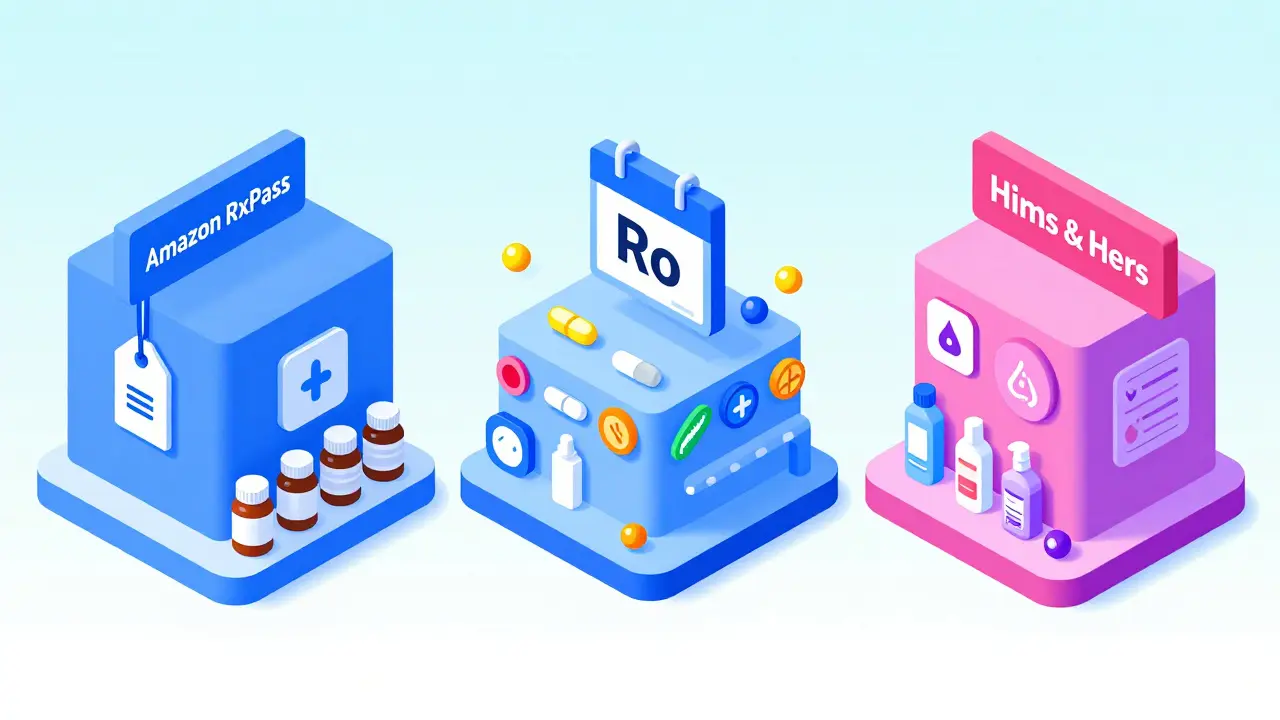
| Platform | Best For | Pricing Model | Medication Coverage | User Rating (Trustpilot) |
|---|---|---|---|---|
| Amazon RxPass | Budget-conscious users with Prime membership | $5/month subscription | ~300 eligible generics (expanding) | 3.5/5 |
| Ro | Broad therapeutic coverage and chronic conditions | $15/month + medication costs | 1,200+ medications | 4.0/5 |
| Hims & Hers | Lifestyle issues (ED, hair loss, skincare) | Per-prescription ($25-$45 avg) | Specialized lifestyle meds | 3.8/5 |
| Beem Health | Users needing financial assistance alongside meds | Variable (savings-focused) | Wide range of generics | 4.2/5 |
Amazon RxPass is the clear winner for simplicity. If you already pay for Prime, the $5 monthly fee for eligible generics is hard to beat. However, the list of covered drugs is limited. As of late 2025, it covered about 150 medications, though Amazon announced an expansion to 300 by early 2026. It’s great for common ailments like allergies or acid reflux, but less useful for complex regimens.
Ro offers the broadest selection. With over 1,200 medications across 15 condition categories, it’s a serious contender for primary care replacement for minor issues. Their diabetes management program, for instance, showed 89% adherence rates, significantly higher than traditional care. The trade-off is cost: you pay $15 a month plus the price of the drug, which can add up.
Hims & Hers dominates the lifestyle segment. If you’re looking for treatments for erectile dysfunction, hair loss, or acne, their brand identity and targeted approach make them a top choice. They price generics 40-60% below retail, but their medical consultation depth is sometimes criticized as being lighter than Ro’s.
Beem Health takes a different angle by integrating financial health. Serving over 5 million users, Beem offers cash advances via Everdraft™ alongside prescription savings. This holistic approach appeals to those struggling with healthcare costs, earning them the highest user satisfaction scores among major platforms.
Cost Savings vs. Brand Names
The primary driver for app-based prescribing is cost. Generic medications typically cost 80-85% less than their brand-name counterparts. According to Drug Patent Watch’s 2025 analysis, this gap widens when you factor in the convenience fees and travel costs associated with traditional pharmacies.
But even within generics, prices vary wildly. Traditional retail pharmacies often mark up generics by 30-50%. App-based platforms leverage bulk purchasing and direct distribution to undercut these prices. For example, a month’s supply of a common blood pressure medication might cost $45 at a local pharmacy but only $15 through a subscription model like RxPass or a discounted rate on Ro.
Keep in mind that insurance compatibility is a mixed bag. About 40% of users report issues trying to use insurance with these apps. Many platforms operate outside traditional insurance networks, offering lower cash prices instead. Before switching, calculate whether your insurance copay is actually lower than the app’s flat rate. For many uninsured or underinsured individuals, the app route is unequivocally cheaper.
Safety and Clinical Concerns
Convenience shouldn’t come at the cost of safety. There are legitimate concerns about how these platforms handle clinical judgment. A 2025 study in JAMA Internal Medicine found that DTC telehealth platforms prescribed medications 23% more frequently than traditional primary care settings for comparable conditions. Dr. Sarah Thompson of the American Pharmacists Association noted that "the shift from patient care to drug sales creates concerning incentives that may compromise clinical judgment."
This doesn’t mean the platforms are unsafe, but it does mean you should be vigilant. The FDA issued 12 warning letters to telehealth companies in Q1 2025 regarding inadequate risk disclosure. Marketing materials often highlight benefits while downplaying side effects. Always read the full medication guide provided in the app, not just the promotional summary.
Care fragmentation is another risk. Thirty-seven percent of community pharmacists reported medication history gaps among patients using multiple prescription channels. If you use an app for some meds and a traditional pharmacy for others, your providers might not see the full picture. This can lead to dangerous drug interactions. To mitigate this:
- Consolidate your prescriptions on one platform whenever possible.
- Manually update your primary care provider’s records after every new prescription.
- Use platforms like Ro that are integrating with Apple Health records to improve data sharing.
Security is generally strong. Major platforms use HIPAA-compliant 256-bit AES encryption and biometric authentication. Your health data is protected, but always check the privacy policy to understand how your data might be shared with third parties.
User Experience and Support
How easy is it to actually get help when things go wrong? User feedback reveals a split experience. On Reddit’s r/telehealth, 68% of sentiment was positive, praising the discretion and ease of access. Users particularly appreciated avoiding awkward in-person conversations for sensitive conditions.
However, 32% reported issues with prescription denials or lack of follow-up care. Prescription approval rates average 65-75%, meaning nearly one in four requests gets rejected initially. When this happens, support quality varies. Amazon RxPass offers 24/7 chat with sub-2-minute response times, but the support staff lacks medical expertise. Ro provides access to pharmacists, but wait times can stretch to 47 minutes during peak hours.
A practical tip from the community: always upload clear images of your current prescriptions if you’re transferring. Using OCR (Optical Character Recognition) features in the app speeds up processing. Also, be prepared for potential delays in delivery-18% of users reported shipping issues in late 2025 surveys. Plan ahead so you don’t run out of medication.
Who Should Use These Apps?
These platforms aren’t for everyone. They are ideal for:
- Young adults (25-44): This demographic makes up 52% of telehealth pharmacy users. They value convenience and digital-first solutions.
- People with mild, chronic conditions: Allergies, acid reflux, hypertension, and benign prostate hyperplasia are well-suited for remote management.
- Those seeking discretion: Conditions like ED, hair loss, or mental health support benefit from the privacy of home delivery.
- Uninsured or high-deductible individuals: The transparent pricing models often save money compared to insurance copays.
They are less suitable for:
- Complex medical histories: If you take multiple medications for serious conditions, the fragmented care model poses risks.
- Seniors: Only 18% of seniors use these services, likely due to comfort levels with technology and preference for in-person relationships.
- Patients needing controlled substances: Most apps cannot prescribe Schedule II-V drugs.
Future Trends in Digital Prescribing
The industry is moving toward hybrid care models. By 2026, we expect to see more integration between app-based platforms and traditional healthcare systems. Ro’s integration with Apple Health and Beem’s planned Medicare Part D integration are early signs of this trend. The goal is to reduce care fragmentation while maintaining the convenience of digital access.
We also anticipate specialization. Just as Hims & Hers focused on lifestyle meds, new platforms may emerge dedicated solely to diabetes, dermatology, or mental health. This verticalization allows for deeper clinical expertise and better tailored support. With the market projected to reach $9.3 billion by 2034, competition will drive innovation in both pricing and care quality.
For now, the best approach is to treat these apps as supplements to, not replacements for, comprehensive primary care. Use them for routine refills and minor issues, but keep your main doctor in the loop. The future of medicine is digital, but human oversight remains essential.
Is app-based prescribing legal?
Yes, app-based prescribing is legal in the United States. Licensed physicians evaluate patients remotely and issue valid e-prescriptions. However, laws vary by state. Some states require an established patient-provider relationship before prescribing, and no platform can legally prescribe controlled substances without strict compliance with federal regulations.
Do these apps accept insurance?
Most app-based platforms do not directly bill insurance. Instead, they offer lower cash prices for generic medications. About 40% of users report difficulties using insurance with these apps. However, some platforms like Beem Health are beginning to integrate with Medicare Part D and other payer systems to improve compatibility.
Can I get any medication through these apps?
No. These platforms primarily dispense generic medications for non-controlled conditions. They typically exclude controlled substances like ADHD stimulants, opioids, and certain anxiety medications. Coverage ranges from 150 medications on Amazon RxPass to over 1,200 on Ro, focusing on common issues like allergies, heart health, and lifestyle conditions.
How safe is my data on these platforms?
Major platforms use HIPAA-compliant security measures, including 256-bit AES encryption and biometric authentication. Regular third-party security audits ensure data protection. However, users should review privacy policies to understand how data might be shared for marketing or research purposes.
What happens if my prescription is denied?
Prescription denial rates average 25-35% for initial requests. If denied, you can usually request a follow-up consultation with a physician to provide more context. Support teams can help escalate the issue, but response times vary. Amazon offers quick chat support, while Ro provides pharmacist access with longer wait times.
Are generic medications from apps as effective as brand names?
Yes. Generic medications must meet the same FDA standards for safety, efficacy, and quality as brand-name drugs. They contain the same active ingredients in the same dosage. The primary difference is price, with generics costing 80-85% less than brand equivalents.
How long does delivery take?
Standard shipping typically takes 3-5 business days. Many platforms offer expedited or same-day delivery options where available. According to industry benchmarks, 92% of prescriptions are fulfilled within 24 hours for same-day delivery tiers, though 18% of users have reported occasional delays.
Which app is best for chronic conditions?
Ro is generally considered the best for chronic conditions due to its broad coverage of 1,200+ medications and integrated care programs. Their diabetes management program, for example, demonstrated high adherence rates. For simpler chronic issues like hypertension, Amazon RxPass may suffice if the medication is on their covered list.
Can I switch back to my regular pharmacy?
Yes, you can always return to your traditional pharmacy. However, to avoid care fragmentation, inform your primary care provider and local pharmacist about any medications obtained through apps. This ensures your medical record is complete and reduces the risk of drug interactions.
Are there hidden fees?
Most platforms are transparent about pricing. Amazon RxPass charges a flat $5/month subscription. Others charge per prescription or monthly membership plus medication costs. Shipping fees may apply unless waived by promotions or Prime membership. Always check the final checkout total before confirming your order.
Christina Moran
May 20, 2026 AT 07:24omg this is so cool i never knew you could just get meds delivered like pizza 🍕 its kinda crazy how fast things have changed. i used to hate going to the pharmacy bc of the lines and now i can just chill on my couch. do they really check your history tho? or is it just a quick quiz?
mardy duffy
May 20, 2026 AT 22:05too good to be true.
Desirea Gaona
May 21, 2026 AT 03:32It is imperative that we consider the ethical implications of such rapid digitization in healthcare delivery systems. While convenience is undoubtedly a significant factor in modern consumer behavior, one must not overlook the potential for reduced human interaction in clinical settings. The transition from traditional face-to-face consultations to algorithmic assessments raises questions about the quality of care provided. Furthermore, the data privacy concerns associated with storing sensitive medical information on third-party servers cannot be ignored. It is essential that regulatory bodies enforce strict compliance standards to protect patient confidentiality. We must also ensure that these platforms are accessible to individuals who may not possess advanced technological literacy. The digital divide remains a critical issue that could exacerbate existing health disparities among vulnerable populations. Therefore, while these innovations offer promising solutions, they must be implemented with caution and rigorous oversight. Community engagement should play a pivotal role in shaping the future of telehealth services to ensure equitable access for all citizens. Let us proceed with both optimism and vigilance as we navigate this evolving landscape.
Kathryn Byrd
May 21, 2026 AT 17:29I read the JAMA study mentioned in the post. The 23% higher prescription rate is concerning but context matters. Many people simply lack access to primary care physicians due to insurance gaps or geographic barriers. These apps fill a void that traditional medicine has failed to address adequately. However, I agree that care fragmentation is a real risk. Patients need better tools to sync their records across different providers.
Tanya KLIMCHUK Klimchuk
May 23, 2026 AT 11:42STOP WORRYING SO MUCH! This is amazing progress! If you want cheap meds, USE RO OR AMAZON RXPASS! Why would you pay more at a local pharmacy when you can save money and time? I switched last year and saved hundreds of dollars. Don't let fear hold you back from better healthcare options. Just sign up and get your stuff delivered. It's that simple. Get out there and take control of your health today!
Anthony Red
May 24, 2026 AT 17:01Hey everyone, just wanted to drop a quick tip here. I've been using Ro for about six months now for my blood pressure meds. The app is pretty slick and the doctors actually seem to read your profile. One thing I noticed is that if you have any weird symptoms, mention them clearly in the questionnaire. Otherwise, they might just auto-approve based on standard protocols. Also, make sure you tell your regular doctor what you're doing so they aren't surprised at your next visit. It's all about keeping the loop closed, ya know? Stay safe out there folks.
Javier Arauz
May 25, 2026 AT 15:51This is exactly why America is failing. We let tech companies replace our doctors because we're too lazy to drive 10 minutes. Real men go to the clinic and talk to a real person. These apps are a scam designed to sell your data to big pharma. Wake up sheeple! Support local businesses and stop trusting Silicon Valley hacks with your life.
Kris Wong
May 25, 2026 AT 23:03The FDA warning letters are just a distraction 🚨👀 They want you to think it's unsafe so you keep paying high prices at CVS. The real conspiracy is that these apps are testing new drug formulations on unsuspecting users without telling them. Have you ever wondered why the packaging looks slightly different? It's not just generic branding. They are tracking your biometric data through the app permissions. Turn off location services immediately! 📱🔒
Danny S
May 26, 2026 AT 11:13:shrug: The statistical evidence presented regarding cost savings is undeniable yet the moral decay inherent in this transactional approach to health is abhorrent. One must question the integrity of a system that prioritizes efficiency over empathy. The encryption standards cited are merely a facade for deeper surveillance mechanisms embedded within the operating system itself. Do not trust the binary code. It lies.
Jeremiah Cassandra
May 27, 2026 AT 08:20Ah, yes. Because nothing says 'personalized healthcare' like an algorithm deciding your fate based on a multiple-choice quiz 😂. I suppose we should all just throw away our stethoscopes and embrace the robot overlords. But hey, if you enjoy having your medical history sold to advertisers, by all means, download the app. Just don't come crying to me when your credit score drops because you bought erectile dysfunction pills instead of paying your rent 💸.
charles robert
May 28, 2026 AT 01:12In the grand tapestry of existence, the pill bottle is but a symbol of our collective desperation 🎭. We seek comfort in capsules while ignoring the void within. The app promises salvation but delivers only temporary relief from the existential dread of mortality. Is it truly healing if the soul remains unattended? Perhaps the real disease is the belief that technology can cure the human condition. We are all just waiting for the final prescription: death 💀.
Warren Brewer
May 28, 2026 AT 15:27i think this is good for old people too. my mom uses it now. she likes that she dont have to drive in snow. its easy for her. just make sure she knows how to use phone well. but yeah saves money is best part.
Mark Ronson
May 30, 2026 AT 01:55As a pharmacist, I can confirm that the clinical judgment aspect is indeed tricky. We see a lot of patients coming in with prescriptions from these apps that conflict with their other meds. It is crucial that you consolidate your care whenever possible. If you are using an app, please export your medication list and share it with your primary care provider. The typo-prone nature of online forms can also lead to errors, so double-check everything before submitting. Safety first, always.