Every year, millions of unused or expired pills sit in medicine cabinets across homes - opioids, painkillers, antibiotics, even vitamins. They’re not doing anyone any good. Worse, they’re a danger. Kids find them. Teens experiment with them. Pets chew through bottles. And if you flush them down the toilet or toss them in the trash, they end up in rivers, soil, and drinking water. The solution isn’t more warnings or better labeling. It’s drug take-back programs.
What Exactly Are Drug Take-Back Programs?
Drug take-back programs are official, government-backed systems that let you drop off unused or expired medications at secure locations. These aren’t just one-day events anymore. While the DEA still runs National Prescription Drug Take Back Days in April and October, the real game-changer is the growing network of permanent drop boxes. You’ll find them in pharmacies, hospitals, police stations, and even some community centers. They’re locked, monitored, and designed to keep medications out of the wrong hands - and out of the environment. These programs accept a wide range of items: prescription pills, over-the-counter drugs, patches like fentanyl or nicotine, ointments, and even pet medications. They don’t take inhalers, syringes, alcohol, thermometers, or illegal drugs. The rules are strict for a reason. If you put the wrong thing in, it can contaminate the whole batch. Always keep meds in their original containers if you can. If not, put them in a sealed plastic bag and scratch out your name and prescription number. That’s it.How Do They Actually Work?
Once you drop off your meds, they don’t sit around. Within days, they’re picked up by licensed medical waste handlers and taken to high-temperature incinerators. That’s the only approved way to destroy them. No landfills. No waterways. No recycling. Just complete destruction. This isn’t just about safety - it’s about protecting ecosystems. The EPA estimates that pharmaceutical pollution in waterways contributes to hormone disruption in fish and other wildlife. Take-back programs stop that before it starts. You might wonder why this matters if you’re not using the drugs anymore. Here’s the truth: unused prescription opioids are the number one source of misuse among teens. A 2022 study found that in communities with permanent drop boxes, prescription drug misuse among teenagers dropped by 19% within three years. That’s not a coincidence. When the drugs are gone from the medicine cabinet, they can’t be stolen, shared, or abused.Where Can You Find a Drop-Off Location?
The easiest way to find a nearby drop-off point is to go to DEA.gov/take-back-day. The site has a searchable map showing over 16,500 active locations across the U.S. You can filter by zip code, city, or even type of location - pharmacies, hospitals, or police stations. Walgreens alone has more than 1,600 drop boxes in 49 states. CVS, Rite Aid, and many independent pharmacies are also participating. Some areas have mobile units that drive to neighborhoods, especially in rural or underserved zones. Broward County, Florida, runs a program called Operation Medicine Cabinet that brings collection bins to libraries, churches, and senior centers. They’ve seen participation jump 73% compared to fixed locations. If you live in a town with no drop box, ask your local pharmacy or city hall if they’d consider installing one. Community pressure works.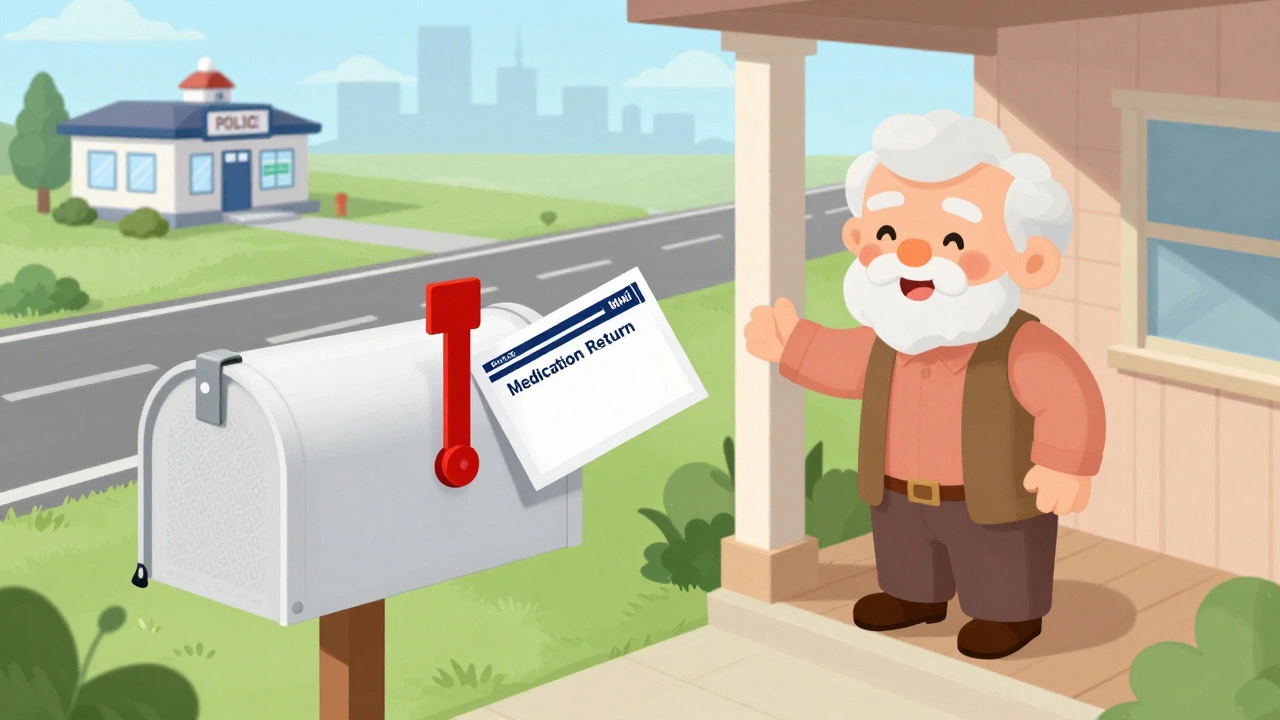
Mail-Back Kits: A Convenient Alternative
Not everyone can get to a drop box. That’s where mail-back programs come in. Some states and pharmacies offer free, prepaid envelopes you can use to send your meds back. You put your pills in, seal the envelope, and drop it in any mailbox. The company that handles the program takes care of the rest - incineration, compliance, documentation. These kits are great for elderly people, those without cars, or anyone living far from a collection site. But here’s the catch: mail-back kits aren’t available everywhere. Only 63% of rural communities have access, compared to 89% in cities. And while they’re convenient, they cost money to produce and ship. Some states, like California and Vermont, provide them for free. Others charge $5-$10. The good news? A bill introduced in 2023 could make these kits free for Medicare Part D beneficiaries - that’s 48 million seniors. If it passes, access could explode.Why Not Just Flush or Trash Them?
You’ve probably heard the old advice: flush pills you don’t need. The FDA used to recommend that for certain high-risk drugs - mainly strong opioids like oxycodone and fentanyl - because the risk of overdose if someone finds them outweighed the environmental risk. But that list is tiny: only about 15 medications still qualify. For everything else? Don’t flush. Don’t toss. Flushing sends chemicals into water systems. Even wastewater treatment plants can’t remove all pharmaceuticals. Traces of antidepressants, birth control, and antibiotics have been found in rivers, lakes, and even tap water. Throwing them in the trash is almost as bad. Landfill leachate can carry drugs into groundwater. And if someone digs through your garbage? That’s how accidental poisonings happen. The FDA and EPA both say: take-back is the best option. If you absolutely must dispose of meds at home, crush pills, mix them with used coffee grounds or kitty litter, seal them in a plastic bag, and throw them in the trash. But this is a last resort - not a first choice.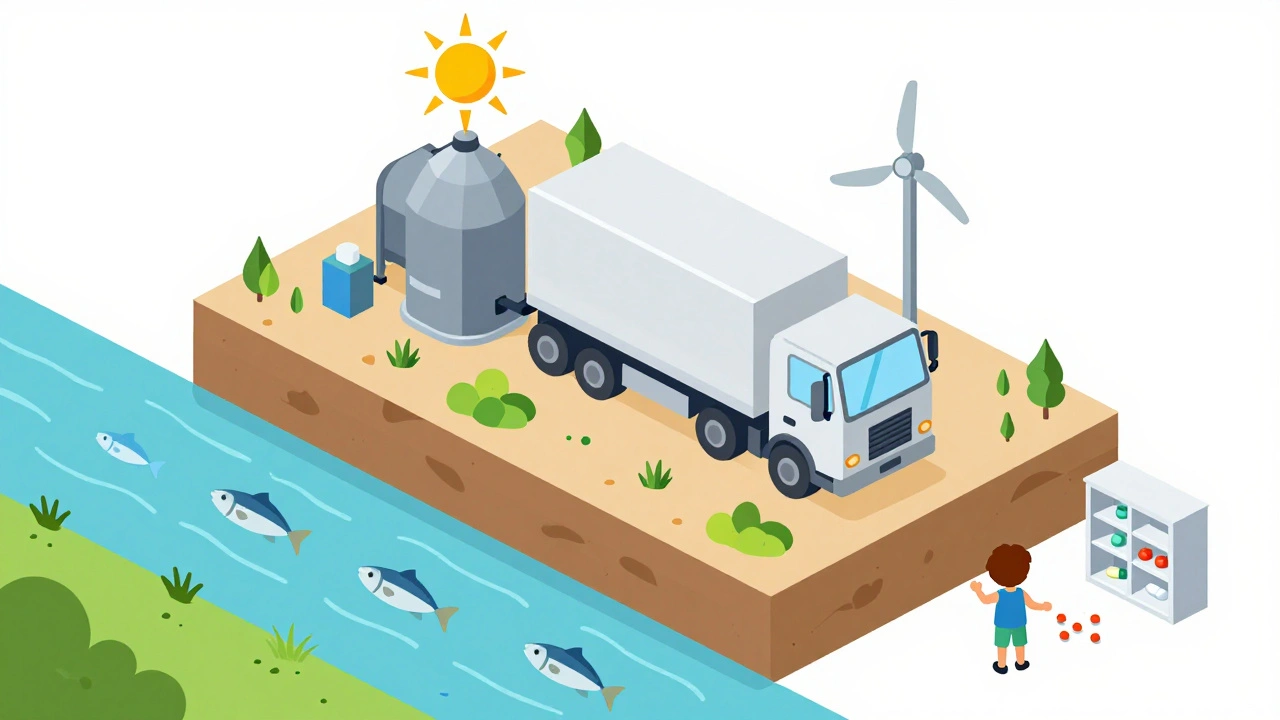
Who Runs These Programs? And Why?
The DEA created the legal framework in 2010 with the Secure and Responsible Drug Disposal Act. Since then, they’ve collected over 19.8 million pounds of medication through take-back events and permanent sites. But they don’t do it alone. Pharmacies handle the drop boxes. Police departments manage collection events. Waste companies like Stericycle handle transport and incineration. Local health departments run outreach campaigns. The motivation? Public safety. Over 100,000 Americans die each year from drug overdoses. Most of those involve prescription opioids that were diverted from home medicine cabinets. Take-back programs reduce supply at the source. Dr. Rahul Gupta, Director of the Office of National Drug Control Policy, calls them “one primary prevention method” to stop addiction before it starts.What’s Holding These Programs Back?
Despite their success, there are big gaps. Only 37% of Americans live within five miles of a permanent drop box. Rural areas have less than half the density of urban ones. And awareness? Shockingly low. Only 28% of people know year-round options exist. Most still think take-back is a one-day event. Another problem: fear. If a police station is the only place you can drop off meds, some people won’t go. Studies show participation drops 32% when law enforcement runs the program alone. Pharmacies are more welcoming. One study found participation jumped 41% when drop boxes were placed in pharmacies instead of police stations. Funding is another hurdle. Each permanent drop box costs $1,200-$2,500 to install. Annual upkeep runs about $18,500 per site. Many small towns can’t afford that. That’s why integrating these programs into existing healthcare systems - like hospitals or clinics - is the most sustainable path forward. It cuts costs by 35% and boosts access.What Can You Do?
1. Check your medicine cabinet. Find expired, unused, or unwanted pills, patches, or ointments. 2. Remove personal info. Scratch out your name and prescription number. Keep meds in original bottles if possible. 3. Find a drop-off. Go to DEA.gov/take-back-day. Search by zip code. Look for pharmacies, hospitals, or police stations. 4. Drop them off. No appointment needed. No questions asked. Just walk in and hand them over. 5. Tell others. Share this with family, neighbors, seniors, or anyone who might not know about these programs. If you can’t find a location, ask your pharmacist. They’re often the first to know about local options. And if your town doesn’t have one, push for it. It’s not just about cleaning out your cabinet. It’s about protecting your community.Can I drop off my pet’s medications at a drug take-back program?
Yes. Most drug take-back programs accept pet medications, including pills, ointments, and patches. Just make sure they’re in their original containers or sealed in a bag with personal info removed. Don’t bring syringes, needles, or liquid injectables - those require special medical waste handling.
Do I need to bring my ID to drop off medications?
No. Drug take-back programs are anonymous. You don’t need to show ID, explain why you’re dropping off meds, or sign anything. The goal is to make it easy and stigma-free so people actually use the service.
What if I live in a rural area with no drop-off locations nearby?
Try a mail-back kit. Some states offer free envelopes through pharmacies or public health offices. If that’s not available, the FDA recommends crushing pills, mixing them with kitty litter or coffee grounds, sealing them in a plastic bag, and throwing them in the trash. But this is a last resort - mail-back or a drive to a nearby town is always better for the environment and public safety.
Are there any medications that should always be flushed?
Only about 15 specific drugs, mostly powerful opioids like fentanyl patches and oxycodone tablets, are still on the FDA’s flush list because of their high risk of fatal overdose if misused. Check the FDA’s website for the current list. For everything else, use a take-back program or the at-home disposal method.
Can I drop off medications from a nursing home or hospital?
No. These programs are for household medications only. Nursing homes, hospitals, and clinics have their own licensed medical waste disposal systems. Don’t bring institutional waste to a public drop box - it’s not allowed and could cause contamination.
How often do drug take-back events happen?
The DEA runs National Prescription Drug Take Back Days twice a year - in April and October. But permanent drop boxes are open every day, year-round. Don’t wait for the event. If you have unwanted meds, drop them off now.
Evelyn Pastrana
December 10, 2025 AT 23:17So basically, we’re paying big pharma to make us hoard poison, then charging us to get rid of it? Classic. 🙄 I dropped off my grandpa’s leftover oxy last week at the Walgreens down the street - no ID, no judgment, just a box that says ‘Don’t be a dumbass and flush this.’ Love it.
Nikhil Pattni
December 11, 2025 AT 12:45Actually, you guys are missing the bigger picture. In India, we don’t even have these programs, and yet our waterways are cleaner because people just *don’t* hoard meds. They use what they need, then stop. No ‘expiries’. No ‘leftovers’. It’s called discipline. Also, did you know that 78% of pharmaceutical pollution in the Ganges comes from *Western-style* pill culture? We should export this model backward, not forward. And also, I once saw a guy flush a whole bottle of insulin in Delhi - it was like a sci-fi horror movie. 😱
Arun Kumar Raut
December 12, 2025 AT 22:55Hey, just wanted to say thanks for this post. My mom’s 78 and she’s been holding onto her old blood pressure pills for years ‘just in case.’ I showed her the DEA map and we went together last Sunday. She cried a little - said she felt guilty for keeping them. But now she’s proud. If you’ve got an elderly relative who’s hoarding meds, take them. It’s not weird. It’s loving.
precious amzy
December 13, 2025 AT 09:28One must interrogate the epistemological underpinnings of this ‘take-back’ paradigm. Is it not merely a neoliberal co-optation of environmental responsibility - shifting the burden from corporate producers to the anxious, guilt-ridden consumer? The DEA, a law enforcement entity, now doubles as a pharmaceutical janitor. How profoundly alienating. And yet… I still dropped mine off. The irony is not lost on me. 🤔
William Umstattd
December 13, 2025 AT 16:11You people are idiots. Flushing is fine. The EPA says so. And you know what? The fish don’t care. They’re fish. They live in water. They’ve evolved with toxins for 500 million years. But no - you need to drive 12 miles to a pharmacy just to drop off a bottle of ibuprofen? That’s not environmentalism. That’s performative virtue signaling with a side of inconvenience.
Sabrina Thurn
December 15, 2025 AT 04:48From a public health epidemiology standpoint, this is one of the most underappreciated primary prevention interventions we’ve got. The 19% reduction in teen opioid misuse in communities with permanent drop boxes? That’s not just data - that’s lives. And the logistics? It’s a closed-loop system: pharmaceutical waste → licensed medical waste handler → high-temp incineration (≥1000°C) → complete mineralization. No bioaccumulation. No leachate. No downstream contamination. It’s elegant. And we need more of it - especially in Medicaid zip codes.
Anna Roh
December 16, 2025 AT 22:38Why do we even have this problem? Someone should’ve just banned prescription refills after 30 days. Problem solved.
Olivia Portier
December 18, 2025 AT 00:12OMG I just found a dropbox at my local library!! 🎉 I’ve been meaning to clean out my cabinet since 2021. Took my kid with me - told him ‘this is how we keep people safe.’ He’s 8. He said ‘so no one gets high from Grandma’s pills?’ I nodded. He gave the box a high five. 🤝 We need more of this. And yes, I’m telling everyone. Even my weird uncle who still uses fax machines.
Evelyn Pastrana
December 18, 2025 AT 05:06@Olivia Portier - your kid high-fiving the dropbox is the most wholesome thing I’ve seen all year. I’m crying. Also, my uncle uses fax machines too. He sent me a letter last month asking if I could ‘fax him the take-back map.’ I did. He printed it. Framed it. Now it’s on his fridge next to the ‘I ❤️ My Medicare Card’ magnet. We’re all weird. But we’re doing the right thing.