ED Medication Interaction Checker
Select your ED medication below to see how it interacts with common heart medications mentioned in clinical guidelines.
Drug Duration & Risk Windows
Based on typical metabolism rates. Consult a professional for personal dosing intervals.
You might think Erectile Dysfunction Medications are just about sexual performance, but they carry life-or-death stakes when mixed with heart drugs. Many men manage blood pressure or chest pain daily without realizing how quickly their prescription list could become dangerous. It isn't just about side effects like headaches or flushing. When certain combinations happen, blood pressure can plummet to levels that stop your heart. We aren't talking about minor dizziness here. We are discussing hypotensive crises that lead to strokes or fatal heart attacks. Knowing exactly which drugs to avoid is your first line of defense.
How PDE5 Inhibitors Actually Work
To understand the risk, you need to see what happens inside your blood vessels. These drugs belong to a class called phosphodiesterase type 5 inhibitors. They do not directly cause an erection. Instead, they enhance the effect of nitric oxide, a chemical messenger your body produces naturally during arousal. This process increases cyclic guanosine monophosphate (cGMP), which relaxes smooth muscle in the penile arteries, allowing more blood to flow.
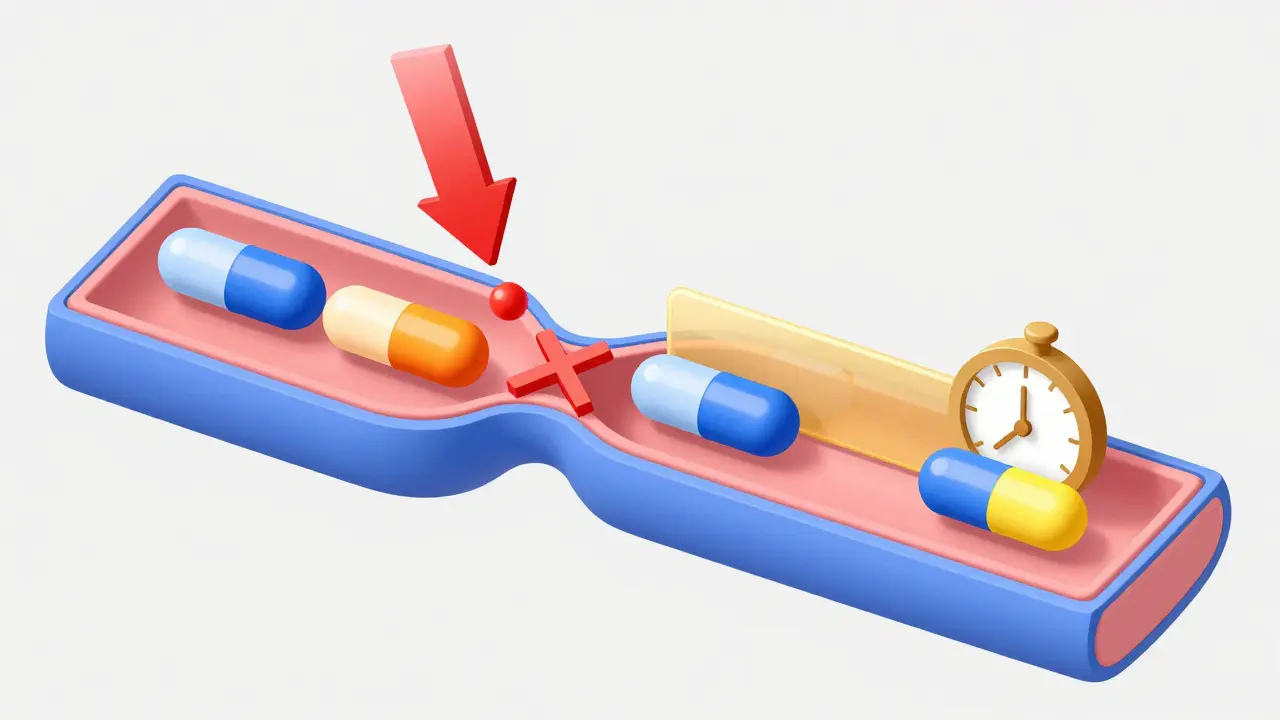
The problem lies in the fact that this relaxation isn't limited to just one part of the body. Because these chemicals work through blood vessels generally, using the medication lowers blood pressure throughout your entire system. Even in healthy men, this drop is measurable, usually reducing systolic pressure by about 5 to 8 mmHg. For someone with a stable cardiovascular system, this is manageable. However, if you introduce another substance that does the exact same thing, the math gets scary fast.
The Absolute Ban on Nitrates
If there is one rule you must never break, it involves nitrates. Organic nitrates are standard treatments for angina, or chest pain caused by reduced blood flow to the heart. You likely know them as nitroglycerin pills, sprays, or patches. Doctors prescribe these because they widen blood vessels to help the heart pump easier. But since both nitrates and PDE5 Inhibitors widen blood vessels through overlapping pathways, taking them together creates a synergistic crash.
Clinical studies show that combining these two types of drugs can lower systolic blood pressure by anywhere between 25 to 51 mmHg. That is not a mild reduction; it is enough to cut off blood supply to vital organs. The result can be sudden loss of consciousness, seizures, or immediate cardiac arrest. Regulatory bodies like the FDA mandate black box warnings for this interaction because there is no safe window for timing.
- Nitroglycerin: Used sublingually for acute chest pain.
- Isosorbide Dinitrate (Isordil): Long-acting tablet for prevention.
- Isosorbide Mononitrate (Imdur): Once-daily maintenance therapy.
- Amyl Nitrite: Often known colloquially as 'poppers' in recreational contexts.
Experts at Harvard Medical School state unequivocally that men on these medications cannot use ED pills under any circumstances. This includes emergency situations where a man might reach for nitro spray thinking it helps, while forgetting he took a dose earlier that day.
Navigating Alpha-Blocker Complexities
Alpha-blockers tell a different story than nitrates. These medications treat high blood pressure and benign prostatic hyperplasia (enlarged prostate). Unlike the absolute prohibition with nitrates, combining alpha-blockers with ED drugs is sometimes possible, but it requires extreme caution. The mechanism here involves blocking receptors that normally tighten blood vessels. If you combine this with PDE5 inhibition, the combined vasodilation can cause symptomatic hypotension.
The risk varies depending on which alpha-blocker you take. Non-selective agents pose higher dangers than selective ones. Clinical guidelines suggest starting at the lowest possible dose of the ED medication, such as 25mg sildenafil or 5mg tadalafil. Crucially, timing matters. UCSF Health recommends maintaining a separation of at least 48 hours between doses of the two drugs when possible. Some protocols allow closer spacing, but only if the patient is stable on the alpha-blocker for weeks beforehand.
This nuance highlights why self-prescribing via online services without full history disclosure is risky. Telemedicine has seen a 22% year-over-year increase in consultations, yet patients often overlook listing older cardiovascular prescriptions. A 62-year-old man on Reddit shared his experience of being hospitalized after ignoring a warning label, dropping to a critical blood pressure reading of 70/40 mmHg after mixing sildenafil with heart meds.
Detailed Drug Profiles and Durations
Not all pills last the same amount of time in your system. This duration affects your safety window significantly. If you take a long-acting drug and have a heart attack later that week, residual amounts might still interact with prescribed nitrate treatment.
| Drug Name (Brand) | Active Duration | Onset of Action | Risk Profile |
|---|---|---|---|
| Sildenafil (Viagra) | 4-5 Hours | 30-60 Minutes | Moderate BP Drop Risk |
| Tadalafil (Cialis) | Up to 36 Hours | 30 Minutes - 2 Hours | Higher Alpha-Blocker Interaction Risk |
| Vardenafil (Levitra) | 4-5 Hours | 30 Minutes | Similar to Sildenafil |
| Avanafil (Stendra) | Approximately 6 Hours | 15 Minutes | |
| Lowest Impact |
Tadalafil stands out because of its extended half-life. While convenient for spontaneity, it keeps the interaction risk present for days rather than hours. This means if you plan surgery or develop heart issues requiring nitrates within 36 hours, you face a conflict. Physicians often prefer short-acting agents for men with borderline heart stability precisely to minimize this exposure window.
Essential Medical Screening Protocols
Before anyone hands over a prescription, a thorough evaluation is necessary. The Second Princeton Consensus Conference established guidelines to categorize patients based on cardiovascular risk. Men over 45, those with diabetes, or individuals with hypertension fall into higher risk categories. A doctor needs to know if your heart can handle the physical stress of sexual activity itself, regardless of the medication.
Specific red flags include unstable angina, severe heart failure, or uncontrolled hypertension exceeding 180/110 mmHg. Men who have suffered a myocardial infarction or stroke within the last six months should strictly avoid these drugs. Cardiac stress testing becomes mandatory if a man cannot achieve four metabolic equivalents (METs) of activity-roughly equivalent to walking up two flights of stairs without stopping.
This screening prevents catastrophic outcomes. The FDA received over 1,200 reports of serious adverse events related to these interactions between 2018 and 2022. Most incidents occurred because patients did not inform their specialists about all medications they were currently using. Always disclose supplements and herbal remedies too, as some contain hidden nitrates.

Managing Risks in Daily Life
Safety extends beyond the pharmacy counter. Emergency room visits for hypotension often occur when patients forget previous doses. Keep a medication diary or use a smartphone app to track intake times. Be honest with every healthcare provider you visit, including dentists or eye surgeons who might ask about your meds. If you ever experience faintness, chest pain, or vision changes after taking the pill, seek emergency care immediately.
Some newer research suggests low-dose daily therapy might even improve endothelial function in select coronary artery disease patients, but this is a delicate balance managed strictly by cardiologists. Do not attempt this regimen on your own. While the market for these drugs grows annually, the fundamental biology remains unchanged. The interaction with nitrates stays lethal across all formulations, whether oral or topical.
Frequently Asked Questions
Can I take Viagra if I use Nitroglycerin?
No. Combining Viagra (sildenafil) with nitroglycerin causes a severe drop in blood pressure that can be fatal. There is no safe time gap between these medications due to the way nitrates are metabolized.
Are alpha-blockers safer than nitrates to mix?
They are less dangerous but still require caution. Mixing them can cause dizziness or fainting. Doctors recommend separating the doses by at least 4 hours to reduce the risk of hypotension.
Which ED medication lasts the longest?
Tadalafil (Cialis) lasts up to 36 hours, whereas others like sildenafil typically last 4 to 5 hours. Longer duration increases the potential window for drug interactions.
What blood pressure level makes me ineligible?
You should not use these drugs if your blood pressure is below 90/60 mmHg (hypotension) or above 180/110 mmHg (uncontrolled hypertension).
Do poppers interact with ED pills?
Yes. Amyl nitrite found in recreational poppers acts similarly to prescription nitrates and poses a deadly risk when combined with PDE5 inhibitors.
Dan Stoof
March 30, 2026 AT 00:41This information is absolutely vital for everyone to hear!!! It shows real care!!! The stakes here cannot be overstated!!! We must stay alert!!! Safety comes first!!!
William Rhodes
March 30, 2026 AT 23:30Many men walk blindly into danger zones.
They do not read the warning labels carefully.
Pride prevents them from asking help.
Doctors know the chemistry best.
You must trust the medical guidance fully.
Ignoring facts leads to bad outcomes quickly.
Heart health matters more than vanity.
Your life is worth saving right now.
Take the extra step to check lists.
Nitrates kill when mixed wrongly.
Alpha blockers need spacing definitely.
Time gaps protect your blood pressure.
Emergency rooms see this tragedy often.
Prevention is always cheaper than surgery.
Stay informed and stay safe today.
RONALD FOWLER
March 31, 2026 AT 06:46it is good to share this important info
Debbie Fradin
April 1, 2026 AT 12:13surprised people still take pills without reading labels seriously
Adryan Brown
April 2, 2026 AT 09:27We all want to maintain our health effectively.
The body signals changes when systems fail.
Moving slowly protects us from mistakes.
Information spreads faster online.
Reading helps understanding grow stronger.
Careful choices make days brighter.
Safety protocols exist for reasons.
Hearing stories helps us learn better.
Respect guides us through hard times.
Medicine needs proper timing rules.
Ignoring rules hurts families deeply.
Communication bridges gaps safely.
Trust builds between patients and doctors.
Patience keeps everyone safe overall.
We should all support each other here.
Jonathan Sanders
April 3, 2026 AT 12:29another day another warning about basic stuff people ignore completely
Jonathan Alexander
April 3, 2026 AT 21:54This situation feels incredibly dramatic and scary for anyone involved with heart conditions
Charles Rogers
April 4, 2026 AT 21:37You really need to stop playing games with prescribed medications.
It is foolish to mix things without consulting specialists.
The data speaks clearly on the risks involved.
Do not become another statistic in hospital records.
Professional guidance costs less than death.
Ignores the consequences of negligence daily.
Smart people know when to pause usage.
Blindness regarding side effects ends badly.
Knowledge is power against fatal errors.
Treat your body with the respect it demands.
Ignore the advice only if you enjoy danger.
Responsibility falls on the individual patient.
Do not let embarrassment ruin your future.
Read the manual before you pop the pill.
Health is fragile and requires constant vigilance.
Kendell Callaway Mooney
April 5, 2026 AT 02:51The guidelines mentioned here follow current medical standards well.
Patients benefit from knowing duration limits clearly.
Simple explanations help memory retention rates.
Sharing this reduces emergency room visits significantly.
dPhanen DhrubRaaj
April 6, 2026 AT 19:17i think its interesting how people react but you should be careful with timing too and also check labels
Vikash Ranjan
April 6, 2026 AT 21:00Sometimes the risk assessments feel overly cautious compared to actual survival rates
Marwood Construction
April 7, 2026 AT 02:26This analysis aligns with standard pharmacological data available publicly.