When a hospital adds a new generic drug to its formulary, it’s not just a paperwork decision. It’s a carefully weighed choice that affects everything from patient safety to the hospital’s bottom line. Behind every generic medication on the shelf is a rigorous, evidence-based process led by a team of pharmacists, doctors, and economists. This isn’t about picking the cheapest option-it’s about finding the best option that works reliably, safely, and affordably for thousands of patients.
What Is a Hospital Formulary?
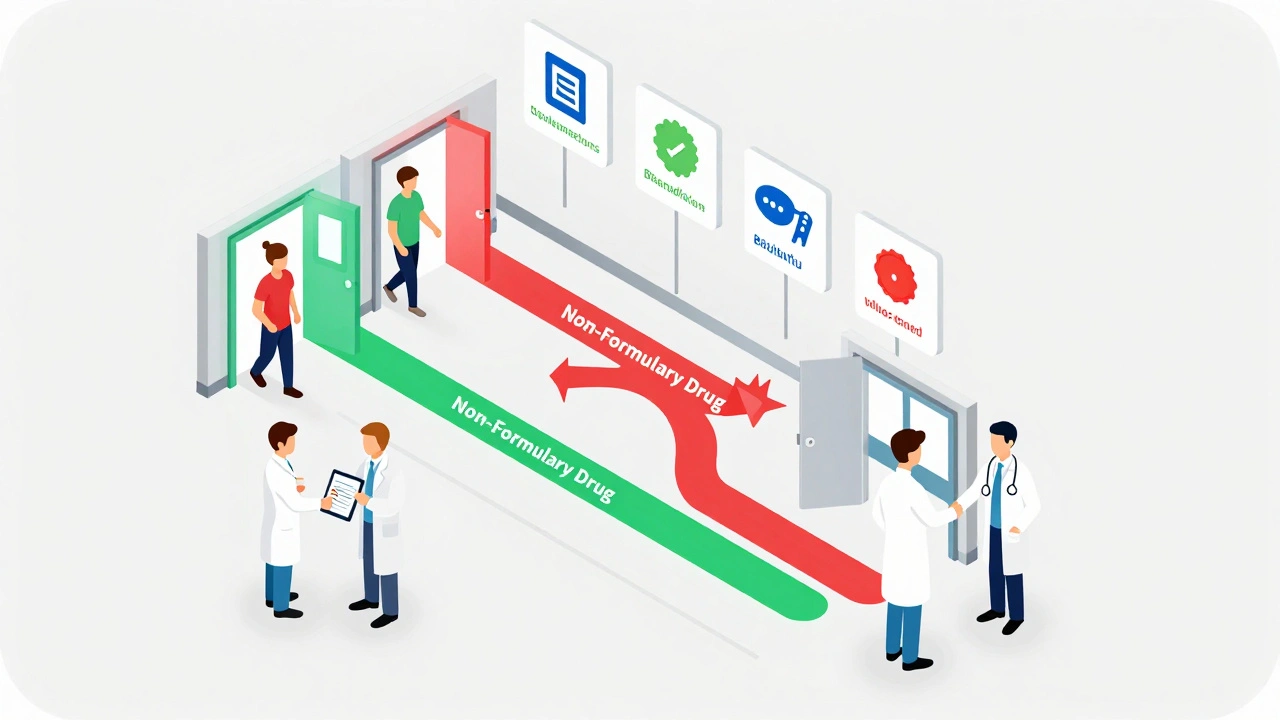
A hospital formulary is a living list of approved medications. It’s not a static catalog you print once a year. It’s updated quarterly in major hospitals and semi-annually in smaller ones. Only drugs on this list are routinely stocked and prescribed. If a drug isn’t on the formulary, getting it requires special approval-often a lengthy process called prior authorization.
The formulary system started in the 1970s as hospitals grew bigger and drug options exploded. Today, most U.S. hospitals with 100+ beds have a formal formulary. About 87% use a closed formulary, meaning only approved drugs are available unless there’s a compelling reason to deviate. This system helps control costs and standardize care across departments.
The goal? As the American Society of Health-System Pharmacists (ASHP) puts it: "The safest, most effective medications that will produce the desired goals of therapy at the most reasonable cost." That’s the triple bottom line: safety, effectiveness, and affordability.
How Generic Drugs Make the Cut
Not every generic drug that gets FDA approval automatically makes it into a hospital formulary. The FDA’s Orange Book tells you if a generic is therapeutically equivalent to the brand-name drug-meaning it has the same active ingredient, dose, and bioavailability within 80-125% of the original. But hospitals go further.
Here’s what the Pharmacy and Therapeutics (P&T) committee actually looks at:
- Clinical evidence: At least 15-20 peer-reviewed studies on efficacy and safety, especially in real hospital settings-not just lab trials.
- Safety profile: How often does it cause side effects? Data comes from the FDA’s Adverse Event Reporting System and hospital internal records.
- Cost-effectiveness: Not just the price per pill. It’s the total cost: How does it affect length of stay? Readmission rates? Emergency visits?
- Formulation differences: A generic pill might look different, taste different, or dissolve differently. Some patients have trouble swallowing certain shapes or sizes. Compliance matters.
- Supply reliability: If a manufacturer has frequent shortages, the drug gets flagged-even if it’s cheap and effective.
For example, in hypertension, 92% of ACE inhibitor prescriptions in hospitals are generic. That’s because multiple generics exist, all proven equivalent, and switching saves millions without increasing risk.
The P&T Committee: Who Decides?
There’s no single person making these calls. It’s a committee-usually 12 to 15 members. You’ll find:
- Pharmacists with Board Certification in Pharmacotherapy (BCPP)
- Physicians from key departments: internal medicine, cardiology, infectious disease
- A healthcare economist or financial analyst
- Occasionally, a nurse or patient advocate
They meet monthly or quarterly. Each drug request comes with a full dossier: clinical studies, pharmacology data, cost comparisons, and manufacturer disclosures. The review takes 45 to 60 days on average. For urgent needs-like a new generic for a life-saving drug-it can be fast-tracked in 14 to 21 days.
Conflict of interest is taken seriously. Since 2020, all ASHP-accredited programs require annual training on this. Pharma reps can’t influence votes. Even small gifts or meals from manufacturers are banned.
Why Cost Isn’t the Only Factor
Many assume hospitals pick generics just because they’re cheaper. That’s only part of the story.
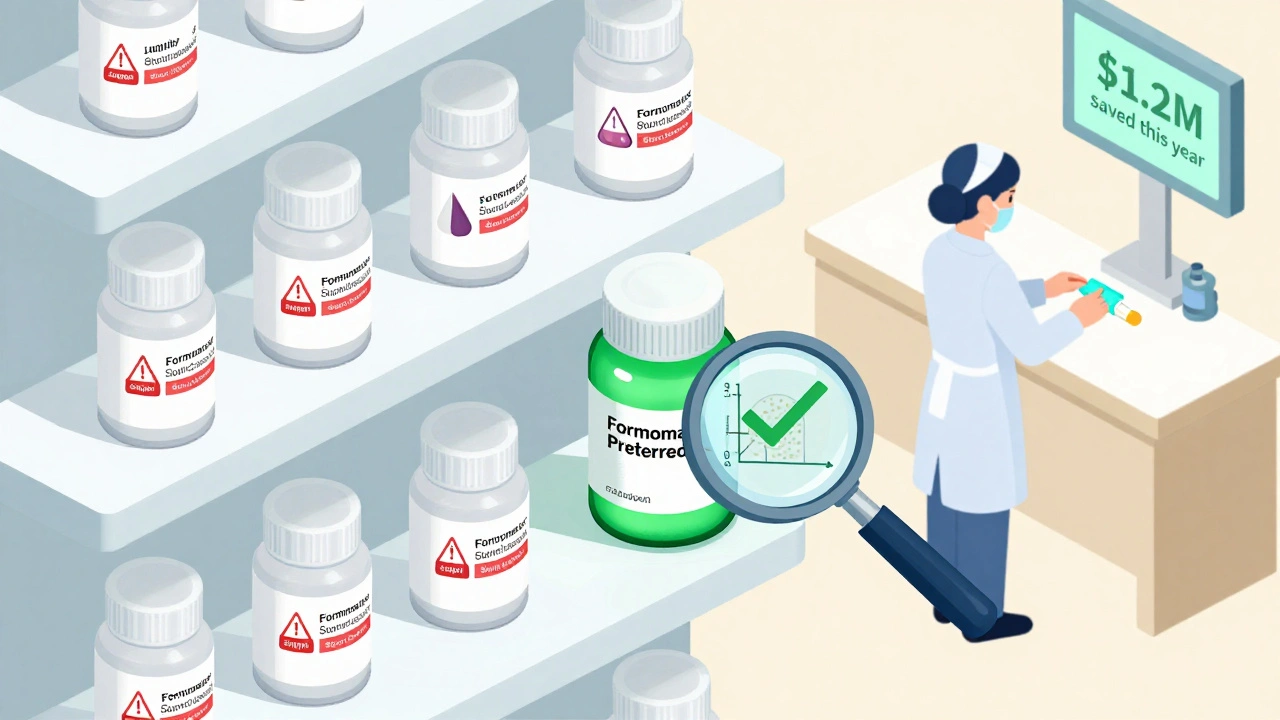
Take anticoagulants. One generic might cost $0.10 per pill. Another, identical in chemical makeup, costs $0.12. But the second one has a better dissolution rate-meaning it’s absorbed more consistently in elderly patients with slow digestion. That reduces the risk of clots or bleeding. The slightly more expensive option actually lowers total care costs by preventing hospital readmissions.
That’s why top hospitals now use predictive analytics to model the total cost of care. A 2023 KLAS Research report found 61% of hospitals track how drug choices affect downstream expenses: longer stays, lab tests, ER visits. A drug that saves $10 per dose but leads to a $10,000 readmission isn’t a bargain.
At Johns Hopkins, switching to formulary-preferred generic anticoagulants saved $1.2 million in one year-without a single increase in adverse events. That’s the sweet spot: lower cost, same outcomes.
Challenges and Conflicts
It’s not all smooth sailing.
Drug shortages hit hard. In 2022, 268 generic medications faced supply issues. When a preferred generic runs out, hospitals scramble. Some temporarily remove it from the formulary. Others activate pre-approved alternatives. Mayo Clinic’s "therapeutic alternatives committee" has a 98% success rate in keeping patients on effective treatment during shortages.
Then there’s resistance from clinicians. A 2021 AMA survey found 32% of physicians felt formulary restrictions hurt patient care. Why? Sometimes a patient responds better to a specific generic brand-even if chemically identical. But if it’s not on the formulary, the doctor has to jump through hoops to get it approved.
Pharmacists and doctors often clash over therapeutic interchange. A pharmacist might swap a non-formulary generic for a preferred one at the pharmacy counter. But if the patient’s blood pressure spikes or they get dizzy, the doctor blames the change-even if the drugs are technically equivalent.
Nurses report workflow disruptions too. When a formulary changes, they have to relearn how to administer the new version. A 2023 AllNurses survey showed 73% saw temporary medication errors during transitions.
What’s Changing in 2025?
The landscape is shifting fast.
The 2022 Inflation Reduction Act is forcing Medicare Part D to align more closely with hospital formularies by 2025. That means hospitals will need to consider how their drug choices affect outpatient coverage too.
Another big change? Value-based contracts. Forty-three percent of hospitals now tie drug payments to outcomes. If a generic reduces readmissions, the hospital might get a rebate. If it doesn’t, the price drops. It’s a move away from buying by the pill-and toward buying by the result.
And then there’s pharmacogenomics. Eighteen percent of academic hospitals are starting to use genetic data to guide formulary choices. For example, if a patient has a gene variant that makes them metabolize a drug too slowly, the formulary might exclude certain generics and only allow ones that are safer for that profile.
Biosimilars are still a challenge. Only 37% of hospitals have formal protocols for evaluating them. These aren’t simple generics-they’re complex biological products. Getting them right takes more science, more data, and more time.
What Works Best
The most successful formularies share a few traits:
- They use GRADE methodology for evidence review-standardized, transparent, and rigorous.
- They involve frontline staff in decisions, not just administrators.
- They track outcomes, not just costs.
- They communicate changes clearly to doctors, nurses, and pharmacists.
Hospitals that do this right don’t just save money. They improve care. Patients get the right drug, on time, with fewer errors. Pharmacists spend less time fighting prior authorizations. Doctors trust the system because they helped build it.
It’s not about cutting corners. It’s about cutting waste-so resources go where they matter most: to the patient.
How often do hospital formularies get updated?
Most academic medical centers review their formularies quarterly. Community hospitals typically do it twice a year. Urgent changes-like drug shortages or safety alerts-can trigger emergency reviews within days.
Why can’t hospitals just use the cheapest generic?
Because cost isn’t the only factor. A cheaper generic might have inconsistent absorption, more side effects, or frequent supply issues. Hospitals look at total cost of care-like how often it leads to readmissions or extra lab tests. Sometimes, a slightly more expensive generic saves money overall.
Do formularies limit patient access to better drugs?
Sometimes. If a newer or more effective generic isn’t on the formulary, patients and doctors must go through prior authorization. This can delay treatment. But the system is designed to prevent unnecessary spending on drugs with no proven advantage. Most hospitals allow exceptions for individual patient needs.
What’s the difference between a hospital formulary and a Medicare Part D formulary?
Hospital formularies focus on clinical outcomes and total cost of care within the hospital setting. Medicare Part D formularies are designed for outpatient use and rely heavily on patient cost-sharing tiers (like co-pays). Hospitals don’t care if a drug costs the patient $5 or $20-they care if it works and doesn’t lead to a longer hospital stay.
How do drug shortages affect formulary decisions?
When a preferred generic runs out, hospitals may temporarily remove it from the formulary and activate an approved alternative. Some hospitals create "therapeutic alternatives committees" to proactively plan for these shortages. At Mayo Clinic, this approach has maintained continuity of care in 98% of cases.
Formulary systems aren’t perfect. But when they’re done right-with transparency, evidence, and collaboration-they’re one of the most powerful tools hospitals have to deliver better care without breaking the bank.
Ella van Rij
December 2, 2025 AT 05:59Oh wow, a whole 15-page whitepaper on how hospitals pick pills. Truly groundbreaking. Next up: ‘The Art of Choosing Between Blue and Red Capsules.’ I’m sure the pharmaceutical CEOs are weeping into their yachts right now. 🤡
Alicia Marks
December 2, 2025 AT 19:21This is actually really cool to see how much thought goes into this. So many people think it’s just about cost, but safety and consistency matter so much. Kudos to the teams doing this work!
Paul Keller
December 3, 2025 AT 05:02While the systemic rigor of hospital formulary selection is commendable, one cannot overlook the structural inefficiencies embedded within the bureaucratic inertia of the P&T committee model. The aggregation of clinical, economic, and pharmacological data is methodologically sound, yet the temporal latency of review cycles-often exceeding 45 days-creates a dangerous lag in therapeutic responsiveness. In an era where real-time pharmacovigilance is technologically feasible, institutional adherence to quarterly deliberations appears not only archaic, but ethically negligent.
Shannara Jenkins
December 3, 2025 AT 14:52I love how this post breaks down the real work behind the scenes. Nurses and pharmacists are the unsung heroes here-juggling shortages, training, and patient reactions all at once. We need more transparency and less top-down mandates. Let the people who actually give the meds have a real voice!
Elizabeth Grace
December 5, 2025 AT 00:32Ugh, I had to wait 3 weeks for my blood pressure med to be approved because it wasn’t on the list. My doctor was furious. Meanwhile, the hospital saved $0.05 per pill. I’m just glad I didn’t have a stroke waiting for paperwork.
Steve Enck
December 6, 2025 AT 04:39One must interrogate the epistemological foundations of this ‘evidence-based’ paradigm. The very notion that ‘clinical equivalence’ can be quantified through bioavailability percentages is a reductive fallacy. Human physiology is not a linear equation. To presume that 80–125% absorption constitutes therapeutic parity is to confuse pharmacokinetics with phenomenology. The patient is not a data point. The body is not a spreadsheet.
Jay Everett
December 7, 2025 AT 05:49Y’ALL. This is the most fascinating thing I’ve read all week. 🤯 Imagine a world where a pill’s shape matters more than its price tag. Pharmacists are basically the Jedi Council of medicine-choosing the right drug, the right way, for the right person. And yeah, sometimes a $0.12 pill saves $10k in readmissions. That’s not just smart-it’s magic. 🧙♂️💊
Laura Baur
December 8, 2025 AT 20:45It is deeply troubling that the article romanticizes the P&T committee as some noble arbiter of health equity, while conveniently omitting the fact that these committees are overwhelmingly composed of physicians and pharmacists with institutional affiliations-many of whom have received consulting fees from manufacturers under the table. The ‘no gifts’ policy is a performative gesture. The real influence is in the ‘informal dinners,’ the ‘educational grants,’ and the revolving door between academia and pharma. Until you audit the committee members’ financial disclosures, this entire system is a carefully curated illusion of objectivity.
Jack Dao
December 9, 2025 AT 18:33Wow. So we’re now treating patients like cost centers in a spreadsheet. ‘Oh, this generic saves $0.03 per pill but causes 0.001% more dizziness.’ That’s the future? Where humanity is optimized out of medicine? 🤖💊
dave nevogt
December 11, 2025 AT 09:33I’ve worked in three different hospitals over the last decade, and what struck me most wasn’t the process-it was the silence. The quiet exhaustion of the pharmacy staff trying to keep up with changes. The nurses learning new pill shapes every few months. The doctors who just want to help their patients but get stuck in prior auth purgatory. This system works… but at what human cost? We measure outcomes, but we don’t measure burnout. And that’s the real drug shortage.
Arun kumar
December 12, 2025 AT 11:48really cool stuff man! i never knew how much work goes into this. in india, we just get whatever is cheapest and hope for the best. here you guys actually care about how it dissolves in the stomach. respect. 🙏
Zed theMartian
December 13, 2025 AT 18:33Let me guess-the next step is AI choosing your meds based on your TikTok history? Next, they’ll replace the P&T committee with a chatbot trained on PubMed abstracts and investor presentations. Soon, your doctor will say, ‘The algorithm says your blood pressure drug is now a blue oval.’ And you’ll nod because you’ve been conditioned to trust machines more than your own body. Welcome to Pharma 4.0, folks. 🚀