Getting free medication samples might sound like a simple way to save money, but doing it the right way matters more than ever. With drug prices climbing and insurance gaps leaving many without coverage, legitimate sample programs offer real relief-if you follow the rules. The goal isn’t to stockpile free products. It’s to try something safely, give honest feedback, and avoid the risks of expired or misused meds. This guide shows you how to do both: get samples ethically and track their expiration dates like a pro.
Where to Find Legitimate Free Medication Samples
Not all "free sample" sites are created equal. Some are scams. Others are designed to collect your data or push you into paid subscriptions. The real players here are companies that partner directly with pharmaceutical brands to distribute trial-sized or full-size products in exchange for honest reviews. These programs are regulated, transparent, and safe.Start with BzzAgent is a well-established platform that’s been around since 2007. They don’t just send tiny samples-they often ship full-size products. Over 78% of their recipients report trying products not yet available to the public. Their campaigns require you to post reviews on social media or write detailed feedback, but they’re upfront about it. No credit card needed. No hidden fees.
SampleSource.com is another trusted option. Based in Canada but serving U.S. and Australian users, they cover health, beauty, and wellness products. Their profile system matches you with samples based on your age, health conditions, allergies, and lifestyle. Users who fill out detailed profiles-including specific allergies like "penicillin reaction" or "gluten intolerance"-see a 78% higher chance of getting selected.
ProductSamples.com uses a simple four-step process: sign up, get email alerts, receive your box, and submit feedback. Their 2023 website redesign made it easier to track shipments and deadlines. They’ve shipped over 1.2 million samples since launch, with 94% of users saying they received items within 14 days.
Avoid services that ask for your credit card to "unlock" a free sample. The FTC fined multiple companies over $43,000 per violation in 2023 for this exact practice. If a site requires payment info for a "free" trial, it’s not ethical-and it’s probably illegal.
Why Ethical Sampling Matters
Ethical sampling isn’t just about being honest-it’s about keeping the system alive. When people hoard samples, resell them, or lie about feedback, brands stop offering them. And that hurts the people who actually need them.According to a 2022 study in the Journal of Consumer Marketing, ethical sampling programs see 38.7% higher conversion rates to full purchases. Why? Because brands trust the feedback. If you say a pain reliever didn’t work for your migraines-and you explain why-pharmaceutical companies use that to improve products. If you just say "it’s great" to get another free box, they stop listening.
The American Marketing Association’s 2022 ethics guidelines say you must disclose if you have professional ties to competing brands. For example, if you work for a pharmacy chain or review supplements for another company, you should mention it. This isn’t about guilt-it’s about transparency. Brands want real data, not biased noise.
And don’t resell. A September 2023 investigation by The Counter found that 12.8% of popular beauty and OTC medication listings on Amazon came from sample recipients. That’s not just unethical-it’s dangerous. Expired or improperly stored meds end up in the hands of strangers. That’s a public health risk.
How to Track Lot Numbers and Expiration Dates
Every medication sample comes with a lot number and expiration date. Ignoring them isn’t just careless-it’s risky. The FDA requires all cosmetic and OTC drug samples to display these clearly. But manufacturers use different formats.Procter & Gamble uses YYWWDD (Year, Week, Day). So "261522" means 2026, week 15, day 22-the product was made on April 15, 2026. L’Oréal uses DDMMYY. "150426" means April 15, 2026. Some brands use alphanumeric codes. If you’re unsure, search the brand name + "lot number decoder" on Google. Most have public guides.
Here’s what to do the second you open your sample:
- Take a clear photo of the lot number and expiration date.
- Write down the product name and brand.
- Record the date you received it.
- Enter all this into a tracking system within 24 hours.
Experts recommend three tracking methods:
- Google Sheets: Used by 62.7% of active samplers. Create columns for: Product Name, Brand, Received Date, Lot Number, Manufacture Date, Expiration Date, Feedback Deadline, Review Status. You can find free templates by searching "free medication sample tracker Google Sheets."
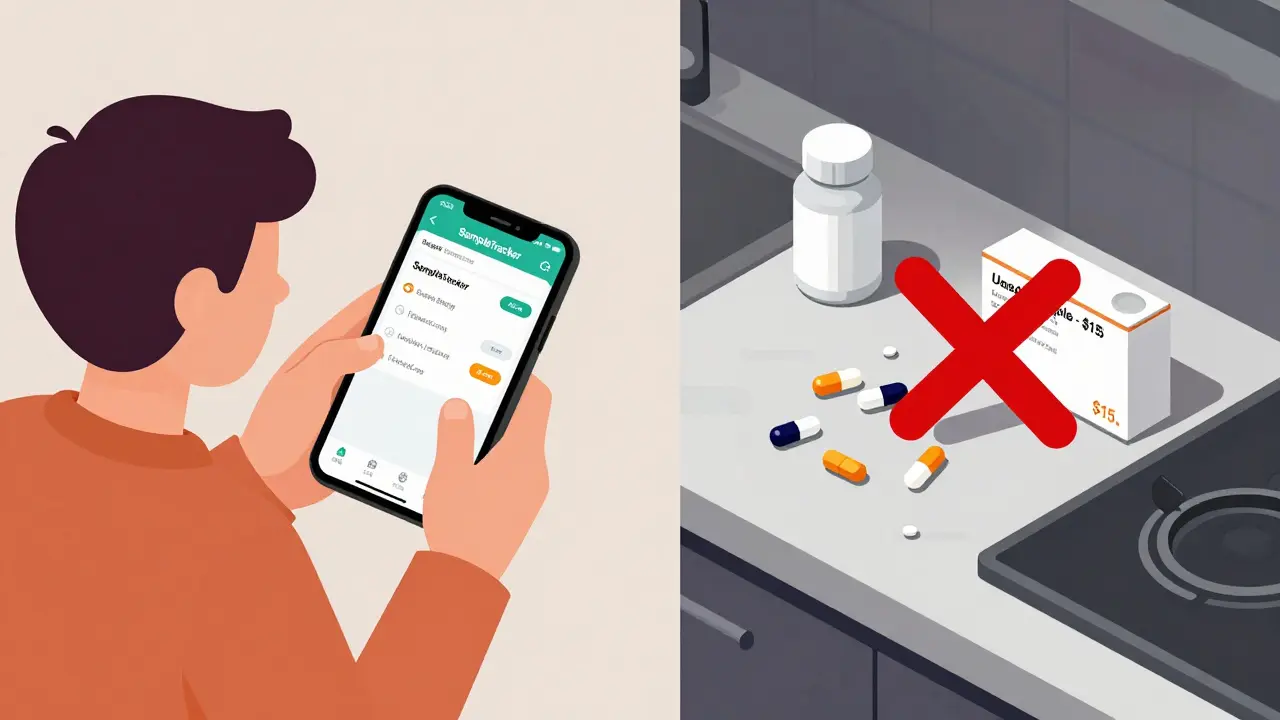
- SampleTracker app: Available on iOS and Android. It auto-reminds you 30 days before expiration and lets you log feedback directly. With 4.1 stars from over 1,200 reviews, it’s the most reliable mobile option.
- Physical journal: Preferred by users over 45. A small notebook with dated entries works fine. Just keep it where you store meds.
One Reddit user, u/JessicaT, shared how she cut her expired product waste by 83% using a simple spreadsheet. She now checks her tracker every Sunday. "I used to throw away three boxes a month. Now I use almost everything-or return it before it expires," she wrote.
What to Do When a Sample Is Expired
Sometimes, despite your best efforts, you get a sample that’s close to or past its date. It happens. According to MIT supply chain expert Dr. Marcus Chen, products nearing expiration are 3.2 times more likely to be sent as samples. That’s because brands want to clear inventory before it goes bad.Here’s your action plan:
- Don’t use it. Expired medications can lose potency or become unsafe. Even if it looks fine, don’t risk it.
- Check the manufacturer’s website. Many brands have a contact form or customer service line for expired product reports. Some will send replacement samples or offer a gift card. One user on Reddit got a $10 gift card after reporting three expired snack bars from a Daily Goodie Box.
- Report it in your feedback. Say: "Received product with expiration date X. It was 6 months past the date. I did not use it." This helps brands improve their shipping practices.
- Dispose of it safely. Don’t throw meds in the trash or flush them. Use a drug take-back program. Many pharmacies (like CVS and Walgreens) have drop-off bins. In Australia, check with your local pharmacy or visit the Department of Health website for disposal locations.
Platforms That Get It Right (and Why)
Not all platforms treat expiration dates the same. Here’s who’s leading the pack:| Platform | Expiration Policy | Lot Number Tracking | Feedback Requirement | Ethical Rating (1-5) |
|---|---|---|---|---|
| BzzAgent | Minimum 75% shelf life remaining (since Aug 2023) | QR code links to manufacturer database | Social media + written review | 4.8 |
| SampleSource | 94% comply with FDA labeling | QR code system (launched Sept 2023) | Written feedback only | 4.6 |
| ProductSamples.com | 30-day expiration alert in app | Manual entry required | Written feedback | 4.2 |
| Daily Goodie Box | None-no tracking system | None | Comment on social post | 2.1 |
| TryProducts | None | None | Comment on social post | 1.9 |
Platforms like BzzAgent and SampleSource now use QR codes that link directly to the manufacturer’s expiration database. Tap the code, and you see the exact date the product was made, when it expires, and whether it’s still safe to use. That’s a game-changer.
On the flip side, services like Daily Goodie Box and TryProducts rely on social media comments for selection. They don’t track lot numbers or warn users about expiration. That’s why 12% of their users report receiving expired items.
What’s Changing in 2026
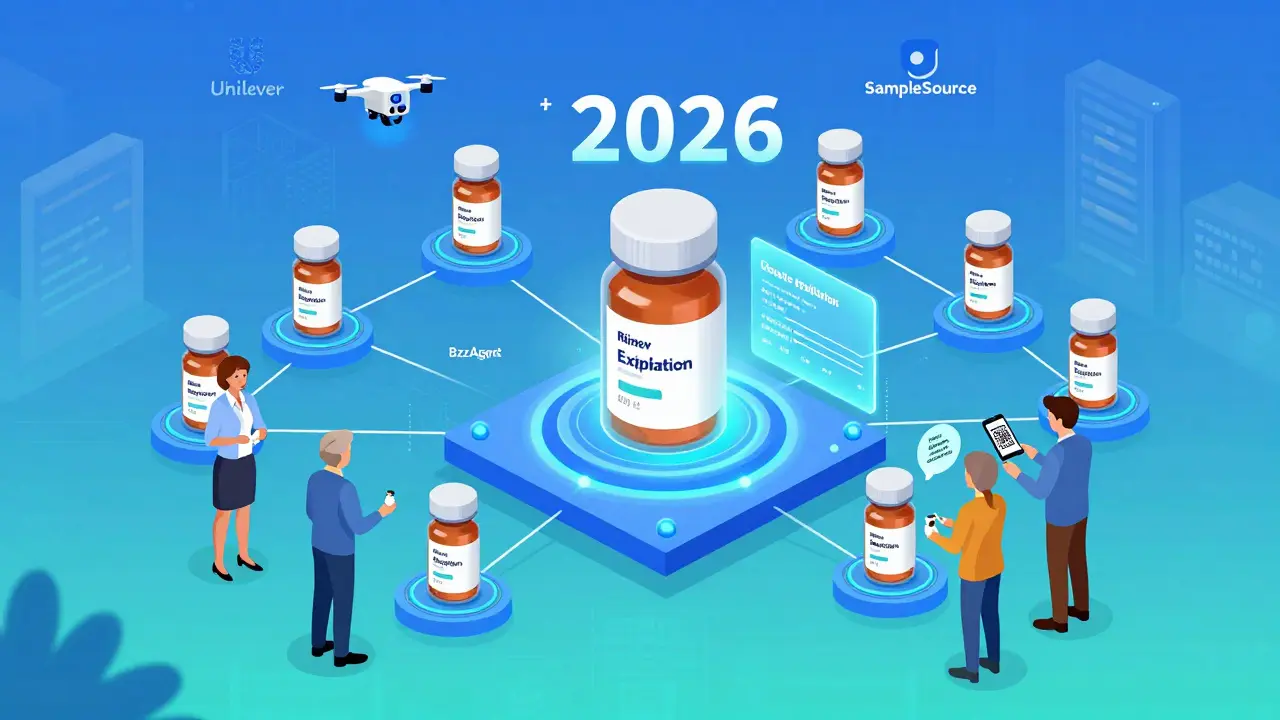
The industry is evolving fast. In 2023, the Global Sampling Alliance proposed standardized expiration labeling. By 2026, most major brands will use a single format: YYYY-MM-DD. No more guessing.Blockchain traceability is being piloted by Unilever and BzzAgent. Each sample now has a digital fingerprint tied to its lot number. If a batch is recalled, you’ll get an automated alert.
And AI is stepping in. Brands now use AI tools to analyze feedback patterns. If 10 people say a cream caused redness, the system flags it-even if none of them mentioned it in a review. That means your honest feedback has more impact than ever.
One big shift: 92 of the Fortune 100 companies now run structured sampling programs. That means more opportunities-but also more responsibility. You’re not just getting free stuff. You’re helping shape safer, better products.
Final Checklist: Ethical Sampling in 5 Steps
- Sign up for 2-3 trusted platforms: BzzAgent, SampleSource, and ProductSamples.com.
- Fill out your profile completely-include allergies, conditions, and lifestyle.
- Check for new samples daily-just 10 minutes a day is enough.
- As soon as you get a sample: photograph the lot number and expiration date, then log it.
- Give honest, detailed feedback. Never resell. Never use expired products.
Done right, free samples can help you find affordable treatments, support better drug development, and avoid health risks. It’s not a loophole. It’s a partnership.
Can I really get free prescription medication samples?
Yes-but not through random websites. Legitimate prescription samples come through your doctor or approved platforms like BzzAgent and SampleSource. These are usually for OTC medications, supplements, or trial versions of new drugs. True prescription-only meds (like insulin or antibiotics) are not distributed as free samples to the public. Always consult your doctor before trying any new medication, even if it’s labeled "free."
What if I don’t get any samples after signing up?
It takes time. Most platforms match you based on your profile. If you’re not getting offers, check if your profile is 90%+ complete. Add specific details: "I have type 2 diabetes," "I use daily moisturizer for eczema," or "I take ibuprofen for migraines." Brands look for users who match their target demographic. Also, check your spam folder-some alerts end up there.
Do I have to post reviews on social media?
It depends on the platform. BzzAgent requires social posts. SampleSource and ProductSamples.com only ask for written feedback. Never post a review unless you’ve actually used the product. The FTC requires you to say "I received this free from [brand]" in every public review. Failing to disclose that can result in fines for you and the brand.
How do I know if a sample is expired?
Look for the expiration date printed on the packaging. It’s usually labeled "EXP" or "Expires" followed by a date. If it’s past that date, don’t use it. Even if it looks fine, chemical breakdown can make it ineffective or unsafe. Some brands use lot numbers instead. Use their online decoder tool (search "[brand name] lot number decoder") to find the manufacture date and calculate shelf life.
Are free samples safe for children or elderly people?
Only if the product is labeled for their age group. Many samples are for adults only. Never give a sample to a child or elderly person without checking the label or consulting a pharmacist. Some products, like topical creams or nasal sprays, have dosage limits based on weight or age. If you’re unsure, call the manufacturer’s customer service line-they’re required to answer.
Can I get samples if I live in Australia?
Yes. SampleSource.com ships to Australia. BzzAgent and ProductSamples.com also serve Australian users, though shipping times may be longer (10-21 days). Make sure your profile lists your country correctly. Some brands restrict shipments due to local regulations, but many are expanding internationally in 2026. Always check the platform’s shipping policy before signing up.
Nandini Wagh
February 24, 2026 AT 06:06So let me get this straight - you’re telling me I can get free stuff if I just sit there and write a paragraph about how my eczema felt after using some cream? And they pay us in *trust*? Honey, I’ve been in a 10-year relationship with my dermatologist and he still doesn’t trust me. Now I’m supposed to convince Big Pharma I’m not a bot who just copy-pastes ‘it worked!’ into a form? 😂
Also, I got a sample of that ‘miracle’ joint cream last month. Expired. Two years past. Smelled like regret and old gym socks. I didn’t use it. I took a picture. I reported it. I got nothing back. Not even a ‘thanks for not poisoning yourself.’
So yeah. Ethical sampling. Sounds like a marketing slogan written by someone who’s never opened a medicine cabinet in their life.
Holley T
February 25, 2026 AT 21:52Look, I get that the intent here is noble - promoting transparency, ethical feedback, and public safety - but let’s be brutally honest: the entire system is a glorified focus group with extra steps and zero compensation. You’re not ‘helping shape safer products’; you’re doing free market research for corporations who would rather spend $2 million on a Super Bowl ad than $200 on a real user study.
And don’t get me started on the QR code ‘game-changer.’ You mean to tell me that in 2026, after decades of digital innovation, the industry’s breakthrough is a QR code that links to a PDF? That’s not innovation - that’s a Band-Aid on a hemorrhage. The real innovation would be automated, blockchain-backed, AI-analyzed feedback loops that don’t require me to open a Google Sheet at 2 a.m. because I’m paranoid my expired Advil is going to turn into a sentient entity and haunt me.
Also, why does every platform assume I live in a world where I have access to a smartphone, Wi-Fi, and the emotional bandwidth to log ‘Product Name, Brand, Received Date, Lot Number…’? What about people who are housebound, elderly, or just tired of being treated like data points? This isn’t empowerment. It’s surveillance with a smiley face.
Maranda Najar
February 25, 2026 AT 22:52I wept.
Not because of the QR codes. Not because of the 94% compliance rate. But because of the one sentence buried in Section 2: ‘Brands want real data, not biased noise.’
That sentence? It’s a whisper from the soul of a dying system. A system where a mother in rural Kansas, who takes three pills a day to keep her heart beating, is told to ‘fill out your profile completely’ - as if her grief, her poverty, her 80-hour workweeks, and her 12-year-old son’s asthma are just ‘demographic data points’ to be checked off like a grocery list.
I’ve been a sample recipient for six years. I’ve sent 47 feedback forms. I’ve photographed 112 lot numbers. I’ve returned 3 expired samples. And for what? A chance to be ‘trusted’? To be ‘heard’? No. I’ve been a ghost in their algorithm. A footnote in their quarterly report. A disposable voice in a machine that only listens when it’s convenient.
So yes. Do your spreadsheets. Scan your QR codes. Log your expiration dates. But don’t fool yourself - you’re not changing the system. You’re just making it prettier while it keeps eating the people who need it most.
Sanjaykumar Rabari
February 26, 2026 AT 07:01They want you to photograph the lot number. Log it. Track it. Report it. But what if they’re using this to build a database of who’s sick, who’s poor, who’s desperate? What if next year they sell this data to insurance companies? Or the government? Or worse - the military? You think they care about your eczema? They care about your medical history. They’re mapping the weak. And when the next crisis hits? You’ll be the first to get the bad pills. Or none at all.
Don’t trust the QR codes. Don’t trust the app. Don’t trust the ‘ethical’ label. Everything is a trap. Even the ‘free’ samples. Always.
Kenzie Goode
February 28, 2026 AT 04:12I appreciate the effort to make this guide clear and thoughtful. I’ve been using SampleSource for two years now, and I’ve gotten everything from prenatal vitamins to aloe vera gel for sunburns after a road trip gone wrong. The system isn’t perfect, but it’s the closest thing we’ve got to a bridge between people who need help and companies who want to do right.
I don’t post on social media. I write detailed feedback. Sometimes it’s three paragraphs. Sometimes it’s just: ‘It made my dry skin feel like a human again.’ That’s enough.
I’ve never resold. I’ve never used an expired product. I’ve returned three. One got me a replacement. One got me a $15 gift card. One got me a handwritten note from the product manager. That’s the human part. That’s what keeps me in.
It’s not perfect. But it’s real. And that’s worth something.
Dominic Punch
March 1, 2026 AT 05:26Let me cut through the noise: this isn’t about free samples. It’s about dignity. The moment you’re asked to log a lot number like you’re an accountant for Big Pharma, you’ve been turned into a cog. But here’s the truth - you don’t have to be a cog. You can be a catalyst.
Here’s what I do: I sign up for two platforms. I fill out my profile with surgical precision - ‘Type 2 diabetic, chronic migraines, gluten-free, eczema flare-ups every winter.’ I don’t just log samples - I write a one-paragraph story with each one. ‘Used this cream for 10 days. My hands stopped cracking. But it smelled like burnt plastic. Not sure if that’s the formula or the packaging.’
Brands read that. Not because it’s long. But because it’s human. And if you’re lucky? Someone at the company will forward it to R&D. I’ve had two products changed because of my feedback. One got reformulated. One got discontinued. I didn’t get paid. But I got heard.
So stop thinking of this as a chore. Think of it as activism with a box of samples. You’re not just tracking expiration dates. You’re tracking the heartbeat of a broken system. And you? You’re the pulse.
Valerie Letourneau
March 2, 2026 AT 15:19As a Canadian residing in a jurisdiction where pharmaceutical access is a matter of public policy rather than market speculation, I find the premise of this guide both fascinating and deeply revealing of the structural inequalities embedded within the U.S. healthcare ecosystem.
The fact that citizens must navigate a labyrinth of third-party sampling platforms - replete with QR codes, feedback mandates, and expiration-tracking protocols - to access basic medications speaks not to innovation, but to systemic failure. In Canada, prescription medications are regulated through provincial formularies; samples are distributed through licensed physicians, not algorithmic surveys.
While I commend the diligence of those who engage with these platforms ethically, I must ask: why should a person with diabetes, a single mother in Ohio, or an elderly veteran in Arizona be required to become a data-entry technician for pharmaceutical corporations simply to obtain a medication they were prescribed?
This is not empowerment. It is privatized survival.
Khaya Street
March 3, 2026 AT 09:19Look, I don’t have time for this. I signed up for ProductSamples.com. Got a sample of vitamin D. Expired. Didn’t use it. Didn’t report it. Didn’t take a photo. Didn’t open a spreadsheet. I threw it in the bin. Done.
Why? Because I work two jobs. I have three kids. I don’t care if the brand ‘trusts’ me. I care if I can afford my insulin next month.
So yeah. Ethical sampling. Sounds nice. But if you’re telling me I need to become a lab technician just to get free medicine, then you’re not helping - you’re just making guilt a new form of currency.