Switching from a brand-name medication to a generic can save money - but for some people, it’s not just a cost issue. It’s a health issue. If you’ve noticed changes in how you feel after switching - more side effects, less control over your condition, or even a return of symptoms you thought were under control - you’re not imagining it. And you’re not alone. About 1 in 7 patients report real differences when switching from brand to generic, especially with medications like levothyroxine, warfarin, or anti-seizure drugs. The good news? You have the right to speak up. You just need to know how.
Why Some People Can’t Switch to Generics
The FDA says generics must work the same as brand-name drugs. And for most people, they do. But there’s a catch: generics only need to be 80-125% bioequivalent to the brand. That’s a wide range. For drugs where tiny changes in blood levels can cause big problems - like blood thinners or epilepsy meds - that margin matters. For example, a study in Neurology found that switching from brand-name Keppra to a generic led to a 23% higher chance of seizures. Another study showed patients on generic warfarin had 17% more emergency visits due to unstable INR levels. These aren’t rare cases. They’re documented risks. Then there’s the inactive ingredients. Generics can use different fillers, dyes, or preservatives. If you’re allergic to lactose, gluten, or a specific dye like FD&C Red No. 40, you might react to a generic even if the active ingredient is identical. About 7% of patients report allergic or intolerant reactions to these non-active components - and many don’t realize it’s the pill, not their condition, causing the problem.What to Say - and How to Say It
Talking to your doctor doesn’t mean demanding. It means presenting facts. The most effective way to get your point across is using the SBAR method:- Situation: "I’ve been stable on my brand-name medication for years. When I switched to the generic, I started having [symptom]."
- Background: "This happened twice before - once in 2022 and again last month. Each time, I went back to the brand and my symptoms improved."
- Assessment: "I believe this isn’t just coincidence. My lab results from [date] show my levels dropped after the switch."
- Recommendation: "Can we keep me on the brand? Or at least try one more time before switching again?"
Bring Proof to Your Appointment
Doctors are busy. They’re also under pressure from insurers to prescribe generics. To help them help you, bring documentation:- Pharmacy receipts showing when you switched and when you went back to brand
- Lab reports showing changes in blood levels (INR, TSH, drug concentrations)
- A symptom journal: write down what happened, when, and how bad it was (use a scale of 1-10)
- A printout from the FDA’s Orange Book showing your drug’s therapeutic equivalence rating
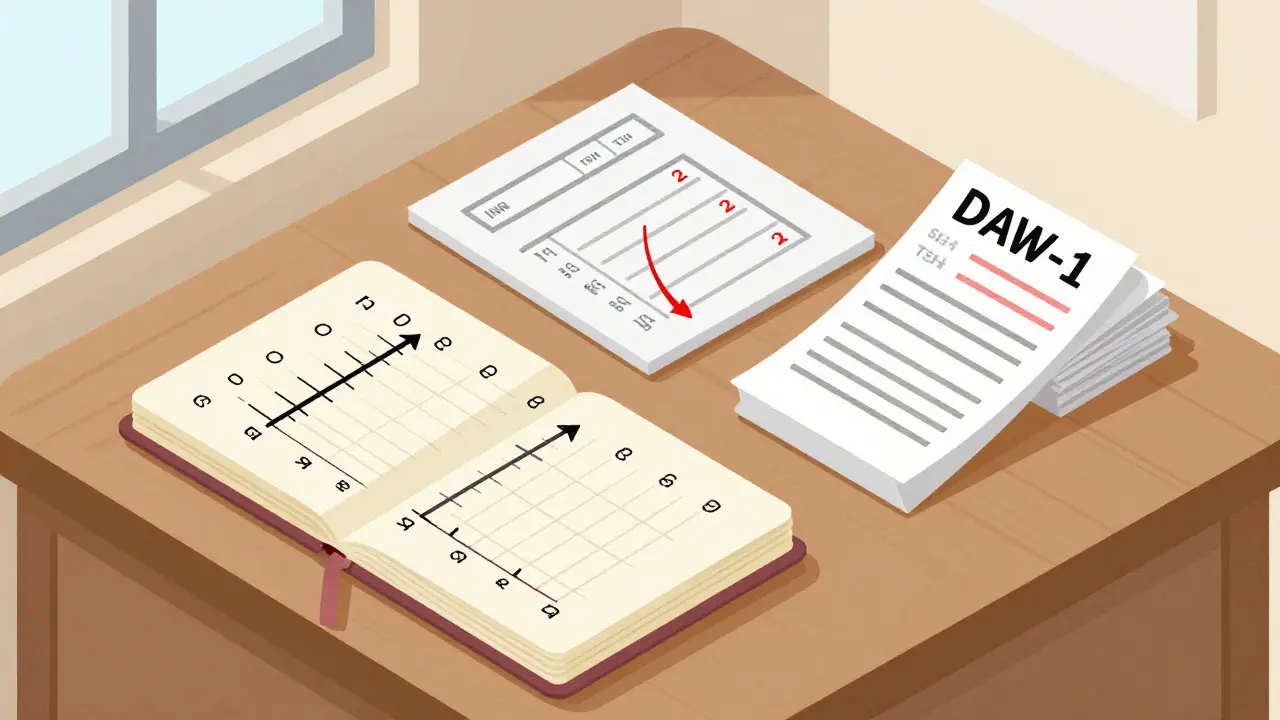
Ask for "Dispense as Written" (DAW-1)
When your doctor writes your prescription, they can add a code: DAW-1. This means "dispense as written" - no substitutions allowed. Pharmacists are legally required to follow this. It’s not a request. It’s a medical order. If your doctor refuses to write DAW-1, ask why. Is it because of cost? Insurance? Then ask them to document your medical necessity in your chart. You can even ask them to write: "Patient has documented therapeutic failure with generic alternatives. Brand required for clinical stability."Insurance Is the Real Hurdle
Most insurance plans won’t cover brand-name drugs if a generic exists - unless you fight for it. About 68% of commercial plans require prior authorization for brand-name meds. That means your doctor has to fill out paperwork explaining why you need it. Here’s the trick: the more proof you give your doctor, the easier it is for them to approve it. If you’ve already kept a symptom log or have lab results showing instability, hand them over. Many doctors say they skip writing the paperwork because it takes 15-30 minutes per patient - and they’re tired. Your documentation makes it faster for them. If your claim gets denied, appeal. About 72% of appeals are approved when you have solid medical evidence. Your doctor’s office can help with this - but only if you give them the tools.Know Your Medication’s Status
Not all drugs are created equal. Some have no generics at all - especially biologics and specialty drugs. If your medication is a biologic (like Humira or Enbrel), what you’re being offered isn’t a true generic - it’s a biosimilar. Those are less predictable. Ask your doctor if what you’re being switched to is a true generic or a biosimilar. Check the FDA’s Drugs@FDA database or the Orange Book to see your drug’s therapeutic equivalence code. If it’s rated AB1 or AB2, it’s considered interchangeable. If it’s rated BX, that means there’s not enough data to guarantee it works the same. That’s your leverage.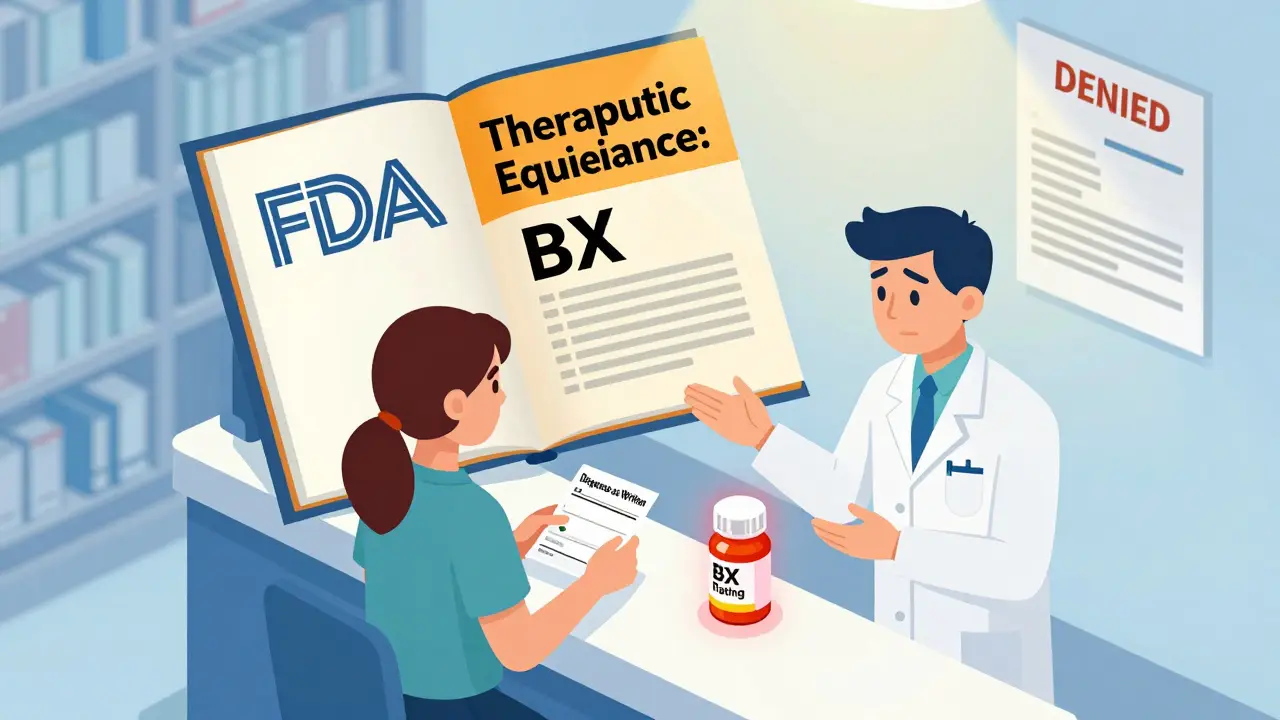
What to Do If Your Doctor Says No
If your doctor still refuses to keep you on brand, ask for a referral to a specialist - like an endocrinologist for thyroid meds, a neurologist for epilepsy, or a hematologist for blood thinners. Specialists are more likely to understand the risks of switching. You can also ask for a second opinion. It’s your right. And if your doctor dismisses your concerns without reviewing your records, it’s time to find one who listens.Real Stories, Real Results
One patient on Reddit shared that after switching from brand-name Lamictal to a generic, she had daily migraines and brain fog for six weeks. When she went back to the brand, it disappeared in three days. Her neurologist agreed to keep her on brand - after seeing her symptom log. Another man with atrial fibrillation had his INR spike to 6.5 after switching to generic warfarin. He was rushed to the ER. His cardiologist now refuses to let him switch again - even though his insurance keeps denying it. He appeals every time. He’s won every time. Your experience matters. Your body knows what works. Don’t let a formulary dictate your health.Final Tip: Don’t Wait Until It’s an Emergency
If you’re thinking about staying on brand, start preparing now. Don’t wait until you’re having a seizure, your blood won’t clot, or your thyroid levels are off the charts. Get your records in order. Talk to your doctor before your next refill. Bring your symptom journal. Know your drug’s rating. Make it easy for your doctor to say yes. You’re not being difficult. You’re being informed. And you deserve a medication that works - not just one that’s cheaper.Can I really stay on a brand-name drug if my insurance won’t cover it?
Yes. Insurance companies can deny coverage, but they can’t force you to take a drug you don’t tolerate. You can appeal the denial with medical documentation from your doctor. About 72% of appeals are approved when you show proof of therapeutic failure or allergic reaction. Your doctor can also write a letter of medical necessity. If all else fails, some drug manufacturers offer patient assistance programs that cover the cost of brand-name drugs for eligible patients.
Are generics always cheaper than brand-name drugs?
Usually, yes - but not always. Some brand-name drugs have co-pays as low as $10 under insurance plans, especially if the manufacturer offers coupons. Meanwhile, some generics - particularly those made overseas or from lesser-known manufacturers - can cost more due to supply issues or market shortages. Always check your pharmacy’s price list before assuming a generic is cheaper. Use tools like GoodRx to compare cash prices.
What if my pharmacist switches my medication without telling me?
In 47 states, pharmacists can substitute generics without telling you - unless your doctor writes "Dispense as Written" (DAW-1) on the prescription. Always check the label when you pick up your meds. If the name or color looks different, ask. If you were switched without consent, you have the right to return it and request the brand. Document the incident and inform your doctor. Some states require consent for substitution - check your state’s pharmacy laws.
Can I ask my doctor to prescribe the brand even if I’ve never had a problem with generics?
You can ask, but doctors are unlikely to agree without a medical reason. Insurance will almost certainly deny it. Doctors follow guidelines that prioritize cost-effective care. Unless you’ve had a documented issue - like a reaction, lab change, or symptom return - they’ll likely recommend the generic. If you’re concerned about future switching, ask your doctor to note "preferred brand due to patient preference and stability" in your chart. It won’t guarantee coverage, but it builds a record.
Is there a list of drugs where generics are known to cause problems?
Yes. The FDA and medical journals identify certain classes as high-risk for therapeutic differences: antiepileptics (like phenytoin, lamotrigine), thyroid hormones (levothyroxine), blood thinners (warfarin), psychiatric drugs (lithium, carbamazepine), and immunosuppressants (cyclosporine). These have narrow therapeutic windows - small changes in blood levels can lead to serious consequences. If you take any of these, be extra cautious about switching.
Lana Kabulova
January 22, 2026 AT 01:16I switched from brand Lamictal to a generic and started having seizures. Not joking. Three in six weeks. My neurologist didn’t believe me until I showed him my journal - 10/10 headaches, brain fog so thick I forgot my own phone number. Back on brand? Gone in 72 hours. This isn’t placebo. It’s pharmacology.
Patrick Roth
January 23, 2026 AT 15:08Oh please. The FDA’s bioequivalence standards are strict enough. You’re just one of those people who think your body is special because you read a Reddit thread. I’ve taken generics for 15 years - no issues. If you can’t handle a pill that’s 80% to 125% similar, maybe you shouldn’t be taking meds at all.
Rob Sims
January 25, 2026 AT 06:03Wow. So the solution to corporate greed is... asking nicely? You want doctors to fight your battles for you while you sit there with your symptom journal like it’s a Harry Potter scroll? Newsflash: insurance companies don’t care about your ‘experience.’ They care about profit margins. And your ‘DAW-1’? That’s a Band-Aid on a hemorrhage.
Real solution? Unionize. Sue the FDA. Burn down the pharmacy. Or just accept that capitalism turns your thyroid into a bargaining chip.
arun mehta
January 26, 2026 AT 05:48Dear friends, I am so moved by this post 🙏
As someone from India, where generics are the backbone of healthcare, I want to say: we must not forget that millions rely on them to survive. But I also hear your pain. Your body. Your truth.
Perhaps the answer lies not in ‘brand vs generic’ but in ‘personalized medicine’ - where testing, monitoring, and doctor-patient trust override formularies.
May your voice be heard. May your pills be stable. 🌿💊
Lauren Wall
January 27, 2026 AT 22:05My pharmacist switched my warfarin without telling me. INR was 7. I was in the ER. Now I check every bottle. Always. And I scream at the counter. No shame.
Kenji Gaerlan
January 28, 2026 AT 16:12bro why are you so mad about pills lmao just take the cheap one
Oren Prettyman
January 29, 2026 AT 19:23While the emotional appeal of this post is undeniably compelling, one must interrogate the underlying epistemological framework of patient-reported outcomes in clinical pharmacology. The anecdotal evidence presented, while vivid, lacks the statistical rigor required to invalidate population-level bioequivalence standards. Furthermore, the implicit assumption that individual physiological variance supersedes regulatory consensus introduces a dangerous precedent - one that could destabilize public health infrastructure predicated on cost-efficiency and scalability. The FDA’s 80–125% range is not arbitrary; it is the product of decades of meta-analyses, pharmacokinetic modeling, and peer-reviewed validation. To elevate subjective experience above this standard is not advocacy - it is anti-scientific narcissism.
Tatiana Bandurina
January 31, 2026 AT 03:35I’m not saying you’re wrong. I’m just saying… have you considered that your brain might be overinterpreting minor fluctuations because you’re anxious about the switch? I’ve seen this before. People fixate on a change - any change - and attribute it to the pill. It’s not always the drug. Sometimes it’s the stress of the change itself.
Lana Kabulova
February 1, 2026 AT 18:10So you think my seizures were ‘stress-induced’? My INR was stable for 3 years on brand. Then I switched. Then I had a stroke. You want me to blame my anxiety? Go read the Neurology study. Or better yet - try it on your thyroid.
Philip House
February 3, 2026 AT 11:38Generic manufacturers are Chinese state-owned enterprises. You think they give a damn about your thyroid? They’re shipping pills made in factories with no inspectors, no quality control, no accountability. This isn’t medicine - it’s geopolitical warfare disguised as cost-saving. Wake up.
Akriti Jain
February 5, 2026 AT 09:19They’re testing the generics on us so they can perfect the mind-control serum for the next phase. That’s why the inactive ingredients change every time - it’s not about cost, it’s about tracking. You think your symptom log is safe? They’re logging your seizures, your INR spikes, your migraines… all to build the algorithm. 😈👁️
Mike P
February 6, 2026 AT 13:12My cousin’s wife took a generic for her epilepsy and started seeing ghosts. Not metaphorically. She called 911 because she swore there was a man in the corner whispering in Latin. Turned out it was the dye. FD&C Red No. 40. They don’t even tell you. You think that’s normal? Nah. This is a scam. And your doctor’s probably in on it.
Jasmine Bryant
February 7, 2026 AT 18:46Just wanted to add - if you’re on levothyroxine, try to stick with the same generic manufacturer. Even within generics, there’s variation. I switched from one generic to another and my TSH went from 2.1 to 8.7. Same pill, different maker. Always check the label for the manufacturer name. And keep a log - even if you think it’s dumb. It saved me.
Liberty C
February 8, 2026 AT 12:53How quaint. You think your suffering is unique? You think your symptom journal is a masterpiece of human resilience? Let me tell you - I’ve read 378 posts just like yours. You’re not brave. You’re performative. You’re not fighting for your health - you’re curating your trauma for the algorithm. The real tragedy? You believe your pain is exceptional. It’s not. It’s just… commodified.