That bottle of Ibuprofen is a widely used over-the-counter nonsteroidal anti-inflammatory drug (NSAID) for pain relief sitting in your bathroom cabinet feels harmless. It’s not a prescription. You can grab it at the grocery store next to the cereal. But treating these medications like candy is one of the most common-and dangerous-mistakes people make with their health. Every year, thousands of otherwise healthy adults end up in the emergency room because they pushed past the recommended dose or ignored the warning label.
You are likely here because you have pain. Maybe it’s a stiff back, a throbbing headache, or joint inflammation that makes moving difficult. You want relief, and fast. But understanding how Naproxen is an NSAID medication often used for long-lasting pain relief due to its longer half-life and ibuprofen actually work inside your body changes how you should take them. This isn’t just about reading the fine print; it’s about knowing when these drugs help you and when they start hurting you.
How NSAIDs Work: More Than Just Pain Relief
To understand why you need to be careful, you first need to know what these pills are doing. Both ibuprofen and naproxen belong to a class of drugs called Nonsteroidal Anti-Inflammatory Drugs, or NSAIDs. They don’t just block pain signals. They attack the root cause of certain types of pain: inflammation.
Your body produces chemicals called prostaglandins when you get injured or sick. These chemicals trigger pain, swelling, and fever. NSAIDs work by blocking an enzyme called cyclooxygenase (COX). Think of COX as the factory manager that tells your body to produce those inflammatory chemicals. When you take an NSAID, you shut down that factory.
The problem? That same enzyme also protects your stomach lining and helps regulate blood flow to your kidneys. By blocking it everywhere, you get pain relief, but you also strip away natural protections. This is why stomach ulcers and kidney issues are such serious risks. Unlike acetaminophen (Tylenol), which works primarily in the brain to raise your pain threshold, NSAIDs work throughout your entire system. That systemic effect is powerful, but it comes with a higher price tag in terms of potential side effects.
Ibuprofen vs. Naproxen: Choosing the Right Tool
If you stand in the pharmacy aisle, you’ll see dozens of brands. Advil, Motrin, Nurofen-they’re all ibuprofen. Aleve is naproxen. While they both stop pain, they behave differently in your body. Knowing the difference helps you pick the right one for your specific situation.
| Feature | Ibuprofen | Naproxen Sodium |
|---|---|---|
| Standard Dose | 200 mg per tablet | 220 mg per tablet |
| Dosing Frequency | Every 4-6 hours | Every 8-12 hours |
| Maximum Daily Limit (OTC) | 1,200 mg (6 tablets) | 660 mg (3 tablets) |
| Half-Life | 1.8-2 hours | 12-17 hours |
| Best For | Short-term, acute pain (headaches, cramps) | All-day coverage (arthritis, muscle strain) |
| Cardiovascular Risk Profile | Moderate risk | Potentially lower risk among NSAIDs |
Ibuprofen leaves your system quickly. Its half-life is only about two hours. This means it hits hard and fast, making it great for a sudden headache or menstrual cramps. However, because it wears off so quickly, you might be tempted to take more doses throughout the day. That is where people slip up. Hitting the 1,200 mg daily limit happens faster than you think.
Naproxen, on the other hand, lingers. With a half-life of up to 17 hours, one dose can keep pain at bay for most of the day. This makes it excellent for chronic conditions like arthritis or a pulled muscle that hurts constantly. Because you take fewer pills, the total chemical load on your stomach over 24 hours might be different, though naproxen still carries significant gastrointestinal risks. Recent FDA analyses suggest naproxen may have a slightly better cardiovascular safety profile than ibuprofen, but both carry warnings for heart attack and stroke risk.

The Hard Limits: Dosage Guidelines You Must Follow
The biggest danger with over-the-counter meds is the illusion of safety. "It’s available without a prescription" sounds like "it’s safe." It is not. The limits exist for a reason. Exceeding them doesn’t give you extra pain relief; it exponentially increases your risk of organ damage.
Here are the strict maximums for adults using over-the-counter formulations:
- Ibuprofen: Do not exceed 1,200 mg in 24 hours. That is six 200 mg tablets. If you take two every four hours, you hit the limit after three doses. Wait longer between doses if you need to.
- Naproxen: Do not exceed 660 mg in 24 hours. That is three 220 mg tablets. Take one every 8 to 12 hours.
- Acetaminophen: Do not exceed 3,000 mg in 24 hours. Many combination cold medicines contain this, so you can accidentally overdose if you mix products.
Never take ibuprofen and naproxen together. They work via the same mechanism, so combining them does not provide synergistic benefits. Instead, it doubles your risk of bleeding, kidney failure, and stomach ulcers without giving you significantly more pain relief. If one isn’t working, switching to acetaminophen is a safer alternative, provided you do not have liver issues.
Who Should Avoid NSAIDs Completely?
Some people should never touch an NSAID unless a doctor explicitly says otherwise. The risks for these groups are not theoretical; they are immediate and severe.
If you have a history of stomach ulcers or gastrointestinal bleeding, NSAIDs are playing Russian roulette with your digestive tract. They inhibit the prostaglandins that keep your stomach lining thick and protected. Without that shield, stomach acid eats through the tissue. Studies show NSAID users are 2 to 4 times more likely to develop ulcers than non-users.
Kidney disease is another major red flag. Your kidneys rely on blood flow to filter waste. NSAIDs constrict the blood vessels leading to the kidneys. In healthy people, this is usually manageable. In someone with compromised kidney function, or even in someone who is dehydrated, this can lead to acute kidney injury. A case reported in the FDA Adverse Event Reporting System involved a 68-year-old who developed acute kidney failure after taking max-dose naproxen for just two weeks.
Heart patients need to be extremely cautious. The FDA issued strengthened warnings in 2020 stating that NSAIDs increase the risk of heart attack and stroke. This risk can appear within the first weeks of use. If you have high blood pressure, heart failure, or established cardiovascular disease, talk to your cardiologist before taking a single pill. The American Heart Association recommends avoiding NSAIDs if possible for these patients.
Pregnant women must also avoid NSAIDs, especially after 20 weeks of pregnancy. Recent FDA announcements highlight that NSAID use later in pregnancy can cause low amniotic fluid and kidney problems in the fetus. Acetaminophen is generally considered the safer option during pregnancy, but always consult your OB-GYN.
Silent Risks: Interactions and Long-Term Use
You might be taking other medications that turn a safe dose of ibuprofen into a dangerous cocktail. The most critical interaction involves aspirin. Many older adults take low-dose aspirin (81 mg) daily to prevent heart attacks or strokes. NSAIDs like ibuprofen can interfere with aspirin’s ability to keep your blood from clotting. If you take both, take the aspirin first, wait at least 30 minutes, and then take the ibuprofen. Or, switch to acetaminophen for pain relief to avoid the interaction entirely.
Blood thinners like warfarin, apixaban, or rivaroxaban are another major concern. Adding an NSAID to these medications drastically increases your risk of internal bleeding. A minor cut could become uncontrollable, or worse, you could experience a gastrointestinal bleed without obvious external signs.
What about long-term use? The rule of thumb from organizations like the Mayo Clinic is simple: use the lowest effective dose for the shortest amount of time. If you find yourself needing NSAIDs for more than 10 days, you have a problem that requires medical attention, not more pills. Chronic pain managed solely with OTC meds is a ticking time bomb for kidney and stomach damage. Doctors may prescribe proton pump inhibitors (like omeprazole) to protect your stomach if long-term NSAID use is medically necessary, but this is a decision for a professional, not a DIY strategy.
Safer Alternatives and Practical Tips
Before reaching for the bottle, consider non-pharmacological options. For muscle pain, heat or ice packs can reduce inflammation without any systemic side effects. Gentle stretching or physical therapy addresses the root cause rather than masking the symptom. Topical NSAIDs, like diclofenac gel, are gaining popularity because they deliver the drug directly to the joint with minimal absorption into the bloodstream. This reduces the risk of heart and stomach issues while still providing local relief.
If you must take oral NSAIDs, follow these practical steps to minimize harm:
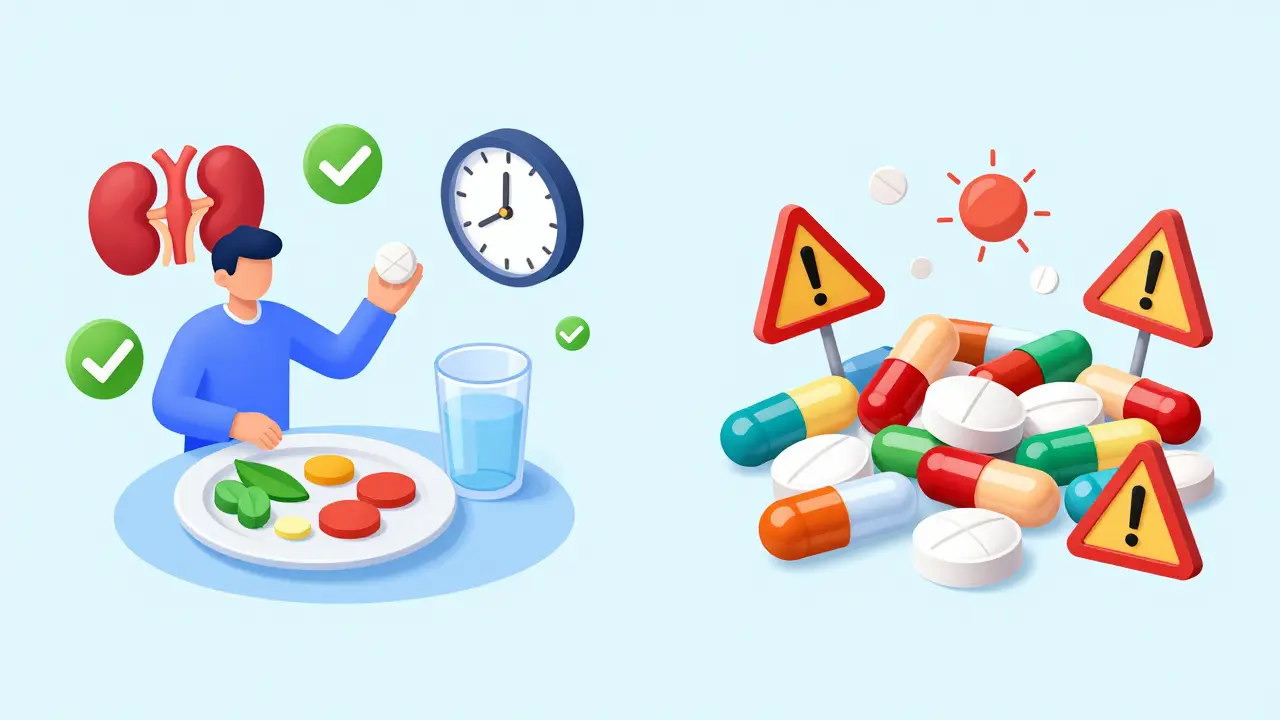
- Take with food: Never take an empty-stomach NSAID. Food buffers the stomach acid and reduces irritation.
- Stay hydrated: Dehydration stresses the kidneys. Drinking water helps your kidneys process the medication safely.
- Avoid alcohol: Alcohol irritates the stomach lining and increases bleeding risk. Mixing alcohol with NSAIDs is a recipe for ulcers.
- Read labels carefully: Check cold and flu medications. Many contain acetaminophen or ibuprofen. Double-dosing is a common cause of accidental overdose.
Pain is a signal. Ignoring it with heavy-handed medication can hide serious underlying conditions. If your pain persists beyond a few days, worsens, or is accompanied by other symptoms like fever, unexplained weight loss, or swelling, see a doctor. Don’t let the convenience of the pharmacy aisle replace professional medical advice.
Can I take ibuprofen and naproxen together for stronger pain relief?
No, you should never take ibuprofen and naproxen together. They are both NSAIDs and work in the same way. Combining them does not provide significantly better pain relief but drastically increases your risk of stomach bleeding, kidney damage, and cardiovascular events. Choose one or the other based on your needs, or alternate with acetaminophen if appropriate.
Is naproxen safer for the heart than ibuprofen?
Evidence suggests that naproxen may have a slightly lower cardiovascular risk compared to other NSAIDs like ibuprofen or celecoxib. However, all NSAIDs carry an increased risk of heart attack and stroke. If you have existing heart disease, high blood pressure, or other risk factors, you should avoid NSAIDs entirely unless specifically directed by your cardiologist.
How long can I take over-the-counter NSAIDs safely?
You should not use over-the-counter NSAIDs for more than 10 days for pain or 3 days for fever without consulting a healthcare provider. Long-term use increases the risk of gastrointestinal ulcers, kidney damage, and cardiovascular issues. If you need pain relief beyond this window, you likely have an underlying condition that requires medical evaluation and possibly a different treatment plan.
Can NSAIDs cause kidney damage in healthy people?
Yes, although it is less common in healthy individuals, NSAIDs can cause kidney damage, especially if taken in high doses, for prolonged periods, or if you are dehydrated. NSAIDs reduce blood flow to the kidneys. In rare cases, this can lead to acute kidney injury or chronic kidney disease. Stay hydrated and stick to the minimum effective dose to mitigate this risk.
Does taking NSAIDs with food completely prevent stomach upset?
Taking NSAIDs with food significantly reduces the risk of stomach irritation and ulcers, but it does not eliminate it entirely. Food acts as a buffer against stomach acid, but the medication still affects the protective lining of your stomach. If you have a history of ulcers or frequent heartburn, you should avoid NSAIDs or speak to your doctor about gastroprotective medications.