When you're going through chemotherapy, your body isn't just fighting cancer-it's also battling side effects that make eating feel impossible. Nausea hits hard. Food smells wrong. Your stomach rejects even your favorite meals. And yet, your body needs more calories and protein than ever to keep you strong enough to finish treatment. This isn't about dieting or losing weight. It's about survival. And the right food choices can mean the difference between staying on schedule with your treatment or having to delay it.
Why Eating More Matters During Chemotherapy
Most people think of cancer treatment as something that happens in the clinic-infusions, scans, pills. But what happens in your kitchen matters just as much. Chemotherapy doesn’t just kill cancer cells. It damages healthy ones too, especially those in your gut, mouth, and immune system. That’s why your body needs extra fuel. According to the European Society for Clinical Nutrition and Metabolism (ESPEN), cancer patients on chemo need 1.2 to 2.0 grams of protein per kilogram of body weight each day. That’s nearly double what a healthy adult needs. Without enough protein, your muscles break down. Your immune system weakens. Recovery slows. And your treatment may be delayed. Calories matter too. While a healthy person might need about 20-25 calories per kilogram of body weight daily, chemo patients need 25-30. That’s not a suggestion-it’s a medical requirement. The National Cancer Institute found that patients who meet these targets are 31% less likely to have treatment delays due to malnutrition. This isn’t about being “good” at eating. It’s about giving your body what it needs to heal.Beat Nausea With These 5 Food Rules
Nausea is one of the most common and stubborn side effects of chemotherapy. It’s not just feeling queasy-it’s the kind of nausea that makes you gag at the smell of coffee or the sight of toast. The good news? You can manage it with smart choices.- Avoid greasy, fried, or heavy foods. These are the biggest triggers. A 2023 study by the Academy of Nutrition and Dietetics found that 73% of patients felt worse after eating fried chicken, pizza, or buttery pasta. Stick to baked, grilled, or steamed options.
- Drink fluids between meals, not with them. Filling your stomach with liquid during meals pushes food around and makes nausea worse. Sip water, ginger tea, or electrolyte drinks an hour before or after eating.
- Choose cold or room-temperature foods. Hot foods release stronger odors. Cold meals like yogurt, chilled fruit, or sandwiches are easier to tolerate. Many patients swear by frozen grapes or chilled watermelon-they’re refreshing, hydrating, and gentle on the stomach.
- Steer clear of strong smells. If the smell of onions, garlic, or coffee makes you sick, skip it. Use plastic utensils if metal tastes bitter. Try eating in a well-ventilated room or outdoors if you can.
- Try ginger. Ginger chews, ginger tea, or even ginger ale (with real ginger) helped 287 patients on Cancer Survivors Network reduce nausea. It’s not magic, but it’s science-backed.
Small Meals, Big Impact
Forget three big meals a day. That’s the old way. During chemo, you need five to six small meals or snacks every few hours. Each should be around 300-400 calories and packed with protein. Why? Large meals stretch your stomach, which triggers nausea. Small, frequent meals keep your blood sugar steady and your stomach calm. Think of it like refueling a car-not by dumping a whole tank at once, but by topping it up every few miles. A peanut butter cracker (220 calories, 8g protein), a hard-boiled egg (70 calories, 6g protein), or a handful of trail mix (280 calories, 7g protein) can make a difference. Keep snacks visible-on the counter, in your bag, by your bed. When you feel even a little hungry, eat. Don’t wait.Protein Is Non-Negotiable
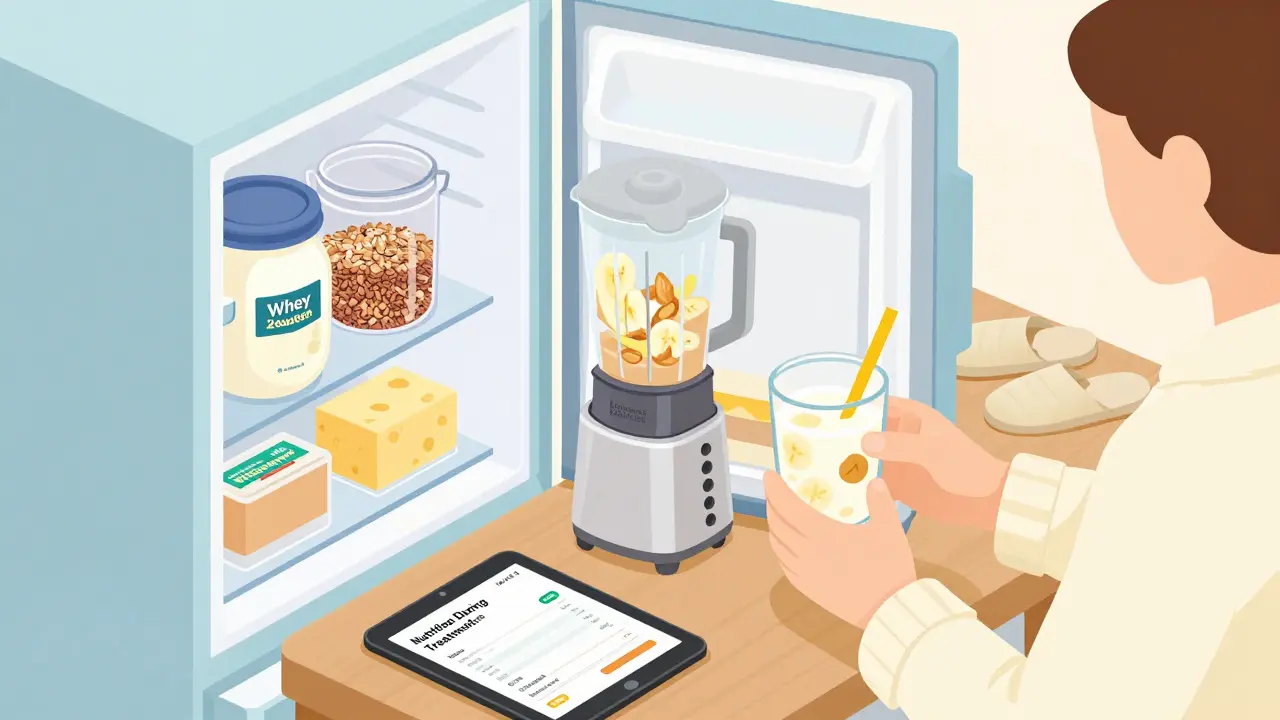
Your body is breaking down muscle to survive. You need to rebuild it. Protein isn’t optional. It’s your armor. If you weigh 70 kg (154 lbs), aim for 84-140 grams of protein daily. That sounds like a lot, but it’s doable.- One cup of Greek yogurt: 20g protein
- Two eggs: 12g
- 3 oz chicken or fish: 21g
- One scoop of whey or plant-based protein powder: 20-25g
- 1/4 cup peanut butter: 8g
Food Safety Is Part of Your Treatment
Chemotherapy weakens your immune system. That means you’re more vulnerable to foodborne illness. The rules aren’t the same as for healthy people.- No raw meat, fish, or eggs. Even rare steak or runny yolks can carry Salmonella or Listeria. Eggs must be cooked until the yolk is firm (160°F/71°C).
- Avoid homemade mayonnaise, Caesar dressing, or eggnog. These often contain raw eggs. Use store-bought versions-they’re pasteurized.
- Wash all produce. Even if it’s pre-washed. Scrub apples, carrots, lettuce. Don’t eat anything with visible mold.
- Reheat leftovers to steaming hot. Don’t just warm them up. Heat them all the way through.
What to Do When You Just Can’t Eat
Some days, nothing sounds good. That’s normal. But you still need to get calories and protein in somehow.- Try smoothies with full-fat milk, protein powder, nut butter, and frozen fruit.
- Sip nutritional drinks like Boost or Glucerna if you can afford them. If not, make your own with milk, oats, banana, and peanut butter.
- Use high-calorie toppings: add cheese to soup, butter to mashed potatoes, honey to oatmeal.
- Keep a food journal. Write down what you ate, even if it’s just a spoonful of yogurt. It helps you see progress.
What Not to Do
There are myths out there that can hurt you.- Don’t cut calories to “starve” cancer. That’s dangerous. The ESPEN guidelines say restricting food during chemo increases treatment toxicity by 37% and delays recovery by two weeks.
- Don’t rely on “clean eating” or detox diets. Your body isn’t trying to “detox.” It’s trying to survive. Whole grains, fruits, and vegetables are great-but not if they make you nauseous. Switch to white rice, pasta, or toast if your stomach can’t handle fiber.
- Don’t wait until you’re hungry to eat. Hunger disappears during chemo. Eat on a schedule, even if you’re not hungry.
Real Stories, Real Results
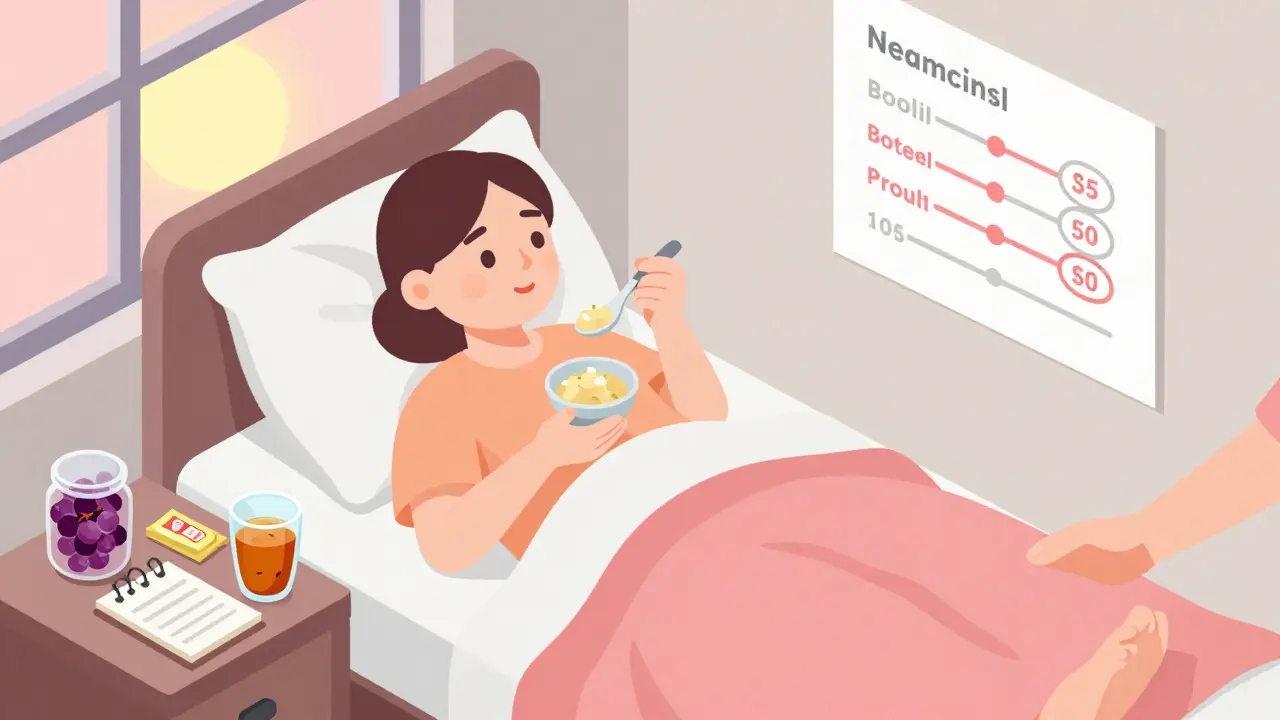
On Reddit’s r/cancer community, 78% of patients said protein shakes kept them going. One woman in Ohio shared that she blended full-fat yogurt, peanut butter, honey, and a banana every morning. Even on her worst days, she drank half. She finished all 12 rounds of chemo without losing weight. Another man in Australia kept frozen grapes in the freezer. When his mouth hurt from mucositis, he sucked on them. They cooled the pain and gave him something to eat without chewing. And on PatientPower.info, 42% of patients couldn’t afford commercial supplements. So they made their own: oatmeal cooked in whole milk with honey and ground flaxseed. It cost less than $1 per serving and gave them 300 calories and 12g of protein.Support Is Out There
You don’t have to do this alone. The American Cancer Society’s helpline answered over 12,000 nutrition questions last month. Their “Road to Recovery” program connects patients with local dietitians who specialize in cancer care. Most major cancer centers now have these experts on staff-68% of NCI-designated centers do, up from 42% in 2018. The National Cancer Institute’s free “Nutrition During Treatment” app, launched in September 2023, helps you track calories, protein, and nausea triggers. Over 42,000 people downloaded it in six months.What’s Next
The future of chemo nutrition is personal. Researchers at Memorial Sloan Kettering are testing whether your genes affect how you respond to certain foods. AI-powered meal planners are being tested in 15 cancer centers right now. But for now, the basics still work: eat small, eat often, prioritize protein, avoid triggers, and never starve yourself. This isn’t about being perfect. It’s about being persistent. Even if you eat only half of what you’re supposed to, you’re still helping your body fight. Every bite counts.Can I still eat fruits and vegetables during chemotherapy?
Yes-but be smart. Wash all produce thoroughly. If you have mouth sores or nausea, choose softer options like cooked carrots, applesauce, or canned peaches. Avoid raw, crunchy veggies like broccoli or kale if they trigger nausea. Fiber intake should be lowered to 10-15g per day if you’re having diarrhea or severe nausea.
Why am I losing weight even though I’m eating?
Chemotherapy changes how your body uses energy. Even if you’re eating, your metabolism speeds up, and your body breaks down muscle for fuel. You may need more protein and calories than you think. Track your intake with a simple app or notebook. If you’re still losing weight after two weeks, talk to your oncology dietitian. You may need a higher-calorie supplement or medical nutrition support.
Are protein shakes better than real food during chemo?
Not necessarily-but they’re easier. Real food is ideal, but nausea, taste changes, or fatigue can make eating solid food hard. Protein shakes (homemade or commercial) are a reliable way to get calories and protein without the stress of chewing or strong smells. Use them as a supplement, not a replacement. Try blending them with real ingredients like banana, oats, or peanut butter to make them more nutritious.
Should I take omega-3 supplements during chemo?
Yes, if your doctor approves. ESPEN’s 2023 guidelines recommend 1-2 grams of EPA/DHA daily for patients losing weight. Studies show omega-3s improve appetite in 62% of patients and help gain back 2.3kg on average. Look for fish oil or algae-based supplements. Don’t take them without checking with your care team, especially if you’re on blood thinners.
How do I know if I’m getting enough protein?
Use this simple check: Multiply your weight in kilograms by 1.5. That’s your daily protein goal in grams. For example, if you weigh 65kg, aim for 97g of protein. Track your meals for a day using a free app like MyFitnessPal. If you’re under your target, add a protein shake or extra cheese, eggs, or yogurt to your day. Ask your dietitian to review your intake every two weeks.
Indra Triawan
January 7, 2026 AT 10:50It's wild how the body just... gives up sometimes. I remember eating a spoonful of peanut butter at 3 a.m. just to feel like I wasn't failing. No one tells you that survival looks like crying over a banana.
It's not about willpower. It's about showing up for yourself when everything else has checked out.
Mukesh Pareek
January 8, 2026 AT 04:33From a clinical nutrition standpoint, the ESPEN guidelines are empirically sound, but the practical implementation is fraught with bioenergetic inefficiencies. The 1.2–2.0 g/kg protein threshold assumes optimal gastrointestinal absorption, which is often compromised due to mucosal atrophy induced by cytotoxic agents.
Additionally, the reliance on caloric density without addressing nutrient bioavailability-particularly micronutrient cofactors like zinc and vitamin D-creates a false sense of metabolic adequacy. The real issue is not volume, but mitochondrial resilience.
Ashley S
January 9, 2026 AT 21:23Ugh. I hate when people act like this is some heroic diet hack. My cousin did chemo and ate nothing but ice cream and cookies for months. She’s fine. You don’t need to be a nutrition ninja. Just eat what doesn’t make you want to die.
Stop gaslighting people into feeling guilty for not eating quinoa smoothies.
Jeane Hendrix
January 10, 2026 AT 00:52Just wanted to say the part about cold foods? LIFE CHANGER. I couldn’t stand the smell of anything warm after round 2. Chilled yogurt with honey and a sprinkle of cinnamon? My new best friend.
Also, the protein shake idea? I made one with oat milk, flax, PB, and a frozen peach. Tasted like dessert. Ate it while lying down. Didn’t feel guilty. It worked.
Thanks for not making this about perfection. Just… something. Anything. That’s enough.
Rachel Wermager
January 11, 2026 AT 13:05Let’s be real-most of this is common sense. But the 287-patient ginger study? That’s not even peer-reviewed. And ‘protein shakes as a lifeline’? That’s anecdotal. Where’s the RCT data?
Also, why is everyone assuming patients have access to blenders, refrigerators, or organic peanut butter? This reads like a Whole Foods pamphlet for people who’ve never missed a meal.
Katelyn Slack
January 13, 2026 AT 08:14thank you for this. i didn’t know i was supposed to eat even if i wasn’t hungry. i thought i was failing because i only ate half a bagel. turns out i was doing okay.
also the frozen grapes thing? genius. i’ve been keeping a bag in the freezer since last week. it’s the only thing i can tolerate. i feel like a weirdo sucking on grapes like a toddler but i don’t care.
Venkataramanan Viswanathan
January 15, 2026 AT 01:36In India, many patients rely on homemade khichdi-rice and lentils cooked soft with turmeric and ghee. It’s bland, digestible, and provides both carbs and protein. Add a spoon of yogurt for probiotics. No blender needed. No cost. Just tradition.
Western nutrition advice often forgets that survival doesn’t require fancy shakes. Sometimes it just needs warmth, simplicity, and a little love in the pot.
Saylor Frye
January 16, 2026 AT 04:36Wow. So now we’re supposed to feel guilty for not blending our own high-protein, low-glycemic, organic, cold-pressed, anti-inflammatory, chemo-adaptogenic smoothie? What’s next? A 12-step program for eating 1.7g/kg of pea protein?
I’m just here to survive. Not to become a nutrition influencer.
Molly McLane
January 17, 2026 AT 11:17I love how this doesn’t shame people for eating junk. My mom ate nothing but grilled cheese and soda for two months. She finished treatment. She’s alive. That’s the win.
Also-yes to the food journal. Even if you write ‘ate 3 crackers and cried.’ That counts. You showed up. That’s the whole point.
Katie Schoen
January 18, 2026 AT 11:55Okay but the frozen grapes? That’s the most beautiful thing I’ve read all week. I’m printing this out and taping it to my fridge.
Also, I’m stealing the ‘refuel like a car’ metaphor. My therapist said I need to stop being hard on myself. Turns out, eating a handful of trail mix while watching Netflix counts as self-care. Who knew?
Beth Templeton
January 19, 2026 AT 01:46Protein shakes aren’t magic. They’re just easier than chewing.
Also ginger works. Stop overthinking it.
Tiffany Adjei - Opong
January 19, 2026 AT 21:48Everyone’s acting like this is revolutionary. I’ve been doing chemo since 2018. The real problem? No one tells you how lonely it is to eat alone. You’re not just fighting nausea. You’re fighting the silence of a kitchen that used to smell like family.
And yeah, the protein targets? Unrealistic if you’re on Medicaid and your fridge is empty. This guide is great-if you have a kitchen, a blender, and a support system.
What about the rest of us?