When someone has liver disease, taking opioids isn’t just about managing pain-it’s a balancing act with real risks. The liver doesn’t just filter toxins; it breaks down most opioids. When it’s damaged, that process slows down, and the drugs build up in the body. What’s meant to relieve pain can turn into a silent threat: respiratory depression, confusion, even overdose. This isn’t theoretical. Studies show opioid side effects rise sharply in people with cirrhosis or advanced fatty liver disease.
How the Liver Normally Processes Opioids
Most opioids are broken down in the liver by enzymes called cytochrome P450 and through a process called glucuronidation. These systems turn the drug into smaller pieces that the kidneys can flush out. For example, morphine gets converted into two main metabolites: morphine-6-glucuronide (M6G), which helps with pain relief, and morphine-3-glucuronide (M3G), which can cause seizures and confusion. Oxycodone is handled by CYP3A4 and CYP2D6 enzymes. Fentanyl, methadone, and buprenorphine follow different paths, but all rely on liver function.
In a healthy person, this system works smoothly. But in liver disease, those enzymes don’t work as well. The liver can’t keep up. The result? The drug stays in the bloodstream longer than it should. Half-lives stretch. Peak concentrations climb. And the risk of toxicity goes up-even if the dose hasn’t changed.
What Happens When the Liver Fails
People with cirrhosis or severe non-alcoholic fatty liver disease (NAFLD) often have up to 70% less liver function. That means opioids aren’t cleared the way they should be. For morphine, plasma clearance drops by half in advanced liver disease. The half-life jumps from around 2-3 hours to over 10 hours. That’s why someone with cirrhosis might feel drowsy or confused after taking a standard dose-because their body is still processing yesterday’s pill.
Oxycodone behaves similarly. In healthy adults, it clears in about 3.5 hours. In severe liver impairment, that stretches to 14 hours on average-with some cases lasting over 24 hours. Maximum concentration in the blood can spike by 40%. That’s not a small change. It’s enough to push someone from pain relief into overdose territory.
Even worse, alcohol-related liver disease changes enzyme activity differently. CYP2E1, which breaks down alcohol, becomes overactive. That can make some opioids break down too fast, leading to unpredictable effects. Meanwhile, CYP3A4 activity drops in NAFLD and diabetes, making drugs like oxycodone stick around longer. So two people with liver disease might need totally different dosing based on what caused their liver damage.
Which Opioids Are Riskiest?
Not all opioids are created equal when the liver is failing. Morphine is one of the riskiest. Because it depends heavily on glucuronidation-a process that falters early in liver disease-it’s prone to building up toxic metabolites like M3G. Even small doses can lead to neurological side effects.
Methadone is another problem. It’s metabolized by multiple CYP enzymes, so it’s harder to predict how it will behave in liver disease. There are no clear dosing guidelines. Some doctors avoid it entirely in advanced cases.
Oxycodone is commonly prescribed, but in severe liver impairment, experts recommend starting at 30% to 50% of the usual dose. Even then, patients need close monitoring. The same goes for hydrocodone and codeine-both are converted into active forms by liver enzymes, and that conversion can become erratic.
On the other hand, buprenorphine and fentanyl may be safer options. Buprenorphine is partly cleared by the liver but has a ceiling effect-it doesn’t cause respiratory depression as easily at higher doses. Fentanyl, when given as a patch, bypasses the liver’s first-pass metabolism. That means less strain on the liver and more predictable blood levels. Transdermal delivery is often preferred in patients with moderate to severe liver disease.
Why Dosing Isn’t One-Size-Fits-All
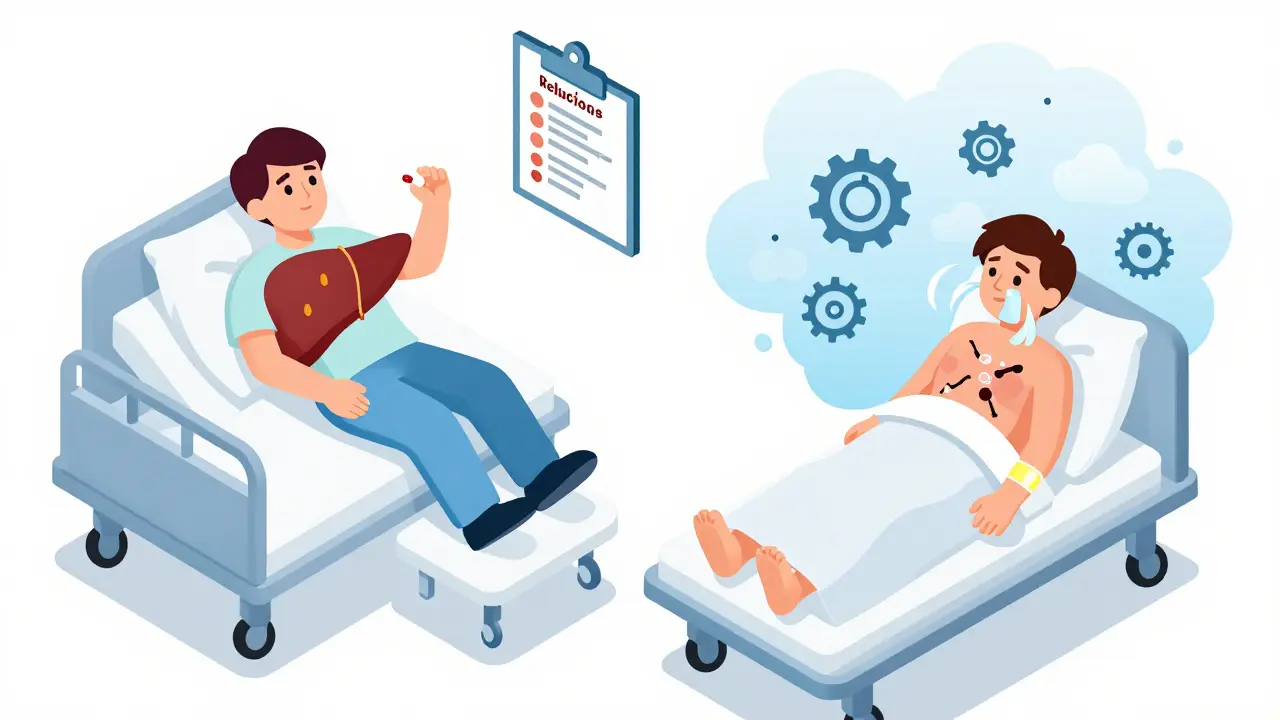
You can’t just reduce the dose and call it good. You have to adjust both the amount and how often it’s given. In early liver disease, lowering the dose while keeping the same dosing schedule might be enough. But in advanced cirrhosis, you need to stretch out the intervals. Giving morphine every 4 hours when the body takes 12 hours to clear it? That’s asking for trouble.
Guidelines from pain and liver societies agree: start low, go slow. For morphine, reduce the initial dose by 50% in mild liver disease and by 75% in severe cases. For oxycodone, begin at 30-50% of the normal starting dose. Always use the lowest effective dose. And never assume a patient’s tolerance from past use applies-liver disease changes how the body responds.
Long-Term Risks: More Than Just Overdose
Chronic opioid use doesn’t just burden the liver-it can make liver damage worse. Studies now show opioids disrupt the gut microbiome. That leads to bacterial toxins leaking into the bloodstream, triggering inflammation in the liver. This gut-liver axis problem can accelerate fibrosis in people with NAFLD or hepatitis.
There’s also evidence that long-term opioid use may raise liver enzyme levels, even in people without prior liver disease. It’s not clear if opioids directly poison liver cells, but the inflammation they cause can worsen existing damage. In someone with early cirrhosis, that’s enough to push them toward decompensation-fluid buildup, confusion, bleeding.
And then there’s the risk of dependency. People with chronic pain and liver disease often get trapped in a cycle: more pain → more opioids → more liver stress → worse pain. Breaking that cycle requires careful coordination between pain specialists, hepatologists, and addiction services.
What Should You Do?
If you or someone you care for has liver disease and needs opioids:
- Start with the lowest possible dose. Don’t follow standard pain protocols.
- Choose opioids that bypass the liver when possible. Transdermal fentanyl or buprenorphine patches are often better than pills.
- Avoid morphine in advanced disease. It’s a high-risk choice.
- Monitor closely. Watch for drowsiness, slurred speech, slow breathing, or confusion. These aren’t just side effects-they’re warning signs.
- Check liver function regularly. Even small changes in bilirubin or albumin can mean it’s time to adjust the opioid.
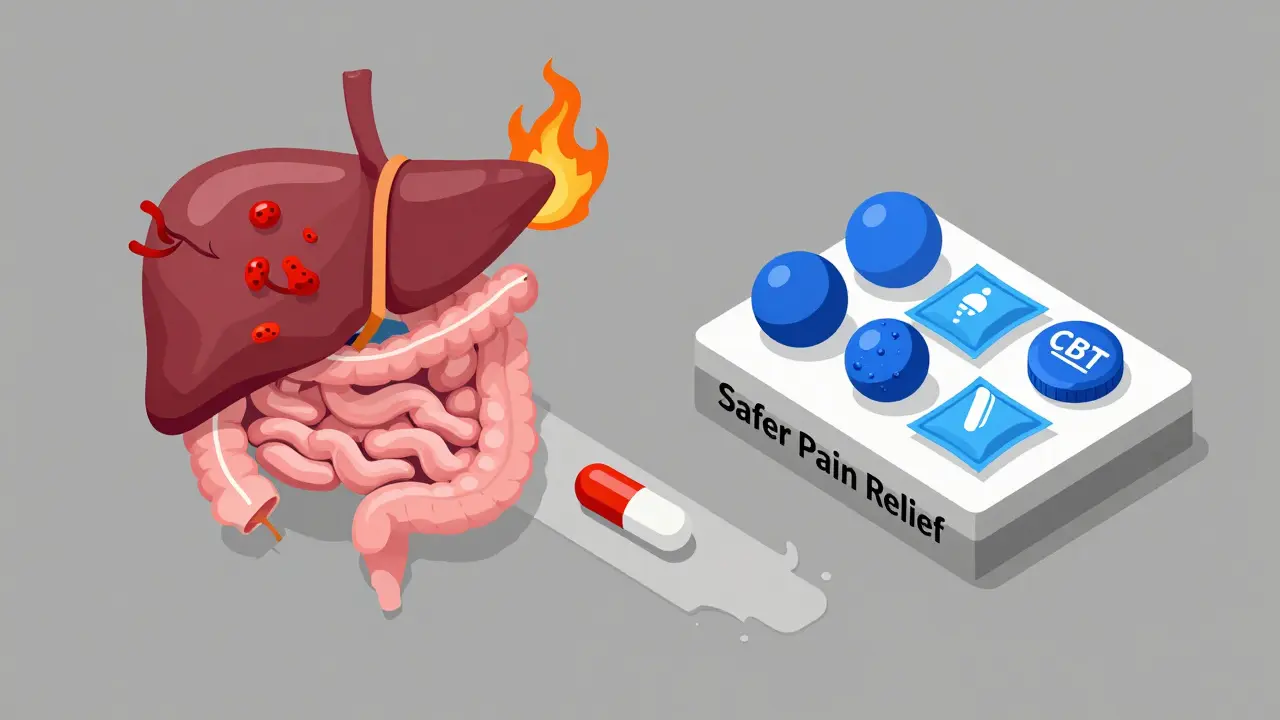
- Ask about alternatives. Non-opioid pain relievers, nerve blocks, physical therapy, or cognitive behavioral therapy may be safer and just as effective.
There’s no perfect opioid for liver disease. But there are smarter choices. The goal isn’t to avoid pain relief-it’s to get it without risking overdose, confusion, or worsening liver damage.
What’s Still Unknown
Despite years of use, we still lack solid dosing guidelines for many opioids in liver disease. Fentanyl, buprenorphine, and tramadol have limited data. Research hasn’t yet quantified how much risk each opioid adds to different types of liver disease-alcoholic vs. viral vs. fatty liver. And we don’t know how genetic differences in enzyme activity affect opioid metabolism in people with cirrhosis.
What’s clear is this: the liver isn’t just a filter. It’s a chemical factory. When it’s damaged, every drug that passes through it behaves differently. Ignoring that fact puts lives at risk.
Can I still take opioids if I have liver disease?
Yes, but only under close medical supervision. Opioids can be used safely in liver disease if the dose is reduced, the frequency is adjusted, and the right drug is chosen. Morphine and codeine are riskier. Buprenorphine patches or low-dose fentanyl may be safer options. Never start or change opioids without consulting a doctor familiar with liver disease.
Why is morphine dangerous in liver disease?
Morphine is broken down into two metabolites: one that helps with pain (M6G) and one that’s neurotoxic (M3G). In liver disease, the liver can’t clear these metabolites properly. M3G builds up and can cause seizures, agitation, or confusion-even at normal doses. Because of this, morphine is often avoided in advanced liver disease.
Does alcohol-related liver disease affect opioids differently?
Yes. In alcohol-related liver disease, the enzyme CYP2E1 becomes more active, which can speed up the breakdown of some opioids. But at the same time, other enzymes like CYP3A4 become less active. This creates unpredictable effects-some drugs may clear too fast, others too slow. That’s why dosing in alcohol-related liver disease is harder to predict than in other types.
Are there safer alternatives to opioids for pain in liver disease?
Yes. Acetaminophen (paracetamol) is often safe at low doses (under 2,000 mg/day) in stable liver disease. Non-drug options like physical therapy, nerve blocks, cognitive behavioral therapy, and heat/cold therapy can also help. For nerve pain, gabapentin or pregabalin may be used, though they need dose adjustments too. Always talk to your doctor before switching.
How do I know if my opioid dose is too high?
Signs include extreme drowsiness, difficulty waking up, slow or shallow breathing, confusion, slurred speech, or unsteady walking. If you notice these, stop the opioid and call your doctor immediately. These aren’t normal side effects-they’re signs of toxicity. People with liver disease are more sensitive, so even small overdoses can be dangerous.
Should I get my liver function tested before starting opioids?
Absolutely. Blood tests like ALT, AST, bilirubin, albumin, and INR help doctors understand how well your liver is working. Without this information, dosing opioids is guesswork. Even if you feel fine, liver damage can be silent. Testing before starting opioids isn’t optional-it’s essential for safety.
steve ker
January 12, 2026 AT 01:03Opioids in liver disease? Just don’t take them. Period. Why make it complicated when the answer’s simple?
George Bridges
January 12, 2026 AT 13:43I’ve seen this firsthand with my uncle-he had cirrhosis and was on oxycodone for back pain. The doc switched him to a fentanyl patch and it was night and day. Less confusion, better sleep, no scary episodes. It’s not about avoiding pain meds-it’s about choosing smarter ones.
People forget the liver isn’t just a filter. It’s a factory. When it’s down, everything downstream gets messy.
Faith Wright
January 14, 2026 AT 05:30Oh wow, so morphine is basically a slow-motion disaster for the liver? No wonder my cousin’s psych doc told her to avoid it like it was a bad Tinder date.
Meanwhile, doctors still prescribe it like it’s Advil. ‘Oh, it’s generic!’ Yeah, and so is a rusty nail-doesn’t mean you should swallow it.
And why is no one talking about how often these patients are just… ignored? Pain + liver disease = ‘we’ll try to help’ but never ‘we’ve got a real plan.’
TiM Vince
January 14, 2026 AT 05:53Interesting breakdown. I work in pharmacy and we get these cases more than you’d think. The real issue isn’t the drugs-it’s the lack of communication between pain clinics and hepatology. Two different teams, two different playbooks.
Buprenorphine patches are underrated. Low risk, steady delivery. But most prescribers don’t know how to initiate them. They think it’s for addiction only.
Also, acetaminophen at 2g/day is fine if the liver’s stable. But so many patients still think ‘natural’ means ‘safe’ and take herbal junk that wrecks their liver more than opioids ever could.
gary ysturiz
January 14, 2026 AT 18:03This is so important. Pain is real. Liver disease is real. But we can still help people without putting them in danger.
Start low. Go slow. Pick the right drug. Watch for signs. That’s it.
It’s not magic. It’s just good medicine. And if we do this right, people can live better-even with chronic pain and a damaged liver.
Thank you for sharing this. It’s the kind of info that saves lives.
Jessica Bnouzalim
January 15, 2026 AT 08:07Okay, so… morphine = bad, fentanyl patch = good, buprenorphine = even better? And we’re supposed to avoid codeine and hydrocodone like they’re radioactive? Got it.
Also-why is no one talking about how many people are just… stuck? They can’t get the patch because insurance won’t cover it, or their doctor doesn’t know how to prescribe it, or they live in a state where opioid rules are a nightmare?
So we have the science… but the system? Still broken.
And yes, I’ve seen people on 30mg oxycodone every 4 hours and they’re barely awake. That’s not pain management. That’s just… sad.
laura manning
January 16, 2026 AT 18:07While the article presents a clinically plausible framework, it lacks rigorous citation of primary literature regarding metabolic kinetics in decompensated cirrhosis. Specifically, the assertion that morphine clearance is reduced by 50% in advanced disease is extrapolated from a 2001 study with n=12; more recent meta-analyses (e.g., J Hepatol 2019) suggest heterogeneity in glucuronidation efficiency based on Child-Pugh classification.
Furthermore, the recommendation to utilize transdermal fentanyl assumes stable skin perfusion-a condition rarely met in patients with advanced liver disease due to splanchnic vasodilation and peripheral edema.
Until pharmacokinetic modeling accounts for dynamic hepatic blood flow alterations, empirical dosing remains speculative, not evidence-based.
Bryan Wolfe
January 17, 2026 AT 09:04This is exactly the kind of info we need to spread-clear, practical, and life-saving.
To everyone saying ‘just avoid opioids’-I get it. But pain is real. And people deserve to live without suffering, even with liver disease.
The key is teamwork: doctor, pharmacist, patient, and family all on the same page. Start low. Watch closely. Switch if needed. Don’t be afraid to ask for help.
And if you’re reading this and you’re a caregiver? Keep asking questions. Push for testing. Push for alternatives. You’re not being difficult-you’re being their voice.
We can do better. And we will.
Thank you for writing this.