Dry Mouth Product Comparison Tool
Your Needs
Recommended Products
Select your needs to see product recommendations
Why Dry Mouth Is More Than Just an Annoyance
Waking up with a cottony mouth, struggling to swallow food, or constantly reaching for a water bottle isn’t just inconvenient-it’s a red flag. Dry mouth, or xerostomia, isn’t something you just tough out. It’s a condition that affects about 10% of adults and jumps to 30% in people over 65. The main culprit? Medications. Over 500 common prescriptions, from blood pressure pills to antidepressants, list dry mouth as a side effect. When your saliva drops, your mouth loses its natural defense system. Saliva doesn’t just help you talk and eat-it fights bacteria, neutralizes acids, and washes away food particles. Without it, cavities form faster, gums get inflamed, and infections become more likely.
What Makes a Dry Mouth Product Actually Work?
Not all mouthwashes or sprays are created equal. The best products for dry mouth don’t just add moisture-they mimic what your saliva does naturally. Look for two key ingredients: xylitol and carboxymethylcellulose (or hydroxyethyl cellulose). Xylitol is a sugar alcohol that doesn’t feed cavity-causing bacteria. In fact, it helps reduce them. That’s why products like ACT Dry Mouth Moisturizing Lozenges and Biotène Dry Mouth Oral Rinse include it. Carboxymethylcellulose and hydroxyethyl cellulose are thickening agents that stick to your mouth lining, creating a protective film that lasts. These are the ingredients dentists actually recommend.
Avoid anything with alcohol, sodium lauryl sulfate (SLS), or high sugar content. Alcohol dries you out even more. SLS can irritate sensitive tissues. And sugar? It’s like pouring fuel on a fire when your saliva isn’t there to wash it away.
The Top Products Dentists Recommend
Biotène is the #1 brand recommended by dentists, pharmacists, and hygienists for dry mouth. Their product line is built around three core needs: moisture, protection, and convenience.
- Biotène Oralbalance Moisturizing Gel - This thick gel is designed for nighttime use. It stays in place for up to 4 hours, coating your mouth while you sleep. It’s perfect if you wake up with a parched throat or cracked lips.
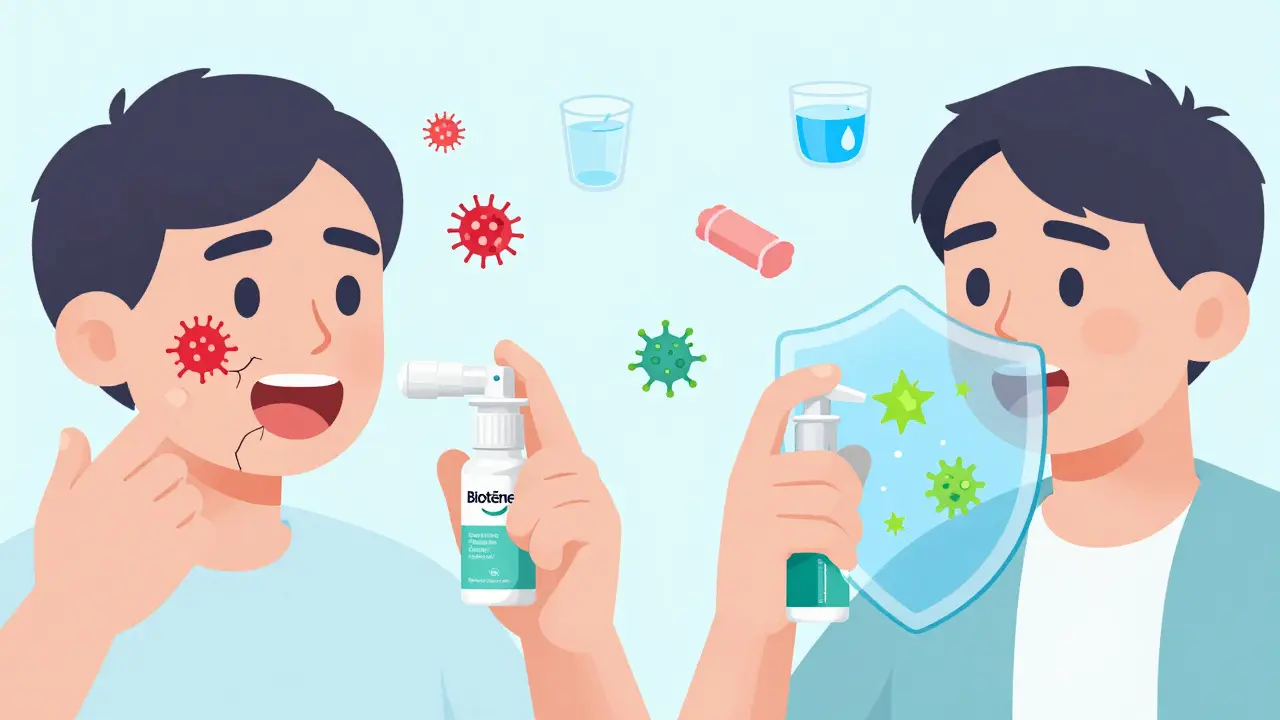
- Biotène Dry Mouth Oral Rinse - A gentle, alcohol-free rinse that cleanses and hydrates. It’s formulated to match the pH of natural saliva, so it doesn’t sting. Use it after brushing, morning and night.
- Biotène Mouth Spray - A quick fix for daytime dryness. One spray gives instant relief without the mess. Great for meetings, driving, or after talking for long periods.
- ACT Dry Mouth Moisturizing Lozenges - These dissolve slowly and deliver xylitol over time. Each lozenge helps prevent cavities while keeping your mouth moist. At $0.19 per piece, they’re one of the most cost-effective options.
- XyliMelts - These adhesive discs stick to your gums or inner cheek and slowly release xylitol and moisture for hours. Ideal for sleep or when you can’t sip water constantly. They even help with bad breath.
TheraBreath offers similar products with stronger flavor options like Mandarin Mint and Tart Berry, which some users prefer. But if you’re looking for clinical backing and professional trust, Biotène remains the standard.
Non-Product Habits That Make a Big Difference
Products help, but habits change everything. You can use the best rinse in the world, but if you’re breathing through your mouth all night or chugging soda, you’re fighting a losing battle.
- Sip water all day - Not chugging, but small sips. Keep a bottle nearby. Sugar-free drinks are fine, but plain water is best.
- Chew sugar-free gum or suck on xylitol hard candies - This tricks your body into making more saliva. Aim for gum with xylitol listed as the first ingredient.
- Breathe through your nose - Mouth breathing dries you out fast. If you snore or have nasal congestion, consider a saline spray or talk to your doctor about underlying issues.
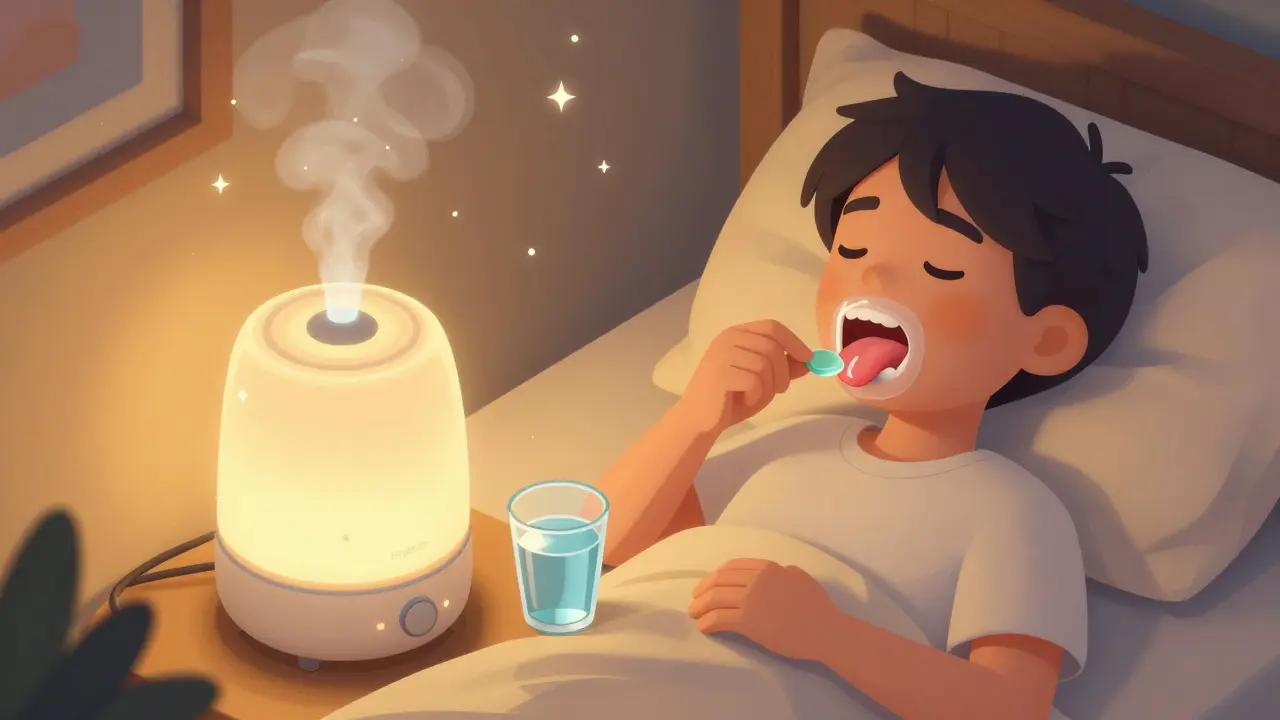
- Use a humidifier at night - Especially in winter or in air-conditioned rooms. Adding moisture to the air helps your mouth stay hydrated while you sleep.
- Avoid alcohol, caffeine, and sugary drinks - Coffee, soda, and wine all make dry mouth worse. Acidic drinks like citrus juices can also erode enamel when saliva isn’t there to buffer them.
- Brush with fluoride toothpaste - Colgate, Sensodyne, and other brands make toothpaste specifically for dry mouth. Fluoride strengthens enamel against the higher cavity risk you face without enough saliva.
What to Do at Night: The Essential Routine
Nighttime is when dry mouth hits hardest. Your body naturally produces less saliva while you sleep, and if you’re already dry, it gets worse. Here’s a simple nighttime routine that works:
- Brush your teeth with fluoride toothpaste.
- Rinse with a dry mouth-specific rinse like Biotène or ACT (don’t rinse with water after-it washes away the protective layer).
- Apply a thin layer of Biotène Oralbalance Gel to your gums, tongue, and inside cheeks.
- Use a humidifier in your bedroom.
- Keep a glass of water by your bed-sip only if you wake up thirsty, don’t chug.
If your dry mouth is severe, your dentist might prescribe a custom fluoride tray. It’s a small plastic mold you wear for a few minutes before bed, holding a high-strength fluoride gel against your teeth. It’s not expensive and can cut your cavity risk in half.
When to See a Dentist
Most people with dry mouth don’t realize how much damage is happening until it’s too late. Cavities in dry mouth patients often form in unusual places-along the gum line or on the front of teeth-where saliva usually protects. If you’ve been using products for more than a month and still feel dry, or if you notice white spots, sore gums, or a burning sensation, it’s time to see your dentist.
They can check for early signs of decay, rule out other causes like Sjögren’s syndrome, and adjust your care plan. You should visit at least once a year, but if you’re on multiple medications or have severe dry mouth, every 3-6 months is better.
Final Reality Check
Dry mouth won’t disappear overnight. There’s no magic cure. But with the right products and habits, you can stop it from controlling your life. The key is consistency. Use your rinse every morning and night. Keep gum or lozenges in your bag. Drink water before you feel thirsty. Use the gel before bed. These aren’t extra steps-they’re your new normal.
And remember: you’re not alone. Millions of people manage dry mouth every day. It’s not a sign of poor hygiene. It’s a side effect of modern medicine. The goal isn’t perfection-it’s control. And with the right approach, you can keep your mouth comfortable, your teeth healthy, and your confidence intact.
Can dry mouth be cured?
Dry mouth can’t always be cured, especially if it’s caused by medications or aging. But it can be managed effectively. The goal isn’t to eliminate it completely-it’s to reduce symptoms and protect your teeth. Using saliva substitutes, staying hydrated, and avoiding triggers can make a huge difference in comfort and oral health.
Is Biotène worth the price?
Yes, if you need reliable, long-lasting relief. Biotène costs more than generic brands, but it’s the only line recommended by dentists and pharmacists. The gel lasts up to 4 hours, which means you use less. The rinse is gentle, alcohol-free, and pH-balanced. For many, the difference in comfort and reduced cavity risk makes it worth the investment.
Can I use regular mouthwash if I have dry mouth?
No. Most regular mouthwashes contain alcohol, which dries out your mouth even more. They also often have sodium lauryl sulfate, which can irritate sensitive tissues. Stick to products labeled for dry mouth, like Biotène or ACT. They’re designed to hydrate, not strip.
Does xylitol really help prevent cavities?
Yes. Xylitol doesn’t feed the bacteria that cause cavities. In fact, it reduces their numbers over time. Studies show regular use can lower cavity risk by up to 60% in people with dry mouth. Just don’t overdo it-more than 10-15 grams a day can cause bloating or diarrhea in some people.
What’s the best way to stay hydrated with dry mouth?
Sip water slowly throughout the day. Ice chips work well too-they melt slowly and keep your mouth moist without overwhelming your system. Avoid gulping large amounts at once. Also, eat water-rich foods like cucumbers, celery, and watermelon. They add moisture without sugar or acid.
Are dry mouth products safe for long-term use?
Yes. Products like Biotène, ACT, and XyliMelts are designed for daily, long-term use. They don’t contain harsh chemicals or drugs. The only caution is with xylitol if you consume large amounts daily-stick to the recommended dose on the label. Always pair products with good oral hygiene and regular dental visits.
Kimberly Reker
January 29, 2026 AT 11:19Just started using the Biotène gel at night and holy crap, my lips aren’t cracking anymore. I used to wake up feeling like I’d been yelling all night. Now I actually sleep. Also, the lozenges are my new best friend at work. No more constant water sipping. Just pop one and go.
Eliana Botelho
January 30, 2026 AT 15:42I tried all that stuff and honestly it’s just a money grab. I’ve been using plain water and chewing gum since I was 19 and I’m 52 now. My dentist says I have the teeth of a 30-year-old. Why are we paying $12 for a gel that’s basically water and cellulose? Also, xylitol? That’s just sugar with a fancy name. My grandma used salt water rinses and lived to 98. We’ve been sold a lie here.
Rob Webber
January 31, 2026 AT 10:03This whole post is a Biotène ad. Dentists don’t ‘recommend’ it because it’s magic-they get kickbacks from the company. And don’t get me started on XyliMelts. Adhesive discs? That’s what you’re doing now? Stick candy to your gums like a toddler? Wake up. Dry mouth is a symptom, not a disease. Fix the cause-stop taking that antidepressant or whatever you’re on. Or at least stop pretending a spray fixes your life.
calanha nevin
February 2, 2026 AT 06:46Consistency is everything. If you’re on medications that cause xerostomia, products are not optional-they’re medical necessities. The gel isn’t a luxury. It’s a barrier against rampant caries. The rinse isn’t for freshness. It’s for pH balance. Skipping steps increases your risk of root decay, which is irreversible and expensive to fix. Don’t gamble with your oral health. This isn’t marketing. This is science.
Lisa McCluskey
February 4, 2026 AT 04:40I’ve had dry mouth for 12 years since chemo. The Biotène rinse is the only thing that doesn’t burn. I tried everything else. The gel is a game changer at night. I don’t wake up gasping anymore. Also the humidifier. Don’t underestimate it. It’s not glamorous but it works. Just keep going. You’re not crazy for needing this stuff.
owori patrick
February 5, 2026 AT 09:56I live in Nigeria and we don’t have access to most of these products. But I learned to use coconut oil swishing-it’s natural, cheap, and helps a lot. Also chewing neem leaves in the morning. Not scientific maybe but it works for my grandma and now me. Maybe we need more affordable options globally. Not everyone can afford Biotène.
Claire Wiltshire
February 6, 2026 AT 05:01Thank you for this thoughtful, well-researched guide. I’ve shared it with my mother who’s on five medications and has been suffering silently for years. The advice about not rinsing after the mouthwash? That was a revelation. I thought you were supposed to rinse everything out. Turns out, you’re supposed to let it work. Small details matter. You’ve made a real difference here.
Darren Gormley
February 7, 2026 AT 15:32LOL at the ‘clinical backing’ of Biotène. 🤡 Just look at the ingredients list. It’s basically water, glycerin, and a marketing budget. Xylitol? Cool. But so is chewing gum. And guess what? Gum costs $2. The gel? $18. I’m not buying into the dental-industrial complex. Also, ‘dentists recommend it’-because they get free samples. Not because it’s better. 🤷♂️
Mike Rose
February 8, 2026 AT 00:59why is this so long? just say use gum and water. i dont need a whole essay. also biontene is overpriced. i just use spitting water and it’s fine. who even has time for all this?
Russ Kelemen
February 8, 2026 AT 09:39There’s a deeper truth here: dry mouth isn’t just about your mouth. It’s about how medicine treats symptoms instead of causes. We’re medicating our way into discomfort, then selling us $20 gels to cope. But the real question is-why are we on so many drugs that break our bodies? Maybe the answer isn’t in the gel. Maybe it’s in rethinking how we treat chronic conditions. Still… I use the gel. Because I’m tired of waking up with a desert in my mouth.
Diksha Srivastava
February 9, 2026 AT 13:13Just wanted to say-you’re not alone. I’m from India and I started using the lozenges after my dad got dry mouth from his blood pressure meds. He says he feels like a new person. I bought him a humidifier too. Small things add up. Keep going. You’re doing great.
Sidhanth SY
February 10, 2026 AT 10:54Been using XyliMelts for 6 months. I sleep with my mouth open from snoring. These things stick like glue and actually help. No more waking up with a sore throat. Also, the gum with xylitol? I chew one after every meal. No cavities in 2 years. Worth every penny. Don’t let the haters stop you.
Adarsh Uttral
February 11, 2026 AT 03:55bro i just drink water and its fine. why u need all this fancy stuff? also i think biontene is just water with sugar in it. i dont believe in all this science talk. just sip water and chill.
April Allen
February 12, 2026 AT 10:54Let’s not conflate symptom management with therapeutic efficacy. The products referenced function as salivary substitutes, not salivary stimulants. Their mechanism is mucoadhesion and hydration-not pharmacological modulation. Xylitol’s anti-cariogenic effect is well-documented in the Cochrane reviews, but the clinical significance is contingent on frequency of use. The 60% reduction cited is derived from controlled trials with 3-5g/day dosing. Real-world adherence is often suboptimal. That said, the behavioral interventions-humidification, nasal breathing, hydration pacing-are the true pillars of management. Products are adjuncts. Not cures. And yes, they’re worth it if you’re at high caries risk. But the system is designed to monetize chronicity. We must acknowledge that.