Why So Many Pills? The Real Cost of Polypharmacy in Older Adults
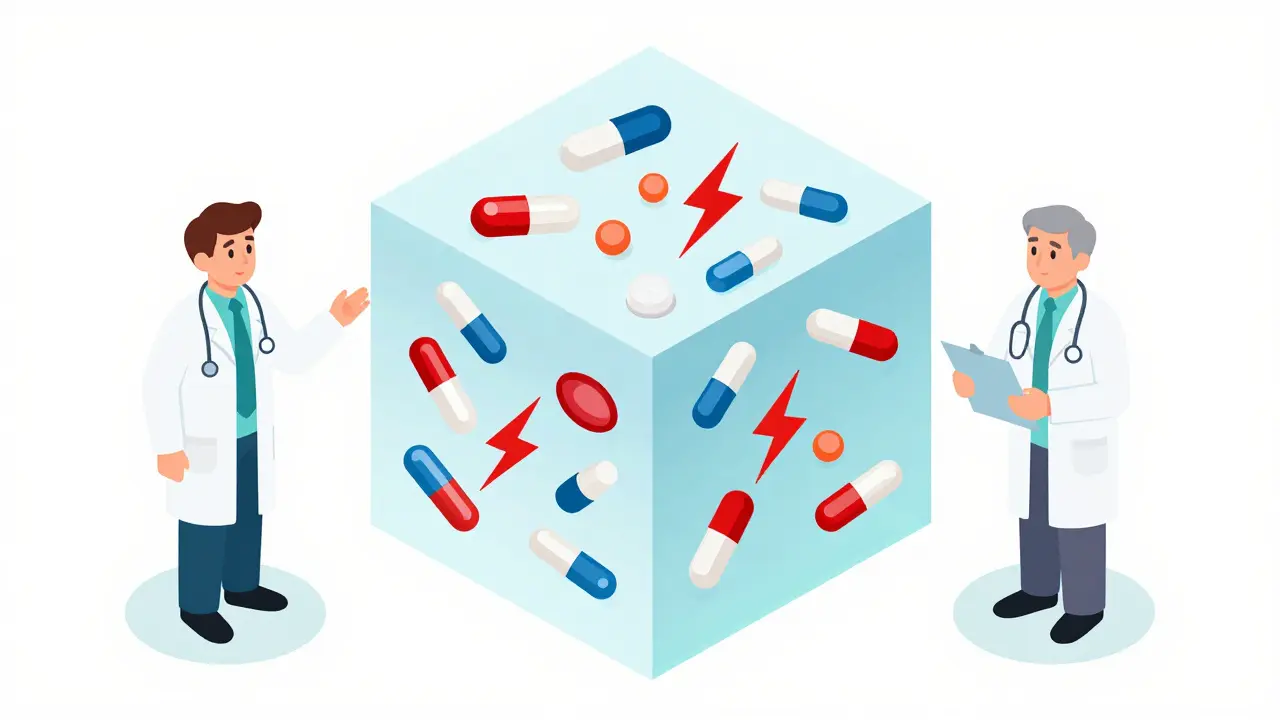
Imagine waking up every morning to a small mountain of pills. Ten, twelve, maybe more. Each one prescribed by a different doctor, for a different condition, with different instructions. This isn’t unusual for older adults. In fact, nearly 40% of people over 65 are taking five or more medications at once - a situation called polypharmacy. And while some of these drugs are essential, too many can turn treatment into a danger zone.
In Australia, about 36% of older adults are on five or more prescriptions. In nursing homes, it’s worse - up to 80%. The problem isn’t just the number of pills. It’s what happens when they mix. Every extra drug increases the chance of harmful interactions. Two medications? 6% risk of a bad reaction. Five? Jump to 50%. Seven or more? You’re practically guaranteed one. And older bodies don’t handle drugs like younger ones. Kidneys slow down. Liver function drops. The brain gets more sensitive. A dose that was safe at 50 can be dangerous at 75.
What’s Really in the Medicine Cabinet?
Polypharmacy doesn’t just mean prescription drugs. It includes over-the-counter painkillers like ibuprofen, sleep aids, herbal supplements like ginkgo or St. John’s wort, and even PRN (as-needed) meds like laxatives or anti-nausea pills. These often fly under the radar - no one thinks to mention them at a doctor’s visit. But they’re part of the mix. And they can clash.
Take NSAIDs, for example. They’re the most commonly prescribed class among older adults on multiple meds. Used for arthritis pain, they’re fine for some. But when mixed with blood thinners like warfarin or aspirin, they can cause stomach bleeds. Add in a diuretic for high blood pressure? Now your kidneys are under extra stress. And if you’re also taking an anticholinergic for overactive bladder - common in seniors - you’re increasing your risk of confusion, falls, and even dementia over time.
One study found patients with major polypharmacy (10+ drugs) were on average 75 years old. That’s not a coincidence. The longer you live with chronic conditions - diabetes, heart disease, arthritis, COPD - the more pills get added. Each specialist sees their piece of the puzzle. The cardiologist adds a beta-blocker. The rheumatologist prescribes a steroid. The GP gives a sleep aid. No one steps back to ask: Is this whole stack still helping?
When More Medicines Mean More Problems
Polypharmacy doesn’t just cause side effects. It causes cascades. A patient takes a blood pressure med that causes dizziness. They fall. The doctor prescribes an anti-nausea drug to treat the dizziness. That drug causes constipation. So now they’re on a laxative. Then the laxative interferes with another med. It’s a chain reaction - and it’s all avoidable.
Research shows that older adults on five or more drugs are:
- Up to 3 times more likely to be hospitalized
- Twice as likely to fall and break a hip
- More prone to memory problems and confusion
- At higher risk of dying from drug-related causes
And here’s the quiet crisis: many of these drugs are taken long after they’re needed. A statin prescribed after a heart attack? Fine. But if the patient’s health has improved, or if they’re now frail and nearing end-of-life, that same statin may do more harm than good. Same with antihypertensives - lowering blood pressure too much in an elderly person can lead to fainting, falls, and kidney damage.
One study tracking over 2 billion patient visits found that nearly half of those with major polypharmacy were taking at least one medication that shouldn’t be used in older adults - according to the American Geriatrics Society’s Beers Criteria. These include drugs like benzodiazepines for sleep, certain antipsychotics for dementia, and long-acting sulfonylureas for diabetes. They’re still prescribed because it’s easier than stopping them.
Deprescribing: It’s Not About Stopping Meds - It’s About Getting It Right
Deprescribing isn’t just cutting pills. It’s a careful, step-by-step process of reviewing each medication and asking: Is this still helping? Is the risk bigger than the benefit?
It’s not about taking away care. It’s about restoring safety. A 78-year-old with mild dementia on five antidepressants, a sedative, and a muscle relaxant? Reducing those can mean fewer falls, clearer thinking, and better sleep - without losing emotional stability.
Successful deprescribing follows a few simple rules:
- Start with the newest or least essential drug. Was it added last year for a temporary issue? Try stopping it first.
- Look for drugs with known risks in seniors. The Beers Criteria and STOPP/START tools list high-risk meds. These are top candidates.
- Stop one at a time. Never cut multiple drugs at once. You won’t know which one caused a change.
- Monitor closely. Watch for return of symptoms, withdrawal effects, or new problems. Keep a journal.
- Involve the patient. If they believe a pill helps - even if it doesn’t - forcing them to stop will backfire. Talk, explain, listen.
Real-world results? One program in Sydney reduced falls by 22% after deprescribing sedatives and anticholinergics. Another cut emergency visits by 30% by removing unnecessary antibiotics and painkillers.
Why Isn’t Everyone Doing This?
If deprescribing works, why isn’t it standard practice?
First, doctors are pressed for time. A 15-minute appointment isn’t enough to review 12 medications. Second, many providers fear backlash - patients think their meds are working, and stopping them feels like giving up. Third, there’s no financial incentive. Insurance pays for prescribing, not reviewing. Pharmacists who specialize in medication management are still rare in general practice.
Then there’s the system. One doctor prescribes a drug for heart failure. Another prescribes a different one for kidney disease. A third adds a sleep aid. No one talks. No one sees the whole picture. Electronic health records don’t always talk to each other. Prescriptions pile up like unread emails.
And patients? Many are afraid. They’ve been told for years that meds are their lifeline. Stopping one feels risky. Some have been on the same pill for 15 years - they don’t remember why they started. They’re scared of what might happen if they stop.
What You Can Do Right Now
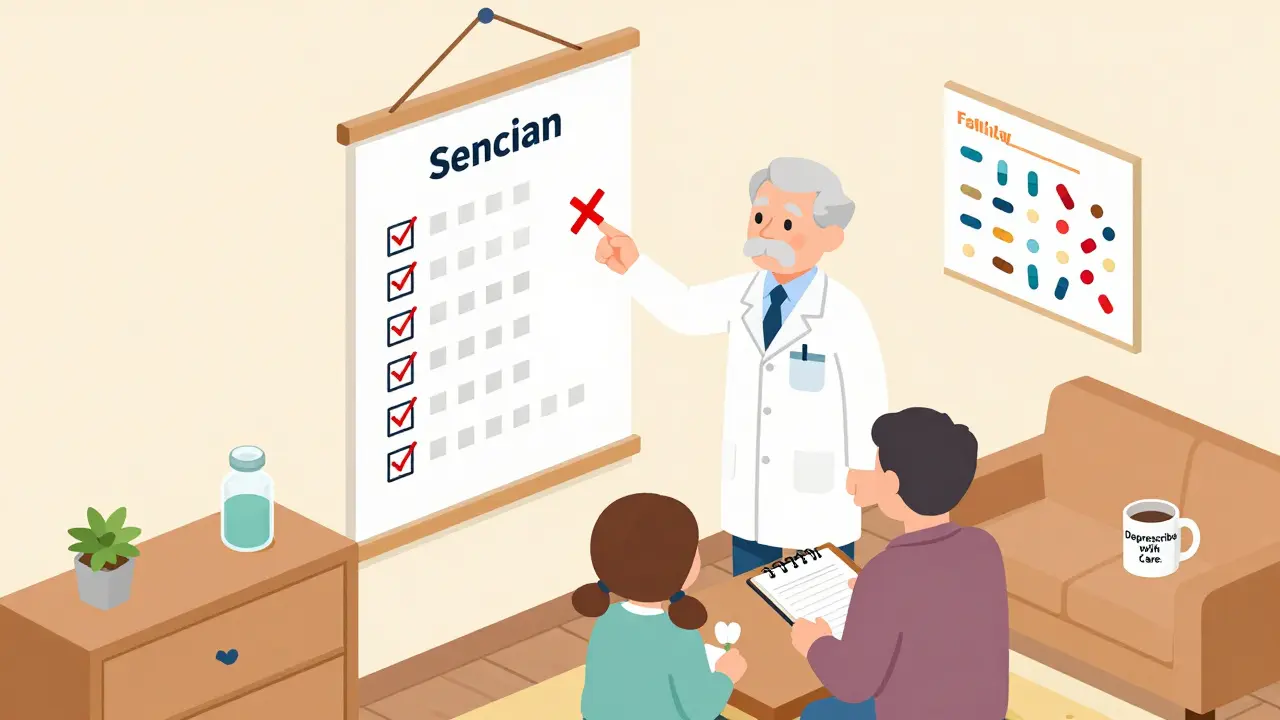
If you or someone you care for is on five or more medications, here’s what to do:
- Make a full list. Include prescriptions, OTCs, vitamins, herbs, and supplements. Write down the reason for each one if you know it.
- Bring it to your next appointment. Ask: “Which of these are still necessary? Are any of these causing side effects?”
- Ask about deprescribing. Say: “Could we review which meds might be doing more harm than good?”
- Consider a pharmacist consult. Many pharmacies now offer free medication reviews. They’re trained to spot interactions and redundancies.
- Track changes. If a drug is stopped, note how you feel - better sleep? Fewer dizziness episodes? Less confusion?
You don’t need to do this alone. Talk to your GP, your pharmacist, or even a geriatric care manager. You’re not being difficult - you’re being smart.
The Future of Medication Safety
The number of older adults will keep rising. By 2050, 1.5 billion people worldwide will be over 65. If we keep prescribing the way we do now, hospitals will be flooded with drug-related emergencies. The answer isn’t fewer doctors. It’s better coordination.
Some places are leading the way. In parts of Australia and Europe, pharmacist-led medication reviews are now part of routine care for seniors. AI tools are being tested to scan patient records and flag high-risk combinations. New guidelines are being created for stopping benzodiazepines, proton pump inhibitors, and antipsychotics in dementia.
But change starts with you. The next time you or a loved one is handed a new prescription, ask: “Is this really needed? What happens if I don’t take it?”
Medications aren’t always the answer. Sometimes, the safest thing you can do is stop taking something.
What is considered polypharmacy in older adults?
Polypharmacy is generally defined as taking five or more medications at the same time. This includes prescription drugs, over-the-counter medicines, herbal supplements, and as-needed medications. While five is the common threshold, some experts consider 10 or more as "hyper-polypharmacy," which carries much higher risks of side effects and interactions.
Can stopping medications really improve health in older adults?
Yes - and often dramatically. Many older adults take medications that were helpful years ago but are no longer needed or are causing harm. Stopping unnecessary drugs can lead to fewer falls, better sleep, clearer thinking, and less stomach bleeding or kidney stress. One study showed a 22% drop in falls after deprescribing sedatives and anticholinergics. The goal isn’t to eliminate all meds - it’s to keep only what truly improves safety and quality of life.
What are the most dangerous drug combinations for seniors?
Some of the riskiest combinations include: NSAIDs (like ibuprofen) with blood thinners (warfarin or aspirin), which can cause internal bleeding; benzodiazepines (like diazepam) with opioids or alcohol, which can slow breathing; and anticholinergics (like diphenhydramine) with other drugs that affect the brain, increasing confusion and dementia risk. The American Geriatrics Society Beers Criteria lists these and other high-risk combinations specifically for older adults.
How do I know if a medication is no longer needed?
Ask your doctor or pharmacist these questions: Was this prescribed for a temporary condition? Has the condition improved or resolved? Is this drug listed in the Beers Criteria as potentially inappropriate for seniors? Does it cause dizziness, confusion, or constipation? Are there lifestyle changes or non-drug options that could work instead? If you can’t remember why you started the med, it’s worth reviewing.
Is deprescribing safe? What if symptoms come back?
Deprescribing is safe when done slowly and under supervision. Most medications can be tapered over weeks or months. If symptoms return, it doesn’t mean the drug was necessary - it could mean the body is adjusting. But if a real problem returns, the medication can be restarted. The key is to stop one drug at a time and monitor closely. Never stop a medication like a beta-blocker or antidepressant suddenly - that can be dangerous. Always work with a healthcare provider.
Gina Beard
January 24, 2026 AT 01:02Everyone’s doing their job. No one’s doing the job of seeing the whole person.
We treat conditions, not humans.
And then we wonder why old people feel like walking pharmacies.
Karen Conlin
January 24, 2026 AT 18:52Josh McEvoy
January 26, 2026 AT 15:44Heather McCubbin
January 28, 2026 AT 11:49Doctors are scared of lawsuits so they prescribe
Patients are scared of dying so they take
Pharmacies are scared of losing revenue so they refill
And the elderly? They just nod and swallow
Shanta Blank
January 29, 2026 AT 22:05Amelia Williams
January 31, 2026 AT 12:36Viola Li
February 2, 2026 AT 05:33Luke Davidson
February 2, 2026 AT 19:57Sushrita Chakraborty
February 3, 2026 AT 12:39Sawyer Vitela
February 5, 2026 AT 10:20Tiffany Wagner
February 5, 2026 AT 23:28Chloe Hadland
February 6, 2026 AT 16:20Jamie Hooper
February 7, 2026 AT 08:22