Every time you pick up a prescription, you’re holding a document that could save your life-or hurt you if you don’t understand it. Prescription labels aren’t just small pieces of paper with names and numbers. They’re your first and most important line of defense against medication errors. And yet, most people grab them, toss them in a bag, and never look again. That’s dangerous. In 2023, over 1.3 million medication errors happened in the U.S. alone. Nearly a quarter of those? Straight-up misunderstandings of the label.
What’s on Your Prescription Label? Don’t Assume
Your label has nine mandatory pieces of information, no matter which pharmacy you use. That’s the law. But here’s the catch: just because it’s there doesn’t mean you’re reading it right. The patient name? Make sure it’s yours. I’ve heard stories of people getting someone else’s blood thinner because the names were similar. The drug name? Look for both the brand and generic version. If your pill looks different than last time, ask why. That’s not a mistake-it’s a safety check.The strength and dosage form matter too. Is it 10 mg or 50 mg? Is it a tablet, capsule, or liquid? Mixing those up can lead to overdose or underdose. One woman took her thyroid pill as a liquid instead of a tablet because she didn’t read the form. She ended up in the ER. The quantity? That tells you how many pills you got. If you were expecting 30 and got 60, ask if it’s right. Refill info? Know how many times you can get it refilled before needing a new prescription. Running out early because you misread the number? That’s not just inconvenient-it’s risky.
How Do You Take It? Read the Directions Like a Pro
Directions on a label often look like a secret code. Take one tablet by mouth twice daily. Sounds simple. But what does “by mouth” mean? That’s oral. What if it says “take on an empty stomach”? That means no food for two hours before and after. If your label says “take with food,” don’t take it on an empty stomach. That can make it less effective-or cause stomach upset.Some meds need to be taken at specific times. Blood pressure pills? Often best in the morning. Sleep aids? At night. Antibiotics? Some need to be spaced evenly-every 8 hours, not just three times a day. And don’t assume “once daily” means morning. Your doctor might have meant bedtime. Always confirm. The FDA says 67% of medication errors happen at the point of administration. That’s when you’re about to swallow it. Don’t let your label be the weak link.
Storage Matters More Than You Think
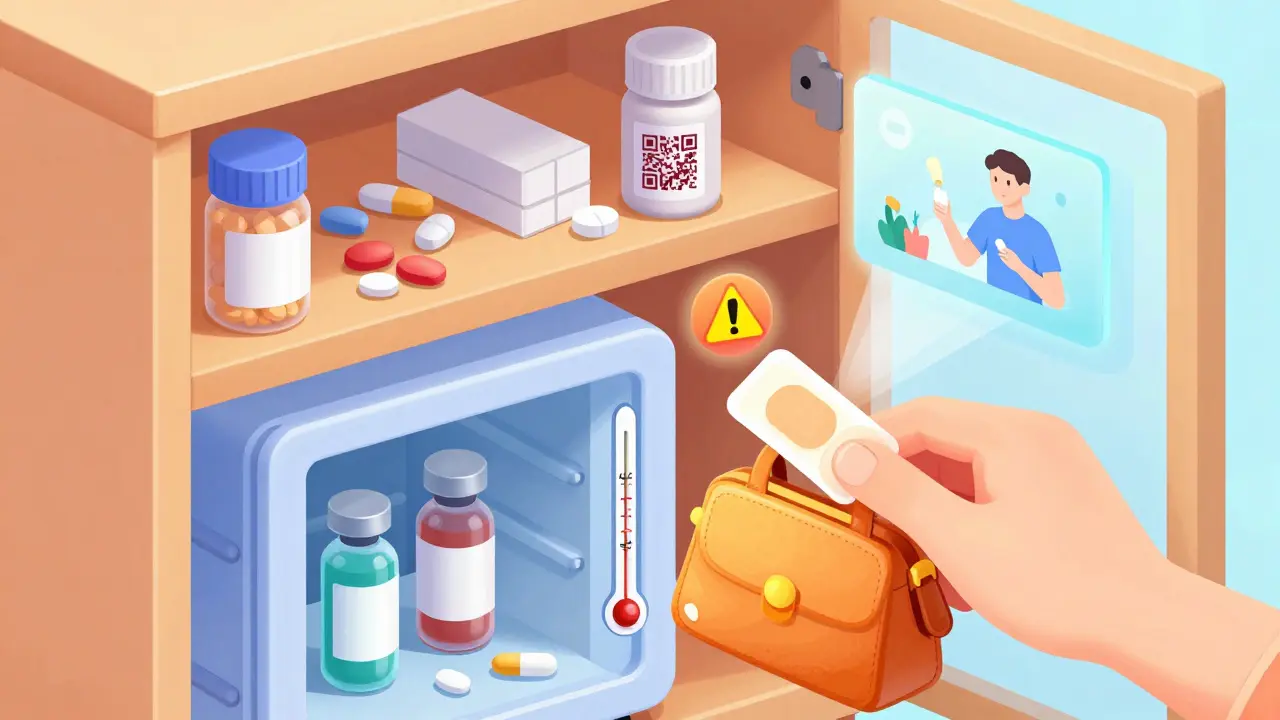
You wouldn’t leave milk out on the counter for weeks. But you might do the same with your medicine. Most prescriptions-78% of them-need to be stored at room temperature, between 68°F and 77°F. That’s your closet or bathroom cabinet. But 15% need refrigeration. Insulin. Some antibiotics. Certain biologics. If yours is one of them, and you kept it on the counter? It might be useless. Or worse, harmful.Check the label for storage instructions. If it’s not clear, ask. One patient in Sydney kept her estrogen patch in her purse for weeks in summer heat. It melted. She didn’t know. She thought the patch wasn’t working. Turns out, the medicine had degraded. She needed a new prescription-and a lesson.
Expiration Dates Are Not Suggestions
That date on the label? It’s not when the bottle looks old. It’s when the drug is guaranteed to work. The FDA requires that meds stay potent until that date-if stored properly. Taking expired antibiotics? They might not kill the infection. Taking expired insulin? It could be dangerously weak. Some people stretch their meds past expiration because of cost. Don’t. It’s not worth the risk.And if you’re not sure? Ask. Pharmacists can tell you if a drug is safe past its date. Some, like epinephrine auto-injectors, become unsafe quickly. Others, like certain painkillers, might still work-but you can’t count on it. When in doubt, get a new one.
What Are the Side Effects? Don’t Wait for the Brochure
You’ll get a Medication Guide with certain prescriptions-especially opioids, blood thinners, or drugs like isotretinoin. But not all meds come with one. That doesn’t mean there aren’t risks. Ask your pharmacist: “What are the most common side effects?” and “What should I call you about?”Some side effects are normal. Nausea with antibiotics. Drowsiness with antihistamines. But if you get swelling, trouble breathing, chest pain, or a rash that spreads? That’s an emergency. Know the red flags. One man took his new blood pressure med and felt dizzy. He thought it was just tired. Two days later, he passed out. He didn’t know dizziness was a warning sign. His pharmacist later said: “If you’d asked about side effects, we’d have warned you.”
Interactions Are Hidden Risks
Your new pill might not play nice with your other meds-or your coffee, grapefruit, or supplements. Ask: “Can I take this with my other prescriptions?” and “Are there foods, drinks, or supplements I should avoid?”For example: statins (cholesterol meds) can interact with grapefruit. Blood thinners like warfarin react badly with vitamin K-rich foods like kale and spinach. Even over-the-counter painkillers like ibuprofen can interfere with heart meds. One woman took her antidepressant with St. John’s Wort because she thought it was “natural.” She ended up with serotonin syndrome. She didn’t know the interaction existed. Pharmacists see this all the time. Ask the question. It’s your right.
Refills and Renewals: Don’t Get Caught Off Guard
How many refills are left? That’s on the label. But what if you need more? Don’t wait until you’re out. Some prescriptions need a new doctor’s note. Others can be refilled automatically. Know the difference. If your label says “0 refills left,” call your doctor before you run out. Don’t skip doses. Don’t double up. And if you’re on Medicare Part D, understand your coverage tier. Some plans change what you pay each month. You might think you’re getting a refill, but you’re being charged more than expected.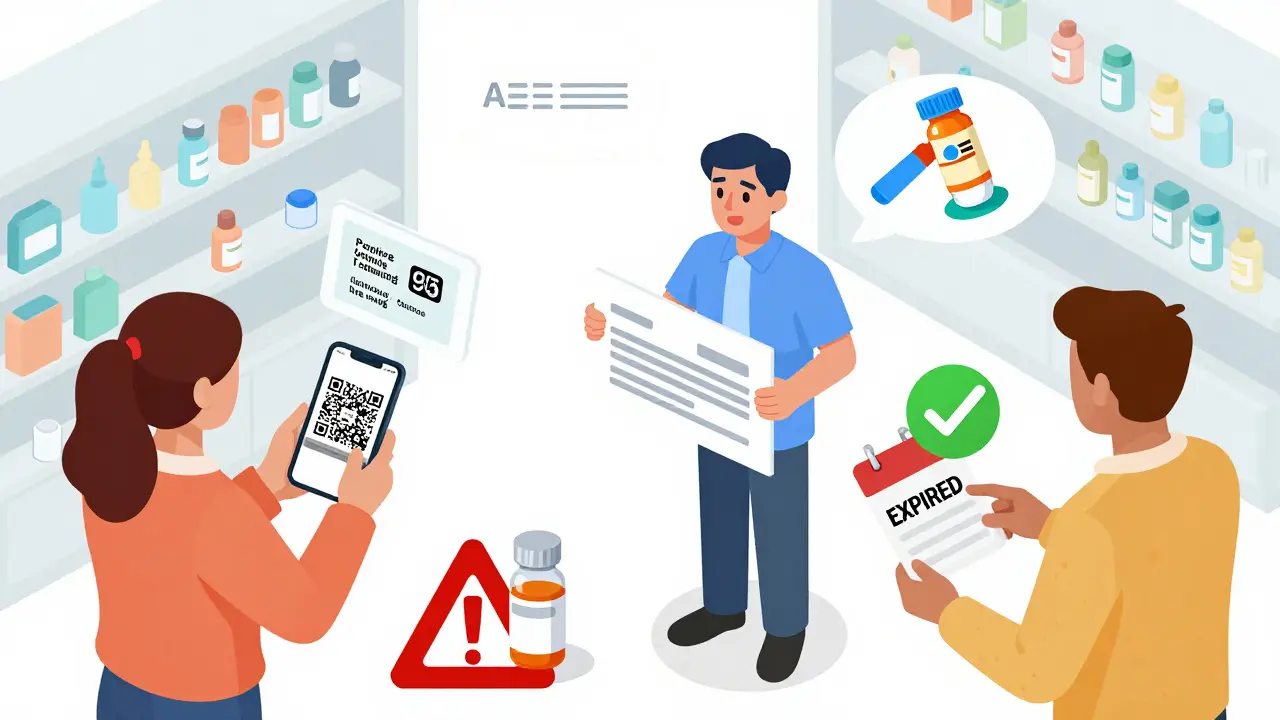
Language, Vision, and Literacy Barriers? Ask for Help
If English isn’t your first language, you’re not alone. Over 25 million U.S. residents have limited English proficiency. Pharmacies are required by law to provide translation services if they get federal funding. Ask for a translator. Don’t pretend you understand. If the print is too small, ask for a large-print label. Most pharmacies offer this for free. If you have trouble reading, ask the pharmacist to read it aloud with you. Repeat the instructions back. “So you’re saying I take one pill every 12 hours, not with food, and store it in the fridge?” That simple step cuts errors by almost 60%.QR Codes and Digital Labels? Use Them
More pharmacies now have QR codes on labels. Scan it with your phone. You might get a video of how to take the drug, a list of side effects, or even a reminder system. In 2022, pharmacies using QR codes saw a 31% drop in medication errors. Walgreens and CVS are rolling out augmented reality labels too-point your phone at the bottle and see dosage instructions float above it. If your pharmacy offers this, use it. It’s not magic. It’s just better communication.Why This Matters: Real Consequences
A 2023 study found that patients who asked just three questions about their label-“What is this for?”, “How do I take it?”, and “What should I watch for?”-reduced their chance of an adverse drug event by 47%. That’s huge. These aren’t just technical questions. They’re survival questions. Medication errors send over 700,000 people to the ER every year. Most of them? Could’ve been avoided with a simple conversation at the counter.You don’t need to be a doctor. You just need to be curious. Don’t be shy. Pharmacists are trained to answer these questions. They’ve seen what happens when people don’t ask. Your label isn’t just paperwork. It’s your safety net. Pull it tight.
What are the nine mandatory elements on a prescription label?
Every prescription label must include: patient name, prescriber name, drug name (brand and generic), strength, dosage form, quantity, directions for use, number of refills, and pharmacy contact information. These are required by the National Association of Boards of Pharmacy and are non-negotiable.
Why does my pill look different this time?
It’s likely a different manufacturer. Generic drugs can look different in color, shape, or size but contain the same active ingredient. Always check the name and strength on the label. If you’re unsure, ask the pharmacist to confirm it’s the right medication. Never assume.
Can I trust the expiration date on my prescription?
Yes, if the drug has been stored properly. The expiration date is the last day the manufacturer guarantees the drug is fully potent and safe. Taking expired medication isn’t always dangerous, but it may not work as intended-especially with antibiotics, insulin, or heart medications. When in doubt, ask your pharmacist.
What should I do if I don’t understand the instructions?
Don’t guess. Ask the pharmacist to explain it in plain language. Request a large-print label. Ask for a video guide if the pharmacy offers QR codes. Repeat the instructions back to them. If you still don’t understand, call your doctor. Misunderstanding directions is one of the top causes of medication errors.
Are there special rules for storing my medication?
Yes. About 78% of prescriptions need room temperature storage (68-77°F). 15% require refrigeration (36-46°F), like insulin or some antibiotics. A few need protection from light or moisture. Always check the label. If it’s not clear, ask. Storing meds incorrectly can make them ineffective or unsafe.
Can I take my new prescription with my other meds?
Always ask. Many drugs interact with others-even over-the-counter ones. For example, grapefruit can make cholesterol meds dangerous. Ibuprofen can reduce the effect of blood pressure pills. St. John’s Wort can cause serious reactions with antidepressants. Bring a list of everything you take, including supplements, to the pharmacy.
What if I miss a dose?
It depends on the drug. For some, like antibiotics, missing a dose can lead to resistance. For others, like blood pressure meds, it might cause a spike. Never double up unless instructed. Call your pharmacist or doctor. They’ll tell you whether to skip it, take it late, or adjust the next dose.
How do I know if my label is in compliance with FDA standards?
All U.S. pharmacies must follow FDA labeling rules. If your label includes the nine required elements, has clear directions, an expiration date, and storage instructions, it’s compliant. If something’s missing or confusing, ask the pharmacist. You can also check the FDA’s website for guidance on what a proper label should include.
Can I get my prescription label in another language?
Yes. Pharmacies that receive federal funding are required by the Affordable Care Act to provide translation services. Ask for a translated label or request an interpreter. Many pharmacies now offer multilingual labels for common languages like Spanish, Mandarin, and Arabic. Don’t settle for a translation you don’t trust.
What should I do if I think my label is wrong?
Don’t take it. Go back to the pharmacy immediately. Show them the label and your prescription receipt. Ask them to double-check the name, strength, and dosage. If they dismiss your concern, ask to speak to the pharmacist-in-charge. Medication errors happen-but they’re preventable. Your vigilance could save your life.
pragya mishra
January 20, 2026 AT 01:20The pharmacy gave me the wrong pill last month and I didn’t notice until I started hallucinating. Seriously. My name was on the label but the drug wasn’t mine. They blamed "similar names." I’m filing a complaint. This isn’t just carelessness-it’s negligence.
Manoj Kumar Billigunta
January 20, 2026 AT 20:56I’ve been a pharmacist for 22 years and I can tell you-most people don’t read the label because they assume the pharmacist already checked everything. But we’re human. We make mistakes. The best defense is you asking the three questions: What is this for? How do I take it? What should I watch for? It takes 30 seconds. Could save your life.
Andy Thompson
January 21, 2026 AT 02:46They’re hiding something. Why do they even put QR codes on labels? It’s not for you-it’s for the government to track what you’re taking. And don’t get me started on the "multilingual labels"-they’re pushing diversity to erase American culture. You think they care if you understand? Nah. They just want you dependent. This is Step One of the Pharma-Deep State takeover.
sagar sanadi
January 22, 2026 AT 00:37So you’re telling me the government mandates nine things on a label… but no one reads them? That’s like putting a fire extinguisher in a burning building and calling it a safety plan. Meanwhile, the real problem is that prescriptions cost $500 and people are too broke to ask questions. They just take whatever they’re handed and hope for the best. Classic capitalism.
kumar kc
January 23, 2026 AT 14:28If you can’t read a label, you shouldn’t be taking pills.
Thomas Varner
January 24, 2026 AT 19:19I used to ignore labels too… until I took my blood pressure med with grapefruit juice and nearly passed out. Now? I read every word. I even take a picture of the label and send it to my sister for a second opinion. She’s not a doctor-but she’s got better eyes than me. And yes, I use the QR code. It’s actually kinda cool. Like a mini tutorial.
Art Gar
January 26, 2026 AT 09:49While the intent of this article is commendable, the underlying assumption-that patient literacy is the primary determinant of medication safety-is empirically flawed. Systemic failures in pharmaceutical supply chain management, regulatory enforcement gaps, and institutionalized communication deficits among healthcare providers constitute the primary vectors of error. The onus placed upon the layperson to self-educate is a manifestation of structural neglect, not patient responsibility.
Edith Brederode
January 26, 2026 AT 22:38THIS. So much this. 🙌 I asked my pharmacist about my new antidepressant and she showed me a video on her tablet about side effects. I cried. No one’s ever taken that much time before. I wish every pharmacy did this. Also, I asked for a large-print label and they gave me one for free. It felt like they actually saw me as a person. ❤️
clifford hoang
January 26, 2026 AT 23:54Let’s be real-pharmacies are just profit-driven extensions of Big Pharma’s surveillance network. QR codes? They’re harvesting your biometrics when you scan them. The "medication guide"? It’s a legal shield for them. And the "nine mandatory elements"? All designed to make you feel safe while they quietly replace your hormones with corporate-grade synthetics. You think your thyroid med is helping? It’s just keeping you docile. Wake up.
Shane McGriff
January 27, 2026 AT 10:54I work with elderly patients every day. One woman took her insulin for a week because she thought "refrigerate" meant "keep in the freezer." She ended up in the hospital. I sat with her for an hour, walked through the label line by line, and had her repeat it back. She’s been fine since. It’s not about being smart-it’s about being heard. Pharmacists? They’re trained to help. You just gotta ask. And if they’re rushed? Ask again. Politely. But firmly.
Jacob Cathro
January 27, 2026 AT 22:02bro why are we even talking about labels? the real issue is that 80% of rx’s are overprescribed and the docs don’t even know what they’re handing out. i got a script for zoloft after asking for advil. the pharmacist was like "uh… you sure?" and i was like "no but i’ll take it anyway". we’re all just guessing at this point. the system is broken. 🤡