Taking medication shouldn’t feel like a gamble. You follow the instructions, you fill the prescription, and you hope for the best. But sometimes, your body reacts in ways that aren’t just annoying-they’re dangerous. Medication side effects are more common than you think. About 7% of hospital admissions in the U.S. are linked to bad reactions, and over 100,000 people die each year from them. The good news? Many of these deaths are preventable-if you know the red flags and act fast.
What Counts as a Real Emergency?
Not every side effect means you need to rush to the hospital. A little nausea? That’s common. Dry mouth? Normal. But some reactions can turn deadly in minutes. Here’s what you must never ignore:- Difficulty breathing-even if it’s just a slight tightness in your chest or throat. This isn’t just discomfort; it’s your body screaming for help.
- Hives or raised, itchy welts-especially if they spread quickly. These are a classic sign of an allergic reaction.
- Swelling of your face, lips, tongue, or throat-if you notice this, don’t wait. Swelling in the throat can block your airway within 30 minutes.
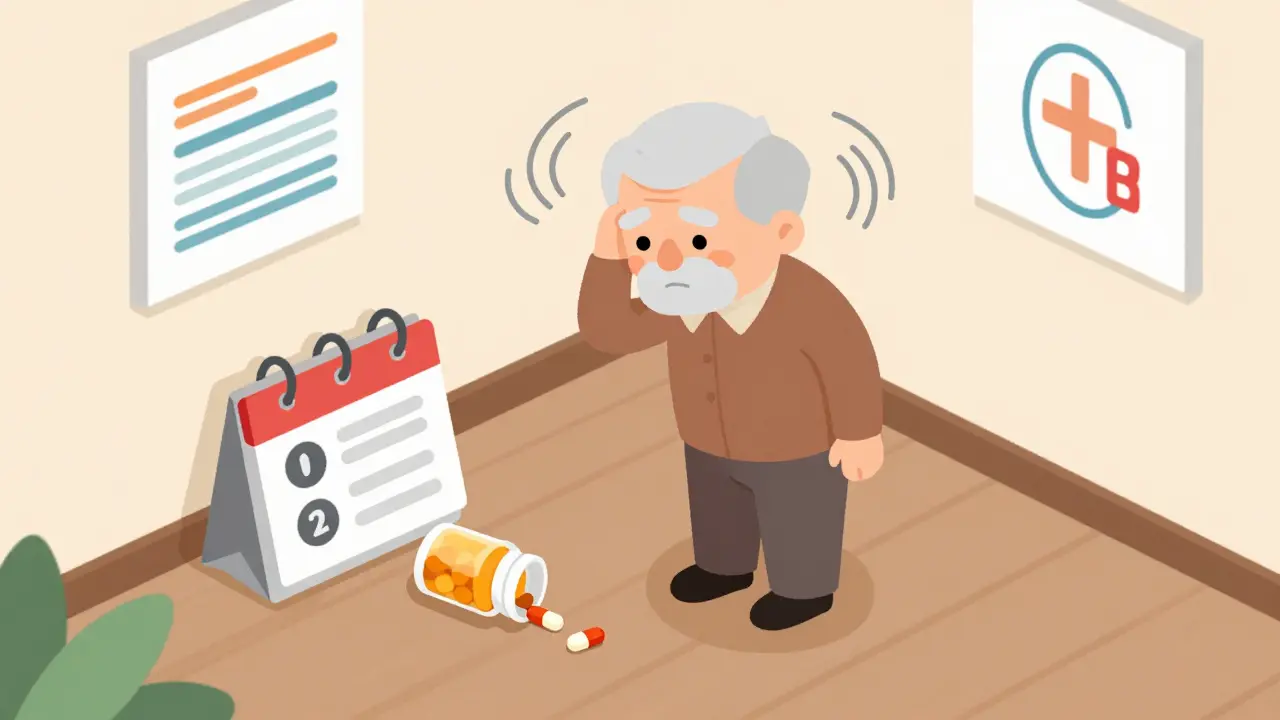
- Dizziness or fainting-especially if you’re over 65. Dizziness increases your risk of falling by 200%, and falls can lead to broken hips, brain injuries, or worse.
- Blisters or peeling skin-this could be Stevens-Johnson Syndrome (SJS) or toxic epidermal necrolysis (TEN). These are rare but deadly skin reactions. About 100-200 cases are reported in the U.S. each year, and they kill up to a third of those affected.
- Severe nosebleeds-if you’re on blood thinners like warfarin or apixaban, occasional spotting is normal. But bleeding that won’t stop? That’s a red flag.
If you have any of these symptoms, call 911 or go to the nearest emergency room. Don’t call your doctor’s office first. Don’t wait to see if it gets better. Time matters.
When to Call Your Doctor (Not the ER)
Most side effects aren’t emergencies-but they still need attention. You don’t have to suffer through them. Here’s when to pick up the phone:- The side effect lasts more than 48 hours. A little nausea after a new antibiotic? Maybe. Nausea that’s still there after two days? Call.
- It’s interfering with your daily life. Can’t sleep? Can’t work? Can’t even walk to the bathroom without feeling dizzy? That’s not normal.
- It’s getting worse. If your headache started mild and now feels like your skull is splitting, that’s a signal.
- You’ve never had this reaction before. Even if it’s something common like diarrhea or fatigue, if it’s new and unusual for you, it’s worth discussing.
- You’re taking multiple medications. Drug interactions are one of the most common causes of serious side effects. A pharmacist or doctor can spot hidden conflicts.
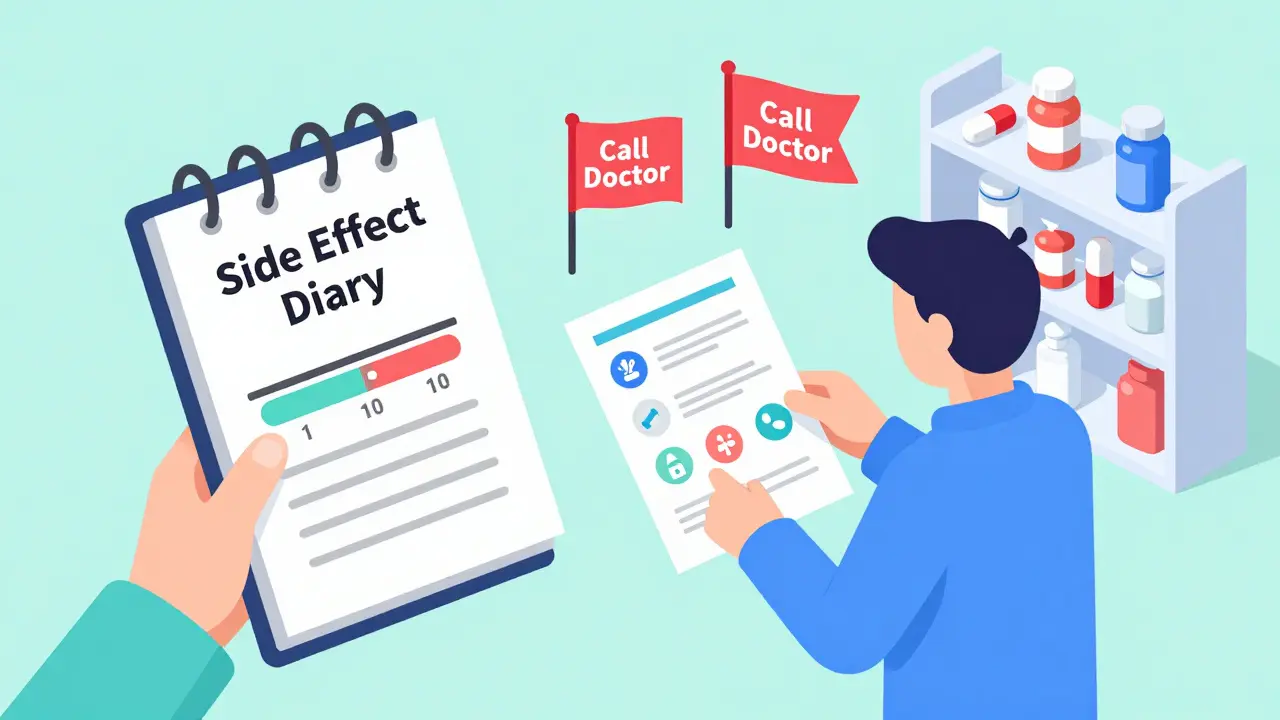
Keep a simple side effect diary. Write down: when you took the pill, what symptom showed up, how bad it was (1-10 scale), and how long it lasted. Studies show this improves diagnosis accuracy by 65%. You’ll give your doctor clear, useful info-not just "I feel weird."
Don’t Stop Your Medication Unless It’s an Emergency
This is where people make the biggest mistake. You feel sick, so you skip a dose-or stop cold turkey. That’s dangerous.For chronic conditions like high blood pressure, diabetes, or depression, stopping medication without medical advice leads to treatment failure in half of cases. A 2023 study from the National Institute on Aging found that 40% of complications from long-term drug therapy come from patients quitting too soon.
Here’s the rule: Only stop your medication if you’re having anaphylaxis (trouble breathing, swelling, fainting) or severe skin reactions (blisters, peeling). For everything else, keep taking it and call your doctor.
For example: if you’re on statins and get muscle pain, don’t quit. Call your doctor. They might lower your dose, switch you to another statin, or check for a rare condition called rhabdomyolysis. But if you stop on your own, your cholesterol could spike, and you could end up with a heart attack.
What’s Just a Normal Side Effect?
It helps to know what’s common-and what’s not. Here’s what most people experience without serious risk:- Nausea-affects 20-30% of people on antibiotics like amoxicillin. Usually goes away in a few days.
- Constipation-happens in 40-50% of opioid users. Talk to your doctor about stool softeners, don’t just tough it out.
- Diarrhea-common with antibiotics. Mild cases are normal; if it’s watery, bloody, or lasts over a week, get checked.
- Dry mouth-35% of antihistamine users deal with this. Drink water, chew sugar-free gum.
- Drowsiness-first-gen antihistamines like diphenhydramine make you sleepy. That’s the point. But if you’re falling asleep while driving, it’s time for a different drug.
- Mild rash-5-10% of people on antibiotics get a harmless rash. If it’s itchy, red, and spreading, get it looked at.
- Headache-15-20% of patients on various meds report this. Often goes away as your body adjusts.
If you’re unsure whether a symptom is normal, assume it’s not. Call your doctor. Better safe than sorry.
How to Report a Bad Reaction
Your report matters. The FDA’s MedWatch program gets over 1.3 million adverse event reports every year. About 15-20% come from patients like you. These reports have led to 200-300 label changes and 15-20 drug recalls annually since 2020.You can report a side effect in two easy ways:
- Call 1-800-332-1088 (FDA’s toll-free line)
- Go to fda.gov/medwatch (online form)
Even if you’re not sure it was the medication, report it. Rare side effects-like sudden liver failure or heart rhythm problems-often show up only after thousands of people start using a drug. Your report could help save someone else’s life.
What’s New in Medication Safety?
In January 2025, the FDA starts rolling out new rules to make side effect information clearer. Drug labels will use plain language instead of medical jargon. Pharmacies will be required to hand out updated medication guides when you pick up your prescription.Meanwhile, the FDA’s Sentinel Initiative is monitoring 300 million patient records in real time. It caught the heart failure risk with a popular diabetes drug within six months-something that used to take years. That’s how fast science is moving.
And here’s the kicker: only 35% of patients can correctly identify a red flag symptom. That’s why education matters. If you know what to look for, you’re not just protecting yourself-you’re helping the whole system work better.
Final Rule: Trust Your Gut
You know your body better than anyone. If something feels off, it probably is. Don’t second-guess yourself because you think you’re "overreacting."Medication safety isn’t about being paranoid. It’s about being informed. You’re not a burden for asking questions. You’re part of the solution.
What should I do if I think I’m having an allergic reaction to my medication?
If you have trouble breathing, swelling of the face or throat, hives, or feel like you might faint, call 911 or go to the emergency room immediately. Do not wait. Anaphylaxis can kill within minutes. If you have an epinephrine auto-injector (like an EpiPen), use it right away. Even if symptoms improve after using it, you still need emergency care-symptoms can return.
Should I stop taking my medication if I have side effects?
Only stop if you’re having a severe allergic reaction (trouble breathing, swelling, hives) or severe skin reactions (blisters, peeling skin). For all other side effects-like nausea, dizziness, or fatigue-keep taking the medication and call your doctor. Stopping without guidance can make your original condition worse, especially for chronic illnesses like high blood pressure or depression.
How long should I wait before calling my doctor about a side effect?
If a side effect lasts more than 48 hours, gets worse, or interferes with your daily life (like making it hard to sleep, work, or walk), call your doctor. Don’t wait until it’s unbearable. Early intervention can prevent serious complications. Keep a simple log: what symptom, when it started, how bad it is (1-10), and how long it lasted.
Can over-the-counter drugs cause serious side effects?
Yes. Many people think OTC meds are harmless, but they’re not. Taking too much acetaminophen (Tylenol) can cause liver failure. Combining NSAIDs like ibuprofen with blood thinners can cause dangerous bleeding. Even antihistamines can cause dizziness, confusion, or urinary retention in older adults. Always check with your pharmacist before mixing OTC drugs with prescriptions.
Is it normal to feel tired after starting a new medication?
It’s common in the first few days, especially with medications for anxiety, depression, or high blood pressure. Your body needs time to adjust. But if you’re so tired you can’t get out of bed, or if the fatigue lasts longer than a week, talk to your doctor. It could be a sign of an interaction, a dosage issue, or an underlying problem like low thyroid function.
How can I tell if a rash is from my medication or something else?
A rash from medication usually appears within days to weeks after starting the drug. It may be red, itchy, or spread quickly. If it’s accompanied by fever, blisters, or peeling skin, stop the medication and seek emergency care. A mild, localized rash that doesn’t spread and goes away in a few days is often harmless. But if you’re unsure, get it checked. Skin reactions can be early signs of serious conditions like Stevens-Johnson Syndrome.
What if I can’t reach my doctor when I have a side effect?
If it’s not an emergency, try calling your pharmacy. Pharmacists are trained to advise on side effects and can often connect you with an on-call doctor. If you’re in Australia, call Healthdirect on 1800 022 222 for free medical advice. If symptoms are severe-like trouble breathing, chest pain, or confusion-go to the nearest emergency department. Never delay care because you can’t reach your regular doctor.
Dylan Patrick
March 13, 2026 AT 13:38Serena Petrie
March 13, 2026 AT 17:07tynece roberts
March 14, 2026 AT 09:47Elsa Rodriguez
March 15, 2026 AT 13:37Kathy Leslie
March 16, 2026 AT 10:41Stephanie Paluch
March 16, 2026 AT 22:15Hugh Breen
March 17, 2026 AT 13:02Buddy Nataatmadja
March 18, 2026 AT 17:01rakesh sabharwal
March 19, 2026 AT 14:32mir yasir
March 21, 2026 AT 13:05Dylan Patrick
March 23, 2026 AT 04:35