Imagine picking up a prescription for a chronic condition. The pharmacist hands you a bottle with a price tag that makes your heart skip a beat. You ask if there’s a cheaper option, and they nod, swapping the brand-name box for a plain white one. That simple switch is the difference between single-source and multi-source drugs. But what does that label actually mean for your wallet, your health, and the effectiveness of the medicine you take every day?
In the complex world of pharmaceuticals, these terms dictate everything from insurance tiers to out-of-pocket costs. Single-source drugs are exclusive products made by one company, often protected by patents. Multi-source drugs have generic competitors, driving prices down through competition. Understanding this distinction isn’t just about saving money-it’s about navigating formulary restrictions, bioequivalence concerns, and the hidden mechanics of how we pay for healthcare in 2026.
Defining the Core Difference: Exclusivity vs. Competition
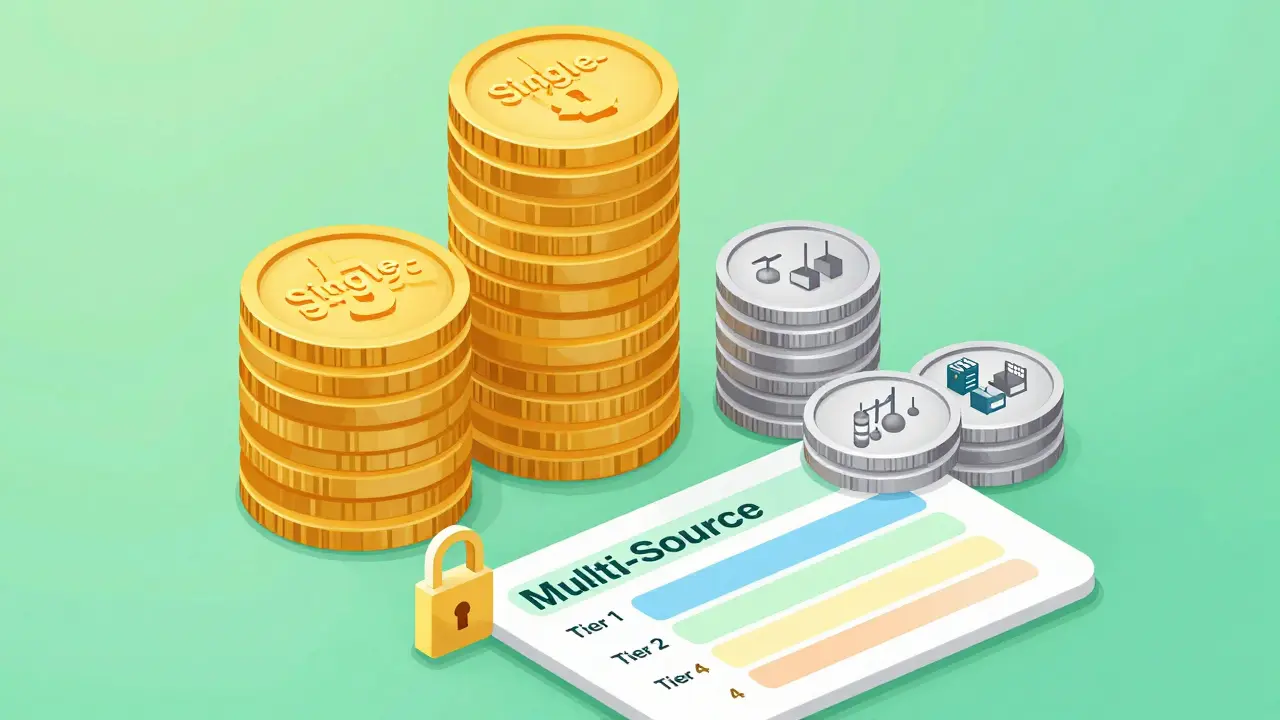
At its simplest, a single-source drug is a medication manufactured exclusively by one company with no generic equivalents available. These are typically newer drugs still under patent protection or exclusivity periods granted by regulators like the FDA. Because there is no competition, the manufacturer has significant control over pricing. In pharmacy benefit manager (PBM) systems, these are often coded as 'N' in the MONY classification system developed by Medi-Span.
On the other hand, a multi-source drug is available as both the original brand and generic equivalents from multiple manufacturers. These drugs have passed the patent hurdle. Generic versions must meet stringent FDA requirements, containing identical active ingredients, dosage forms, strengths, and administration routes. They must also demonstrate bioequivalence to the brand-name version, a mandate rooted in the Hatch-Waxman Act of 1984. In the MONY system, these are marked as 'O' (originator brand with generics) or 'Y' (generic version).
The key takeaway here is market structure. Single-source means monopoly; multi-source means competition. This structural difference cascades into every aspect of the patient experience, from the price on the shelf to the tier on your insurance plan.
The Cost Reality: Why Single-Source Drugs Are More Expensive
Price is usually the first thing patients notice. According to data from the USC Schaeffer Center, single-source drugs command significantly higher average list prices and rebates compared to their multi-source counterparts. For single-source drugs without generic competition, rebates and list prices tend to move together dollar-for-dollar. This means the net price remains relatively steady but high.
For multi-source drugs, the dynamic shifts. Manufacturers have less market power. A $1 increase in rebates often corresponds to less than a $1 increase in the list price, leading to declining net prices over time. This competitive pressure is why approximately 86% of medications sold in the United States are generic or multi-source products. They offer equivalent therapeutic effectiveness at a fraction of the cost.
| Feature | Single-Source Drugs | Multi-Source Drugs |
|---|---|---|
| Pricing Power | High (Monopoly) | Low (Competitive) |
| Average Monthly Cost | $587 (KFF 2022) | $132 (KFF 2022) |
| Rebate Dynamics | List price and rebates move dollar-for-dollar | Rebates drive down net prices more effectively |
| Insurance Tier | Higher tiers (Specialty/Tier 3-4) | Lower tiers (Generic/Tier 1-2) |
| Market Share | Growing in specialty care (12.4% annual growth) | Dominant overall (90% of prescriptions filled) |
The gap is stark. A 2022 Kaiser Family Foundation survey found that monthly medication costs averaged $587 for single-source drugs versus just $132 for multi-source options. While absolute dollar increases for single-source drugs can be massive ($958 vs $69 in recent ASPE reports), percentage increases for multi-source drugs have risen recently due to supply chain pressures. However, the base price difference remains the defining factor for most patients.
Efficacy and Safety: Are Generics Really the Same?
This is the question that keeps many patients up at night. If I switch from the brand to the generic, will it still work? The FDA’s stance is clear: approved generic drugs are therapeutically equivalent. To earn approval, a generic must demonstrate bioequivalence within 80-125% of the reference drug’s pharmacokinetic parameters. This ensures that the amount of drug absorbed into the bloodstream is similar enough to produce the same clinical effect.
However, patient experiences tell a nuanced story. On Drugs.com, multi-source drugs maintain an average rating of 4.2/5.0, slightly lower than the 4.5/5.0 for single-source brands. About 68% of negative reviews for generics cite "inconsistent effectiveness between manufacturers." This doesn’t necessarily mean the generic fails to meet FDA standards. It often points to variations in inactive ingredients-fillers, binders, or dyes-that can affect absorption speed or cause minor side effects in sensitive individuals.
For most people, the difference is imperceptible. But for those taking narrow therapeutic index medications (like certain blood thinners or anti-seizure drugs), even small variations matter. In these cases, sticking with a specific manufacturer, whether brand or generic, is often recommended by specialists. Always discuss any perceived change in efficacy with your doctor before switching back to a costly single-source option.
Navigating Insurance Formularies and PBMs
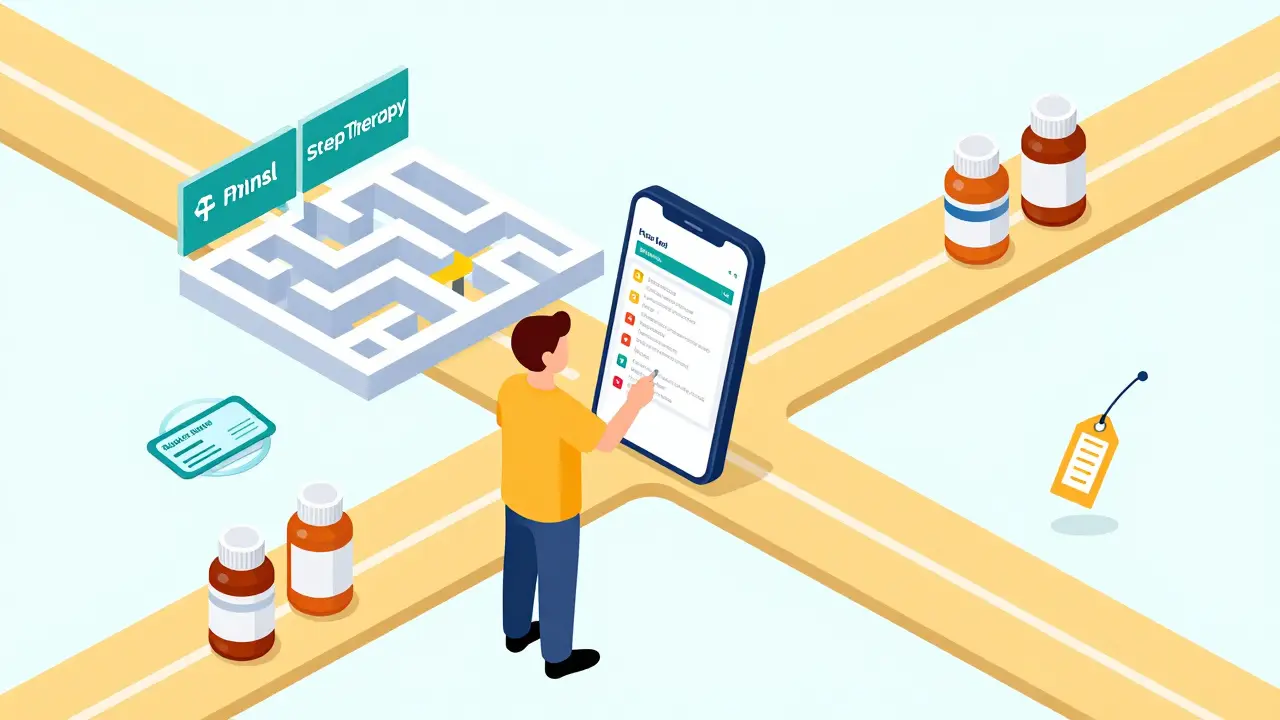
Your insurance plan doesn't just cover drugs; it steers you toward them. Pharmacy Benefit Managers (PBMs) design formularies that prioritize multi-source drugs to keep costs down. Single-source drugs often sit on higher tiers, requiring greater cost-sharing from you. You might encounter "step therapy" requirements, where your insurer demands you try a cheaper multi-source alternative before approving the single-source brand.
Another critical concept is Maximum Allowable Cost (MAC). MAC is the unit price at which a PBM or payer will pay a pharmacy for a generic drug. It typically sits 50-60% below the Average Wholesale Price (AWP) for brand-name drugs. About 75% of generic drugs are reimbursed using these MAC limits. This system works well when there are multiple generic competitors. But when a "single-source generic" emerges-one company holds exclusive rights to the generic version-the price advantage shrinks. Truveris’ 2022 analysis shows these single-source generics are not significantly cheaper than brand drugs, highlighting how market structure trumps the "generic" label in some cases.
If you find yourself facing prior authorization hurdles or unexpected switches between generic manufacturers, know that you’re not alone. A 2022 report by 3 Axis Advisors noted that 63% of multi-source drug users experienced unexpected switches due to PBM contracting changes. While the FDA maintains these switches don’t impact therapeutic outcomes, the psychological burden and potential for minor side effect variations are real challenges for patients.
Practical Steps for Patients in 2026
So, how do you protect yourself and your budget? Here is a actionable checklist based on current market dynamics:
- Check Your Formulary Tier: Before starting a new medication, look up its tier on your insurance plan’s website. If it’s a single-source drug on Tier 4, ask your doctor if a multi-source alternative exists for your condition.
- Ask About Authorized Generics: Some brand-name companies release their own generic versions (authorized generics) to maintain market share after patents expire. These can sometimes bridge the trust gap for patients wary of third-party generics.
- Monitor Manufacturer Changes: If you switch from a single-source to a multi-source drug and feel different, check the manufacturer on the bottle. Consistency matters. Ask your pharmacist to dispense from a specific manufacturer if possible.
- Leverage Patient Assistance Programs: For high-cost single-source specialty drugs, manufacturers often offer copay assistance cards. These can drastically reduce out-of-pocket costs, though they may not count toward your deductible.
- Understand the Inflation Rebate Penalty: Under the Inflation Reduction Act, Medicare Part D now penalizes drugs with price increases faster than inflation. This disproportionately affects single-source drugs. Keep an eye on news regarding price caps for your specific medication.
The transition from single-source to multi-source is accelerating. With the FDA’s GDUFA III implementation aiming to reduce generic approval times to 10 months by 2025, more drugs are becoming multi-source faster than ever. This is good news for affordability, but it requires patients to stay informed about their specific prescriptions.
FAQ: Common Questions About Drug Sourcing
Is a single-source drug always better quality than a multi-source generic?
Not necessarily. Both must meet strict FDA safety and efficacy standards. Single-source drugs are often newer and may have more clinical trial data, but multi-source generics are required to be bioequivalent. Quality differences usually relate to inactive ingredients, not the active medicinal component.
Why did my pharmacy switch my generic drug manufacturer?
Pharmacies and PBMs often switch manufacturers to secure lower contracts or due to supply shortages. While the FDA states these switches are therapeutically equivalent, some patients notice subtle differences in side effects or efficacy due to varying fillers or binders.
Can I force my insurance to cover a single-source brand name drug?
You can request an exception or appeal, especially if you have documented adverse reactions to all available multi-source alternatives. However, insurers often require "step therapy," meaning you must prove that cheaper multi-source options failed before covering the expensive single-source brand.
What is a "single-source generic"?
This occurs when only one company manufactures the generic version of a drug. Without competition from other generic makers, the price may remain high, similar to a brand-name drug, defeating the usual cost-saving purpose of generics.
How does the Inflation Reduction Act affect single-source drugs?
The IRA imposes penalties on Medicare Part D drugs that raise prices faster than inflation. Since single-source drugs have historically had higher baseline prices and fewer competitive checks, they are more likely to trigger these rebates, potentially slowing future price hikes.
Madeline Petes
May 23, 2026 AT 15:33honestly this is such a relief to read because i was so confused about why my insulin cost went up last month. it makes total sense now that the monopoly stuff is driving prices crazy. thanks for breaking it down so clearly!!
Anthony Padilla
May 24, 2026 AT 19:55i think its super important that we talk about how these systems affect everyone, not just people with money. like, if you are on a fixed income, that $587 vs $132 difference is life or death basically. we need more transparency in how PBMs operate because they are hiding behind all these rebates and tier lists. also, did anyone else notice the typo in the original post where it said 'actionable checklist'? small thing but it distracts from the great info.
Elizabeth Fandry
May 25, 2026 AT 20:02One must consider the philosophical implications of bioequivalence. 🧐 Is a drug truly the same if the inactive ingredients differ? The mind wanders into the realm of identity and substance. It is pretentious, perhaps, to demand perfection, yet when one’s health hangs in the balance, the distinction between ‘good enough’ and ‘optimal’ becomes paramount. One should not settle for mediocrity in matters of vital importance. 😤
Ramanath Rao
May 26, 2026 AT 23:54This whole system is broken beyond repair. In India, generics are affordable and accessible, but here you have this ridiculous PBM cartel inflating prices while pretending to save money through rebates. It is insulting to patients who have to jump through hoops for basic medication. The FDA needs to stop allowing single-source generics to exist without competition. It is pure greed disguised as healthcare policy.
Gary Helminiak
May 28, 2026 AT 21:56Hey folks! 👋 Just wanted to add some context here since I work in pharmacy benefits management. The rebate system is incredibly complex and often misunderstood by the general public. When a manufacturer offers a large rebate, it doesn't always mean the patient pays less at the counter; instead, the PBM keeps a portion of that rebate as profit, which incentivizes them to steer patients toward higher-list-price drugs rather than lower-net-cost ones. This creates a perverse incentive structure where the most expensive brand-name drugs can sometimes be preferred over cheaper generics because the back-end financial arrangements favor the PBM. It's a mess, but understanding this helps explain why your formulary might look the way it does. 💊📉
Christopher Laver
May 30, 2026 AT 14:24Boring. Read the article myself. Too much jargon.
Michael Schurmann
May 31, 2026 AT 04:13The author fails to grasp the nuance of market dynamics. Single-source drugs are expensive because R&D costs billions. You cannot simply wish away the economics of innovation. Those who complain about prices without understanding the underlying intellectual property rights are merely engaging in populist rhetoric. It is pathetic that people expect free healthcare funded by taxing successful pharmaceutical companies. Get a grip.
irine sabrina
May 31, 2026 AT 15:18I really appreciate this discussion because it highlights how stressful navigating healthcare can be. We all want to feel empowered and informed, right? It’s wonderful to see people sharing their experiences and insights. Let’s keep supporting each other through these challenges. Remember, you’re not alone in feeling frustrated by the system. 🌟
dane thorp
June 1, 2026 AT 00:23It is worth noting that step therapy requirements are often mandated by insurance contracts to ensure cost-effectiveness. While frustrating, they serve a purpose in managing overall healthcare expenditures. Patients should review their specific plan details carefully.
Christina Mitchell
June 2, 2026 AT 21:21There is a deeper truth here about trust and autonomy. When we lose control over our own bodies due to corporate decisions, we lose a part of our humanity. Yet, there is hope in education. By understanding these mechanisms, we reclaim some power. The shift towards multi-source options is a positive step towards equity and accessibility for all cultures and communities.
Russell Russell
June 2, 2026 AT 22:28Let's get motivated to change this! Knowledge is power. If we understand how the system works, we can advocate for better policies. Don't let the complexity discourage you. Every time you ask your pharmacist about generic alternatives or check your formulary tier, you are taking a stand. Keep pushing forward and stay informed!