When someone overdoses on medication, time isn’t just important-it’s everything. A person can go from feeling fine to struggling to breathe in under five minutes. And while emergency services are vital, knowing what antidotes exist-and how they work-could mean the difference between life and death. This isn’t about scare tactics. It’s about clarity. If you or someone you care about takes medications regularly, you need to know what to look for and what can actually help.
Acetaminophen (Paracetamol) Overdose: The Silent Killer
Acetaminophen, known as paracetamol in Australia, is in more than 600 over-the-counter and prescription products. It’s in cold medicines, pain relievers, and sleep aids. People think it’s safe because it’s everywhere. But taking just 10 grams-about 20 regular tablets-can cause severe liver damage. And here’s the twist: you might feel fine for hours. No vomiting. No pain. Just normal.
That’s why waiting to see symptoms is deadly. The antidote, N-acetylcysteine (NAC), works best if given within 8 hours of ingestion. After that, liver damage can become irreversible. Hospitals use a blood test called the Rumack-Matthew nomogram to decide if NAC is needed. If you suspect an overdose-even if the person seems okay-call emergency services immediately. Don’t wait.
In Australia, the Better Health Channel warns that symptoms often don’t show up for 2 to 3 days. That’s why even if someone seems fine after taking too much paracetamol, they still need medical care. NAC is given either as an IV drip over 21 hours or as a bitter-tasting oral solution. It’s not pleasant, but it’s life-saving. In the U.S., IV NAC costs around $700 for a full course. In Australia, it’s available in public hospitals at no cost to patients.
Opioid Overdose: Naloxone Can Bring Someone Back
Opioids include prescription painkillers like oxycodone and hydrocodone, as well as illegal drugs like heroin and fentanyl. An overdose slows or stops breathing. Skin turns blue. The person becomes unresponsive. Without help, they die.
The antidote here is naloxone. It works fast-within 2 to 5 minutes. It knocks opioids off brain receptors and lets breathing restart. Naloxone comes as a nasal spray (like Narcan) or an auto-injector. It’s safe, simple, and non-addictive. You can’t overdose on naloxone.
In Victoria, the Take-Home Naloxone Program has given out over 25,000 free kits since 2017. There are 1,842 documented cases where someone used naloxone to reverse an overdose. That’s real. That’s proof it works. Naloxone kits are available at pharmacies without a prescription in Australia. You don’t need to be a doctor to use one. If you know someone who uses opioids-even if they’re prescribed-keep a kit nearby. Learn how to use it. Practice with a training device.
But here’s the catch: naloxone wears off in 30 to 90 minutes. Opioids can stay in the body much longer. That means someone can slip back into overdose after the naloxone wears off. Always call 000 after giving naloxone. Even if they wake up, they still need medical care.
Benzodiazepine Overdose: Flumazenil Is Risky
Benzodiazepines like diazepam (Valium), alprazolam (Xanax), and clonazepam (Klonopin) are used for anxiety, seizures, and sleep. They’re safe when taken as directed. But mixing them with alcohol or opioids is dangerous. Too much can cause deep sedation, slow breathing, and coma.
The antidote is flumazenil. It reverses the effects quickly. But here’s the problem: if someone takes benzodiazepines every day for weeks or months, flumazenil can trigger sudden withdrawal-and that can cause seizures. That’s why many doctors avoid it. Instead, they focus on breathing support: oxygen, airway management, and monitoring.
California Poison Control System recommends starting with a tiny dose of flumazenil-0.2 mg-and watching closely. If the person wakes up and starts acting agitated or confused, stop. Don’t give more. The risk of seizures is real. For someone on long-term benzodiazepines, supportive care is safer than reversal.
If you’re on these medications, talk to your doctor. Don’t mix them with alcohol or opioids. Keep track of your doses. If you ever feel like you’ve taken too much, get help immediately-even if you don’t feel bad yet.
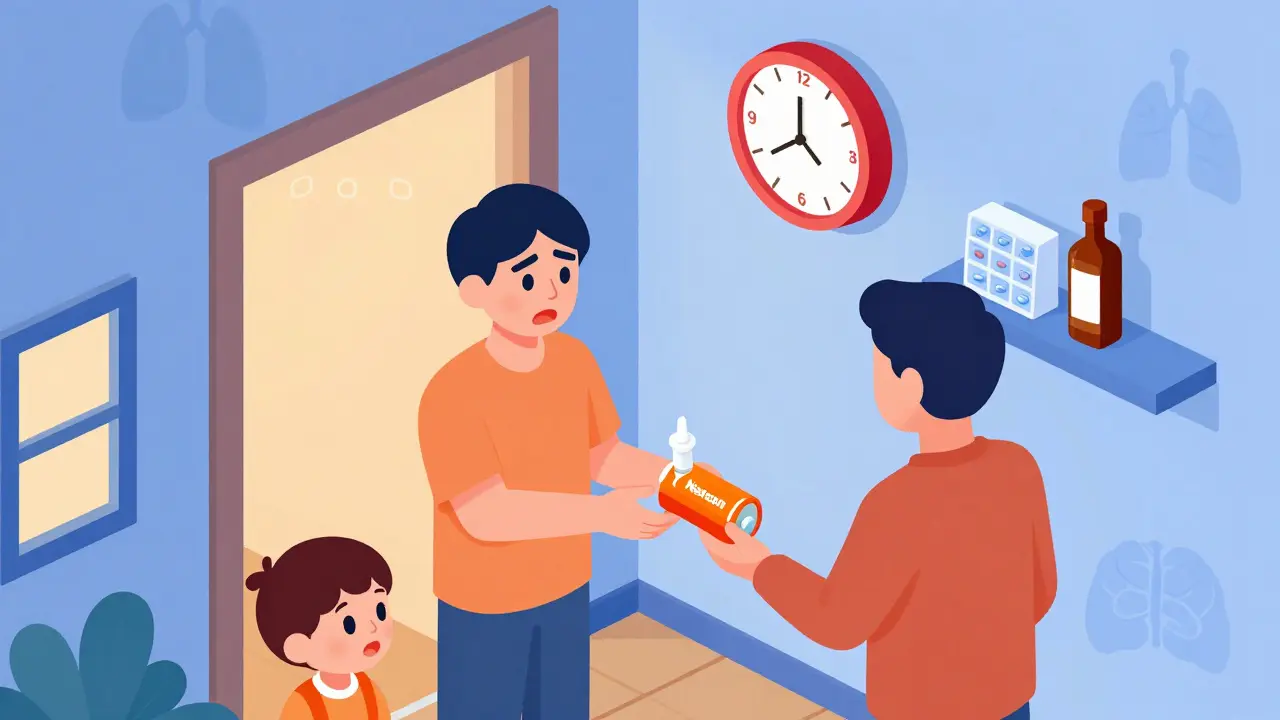
Toxic Alcohol Poisoning: Methanol and Ethylene Glycol
Methanol and ethylene glycol are found in antifreeze, windshield washer fluid, and some cleaning products. They’re not meant to be drunk. But sometimes, people accidentally ingest them-or worse, drink them thinking they’re alcohol.
These poisons don’t make you drunk right away. They turn into toxic acids in the body that destroy kidneys, the brain, and the optic nerve. Symptoms start with nausea and dizziness, then turn to confusion, seizures, and blindness. By the time someone feels really sick, it’s often too late.
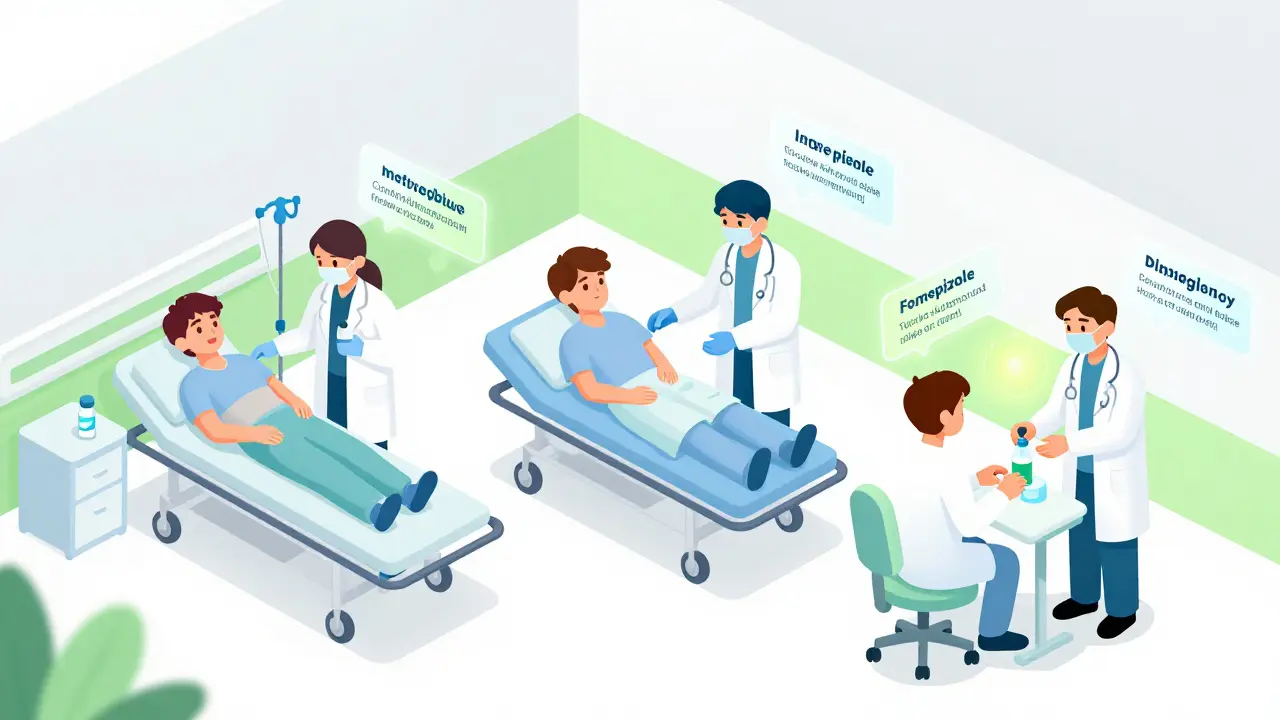
The antidote is fomepizole. It blocks the body from turning the poison into acid. It’s given as an IV injection. The first dose is 15 mg per kg of body weight, then 10 mg every 12 hours. Treatment lasts days. Fomepizole costs about $4,000 per course. That’s expensive. But there’s a cheaper alternative: ethanol (alcohol). Yes, vodka or whiskey. In emergencies, hospitals sometimes use IV ethanol to compete with the poison. It’s not ideal-it’s messy and hard to dose-but it works when fomepizole isn’t available.
If you suspect someone drank antifreeze or another toxic fluid, call 000. Don’t wait for symptoms. Don’t try to make them vomit. Get them to a hospital fast. Time is everything.
Methemoglobinemia: When Blood Can’t Carry Oxygen
Some medications-like nitroglycerin, dapsone, or local anesthetics like benzocaine-can cause methemoglobinemia. This is when the iron in your blood changes form and can’t carry oxygen. Skin turns blue or gray. Breathing becomes hard. The person feels dizzy or confused.
The antidote is methylene blue. It’s given as an IV injection over 5 minutes. The dose is 1 to 2 mg per kg of body weight. You don’t give more than 7 mg per kg total. It works fast-often within minutes. But it’s not for everyone. People with G6PD deficiency (a genetic condition) can have severe reactions. That’s why doctors check before giving it.
If you’re on medications that can cause this, know the signs. Blue lips or skin that doesn’t go away after a few minutes? That’s not normal. Get help. Don’t wait.
What You Can Do Right Now
You don’t need to be a doctor to save a life. Here’s what you can do today:
- Keep a naloxone kit at home if you or someone you live with uses opioids.
- Know where to get free naloxone in your area-in Australia, ask at your local pharmacy or community health center.
- Store medications safely. Use childproof caps. Lock them away if kids or visitors are around.
- Never mix painkillers, sleeping pills, or anxiety meds with alcohol.
- Write down your medications and doses. Bring this list to every doctor visit.
- If you suspect an overdose, call 000 immediately. Don’t wait. Don’t try to ‘wait it out’.
- Learn the recovery position: if someone is unconscious but breathing, turn them gently onto their side. This keeps their airway open.
Why Antidotes Aren’t Magic Bullets
Antidotes are powerful-but they’re not replacements for emergency care. Naloxone brings someone back, but they still need a hospital. NAC protects the liver, but it doesn’t fix damage already done. Flumazenil can cause seizures. Methylene blue can be dangerous in some people.
Doctors always start with support: oxygen, IV fluids, airway management. Antidotes come second. That’s why calling 000 is non-negotiable. Even if you give naloxone and they wake up, they still need monitoring. Overdoses can rebound. Organs can fail. You need professionals.
And don’t rely on internet advice. Reddit stories and YouTube videos aren’t medical guidance. Poison control centers are. In Australia, call 13 11 26. In the U.S., it’s 1-800-222-1222. These lines are free, confidential, and staffed by toxicology experts 24/7. Use them.
What’s Changing in 2026
Things are improving. In late 2023, the FDA approved Narcan nasal spray for over-the-counter sale in the U.S. It’s now on shelves without a prescription. Australia is watching closely. Generic versions of naloxone are cheaper. Longer-acting versions are in trials-ones that could last 4 to 6 hours instead of 90 minutes.
But access is still uneven. Rural hospitals often don’t stock fomepizole or digoxin immune Fab. Insurance doesn’t always cover them. Cost is still a barrier. That’s why public education and community programs matter more than ever.
Antidotes aren’t just for hospitals anymore. They’re for homes, schools, workplaces. They’re for you.
Can I give someone naloxone if I’m not a doctor?
Yes. Naloxone is designed to be used by anyone. It’s safe, easy to use, and won’t harm someone who didn’t overdose. If someone is unresponsive, not breathing, or has blue lips, give naloxone immediately. Then call 000. You can’t overdose on naloxone, and you can’t make things worse by trying.
Is NAC available over the counter?
No. N-acetylcysteine (NAC) is only available by prescription or in hospital settings. It’s not sold as a supplement for overdose prevention. Taking NAC on your own won’t help if you’ve overdosed on acetaminophen. You need the correct IV or oral dose given under medical supervision. Don’t try to self-treat.
What if I don’t know what the person overdosed on?
Call 000 and 13 11 26 (Poison Control) at the same time. Emergency responders are trained to handle unknown overdoses. They’ll bring the right tools and medications. Don’t guess. Don’t wait. Even if you’re unsure, getting help fast is the best thing you can do.
Can I use vodka to treat ethylene glycol poisoning at home?
No. Ethanol (alcohol) is only used as an emergency treatment in hospitals under strict medical control. Giving someone vodka at home won’t work safely. It’s hard to dose correctly, and alcohol itself can cause breathing problems or coma. If you suspect toxic alcohol poisoning, call 000 immediately. Do not attempt home remedies.
Are antidotes safe for pregnant women?
Yes. Naloxone, NAC, and methylene blue are considered safe in pregnancy when used for overdose. The risk of not treating the overdose is far greater than the risk of the antidote. If a pregnant woman overdoses, she needs immediate medical care. Antidotes can save both her life and the baby’s.
Final Thought: Knowledge Is the Best Antidote
You can’t prevent every overdose. But you can prepare. Know the signs. Know the antidotes. Know where to get help. Keep naloxone in your bag, your car, your home. Talk to your family about medication safety. Don’t assume someone else will act. If you’re the one who knows what to do, you might be the one who saves a life.
Jarrod Flesch
January 22, 2026 AT 03:27Naloxone kits are now at every pharmacy here in Melbourne-free and no ID needed. I keep one in my glovebox and one by my bed. You never know when someone’s gonna need it. I’ve seen it work. It’s like magic, but real.
Also, if you’re on opioids-even just for back pain-tell someone you live with where it is. Don’t wait till it’s too late.
Amber Lane
January 22, 2026 AT 05:23NAC isn’t OTC for a reason. People think ‘it’s just a supplement’ and pop pills hoping it’ll save them. Nope. You need the IV drip, the timing, the monitoring. Self-treating acetaminophen overdose is like trying to patch a plane mid-flight with duct tape.
Sangeeta Isaac
January 22, 2026 AT 20:39so like… if i drink antifreeze and then chug a bottle of vodka… is that a ‘home remedy’ or just a really bad episode of ‘my weird family’? 😅
Barbara Mahone
January 24, 2026 AT 13:15The FDA’s OTC approval of Narcan is a quiet revolution. In the U.S., we’ve spent decades treating addiction as a moral failure. Now, we’re finally treating it like a medical emergency. That shift matters. Not because it’s perfect-but because it’s human.
Malvina Tomja
January 26, 2026 AT 03:42Flumazenil is dangerous? Of course it is. People on benzos for years are addicted, not ‘medicated.’ They should’ve tapered slowly. This isn’t a ‘safe reversal’-it’s a bandaid on a systemic failure. The real problem is doctors prescribing these like candy.
And don’t get me started on how many people mix them with alcohol. It’s not ‘accidental.’ It’s negligence.
Ashok Sakra
January 27, 2026 AT 00:19wait so if i take 20 paracetamol and feel fine i should just go to hospital?? but what if i dont have money?? what if i dont have transport?? what if i just want to sleep??
why is everyone so dramatic?? i just want to chill
Rod Wheatley
January 28, 2026 AT 12:51Just had to explain this to my 72-year-old mom last week. She was taking Tylenol for arthritis and didn’t realize how easy it is to overdose. I printed out the chart from the article, laminated it, and taped it to her medicine cabinet.
She cried. Said she didn’t know. We all need this info. Not just for us-for our parents, our grandparents. They’re the ones most at risk.
michelle Brownsea
January 28, 2026 AT 23:41Let me be very clear: You do not ‘save a life’ by keeping naloxone in your car. You save a life by intervening early, by preventing addiction, by addressing trauma, by funding mental health services, by dismantling the pharmaceutical-industrial complex that pushed opioids like candy.
Antidotes are not solutions-they are damage control. And we are failing if we treat them like the end goal.
Steve Hesketh
January 30, 2026 AT 19:48Brothers and sisters, this is the kind of knowledge that turns bystanders into heroes. I’m from Lagos, and we don’t have fomepizole in most clinics-but we have people who care. If you know someone who drinks cleaning products? Don’t judge. Don’t look away. Call the poison line. Hold their hand. That’s what matters.
God doesn’t ask us to be doctors. He asks us to be present.
Samuel Mendoza
January 31, 2026 AT 11:23Wait-vodka as an antidote? That’s not a ‘cheaper alternative.’ That’s a myth from the 1980s. Fomepizole is expensive, yes-but ethanol isn’t safer. It’s just older. And no, you can’t ‘dose’ it at home. This article is misleading.
Jerry Rodrigues
February 1, 2026 AT 13:36My cousin OD’d on Xanax and alcohol. They didn’t give her flumazenil. They just put her on oxygen and waited. She woke up three hours later. No seizures. No drama.
Supportive care works. Sometimes, less is more.
Kelly McRainey Moore
February 1, 2026 AT 14:50I’m a nurse in rural Ohio. We don’t have fomepizole. We’ve used ethanol IVs before. It’s messy. It’s not ideal. But we saved two lives last year with it.
Don’t shame the workarounds. When the system fails, people still need help. And we give it.
Melanie Pearson
February 2, 2026 AT 18:12Why is this article so… American-centric? Australia gives NAC for free? What about the rest of the world? In many countries, even basic emergency care is inaccessible. This isn’t about ‘knowing the antidotes’-it’s about healthcare equity. Stop pretending this is just a knowledge gap.
Philip Williams
February 4, 2026 AT 12:08Thank you for this comprehensive, evidence-based overview. The distinction between antidotes and emergency support is critical. Too many assume that naloxone or NAC alone is sufficient. This clarifies the hierarchy of care: airway, breathing, circulation-then antidotes. Essential reading.
Jarrod Flesch
February 5, 2026 AT 10:39Just saw someone reply saying ‘vodka works.’ NO. Just no. I’ve seen people try this. One guy ended up in ICU with alcohol poisoning AND ethylene glycol toxicity. It’s not a hack. It’s a death sentence.
Stop googling ‘home remedies’ for poison. Call 13 11 26. It’s free. It’s fast. It’s real.