When you pick up a prescription and see a different name on the bottle - maybe it’s no longer Lexapro but escitalopram - you might wonder: is this really the same? The answer lies in bioequivalence testing, a quiet but critical process that keeps millions of patients safe every day. This isn’t just about saving money. It’s about making sure that a generic drug works exactly like the brand-name version - no surprises, no risks, no compromises.
What Bioequivalence Actually Means
Bioequivalence isn’t a marketing term. It’s a hard science. It means that when you take a generic drug, your body absorbs the active ingredient at the same rate and to the same extent as the brand-name version. That’s measured using two key numbers: AUC (area under the curve), which tells you how much of the drug gets into your bloodstream over time, and Cmax (maximum concentration), which shows how fast it gets there. Regulatory agencies like the U.S. FDA and the European EMA require that the 90% confidence interval for these values falls between 80% and 125% compared to the original drug. That might sound like a wide range, but it’s based on decades of clinical data showing that within this window, patients experience the same therapeutic effect and safety profile. For drugs with a narrow therapeutic index - like warfarin, levothyroxine, or phenytoin - the standard is even tighter, often 90% to 111%, because even small differences can lead to serious side effects or treatment failure.Why This Testing Protects Your Health
Imagine switching from one heart medication to another because it’s cheaper - but the new version doesn’t dissolve the same way in your stomach. That could mean your blood levels drop too low, increasing your risk of a clot. Or worse, it could absorb too quickly, causing dangerous bleeding. Bioequivalence testing prevents this by proving the generic version behaves identically in the body. The FDA and EMA don’t approve generics based on chemical similarity alone. They require real-world data from clinical studies. These are typically done in healthy volunteers, using a crossover design: you take the brand drug one time, then the generic another, with a washout period in between. Blood samples are taken over hours to track how the drug moves through your system. If the results match within the approved range, the generic is approved. This isn’t theoretical. In 2020, the U.S. saved $313 billion by using generic drugs - 90% of all prescriptions filled, but only 23% of total drug spending. That’s possible because bioequivalence testing gives doctors and pharmacists confidence to switch patients without risking their health.When the Rules Get More Complex
Not all drugs are created equal. Some, called highly variable drugs (HVDs), behave differently from person to person. For example, a drug like clopidogrel might be absorbed at wildly different rates in different people. For these, regulators use scaled average bioequivalence. Instead of a fixed 80-125% range, the acceptable window widens to 75-133%, but only if the drug’s variability is high and the average difference between products stays small. This prevents unsafe products from slipping through just because the data looks noisy. Then there are complex products: inhalers, topical creams, eye drops. These don’t just need to be absorbed the same way - they need to deliver the drug to the right place in the body. For inhalers, it’s not enough to match blood levels. The particle size, spray pattern, and lung deposition matter too. That’s why the FDA launched its Complex Generic Drug Products initiative in 2022. New methods, including advanced imaging and in-vitro testing, are being developed to measure what traditional blood tests can’t.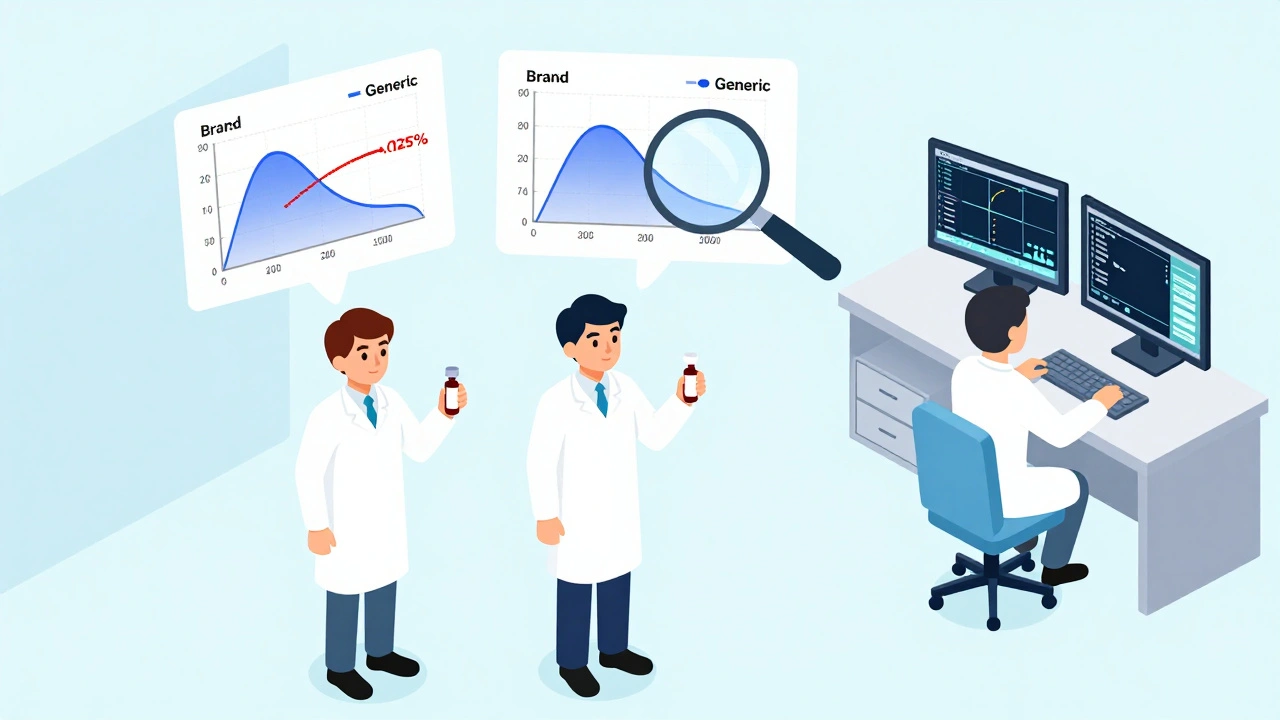
Biosimilars Are Not the Same
It’s easy to confuse generic drugs with biosimilars. They’re both cheaper alternatives, but they’re not the same thing. Generics are chemically identical copies of small-molecule drugs - think aspirin or metformin. Biosimilars are copies of biologic drugs - complex proteins made in living cells, like insulin or Humira. Because biologics are made by living organisms, they can’t be exact copies. Instead, biosimilars must prove similarity through a “totality of evidence” approach: structural analysis, animal studies, pharmacokinetics, immunogenicity tests, and sometimes clinical trials. This is why biosimilars take longer and cost more to develop than generics. But the goal is the same: patient safety. If a biosimilar works like the original, it can be safely used - and it’s already saving billions in autoimmune and cancer treatments.What Patients Really Experience
Some patients report problems after switching to a generic. Reddit threads, pharmacy forums, and personal stories often mention fatigue, mood changes, or worsening symptoms. But here’s the key: these reports rarely match what regulatory agencies see. The FDA’s Adverse Event Reporting System (FAERS) shows that only 0.07% of all adverse drug reports from 2020 to 2023 involved generics with confirmed bioequivalence. That’s far lower than the 2.3% linked to brand-name drugs. Why? Because when a generic fails bioequivalence testing, it doesn’t get approved. If it slips through and causes a pattern of harm, the FDA pulls it. A 2022 survey by the National Community Pharmacists Association found that 87% of patients felt generics worked just as well as brand names. Even for drugs like levothyroxine - which had a major safety overhaul in 2012 after inconsistent generics caused thyroid issues - patient satisfaction improved after stricter bioequivalence standards were enforced. Today, 58% of reviewers on Drugs.com say the generic works the same as the brand.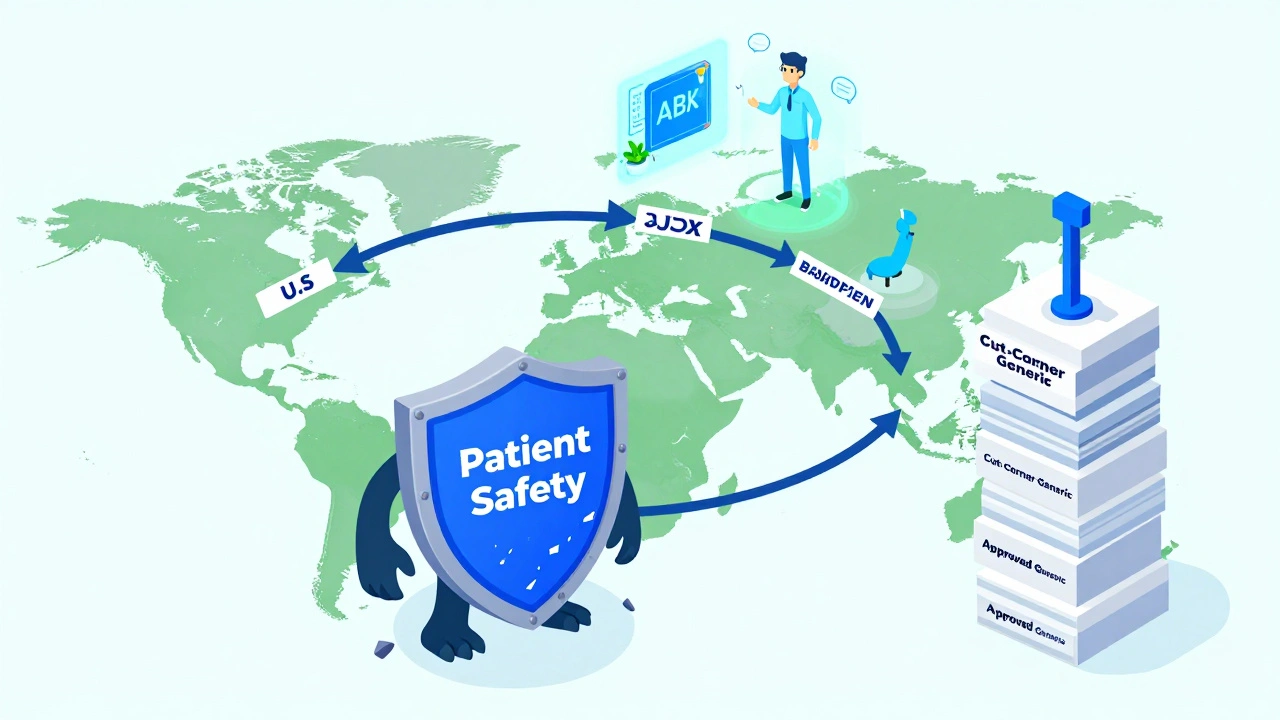
The Hidden Cost of Skipping Testing
Conducting a bioequivalence study isn’t cheap. It costs between $1 million and $2 million per formulation and takes 12 to 18 months. It requires specialized labs, trained staff, precise analytical methods like LC-MS/MS, and volunteers who meet strict health criteria: age 18+, BMI between 18.5 and 30, normal liver and kidney function. Some manufacturers try to cut corners. They skip fed-state studies even when the brand drug is taken with food. Others use outdated methods that can’t detect small differences in dissolution. That’s why regulators keep updating guidelines. The EMA’s 2023 update on topical products, for example, now requires new in-vitro tests to prove the cream spreads and penetrates skin the same way as the original. The stakes are high. If bioequivalence testing were weakened, patients would face unpredictable outcomes. One study found that switching between non-bioequivalent levothyroxine formulations caused thyroid hormone levels to fluctuate enough to require dose adjustments in over 30% of patients. That’s not just inconvenient - it’s dangerous.The Global Picture
Bioequivalence standards aren’t just an American or European thing. As of 2023, 134 countries have formal requirements - up from 89 in 2015. The World Health Organization, the International Pharmaceutical Regulators Programme, and groups like ICH have pushed for global alignment. But differences still exist. Japan requires fasting studies even for drugs meant to be taken with food. Brazil mandates specific lab tests regardless of the study design. These variations make it harder for manufacturers to sell globally, but they also protect patients in regions with weaker oversight. The future is moving toward smarter testing. The FDA is now accepting data from physiologically-based pharmacokinetic (PBPK) models - computer simulations that predict how a drug behaves in the body. In 2022, they approved 17 such submissions. Artificial intelligence is being explored to predict bioequivalence from dissolution profiles alone, potentially reducing the need for human trials in the future. But for now, blood tests and clinical studies remain the gold standard. Because when it comes to your health, there’s no substitute for proof.Are generic drugs really as safe as brand-name drugs?
Yes - if they’ve passed bioequivalence testing. Regulatory agencies like the FDA and EMA require generic drugs to prove they deliver the same amount of active ingredient at the same rate as the brand-name version. Once approved, they are considered therapeutically equivalent. Over 90% of U.S. prescriptions are for generics, and adverse event data shows they’re just as safe.
Why do some people say generics don’t work for them?
Some patients report changes in how they feel after switching, but these cases are rare and often not linked to actual bioequivalence failure. Factors like placebo effect, changing health conditions, or switching between different generic manufacturers (not just brand to generic) can cause perceived differences. The FDA tracks adverse events closely - if a generic consistently caused harm, it would be pulled from the market.
What drugs need stricter bioequivalence testing?
Drugs with a narrow therapeutic index (NTI) require tighter standards. These include warfarin (blood thinner), levothyroxine (thyroid hormone), phenytoin (seizure control), and cyclosporine (immunosuppressant). For these, the acceptable bioequivalence range is often narrowed to 90-111% instead of the standard 80-125% to prevent dangerous fluctuations in blood levels.
Can I trust a generic drug if it’s much cheaper?
Price alone doesn’t determine safety. But if the generic is approved by a reputable regulatory agency like the FDA, EMA, or WHO, you can trust it. The low cost comes from reduced marketing and R&D expenses - not lower quality. The testing process is just as rigorous. Always check that the generic is listed in the FDA’s Orange Book or equivalent registry.
How do regulators ensure bioequivalence standards are followed?
Regulators require detailed study protocols, validate analytical methods, and inspect manufacturing sites. They review raw data from clinical trials, not just summaries. Post-approval, they monitor adverse events and can request additional studies if concerns arise. Companies that falsify data face fines, product recalls, and criminal charges.
Karl Barrett
December 4, 2025 AT 02:28Let’s be real - bioequivalence isn’t just regulatory box-ticking. It’s pharmacokinetic poetry. The 80-125% CI? That’s not arbitrary. It’s the sweet spot where therapeutic equivalence meets biological reality. AUC and Cmax aren’t just acronyms - they’re the heartbeat of patient safety. When you’re dealing with NTI drugs like warfarin, that window shrinks to 90-111% because the margin for error is literally life or death. We’re not talking about aspirin here - we’re talking about drugs where 5% difference in absorption can trigger a stroke or a bleed. And yet, people still think generics are ‘cheap knockoffs.’
The fact that 90% of prescriptions are filled with generics and adverse event rates are LOWER than brand-name drugs? That’s not luck. That’s science. That’s the FDA doing its job. The real tragedy isn’t generics - it’s the misinformation that makes patients afraid to take them.
Jake Deeds
December 6, 2025 AT 00:34Oh wow, another ‘trust the FDA’ pep talk. How quaint. You know what happens when you trust institutions? You get fenfluramine. You get Vioxx. You get opioids marketed as non-addictive. The FDA isn’t a saint - it’s a bureaucracy with a budget and lobbyists. And let’s not forget: the 80-125% range was chosen because it’s *convenient*, not because it’s *perfect*. What about patients who’ve had real, documented reactions after switching? You dismiss them as ‘placebo’? That’s not science - that’s arrogance.
And don’t even get me started on ‘bioequivalent’ levothyroxine. I’ve seen three patients end up in the ER because their generic switched without warning. The system isn’t broken - it’s just *comfortable*. And comfort is the enemy of safety.
George Graham
December 7, 2025 AT 10:02I’ve worked in community pharmacies for 22 years, and I’ve seen patients go from skeptical to grateful after switching to generics. But it’s not just about the science - it’s about trust. When a patient comes in nervous because their pill looks different, we take time to explain: ‘This isn’t a different drug. It’s the same medicine, just made by someone else.’ We show them the Orange Book listing. We reassure them. And most of the time? They’re fine.
Yeah, there are outliers. But the data doesn’t lie - 87% of patients say generics work just as well. And when they don’t? It’s usually because they switched between two different generics, not brand to generic. That’s a pharmacy workflow issue, not a bioequivalence failure. We need better communication, not fear.
John Filby
December 9, 2025 AT 09:10Big fan of this breakdown 😊 I always tell my grandma that generics are the same, just cheaper - and she believes me because I explain it like this. The 80-125% thing sounded wild at first, but once I read about AUC and Cmax, it made sense. Also, the part about inhalers and creams needing more than blood tests? Mind blown. I had no idea they had to test how the cream spreads on skin 😅
Also, huge props to the FDA for using PBPK models now. That’s like… sci-fi becoming real. AI predicting drug behavior? Next thing you know, we’ll have robot pharmacists.
Elizabeth Crutchfield
December 11, 2025 AT 09:03i just switched to generic levothyroxine and i swear my energy dropped and i felt like a zombie for 2 weeks. my doc said it’s ‘all in my head’ but i know what i felt. why do they even let these generics exist if people like me get wrecked?
Ben Choy
December 11, 2025 AT 20:20Love this post. Seriously. The part about HVDs and scaled average bioequivalence? That’s the kind of nuance we need more of. So many people think ‘generic = bad’ without understanding how smart the science actually is. The fact that regulators adjust the range based on variability? That’s not laziness - that’s precision.
Also, kudos to the WHO pushing global standards. It’s not just about cost - it’s about equity. People in low-income countries deserve safe meds too. And yes, biosimilars are a whole other beast - but they’re still a win for patients who need biologics without going bankrupt.
Emmanuel Peter
December 12, 2025 AT 15:11So you’re saying the FDA approves generics based on blood tests in healthy young men? What about elderly patients? Diabetics? People with liver disease? You think a 22-year-old volunteer with a BMI of 24 is representative of the 70-year-old woman on five meds? That’s not science - that’s a fantasy. And you call that ‘patient safety’?
Oh, and don’t even get me started on the fact that companies can submit data from just one formulation and get approval for 10 different strengths. That’s not bioequivalence - that’s statistical sleight of hand. You’re not protecting patients. You’re protecting profit margins.
Ollie Newland
December 14, 2025 AT 02:51As a pharmacokinetics nerd, I’ll say this: the 80-125% CI is statistically robust. It’s derived from real-world outcomes data, not theoretical models. The fact that it works across 90% of drugs is a testament to how well the science has matured.
And yes - HVDs are tricky. But scaled BE? That’s genius. It’s not lowering standards - it’s adapting them. Same with complex products. Inhalers? You can’t just measure plasma levels. You need aerosol deposition data. The EMA and FDA are evolving, and that’s a good thing.
Also - PBPK models are the future. We’re moving toward in silico trials. In 10 years, we might not need human studies for 70% of generics. That’s efficiency without sacrificing safety.
Carolyn Ford
December 15, 2025 AT 08:49Oh please. ‘Bioequivalence’? More like ‘bioconvenience.’ The FDA lets generics in with a 25% swing in absorption? That’s not equivalence - that’s a gamble. And you call it ‘safe’? What about the 12% of patients who report ‘different side effects’? You ignore them because they don’t fit your pretty little statistical model?
And let’s talk about the real problem: manufacturers. They use cheaper fillers. They change the coating. They skip fed-state studies. And the FDA? They’re too busy kissing pharma’s ass to actually enforce anything. You think this is safe? You’re delusional.
Heidi Thomas
December 16, 2025 AT 18:00Stop lying to people. Generics aren’t safe. They’re a cost-cutting measure disguised as progress. I’ve been on the same brand-name drug for 15 years. Switched to generic once. Had a seizure. That’s not placebo. That’s failure. And now you want me to believe the FDA’s numbers? They’re paid off. You’re part of the system that kills people to save money.
Alex Piddington
December 18, 2025 AT 00:44This is one of the clearest, most thoughtful explanations of bioequivalence I’ve seen in a long time. Thank you for taking the time to break down the science without oversimplifying. The distinction between generics and biosimilars is especially important - too many people conflate them.
And I appreciate the emphasis on patient experience. Yes, most people do fine. But for those who don’t, we need better tracking, better labeling, and better communication. Not fear. Not dismissal. Just better systems.
Also - the PBPK models are exciting. If we can reduce human trials without compromising safety, that’s a win for ethics, cost, and speed. This is the future of medicine.
Benjamin Sedler
December 18, 2025 AT 23:59Okay but what if the generic has a different dye? I read online that the red dye in one brand of metformin caused my rash. But the FDA says ‘active ingredient is the same’ so it’s fine? That’s like saying two cars are identical because they have the same engine - even if one has a plastic steering wheel and the other has leather.
And why do they even allow different fillers? I’m not asking for luxury - I’m asking for consistency. If I switch from one generic to another and my body reacts, why isn’t that a red flag? Why is the burden always on the patient to figure out which version works?
Also - if you’re going to cite the Orange Book, why not mention that it doesn’t list all generics? Some are ‘AB-rated’ but still cause issues. The system isn’t perfect. It’s just… quiet.