Imagine waking up in the middle of the night gasping for air. Your chest feels tight, like a vice is squeezing your lungs. This isn't just bad luck; it's uncontrolled asthma, a chronic inflammatory disease of the airways that causes recurring episodes of wheezing, breathlessness, chest tightness, and coughing. For millions of people, this panic is a regular part of life because they are using outdated strategies to manage their condition. The good news? We know exactly how to stop this cycle. Recent updates in medical guidelines have shifted the focus from simply treating symptoms to preventing them entirely.
If you have asthma, you likely own an inhaler. But do you actually know if it’s working? Most people think taking a puff when they feel short of breath is enough. That approach is dangerous. Modern medicine has moved away from relying solely on quick-relief sprays. Instead, the goal is daily control through anti-inflammatory medications and smart trigger avoidance. Let’s break down what real asthma control looks like in 2026, based on the latest evidence from global health authorities.
The Big Shift: Why Your Reliever Inhaler Isn't Enough
For decades, the standard advice was simple: use a rescue inhaler when you can’t breathe. These devices contain short-acting beta-agonists (SABAs), which relax the muscles around your airways quickly. It feels like magic relief. However, recent data shows this method is risky. Using only SABAs treats the symptom but ignores the underlying inflammation. Think of it like putting a bandage on a wound that keeps getting infected. The swelling inside your airways stays there, waiting to flare up again.
The Global Initiative for Asthma (GINA) 2025 Strategy Report makes a clear recommendation: all adults and adolescents should receive inhaled corticosteroid (ICS)-containing medication. This is a huge change. Inhaled corticosteroids reduce the swelling and mucus production in your lungs over time. They don’t work instantly, which is why people often skip them. But skipping them leads to severe attacks. The Veterans Health Administration and Department of Defense (VA/DOD) 2025 guidelines back this up, stating that the benefits of ICS therapy outweigh the risks for everyone with asthma, even those with mild symptoms.
Here is the practical takeaway: you need two types of medication. A controller (usually an ICS) that you take every day to keep inflammation down, and a reliever for emergencies. Many modern inhalers combine both into one device, such as formoterol combined with an ICS. You take this daily, and you can also use it as needed when symptoms appear. This dual action protects you while giving you immediate relief.
Mastering Inhaler Technique: It’s Not Just About Puffing
You can have the best prescription in the world, but if you don’t get the medicine into your lungs, it does nothing. Studies show that nearly half of patients use their inhalers incorrectly. This is the number one reason asthma remains uncontrolled despite treatment. Let’s fix this right now.
| Inhaler Type | Common Mistake | Correct Action |
|---|---|---|
| Metered Dose Inhaler (MDI) | Not shaking before use; breathing out too hard into the mouthpiece | Shake well for 5 seconds. Breathe out gently away from the device. Press and inhale slowly. |
| Dry Powder Inhaler (DPI) | Breathing in too softly or too slowly | Take a deep, fast breath to pull the powder deep into the lungs. Do not exhale into the device. |
| Soft Mist Inhaler | Holding breath for less than 10 seconds | Hold your breath for 10 seconds after inhaling to let the mist settle. |
Notice the difference between MDIs and DPIs? Metered dose inhalers require a slow, steady breath. Dry powder inhalers need a forceful, rapid inhale. If you use a DPI like an MDI, the powder sits in your throat instead of your lungs. This causes hoarseness and thrush without helping your breathing. Always ask your pharmacist or doctor to watch you use your inhaler. They should check your technique at every visit. It’s not an insult; it’s a safety check.
Another critical step is rinsing your mouth after using an inhaled corticosteroid. This prevents fungal infections in your mouth and throat. Spit the water out; don’t swallow it. This small habit protects your oral health while keeping your lungs clear.

Identifying and Managing Asthma Triggers
Medication controls the biology of asthma, but your environment controls the frequency of attacks. You cannot ignore triggers. The NHLBI Asthma Care Quick Reference emphasizes determining exposures and sensitivities. For some, it’s dust mites. For others, it’s pollen, pet dander, or cold air. Identifying your specific triggers is key to long-term success.
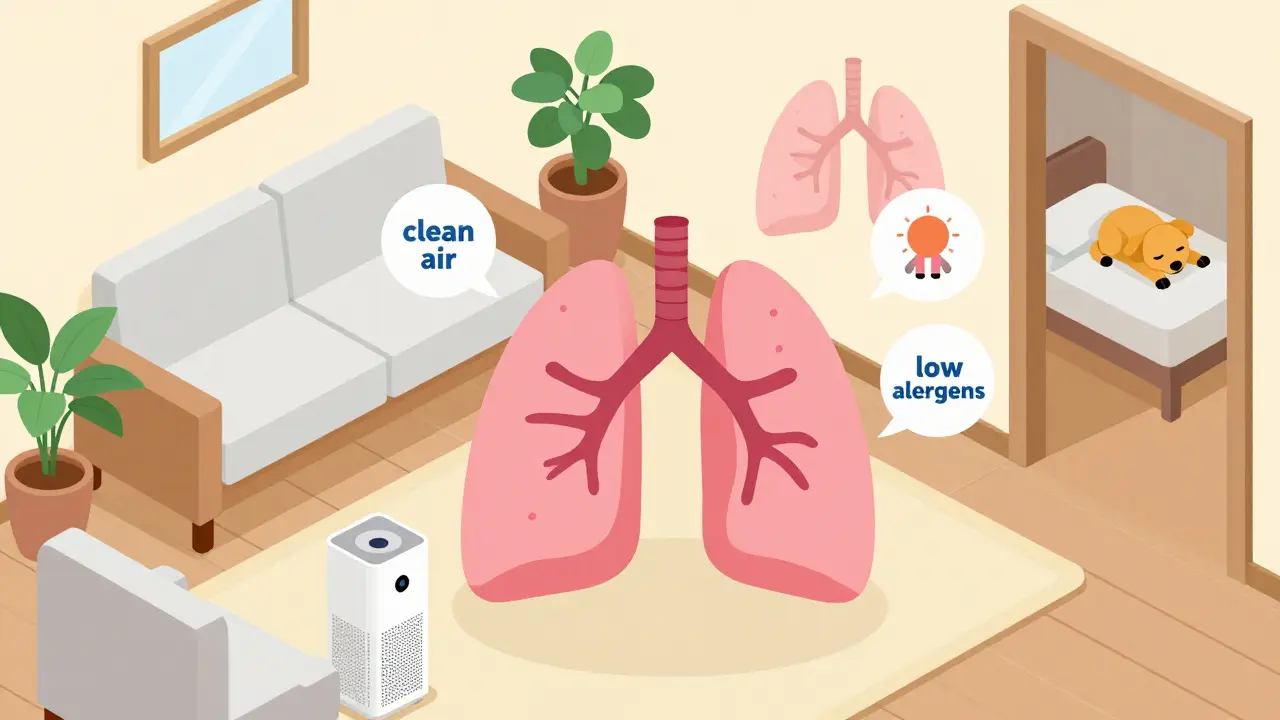
Start with your home. Dust mites thrive in bedding and carpets. Washing sheets in hot water weekly and using allergen-proof covers on pillows and mattresses can drastically reduce exposure. If you have pets, keep them out of the bedroom. Their dander settles on fabrics and lingers for weeks. Vacuum frequently with a HEPA filter vacuum cleaner to trap tiny particles.
Air quality matters too. Smoking is a major irritant. If you smoke, quitting is the single best thing you can do for your lungs. Secondhand smoke is equally damaging. Avoid burning candles or incense indoors, as these release particulate matter that inflames sensitive airways. During high pollution days or wildfire seasons, keep windows closed and use an air purifier with a true HEPA filter.
Don’t forget about comorbidities. Conditions like gastroesophageal reflux disease (GERD), chronic rhinosinusitis, and obesity worsen asthma. Treating acid reflux, for example, can improve lung function significantly. If you have nasal allergies, managing them with antihistamines or nasal sprays reduces post-nasal drip that triggers coughing and bronchospasm.
Long-Term Management: Stepping Up and Down
Asthma management is dynamic. It’s not a static prescription you keep forever. The VA/DOD 2025 guidelines recommend a "step-care" approach. When your asthma is well-controlled for three consecutive months, you should consider stepping down your medication. This means reducing the dose of your inhaled corticosteroid by 25-50%. The goal is to find the lowest effective dose that keeps you symptom-free. This minimizes potential side effects while maintaining control.
Conversely, if you’re having symptoms more than twice a week, waking up at night, or needing your reliever inhaler frequently, you need to step up. This might mean adding a long-acting muscarinic antagonist (LAMA) or increasing your ICS dose. Never increase your medication without talking to your doctor first. They need to rule out other issues like infection or worsening environmental exposure.
Monitoring is essential. Use the Asthma Control Test (ACT). It’s a simple five-question survey that asks about activity limitation, nighttime symptoms, and reliever use. Score yourself every month. A score below 20 indicates poor control. Bring this score to your doctor’s appointments. It provides objective data rather than vague feelings like "I’ve been okay."
Creating an Asthma Action Plan
Knowing what to do in an emergency saves lives. An asthma action plan is a written document, usually color-coded (green, yellow, red zones), that tells you exactly what to do based on your symptoms or peak flow readings. The NHLBI specifies that these plans should teach patients to take daily actions, adjust medications during worsening asthma, and seek medical care when necessary.
Your green zone is "all clear." You have no symptoms, and your peak flow is normal. Take your maintenance meds as usual. The yellow zone means caution. You might have coughing or wheezing. Your plan will tell you to take extra puffs of your reliever or start a short course of oral steroids if prescribed. The red zone is danger. Breathing is difficult, and reliever meds aren’t helping. This requires immediate emergency care. Keep a copy of this plan in your wallet, on your fridge, and on your phone.
Share this plan with family members, coworkers, and teachers. They need to know how to help you if you can’t speak clearly during an attack. Education empowers your support network and reduces anxiety for everyone involved.
Future Directions: Biomarkers and Personalized Care
Medicine is moving toward precision healthcare. The GINA 2025 report highlights the use of biomarkers for severe asthma. Blood eosinophil counts greater than 300 cells/μL or exhaled nitric oxide (FeNO) levels above 50 ppb indicate type 2 inflammation. These markers help doctors decide if you’re a candidate for biologic therapies-advanced injections that target specific immune pathways. If standard inhalers aren’t enough, these treatments offer hope for severe cases.
While digital health tools are popular, current guidelines note insufficient evidence to fully endorse them as replacements for traditional care. Apps can track symptoms, but they shouldn’t replace professional assessment. Use technology as a supplement, not a substitute, for your doctor’s advice.
Can I stop using my inhaler if I feel better?
No. Feeling better means your medication is working, not that you are cured. Stopping inhaled corticosteroids abruptly can lead to a sudden, severe flare-up. Only reduce your dose under a doctor’s supervision after being stable for at least three months.
Are inhaled steroids safe for long-term use?
Yes. Inhaled corticosteroids act locally in the lungs, so very little enters the bloodstream. Side effects like thrush or hoarseness are manageable with proper technique and rinsing. The risk of severe asthma attacks far outweighs the minor local side effects.
What is the difference between an MDI and a DPI?
Metered Dose Inhalers (MDIs) spray a liquid medication and require a slow, steady breath. Dry Powder Inhalers (DPIs) deliver powdered medication and require a fast, forceful breath to disperse the drug. Choose the one that matches your ability to coordinate breathing with activation.
How often should I see my doctor for asthma?
If your asthma is well-controlled, an annual review is sufficient. If your symptoms are changing or you are adjusting medications, see your doctor every 3-6 months. Always schedule a visit if your action plan moves you into the yellow or red zone repeatedly.
Does exercise make asthma worse?
Exercise can trigger bronchoconstriction in some people, but it doesn’t mean you should avoid it. Regular physical activity improves lung capacity and overall health. Use your reliever inhaler 15 minutes before exercising if recommended by your doctor, and ensure your baseline inflammation is controlled with daily meds.