Ever wondered why some generic drugs feel different from the brand-name version, while others are exactly the same? Most of us just see "generic" as a cheaper alternative, but there is a specific category called authorized generics is an approved brand-name drug that is marketed without the brand name on its label, remaining chemically identical to the original product. It is essentially the brand-name medication in a generic disguise. If you have ever struggled with a standard generic-perhaps it didn't work as well or caused a new side effect-an authorized generic might be the solution you need.
What Exactly Is an Authorized Generic?
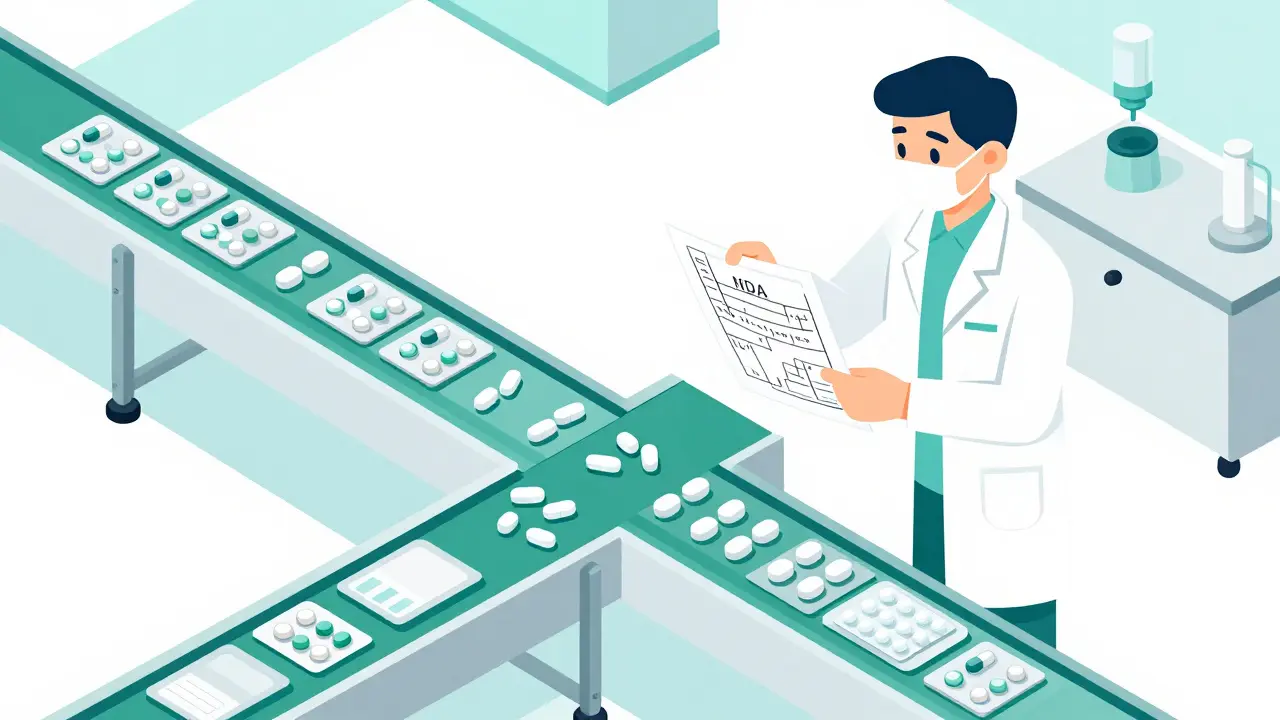
To understand this, we need to look at how drugs get to your pharmacy shelf. Normally, a company creates a new drug and gets a New Drug Application (NDA) from the FDA. When the patent expires, other companies try to make "traditional" generics by proving their version is bioequivalent. They do this via an Abbreviated New Drug Application (ANDA).
An authorized generic skips that whole "proving" process. Why? Because the brand-name company itself decides to sell the exact same product-same active ingredients, same inactive fillers, same manufacturing process-but without the fancy brand label. Because it's already approved under the original NDA, it doesn't need a new application. It's not just "similar"; it is the identical twin of the brand drug.
Authorized vs. Traditional Generics: What Is the Difference?
You might be thinking, "If they both say generic, does it really matter?" In most cases, it doesn't. But for some people, the "inactive" ingredients-the binders, dyes, and fillers-can cause real problems. Traditional generics only have to match the active ingredient; the fillers can vary. Authorized generics, however, use the exact same recipe as the brand.
| Feature | Authorized Generic | Traditional Generic |
|---|---|---|
| Active Ingredients | Identical to Brand | Identical to Brand |
| Inactive Ingredients | Identical to Brand | Can differ from Brand |
| FDA Pathway | Original NDA | ANDA Approval |
| Orange Book Listing | Not Listed | Listed |
| Cost | Lower than Brand | Lowest Cost |
Which Drugs Offer the Authorized Generic Option?
Not every medication has an authorized generic version. In fact, only about 10% of brand drugs follow this path. Pharmaceutical companies usually launch these strategically-often right when a competitor's generic is about to hit the market-to keep a grip on their customer base.
If you're looking for a list of drugs that often have these options, keep an eye on medications where precision is everything. These are often called Narrow Therapeutic Index drugs. In these cases, a tiny change in how the drug is absorbed (caused by different fillers) can lead to a big change in how you feel.
- Thyroid Medication: Some versions of levothyroxine (like those from Jerome Stevens Pharmaceuticals) act as authorized generics for brand names like Unithroid. Patients often find these more stable than random generics.
- Gout Treatment: Prasco Laboratories offers an authorized generic of colchicine (Colcrys). This is a lifesaver for people who can't tolerate the inactive ingredients in traditional generics.
- ADHD Medication: You can find authorized generics of methylphenidate ER (Concerta) through providers like Watson/Actavis.
- Pain Management: Greenstone Pharmaceuticals provides an authorized generic of celecoxib (Celebrex).
- Diabetes Care: Recent updates to the FDA list include an authorized generic for empagliflozin (Jardiance), launched by Boehringer Ingelheim.
Why Would a Brand Company Do This?
It seems weird that a company would sell its own drug for less money, right? It's actually a smart business move. When a patent expires, the company faces a cliff where they lose millions in revenue. By releasing an authorized generic, they can capture a piece of the generic market share before other companies do.
Research shows that about 70% of these drugs are launched during the "180-day exclusivity period." This is the window where the first generic company to copy the drug gets a head start. The brand company jumps in with an authorized generic to compete with that first mover, effectively splitting the profit and slowing down the price drop that usually happens when many generics enter the market.
How to Get an Authorized Generic at Your Pharmacy
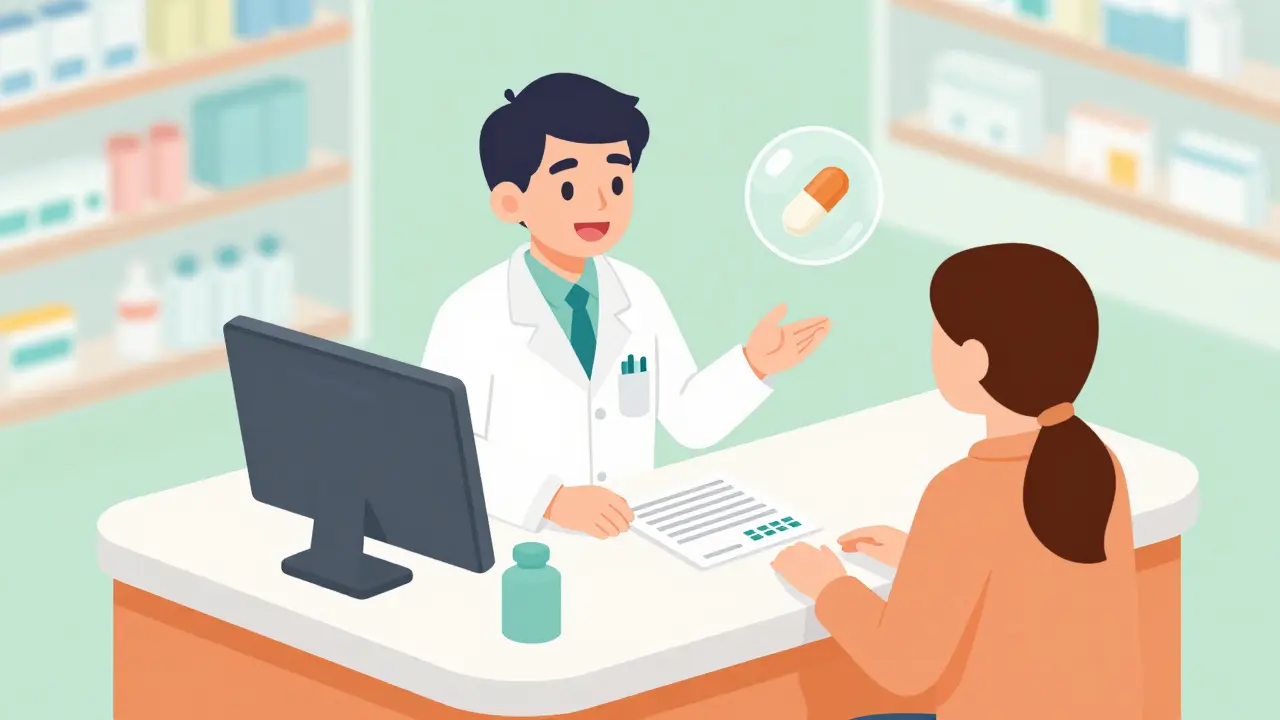
Here is the tricky part: authorized generics often don't look different in your pharmacy's computer system. They usually appear as the generic name. However, they have a specific manufacturer code that tells the pharmacist exactly who made it.
If you've had a bad experience with a generic version of a drug, don't just ask for "the brand." Ask your pharmacist if there is an authorized generic available. Tell them you are specifically looking for the version that uses the original brand-name formulation. They can check the manufacturer code to ensure you're getting the authorized version rather than a traditional generic.
Keep in mind that the pill might look different. It might be a different color or have different markings than the brand-name pill, even though the chemical makeup is identical. This is a common point of confusion, so don't be alarmed if the tablet doesn't look exactly like the one in the fancy brand-name bottle.
Are authorized generics safer than traditional generics?
Not necessarily "safer" in terms of quality-both are FDA-approved and must meet strict standards. However, they are "safer" for people who have sensitivities to the inactive fillers used in traditional generics. Since they use the exact same recipe as the brand, you avoid the risk of a reaction to a different filler.
Do I need a special prescription for an authorized generic?
No. Your doctor writes the prescription for the drug name (e.g., levothyroxine). Depending on your state's laws, the pharmacist can substitute the brand for a generic. You just need to specify to the pharmacist that you prefer the authorized generic version if it's available.
Why aren't they listed in the FDA Orange Book?
The Orange Book is designed to list generics that had to prove their equivalence via an ANDA. Because authorized generics are approved under the original brand's NDA, they don't need to be listed as a "separate" equivalent product; they are essentially the product itself.
Are they always cheaper than brand-name drugs?
Yes, they are marketed to be more affordable than the brand. However, they may be slightly more expensive than the cheapest traditional generic because they are produced by the brand manufacturer who may set a higher price floor.
How can I find the most current list of these drugs?
The FDA maintains an official "Listing of Authorized Generic Drugs." This is the most reliable source, though your pharmacist is the best person to tell you what is actually in stock at your local pharmacy.
What to Do If Your Medication Isn't Working
If you've switched from a brand name to a generic and feel like your symptoms are returning, don't just push through it. Start a medication log. Note the date you switched and any specific symptoms you noticed. Check the bottle for the manufacturer.
If the manufacturer changes from month to month, you might be cycling through different traditional generics with different fillers. This is where requesting an authorized generic can provide consistency. If your insurance won't cover the brand and the generic is failing, a doctor's note specifying "Dispense Authorized Generic only" or "No substitution" can sometimes help your insurance provider approve the more specific version.
Scott Lofquist
April 14, 2026 AT 06:41Actually, the whole system is a joke 🙄 Pharmaceutical companies just do this to screw over the first generic manufacturer and keep the prices higher than they should be. It's just a corporate greed tactic wrapped in a "patient benefit" blanket 🤡
Clint Humphreys
April 15, 2026 AT 01:36It is honestly fascinating how they talk about "inactive ingredients" like they are just harmless fillers when we all know that is where the real chemistry happens to keep us dependent on the system and it is just too convenient that the brand company "allows" a version of it for cheaper once they've squeezed every penny out of the patent holder period because if you actually look at the corporate structure you see the same board members across these shell companies and it is all just a game of musical chairs with our health
rupa das
April 16, 2026 AT 06:34who cares
Randy Ryder
April 16, 2026 AT 23:57From a pharmacokinetics perspective, the bioavailability of Narrow Therapeutic Index drugs is incredibly sensitive to any deviation in the excipient profile. When you deal with an ANDA, the bioequivalence window is often wide enough that some patients experience suboptimal plasma concentration levels, which explains the clinical variability. Switching to an authorized generic essentially eliminates the variance in the delivery mechanism by maintaining the original proprietary formulation.
Tabatha Pugh
April 17, 2026 AT 00:43I bet the pharmacists just ignore the manufacturer code anyway because they are too lazy to look it up in the system and just hand you whatever is in the bottle
Honestly most of these clinics just want to push the cheapest option regardless of if it actually works for the patient's specific body chemistry
Ikram Khan
April 18, 2026 AT 02:25Wow! This is such an eye-opener!! 😲 I never knew there was a middle ground between brand and generic. It's like finding a hidden shortcut in a game! 🌟
Shaylia Helland
April 19, 2026 AT 22:22i've spent so many years just feeling off after switching meds and thinking i was just imagining it or that i was getting old but reading this makes me realize it might have just been those fillers and it's kind of a relief to know there is a reason for it all just floating around in the system and not being talked about enough in the doctor's office where we only get fifteen minutes before they rush out the door
john chiong
April 21, 2026 AT 21:02the sheer audacity of these companies to pretend they are helping us while they manipulate the orange book for profit is absolutely repulsive and a stain on the medical profession
Rim Linda
April 22, 2026 AT 16:39OMG I literally had this happen with my thyroid meds and I thought I was losing my mind!! 😱 The generic made me feel like a zombie for three months and then I switched and everything changed!! This is the tea! ☕️✨