Generic drugs are supposed to be safe, affordable copies of brand-name medicines. But over the last few years, something has gone wrong. Across the U.S., people taking common generics for high blood pressure, cancer, and even colds have been exposed to dangerous contaminants-some linked to cancer, organ damage, and fatal overdoses. These aren’t rare mistakes. They’re systemic failures in how these drugs are made, inspected, and tracked.
What’s Actually in Your Generic Pills?
The problem isn’t just one bad batch. It’s pattern after pattern of contamination showing up in the same types of drugs, made by the same factories. Take valsartan, a blood pressure medication sold under dozens of generic names. Between 2018 and 2025, over 1,300 lawsuits were filed after patients found their pills contained NDMA, a known carcinogen. In some samples, levels were 200 times higher than the FDA’s safety limit. The source? A manufacturing change at a Chinese plant that added sodium nitrite to cut costs-without testing if it created toxic byproducts. Then there’s Mucinex, a common cold remedy. In 2025, independent lab tests found benzene-another cancer-causing chemical-in some generic versions at 4.7 parts per million. The FDA’s limit is 2 ppm. People who took it daily for over a year developed bone marrow problems consistent with long-term benzene exposure. One patient, Miriam Birdsong, was diagnosed with myelodysplastic syndrome after 18 months of use. And it’s not just oral meds. Fentanyl patches, used for chronic pain, were recalled in 2023 after 1.2 million units from Sandoz were found to leak. In 0.8% of them, the drug escaped at rates over 15% of the labeled dose. That’s enough to cause overdose in someone not tolerant to opioids. One death in Ohio was directly tied to this defect.Why Are Chemotherapy Drugs Failing?
Cancer patients are among the most vulnerable. In 2023, a STAT News investigation found 17 chemotherapy drugs from Indian manufacturers failed basic quality tests. Twelve of them contained less than 80% of the labeled active ingredient-far below the FDA’s 85-115% acceptable range. One drug, cisplatin, was so inconsistent that 34% of patients receiving the generic version saw their cancer progress, compared to just 12% on the brand-name version. The factory that made those drugs, Intas Pharmaceuticals in Ahmedabad, had a documented history of fraud. FDA inspectors in 2022 found employees shredding quality control records and pouring acid on them to destroy evidence. That same facility shipped out batches that were never tested for potency. When those drugs reached hospitals, cancer centers reported treatment failures across the board. Memorial Sloan Kettering documented 7 out of 11 patients failing to respond to treatment-after switching to the contaminated generic.Where Are These Drugs Made?
It’s not random. Over 80% of the active ingredients in U.S. generic drugs come from China. India produces 40% of the finished pills. And these countries account for nearly all the major contamination cases. Since 2018, 16 of the 17 substandard cancer drugs came from India. Zee Laboratories alone has been cited 46 times for violations-including finding visible particles in every single vial of cisplatin tested. The FDA inspects just 13% of Indian drug plants each year. With over 28,000 foreign facilities needing review and only $78 million in its 2025 budget for inspections, the agency is overwhelmed. Meanwhile, 83% of the top 100 generic drugs sold in the U.S. contain no active ingredients made in America. That means the supply chain is long, opaque, and nearly impossible to trace.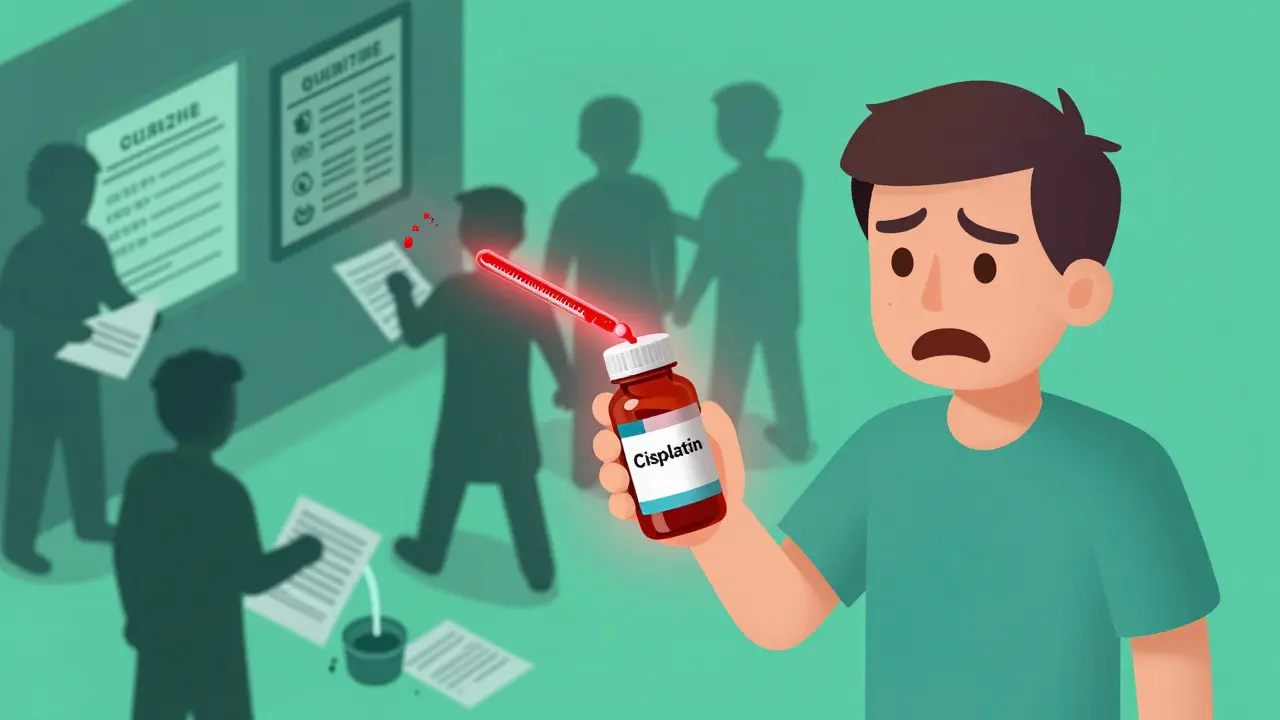
Why Doesn’t the FDA Stop This?
The FDA does recall contaminated drugs. But here’s the problem: they don’t always tell you which ones. For years, the agency redacted the names of drugs linked to violations in inspection reports. That meant doctors and pharmacists couldn’t know if the generic they were prescribing or dispensing had been flagged. ProPublica exposed this policy in 2008-and it continued until September 2025, when the FDA finally announced a “Name Transparency Initiative.” But no one knows if it will be enforced. The agency also relies on manufacturers to self-report problems. When ZHP, the Chinese company behind the valsartan contamination, found NDMA in their process back in 2012, they didn’t report it. They kept making the drug. It took a whistleblower and years of litigation for the truth to come out. And when recalls happen, they’re often too late. The FDA’s recall system is reactive, not predictive. It waits for complaints, lab tests, or patient harm before acting. Meanwhile, AI tools and real-time monitoring systems exist-but only 3% of Indian plants use them. MIT research shows these systems could cut contamination by 78%. But upgrading costs $5-15 million per facility. Most manufacturers won’t pay unless forced.What Can You Do?
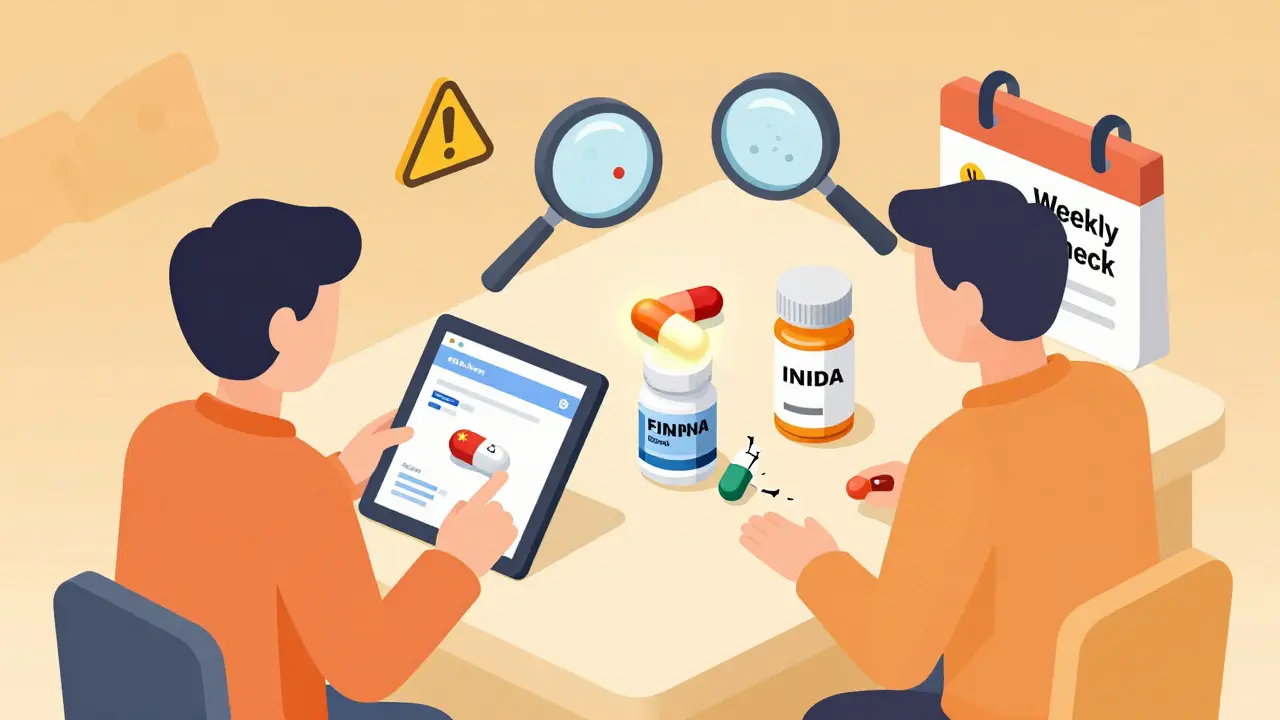
You can’t control where your drug is made. But you can control what you take.- Check the FDA recall list weekly. Pharmacies are required to post recalls, but most patients don’t know where to look. Go to fda.gov/safety/recalls and search by drug name.
- Ask your pharmacist for the manufacturer. If your generic valsartan is made by ZHP or Intas, ask if a safer version is available. Many pharmacies stock multiple generics from different makers.
- Don’t assume all generics are equal. A 2025 Pharmacy Times survey found 68% of pharmacists now check FDA recall lists every week. You can too. If your pill looks different from last month, ask why.
- Report side effects. If you feel worse after switching to a new generic-especially with cancer meds, blood pressure drugs, or opioids-tell your doctor and file a report with MedWatch (fda.gov/medwatch). Your report could help stop a bad batch.
- Consider brand-name when it matters. For life-critical drugs like levothyroxine or chemotherapy, the brand version may cost more-but it’s often more consistent. One Reddit user, PharmTech2020, reported seeing three different generic levothyroxine batches fail potency tests in six months. Patients’ TSH levels spiked until they switched back to brand.
What’s Changing in 2026?
The FDA’s 2026-2030 plan includes AI tools to predict contamination risks before they happen and blockchain systems to track every pill from factory to pharmacy. The new GDUFA III rules, effective June 2025, now require real-time stability testing for high-risk drugs. That’s a start. But without real penalties, change will be slow. Indian manufacturers lost $870 million in U.S. exports in 2024 after repeated violations. Still, many keep operating. The Valsartan lawsuits-now totaling over 1,300 cases-are setting legal precedents. If courts find manufacturers knowingly hid contamination, fines could reach $1.2 million per cancer patient. The truth is, generic drugs saved the U.S. healthcare system $1.7 trillion over the last decade. But safety can’t be traded for savings. When a cancer patient’s treatment fails because their chemo drug was 20% weak-or when a fentanyl patch leaks and kills someone-it’s not a cost-saving. It’s a tragedy.What You Should Know Now
- The most contaminated drug classes: blood pressure meds (28% of recalls), cancer drugs (19%), and respiratory drugs (14%). - The most dangerous contaminants: NDMA (cancer), benzene (leukemia), and inconsistent potency (treatment failure). - The most at-risk manufacturers: Indian and Chinese plants with repeated violations. - The most reliable action: ask your pharmacist who made your drug and check FDA recalls every week. Generic drugs aren’t inherently unsafe. But without transparency, oversight, and accountability, they become a gamble. You deserve to know what’s in your medicine-and you have the right to demand better.Are all generic drugs unsafe?
No. Most generic drugs are safe and effective. The problem isn’t generics as a category-it’s specific manufacturers and facilities with poor quality control. Out of over 10,000 approved generic products, only a small fraction have been linked to contamination. But because these failures happen in high-risk drugs like cancer treatments and heart medications, the consequences are severe.
How do I know if my generic drug was recalled?
Check the FDA’s official recall page at fda.gov/safety/recalls. You can search by drug name, manufacturer, or lot number. If you’re unsure which manufacturer made your pills, look at the bottle-the name is printed on the label. You can also ask your pharmacist. Many now keep printed recall lists on hand and will check for you.
Can I switch back to the brand-name drug?
Yes, but it depends on your insurance. Many plans require you to try generics first. If you’re on a critical drug like levothyroxine, chemotherapy, or a blood thinner, your doctor can file a medical exception. If you’ve had side effects or lab results that suggest the generic isn’t working, that’s strong evidence for approval. Don’t be afraid to ask.
Why don’t pharmacies just stop selling contaminated generics?
Pharmacies don’t make the drugs-they get them from distributors who get them from manufacturers. By the time a drug reaches the pharmacy, it’s already packaged and labeled. Pharmacies rely on FDA recalls to know when something’s unsafe. Until a recall is issued, they’re legally allowed to sell it. That’s why it’s up to patients and providers to stay informed and push for transparency.
Is there a way to tell if a generic drug is contaminated just by looking at it?
Usually not. Contaminants like NDMA or benzene are invisible. You can’t see them, smell them, or taste them. Even potency issues-like a chemo drug being 20% weak-won’t change how the pill looks. The only way to know is through lab testing or an official recall notice. Don’t rely on appearance.
Angela Goree
January 2, 2026 AT 02:40Who the hell let China and India run our medicine supply? We’re literally gambling with people’s lives because we’re too lazy to make pills here! We built the atomic bomb-why can’t we make a damn blood pressure tablet without poison in it?!
Lori Jackson
January 2, 2026 AT 16:27The systemic epistemological collapse of pharmaceutical oversight is not merely a regulatory failure-it’s a moral ontological crisis precipitated by neoliberal commodification of biopharmaceutical integrity. The FDA’s epistemic deference to corporate self-reporting constitutes a form of institutionalized necropolitics.
Wren Hamley
January 2, 2026 AT 23:10So let me get this straight-we outsource 80% of our active ingredients to countries that don’t even inspect their own factories, then act shocked when things go sideways? I get cost-cutting, but this isn’t ‘lean manufacturing,’ this is ‘let’s see how many people we can poison before Congress notices.’
Sarah Little
January 3, 2026 AT 22:32Have you considered that the real issue is not the manufacturers but the fact that pharmacists aren’t required to disclose the manufacturer on the prescription label? That’s the hidden loophole. Patients can’t advocate if they don’t know who made their pills.
innocent massawe
January 4, 2026 AT 18:51Wow. This is heavy. 😔 I come from Nigeria, where we get a lot of these same generics-and no one checks. I hope things change. People deserve safe medicine, no matter where they live.
veronica guillen giles
January 5, 2026 AT 04:35Oh wow, so the FDA finally decided to ‘transparency’ after 17 years of people dying? Groundbreaking. Next they’ll invent a wheel that doesn’t roll downhill. 🙄
Ian Ring
January 7, 2026 AT 03:23It’s staggering how little accountability exists. I’ve worked in pharma logistics-once the drugs leave the factory, they’re a black box. And the FDA’s budget? It’s a joke. We need a moonshot-level investment in supply-chain integrity.
erica yabut
January 8, 2026 AT 00:55Anyone else notice how the FDA only acts after someone dies? That’s not oversight-that’s autopsy-based regulation. And the fact that ZHP knew about NDMA since 2012 and kept shipping? That’s not negligence. That’s premeditated homicide.
Tru Vista
January 8, 2026 AT 08:48lol the FDA has a budget of $78M? That's less than my rent. Also, 'intas pharma' is just a typo for 'intentional fraud pharma'. 😂
Vincent Sunio
January 8, 2026 AT 09:55The argument that generics are inherently safe is a fallacy rooted in ideological bias toward cost-efficiency over clinical fidelity. The data demonstrates statistically significant deviations in therapeutic equivalence, particularly in narrow-therapeutic-index medications. To conflate accessibility with safety is to commit a category error of life-or-death magnitude.
JUNE OHM
January 9, 2026 AT 21:45THIS IS A BIOWEAPON. 🚨 The FDA is in bed with Big Pharma AND foreign governments. You think they don’t know? They’re letting this happen to reduce Medicare costs. And don’t even get me started on the microchips in the pills-every batch has a tracker. You’re being monitored. The pills are the control mechanism. 🌍💊
Philip Leth
January 10, 2026 AT 17:05Man, I used to think generics were fine until my cousin got sick on the cheap version of his heart med. Now he’s on brand, and his doc says it’s the only thing keeping him alive. Don’t be cheap with your life.
Palesa Makuru
January 12, 2026 AT 02:52Why are we even surprised? We outsource everything-phones, clothes, now our medicine? We’ve turned healthcare into a Walmart aisle. And we wonder why people die.
Hank Pannell
January 13, 2026 AT 01:32It’s not just about contamination-it’s about trust. We used to believe in science. Now we’re left wondering if the pill we swallow is a cure… or a slow timer. Maybe the real epidemic isn’t the toxins-it’s the erosion of faith in institutions meant to protect us.
Shruti Badhwar
January 14, 2026 AT 18:38As someone from India, I am deeply ashamed. Many small manufacturers cut corners to survive in a hyper-competitive market. But this is not sustainable. The Indian pharma industry must be held accountable-not just by foreign regulators, but by our own citizens. We must demand better.