Every year, more than 36 million older adults in the U.S. fall - and for many, the cause isn’t slippery floors or poor lighting. It’s the medication they’re taking to sleep better, manage anxiety, or ease pain. Sedating drugs like benzodiazepines, antidepressants, opioids, and muscle relaxants quietly increase fall risk by slowing reactions, blurring vision, and throwing off balance. The scary part? These medications are often prescribed without ever asking: Is this worth the risk?
What Makes a Medication a Fall Risk?
Not all sedatives are created equal, but they all share one dangerous trait: they dull the nervous system. The CDC calls these Fall Risk Increasing Drugs (FRIDs), and they include:- Benzodiazepines (like diazepam or lorazepam)
- Antidepressants (especially tricyclics like amitriptyline)
- Opioids (oxycodone, hydrocodone, morphine)
- Antipsychotics (quetiapine, risperidone)
- Muscle relaxants (baclofen, cyclobenzaprine - baclofen has the highest documented risk in its class)
- Antihypertensives (when doses are too high)
- Sedative-hypnotics (zolpidem, eszopiclone)
It’s not just the drug itself - it’s the combination. Taking three or more of these at once multiplies the danger. A 2021 study found that people on five or more medications had nearly double the fall risk compared to those on one or two. And it’s not just about being drowsy. These drugs can cause orthostatic hypotension - a sudden drop in blood pressure when standing - leaving people lightheaded and unsteady within seconds.
The STEADI-Rx Model: A Proven Approach
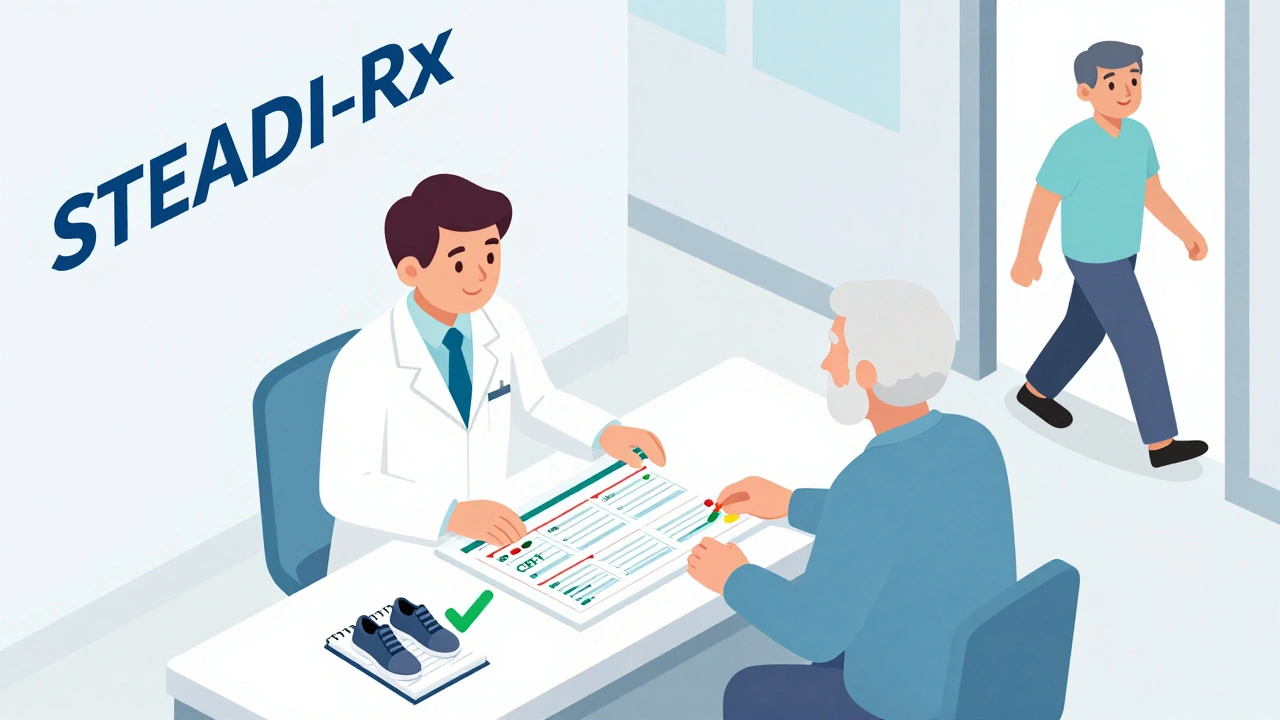
The CDC’s STEADI-Rx program - launched in 2018 and now used in over 65% of major U.S. health systems - gives providers a clear, three-step plan:- Screen: Ask every older adult if they’ve fallen in the past year. Use simple tools like the Timed Up and Go test.
- Assess: Review every medication. Look for FRIDs, overlapping effects, and unnecessary prescriptions.
- Intervene: Adjust, switch, or stop high-risk drugs - with support.
Pharmacists play a central role. In community pharmacies, trained pharmacists use a Provider Consult Form to flag risky meds and suggest alternatives. For example, instead of prescribing diazepam for insomnia, they might recommend cognitive behavioral therapy for insomnia (CBT-I), which has no fall risk and better long-term results. In the STEADI-Rx pilot, 75% of recommendations involved switching to a safer alternative - not just cutting the dose.
Medication Review Works - But Only If Done Right
A 2021 study in the Journal of the American Geriatrics Society found that medication reviews reduced falls by up to 30% when done thoroughly. But here’s the catch: most primary care visits last 10-15 minutes. That’s not enough time to untangle a 10-pill regimen.This is why pharmacist-led reviews are so powerful. Pharmacists have the time. They track refills, check for drug interactions, and know which meds are most likely to cause dizziness. In a 2022 survey, 82% of pharmacists believed their reviews reduced fall risk - but only 45% had enough time to do them properly.
Real success comes from collaboration. When a pharmacist spots a risky combo - say, an opioid and a benzodiazepine - they send a structured note to the prescriber with three key questions:
- Is this medication still needed?
- Is there a safer alternative?
- Can we taper and monitor instead of stopping cold?
Many prescribers agree - especially when the pharmacist offers a replacement plan. For instance, switching from amitriptyline (a sedating antidepressant) to sertraline (a non-sedating one) can cut fall risk without worsening depression.
Exercise Isn’t Optional - It’s Essential
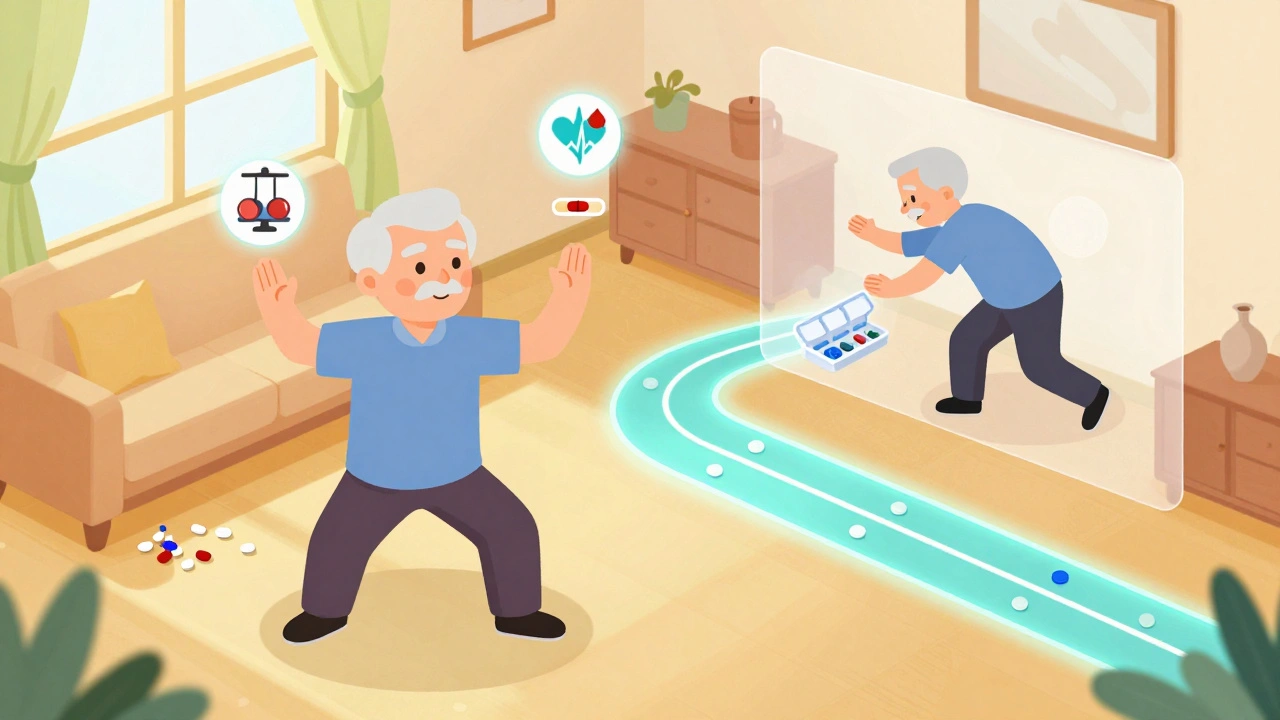
Medication review alone isn’t enough. The strongest evidence for fall prevention comes from combining medication changes with exercise.Cochrane reviews show that programs with balance, strength, and gait training - done 30 to 90 minutes, one to three times a week for at least 12 weeks - reduce falls by 15% to 29%. Even better: they cut fractures by 61% and reduce falls needing medical care by 43%.
What works? Tai Chi, chair yoga, heel-to-toe walking, and leg lifts. No fancy equipment needed. A 2023 CDC update specifically recommends exercise for anyone taking sedating meds - even if they’ve never fallen before. Prevention beats recovery every time.
Vitamin D? The Evidence Is Mixed
You’ve probably heard that vitamin D helps prevent falls. The U.S. Preventive Services Task Force recommends 800 IU daily. But a Cochrane review found no significant benefit. Why the confusion?It depends on baseline levels. If someone is severely deficient (common in older adults with limited sun exposure), supplementing helps. But if they’re already getting enough, extra vitamin D doesn’t add protection. The best practice? Test levels first. If low, give 1,000 IU daily. If normal, skip it - and focus on exercise and meds instead.
What Patients Say - Real Stories
On Reddit’s r/geriatrics, users share their wins and struggles:One woman, u/SeniorSafetyFirst, switched from diazepam to CBT-I after her pharmacist flagged the fall risk. Her nighttime falls dropped from 2-3 per month to zero in six months.
Another man stopped his opioid after his doctor offered a non-opioid pain plan. He said, “I thought I needed it. Turns out, I just needed a different approach.”
But not everyone succeeds. A 2021 National Council on Aging survey found that 63% of older adults struggled to reduce sedating meds because of withdrawal symptoms - anxiety, insomnia, tremors - or fear their original problem would return. That’s why tapering matters. Stopping cold can be dangerous. Slow reduction, with support, is the key.
Barriers and How to Overcome Them
Even with solid evidence, change is slow. Why?- Prescriber resistance: Some doctors don’t know the latest guidelines or fear upsetting patients.
- Patient reluctance: “This pill helps me sleep” - and they don’t want to lose that.
- Lack of reimbursement: Medicare pays poorly for medication reviews, so many pharmacists can’t afford the time.
Solutions are emerging:
- Electronic alerts in EHRs that flag high-risk combos before prescriptions are written.
- Pharmacist prescribing authority in some states - allowing them to adjust certain meds without a doctor’s note.
- Standardized patient education handouts that explain risks in plain language.
The American Society of Consultant Pharmacists now offers a certification for Geriatric Pharmacotherapy Specialists. Over 1,200 pharmacists are certified as of early 2024 - and that number is growing.
The Bigger Picture
By 2040, 80.8 million Americans will be over 65. Falls will keep rising unless we act. The CDC’s STEADI initiative has been adopted by 78% of state health departments. The global fall prevention market is projected to hit $31 billion by 2028. This isn’t just a clinical issue - it’s a public health emergency.Medication-related falls aren’t accidents. They’re preventable. And the tools to stop them already exist. What’s missing is consistent action - from doctors, pharmacists, families, and patients.
If you or someone you care for is on sedating meds, ask:
- Is this drug still necessary?
- Is there a non-sedating alternative?
- Can we try cutting the dose slowly?
- Am I doing any balance or strength exercises?
One conversation - one review - one change - can mean the difference between a fall and a safe, independent life.
What are the most dangerous sedating medications for older adults?
The highest-risk medications include benzodiazepines (like diazepam), tricyclic antidepressants (like amitriptyline), opioids (like oxycodone), antipsychotics (like quetiapine), and muscle relaxants like baclofen. Baclofen has the highest documented fall risk among muscle relaxants. Combining two or more of these drugs multiplies the danger significantly.
Can stopping sedating medications actually reduce falls?
Yes - and studies show it’s one of the most effective actions you can take. The STEADI-Rx program found that switching or tapering high-risk medications prevented tens of thousands of falls annually. One user reported zero nighttime falls after switching from diazepam to CBT-I. Success depends on doing it safely: slow tapering, monitoring symptoms, and replacing the medication with non-drug strategies like sleep hygiene or physical therapy.
How often should older adults have their medications reviewed?
At least once a year - and every time a new medication is added or changed. People on five or more drugs should have a review every six months. Pharmacists are best suited to do this, especially in community pharmacies using tools like the CDC’s STEADI-Rx protocol. Don’t wait for a fall to happen - proactive reviews save lives.
Is vitamin D supplementation effective for fall prevention?
It depends. If blood levels are low (below 30 ng/mL), taking 1,000 IU daily can help. But if levels are normal, extra vitamin D doesn’t reduce falls. The U.S. Preventive Services Task Force recommends 800 IU daily, but a Cochrane review found no benefit for people with adequate levels. Test first. Don’t guess.
What kind of exercise helps prevent falls in older adults on sedating meds?
Balance, strength, and gait training are most effective. Programs like Tai Chi, chair yoga, heel-to-toe walking, and standing on one foot improve stability. Aim for 30-90 minutes, one to three times per week, for at least 12 weeks. These exercises don’t require equipment and can be done at home. When combined with medication review, they reduce fall risk by up to 29%.
Can pharmacists help reduce fall risk from medications?
Absolutely. Pharmacists are trained to spot high-risk drug combinations, identify unnecessary prescriptions, and suggest safer alternatives. Programs like STEADI-Rx empower pharmacists to consult directly with prescribers using standardized forms. In pilot studies, 75% of their recommendations led to safer medication changes. If your pharmacist hasn’t offered a medication review, ask for one.
Raja Herbal
December 8, 2025 AT 19:49Rich Paul
December 9, 2025 AT 05:48Delaine Kiara
December 10, 2025 AT 12:54Ruth Witte
December 11, 2025 AT 14:43Katherine Rodgers
December 11, 2025 AT 17:08Lauren Dare
December 12, 2025 AT 04:41Gilbert Lacasandile
December 13, 2025 AT 01:25Kathy Haverly
December 14, 2025 AT 05:43Graham Abbas
December 16, 2025 AT 02:36Steve Sullivan
December 16, 2025 AT 19:58precious amzy
December 18, 2025 AT 10:10Tejas Bubane
December 19, 2025 AT 19:08Angela R. Cartes
December 20, 2025 AT 06:40Philippa Barraclough
December 20, 2025 AT 11:05Olivia Portier
December 20, 2025 AT 22:04