When you have G6PD deficiency, a simple prescription can turn dangerous. This inherited condition affects about 400 million people worldwide, and most don’t even know they have it. The problem isn’t the deficiency itself-it’s what happens when certain medications trigger a sudden, life-threatening breakdown of red blood cells called hemolysis. Hemoglobin can drop by more than half in just a week. That’s not a side effect. That’s a medical emergency.
What Is G6PD Deficiency, Really?
G6PD stands for glucose-6-phosphate dehydrogenase. It’s an enzyme your red blood cells need to protect themselves from oxidative stress. Think of it like a shield. Without enough of this enzyme, your red blood cells can’t fight off damage from certain chemicals in drugs, foods, or infections. When that shield fails, the cells burst open and spill their contents into your bloodstream. That’s hemolysis.
This isn’t rare. It’s one of the most common human enzyme deficiencies. It’s most common in people with ancestry from sub-Saharan Africa, the Mediterranean, Southeast Asia, and the Middle East. That’s no accident. G6PD deficiency evolved because it offers some protection against malaria. But now, in a world with modern medicine, that evolutionary advantage has become a hidden risk.
There are over 200 known variants of G6PD deficiency. They’re grouped into five classes. Class III is the most common worldwide-about 80% of cases. People with this version usually have mild enzyme levels and may never have problems unless exposed to a strong trigger. Class II is more severe, common in Mediterranean populations. These people can have a hemolytic crisis from a single dose of the wrong drug. Class I is the rarest and most dangerous-it causes chronic hemolysis even without triggers.
The 10 Medications That Can Trigger Hemolysis
Not all drugs are dangerous. But some are absolute no-gos if you have G6PD deficiency. The World Health Organization’s 2024 Essential Medicines List identifies 87 medications with known risks. Here are the top 10 that cause the most harm:
- Rasburicase - Used to treat tumor lysis syndrome. This drug generates hydrogen peroxide. In G6PD-deficient patients, it causes near-universal hemolysis. The FDA issued a black box warning in January 2023. A single dose can drop hemoglobin to 3 g/dL.
- Methylene blue - Given for methemoglobinemia. It’s a strong oxidizing agent. In deficient patients, it causes hemolysis in 95% of cases. One case reported in JAMA Internal Medicine showed hemoglobin falling from 14.2 to 5.8 g/dL in 48 hours.
- Primaquine - Used to treat malaria, especially Plasmodium vivax. It’s the most common cause of hemolysis in malaria-endemic areas. In Class I and II patients, hemolysis is inevitable at standard doses.
- Dapsone - Used for leprosy and some skin conditions. At doses above 50 mg daily, it causes hemolysis in 80% of G6PD-deficient patients.
- Nitrofurantoin - A common UTI antibiotic. Even short courses can trigger hemolysis in sensitive individuals.
- Sulfonamides - Including sulfamethoxazole (Bactrim). These antibiotics are high-risk, especially in high doses or in patients with Class II deficiency.
- Phenazopyridine - Used for urinary pain. Found in over-the-counter UTI relief products. Can cause dark urine and hemolysis.
- Chloramphenicol - An older antibiotic. Still used in some countries. Known to cause bone marrow suppression and hemolysis.
- Naphthalene - Found in mothballs. Not a medication, but a common environmental trigger. Inhalation or skin contact can trigger hemolysis in children.
- Aspirin (high doses) - Not a major risk at low doses (like 81 mg for heart health). But doses above 1,000 mg daily can be dangerous, especially in Class II patients.
Here’s the scary part: Many doctors don’t know. A 2022 survey of 1,247 G6PD-deficient patients found that 68% had experienced at least one hemolytic episode-and 42% said their provider didn’t know they needed to avoid these drugs.
Safe Alternatives You Can Actually Use
You don’t have to live in fear. There are safe options for almost every condition. The key is knowing them and asking for them.
- For malaria prevention: Use atovaquone-proguanil (Malarone) instead of primaquine. It’s safe for all G6PD classes. CDC data shows 95% of deficient travelers using Malarone avoided hemolysis.
- For malaria treatment: Artemisinin-based combination therapies (ACTs) are safe and now the global standard. Tafenoquine is approved but requires mandatory G6PD testing before use.
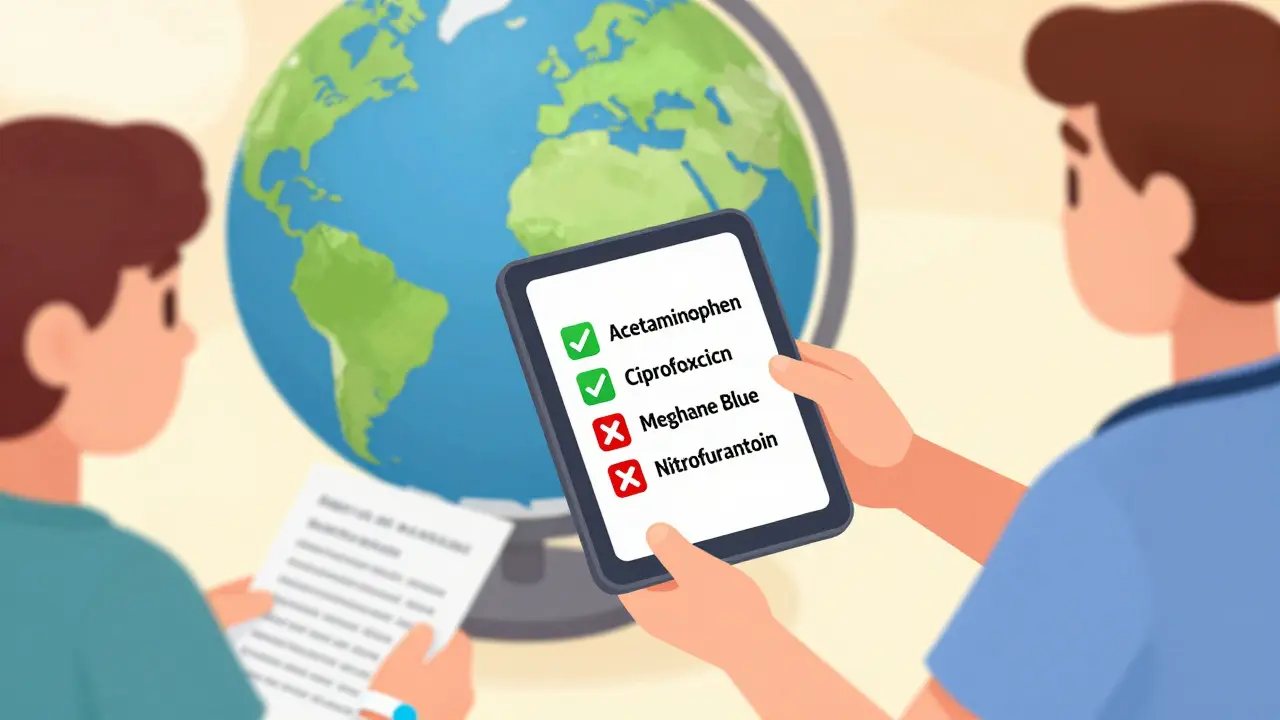
- For UTIs: Avoid nitrofurantoin and sulfonamides. Use ciprofloxacin or fosfomycin instead.
- For pain or fever: Acetaminophen (Tylenol) is safe. Avoid high-dose aspirin.
- For methemoglobinemia: Avoid methylene blue. Use ascorbic acid (vitamin C) or exchange transfusion if severe.
- For tumor lysis syndrome: Avoid rasburicase. Use allopurinol instead. It’s slower but safe.
Some newer drugs are designed with G6PD safety in mind. The FDA now requires G6PD testing before prescribing tafenoquine. That’s progress.
Testing Is the Only Real Prevention
There’s no cure for G6PD deficiency. Prevention is everything. And the only way to prevent hemolysis is to know your status.
Testing is simple. The fluorescent spot test gives results in 15 minutes and is 98.7% accurate. It’s been used for decades in places like Saudi Arabia, where universal newborn screening reduced hemolytic crisis admissions by 78% between 2010 and 2020.
But here’s the catch: You can’t test right after a hemolytic episode. Your body is still rebuilding red blood cells. The new cells have normal enzyme levels, so the test can look falsely normal. You need to wait at least 3 months after an episode to get an accurate result.
That’s why newborn screening matters. The American Academy of Pediatrics recommends testing all newborns in areas where G6PD deficiency affects more than 5% of the population. That’s 127 countries. Yet in the U.S., only 12 states require it-even though 1 in 10 African American males has it.
Point-of-care tests are getting faster. In January 2024, the FDA approved the first quantitative point-of-care G6PD test that gives results in 8 minutes with 99.1% accuracy. This could change emergency care-like if someone needs rasburicase and there’s no time to wait for a lab.
Why Women Can Also Be Affected
Many people still think G6PD deficiency only affects men. It’s an X-linked disorder, so men are more likely to show symptoms. But women aren’t off the hook.
Because of X-chromosome inactivation (called lyonization), some women carry one normal and one defective gene. Depending on which X chromosome is active in their red blood cells, they can have anywhere from near-normal enzyme levels to severe deficiency. A 2020 Lancet Haematology study found that 15% of women with the G6PD mutation experienced hemolysis after taking high-risk drugs.
If you’re a woman with a family history of G6PD deficiency-or if you’ve had unexplained anemia after taking a medication-you should get tested. Don’t assume you’re safe just because you’re female.
What to Do If You’re Diagnosed
Getting diagnosed isn’t the end-it’s the start of living safely.
- Get a medical alert bracelet or card that says “G6PD Deficient.”
- Keep a printed list of safe and unsafe medications. Update it every time your doctor changes your prescriptions.
- Ask your pharmacist to flag your profile in their system. Many now use electronic alerts for high-risk drugs.
- Carry a copy of your test results. Not all doctors know the details.
- Teach your family what to do in an emergency. Hemolysis can cause dark urine, jaundice, fatigue, and rapid breathing. If these happen after taking a new drug, go to the ER.
Education works. A 2023 NIH study found that 92% of patients who received detailed avoidance education had no hemolytic episodes over five years. Only 38% of those who got standard care avoided another crisis.
The Future: Better Tools, Better Outcomes
There’s real hope on the horizon. Researchers at the NIH are testing a recombinant human G6PD enzyme replacement therapy. Phase I trials start in late 2024. If it works, it could one day restore normal enzyme function.
Another promising avenue is N-acetylcysteine (NAC). Early lab studies show it can protect red blood cells from oxidative damage-even when paired with primaquine. That could make malaria treatment safer for millions.
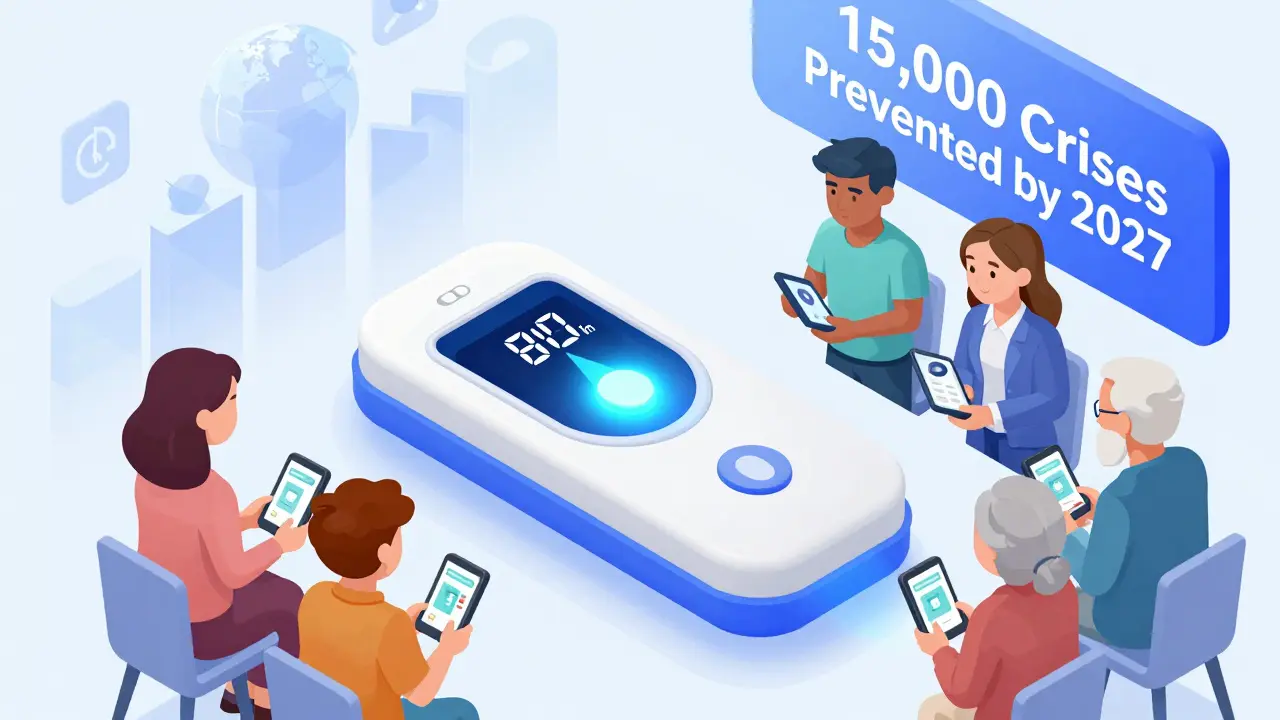
Meanwhile, global health programs are scaling up. The Global Fund has committed $127 million to G6PD testing in 32 malaria-endemic countries. The goal: prevent 15,000 hemolytic crises a year by 2027.
The message is clear: G6PD deficiency doesn’t have to be a death sentence. With testing, awareness, and safe alternatives, it can be managed. The problem isn’t the condition-it’s the silence around it.
Can I take ibuprofen if I have G6PD deficiency?
Yes, ibuprofen is generally safe for people with G6PD deficiency at standard doses (200-400 mg every 4-6 hours). Unlike aspirin, it doesn’t cause significant oxidative stress. However, avoid high doses or long-term use without medical supervision, especially if you have kidney issues or other health conditions.
Is G6PD deficiency the same as sickle cell anemia?
No. G6PD deficiency is an enzyme disorder that causes red blood cells to break down under oxidative stress. Sickle cell anemia is a structural problem with hemoglobin that causes cells to become stiff and sickle-shaped, blocking blood flow. They’re both inherited blood disorders, but the causes, symptoms, and treatments are completely different. Splenectomy helps some sickle cell patients but offers no benefit for G6PD deficiency.
Can I eat fava beans if I have G6PD deficiency?
No. Fava beans (broad beans) contain compounds that trigger severe hemolysis in G6PD-deficient individuals. This is called favism. Even small amounts can cause a crisis. Avoid them completely, including in soups, salads, or processed foods. This is one of the oldest known triggers-documented since ancient Greece.
Does G6PD deficiency affect life expectancy?
Not if you avoid triggers. People with G6PD deficiency who know their limits and avoid high-risk medications live normal lifespans. The danger comes from accidental exposure-especially in places without testing or awareness. In resource-limited settings, hemolytic crises can be fatal without quick access to blood transfusions. But in countries with good healthcare, mortality is extremely rare.
Should I get tested if my family has G6PD deficiency?
Yes. If you have a parent, sibling, or child with G6PD deficiency, you should get tested-even if you’ve never had symptoms. You might carry the gene and not know it. Testing is quick, cheap, and prevents emergencies. This is especially important before surgery, pregnancy, or starting new medications.
Can I travel to malaria-endemic countries with G6PD deficiency?
Yes, but you must avoid primaquine and tafenoquine. Use atovaquone-proguanil (Malarone) for prevention and artemisinin-based combination therapies (ACTs) for treatment. Always carry proof of your G6PD status and a list of safe alternatives. Talk to a travel clinic before departure. The CDC confirms that 95% of deficient travelers using Malarone avoided hemolysis in a 2021 study.
Kayleigh Campbell
December 15, 2025 AT 16:50So let me get this straight-we’ve got a genetic shield that kept our ancestors alive during malaria season, and now it’s a ticking time bomb because doctors don’t bother learning about it? 😅 I got my G6PD status checked after my cousin nearly died from a UTI antibiotic. Turned out his PCP had never heard of it. Welcome to modern medicine, folks.
SHAMSHEER SHAIKH
December 15, 2025 AT 17:56Dear Readers, I must express my profound gratitude for this meticulously researched and profoundly informative exposition on Glucose-6-Phosphate Dehydrogenase Deficiency! The clarity with which the mechanisms of oxidative stress and hemolysis are delineated is nothing short of exemplary. I implore all healthcare practitioners to internalize this knowledge, as the consequences of oversight are not merely clinical-they are existential.
Arun ana
December 16, 2025 AT 17:21Thanks for this! 😊 I’ve been avoiding sulfa drugs for years but never knew why. Now I’ve got a list to show my doctor. G6PD is such a silent thing-until it’s not.
Dave Alponvyr
December 18, 2025 AT 07:19Aspirin’s fine at 81mg. Ibuprofen’s fine. But give me a 1200mg dose of either? Boom. Red blood cells on vacation. Meanwhile, my doc still thinks ‘natural remedies’ fix everything.
Billy Poling
December 19, 2025 AT 06:43It is my considered opinion, based upon a comprehensive review of peer-reviewed literature spanning the past two decades, that the systemic failure to implement universal G6PD screening in the United States constitutes a gross negligence on the part of public health institutions. The statistical disparity between African American male prevalence and state-mandated testing protocols is not merely an oversight-it is a structural injustice, compounded by the commercial interests of pharmaceutical entities who profit from reactive rather than preventive care.
Tiffany Machelski
December 20, 2025 AT 13:17soo i just found out i have this and i was like wait… did i take that bactrim last year?? and i got really yellow and tired after… oh no oh no oh no
Souhardya Paul
December 22, 2025 AT 00:36Love how this breaks down the meds and gives safe swaps. I’m a nurse and I’m sharing this with my whole unit. So many of us were taught ‘avoid sulfa’ but never why. Now we know the science-and the stakes.
Josias Ariel Mahlangu
December 22, 2025 AT 13:25People complain about ‘medical discrimination’ but they won’t get tested. If you’re from a high-risk region and never checked, you’re gambling with your life. No sympathy for ignorance.
anthony epps
December 24, 2025 AT 11:25Wait, so if I’m African American and never had symptoms, does that mean I’m probably fine? Or should I still get tested?
Andrew Sychev
December 24, 2025 AT 23:33THEY KNOW. THEY’VE ALWAYS KNOWN. Why do you think the FDA only added warnings after 100,000 people got sick? This isn’t science-it’s corporate cover-up. And now they want you to pay for point-of-care tests. Wake up.
Dan Padgett
December 26, 2025 AT 11:00This hit me like a thunderclap. My uncle died in Nigeria after being given sulfa for a fever. No one told us it was dangerous. We thought it was just ‘bad luck.’ But now I see-it wasn’t luck. It was silence. And silence kills. Thank you for speaking up.
Hadi Santoso
December 27, 2025 AT 17:32yo i just got back from niger and i used malarone like the post said-so good. also i told my cousin who’s from jordan to get tested. she’s like ‘but i’m fine!’ bro… you’re not fine if you don’t know.
Colleen Bigelow
December 27, 2025 AT 20:39Who funded this? Big Pharma wants you to think testing is the answer so they can sell you expensive ‘safe’ drugs. Malarone costs $50 a pill. Allopurinol? $2. They don’t want you to know the truth-they want you dependent.
James Rayner
December 28, 2025 AT 01:57I’ve had G6PD since birth. Never knew. Got diagnosed after a bout of jaundice at 32. Now I carry a card. My pharmacist knows me by name. I’m alive because I asked. Please, if you’re from a high-risk background-ask. Even if you feel fine.
Cassandra Collins
December 29, 2025 AT 21:25so like… are you saying the government is hiding this? because i read somewhere that the CDC knew about this in the 70s but didn’t make a public warning because they didn’t want to scare people? is that true??