Ever stared at a prescription label and thought, Wait, what does this actually mean? You're not alone. Millions of people take medications every day, but far too many are left guessing how to use them safely. Confusing medication instructions aren't just annoying-they're dangerous. A single misread abbreviation or unclear timing can lead to overdose, missed doses, or harmful side effects. The good news? You have the power to fix this before it becomes a problem.
Why Medication Instructions Get So Confusing
It starts with the prescription. Sometimes, doctors write shorthand like "q.d." or "BID," thinking it's clear. But those abbreviations? They’re outdated and risky. The Institute for Safe Medication Practices (ISMP) banned them years ago because "q.d." can be mistaken for "q.i.d." (four times a day), and "BID" might look like "TID" if handwriting is messy. Even something as simple as "d" in "mg/kg/d" can be read as "dose" instead of "day," leading to dangerous miscalculations. Manufacturers add to the mess. Two different brands of the same drug-say, generic ibuprofen-might come with totally different instructions. One says "take with food," another says "take on an empty stomach." Neither is wrong, but which one do you follow? The National Institutes of Health (NIH) found that when instructions differ between manufacturers, patients are at higher risk of taking the drug incorrectly. And if your pharmacist switches brands without telling you? You might not even realize the instructions changed.What the FDA and Other Agencies Actually Require
The U.S. Food and Drug Administration (FDA) stepped in back in 1998 with a rule: for certain high-risk drugs, you must get a Medication Guide every time you fill the prescription. These are not just pamphlets-they’re legally required, easy-to-read handouts that explain serious risks and how to avoid them. Drugs like isotretinoin (Accutane), opioids, and birth control pills all come with these guides. As of 2023, over 200 medications require them. But here’s the catch: Medication Guides are only required for high-risk drugs. For everything else? There’s no standard. A pharmacist might hand you a printed sheet, or they might just say, "Take one pill daily." No details. No timing. No warnings. That’s where confusion creeps in. In hospitals, staff are trained to explain medication use directly to patients. But in pharmacies? The rules are looser. Pharmacists are expected to counsel you, but many are swamped. If you don’t ask, you might walk out with a bottle and zero clarity.How to Read a Medication Label Like a Pro
Don’t rely on memory. When you get a new prescription, stop and read the label like you’re checking a contract. Here’s what to look for:- Dose: Is it "5 mg" or "5 tablets"? If it says "1 tab," make sure you know how big the tablet is. Some pills are 100 mg, others are 500 mg.
- Frequency: "Twice daily" means every 12 hours-not morning and night if you sleep at 10 pm. For cholesterol meds, taking them at bedtime matters because your body makes more cholesterol overnight.
- Timing: "Take with food" means with a full meal, not a snack. "Take on an empty stomach" means no food for 1 hour before and 2 hours after.
- Duration: "Take for 7 days" doesn’t mean "until you feel better." If you stop early, the infection might come back.
- "As needed": This is the most dangerous phrase. It doesn’t mean "whenever you feel like it." It means "only if symptoms appear," and there’s usually a daily maximum. For example, acetaminophen: "Take 1 tablet every 6 hours as needed for pain, not more than 4 tablets in 24 hours."
What to Ask Your Pharmacist or Doctor
You don’t need to be a medical expert to ask smart questions. Here are five simple questions to ask every time you get a new prescription:- "What is this medicine for?" Knowing the purpose helps you spot if it’s working-or if you’re taking the wrong thing.
- "What happens if I miss a dose?" Some meds, like antibiotics, need to be taken at exact times. Others? You can skip without harm.
- "Are there any foods, drinks, or other meds I should avoid?" Grapefruit juice can mess with blood pressure meds. Alcohol can make painkillers toxic.
- "What side effects should I watch for?" Not all side effects are dangerous. But if you’re told "drowsiness is common," you shouldn’t drive.
- "If I’m unsure, who should I call?" Get the pharmacy’s direct line or your doctor’s nurse line. Don’t wait until you’re confused.
Joanne Doyle Petrongolo, a pharmacist at Massachusetts General Hospital, puts it bluntly: ""Take as needed" isn’t a free pass. You need to know the intent, the max dose, and the spacing. Otherwise, you’re playing Russian roulette with your health."
When Different Brands Mean Different Instructions
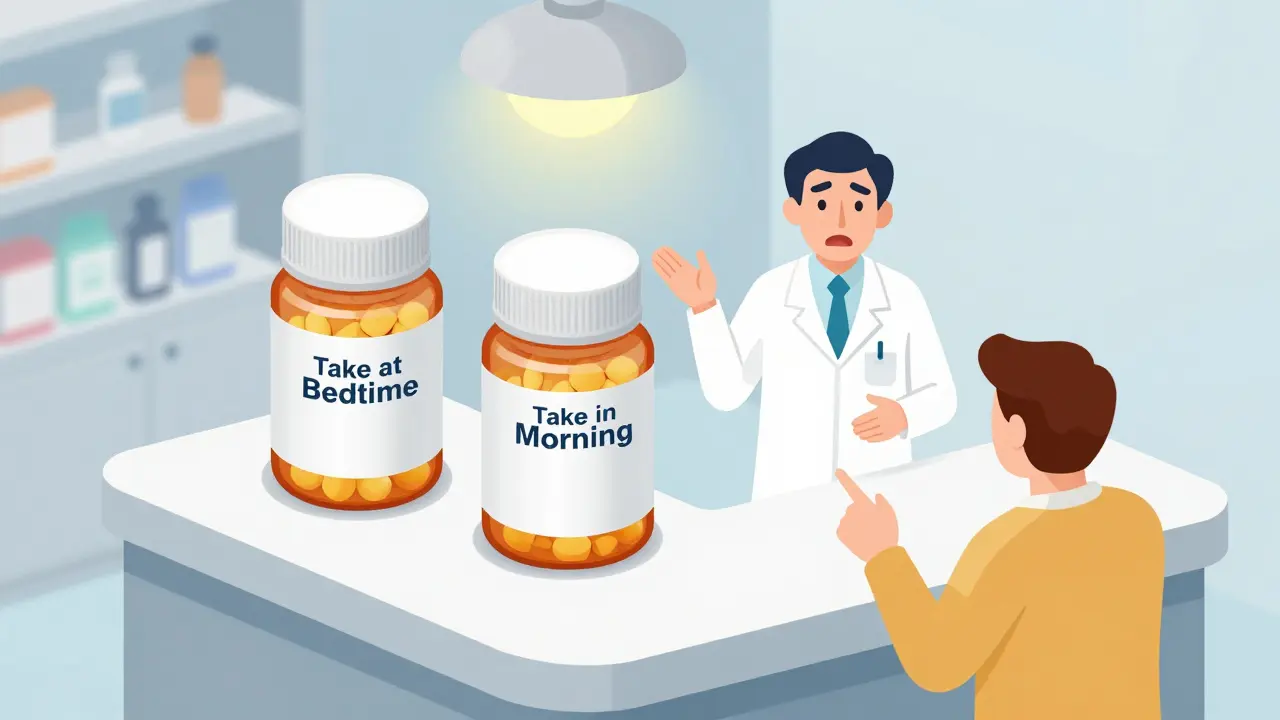
Let’s say you’ve been taking a generic version of your blood pressure drug for months. One day, your pharmacy gives you a different generic brand. The label says "take at bedtime." Last time, it said "take in the morning." What do you do? Stop. Don’t switch. Call your pharmacist. The NIH says manufacturers sometimes have conflicting instructions because their clinical trials used different populations or dosing schedules. Your doctor needs to review both versions to decide which one is right for you. Some pharmacies now use electronic systems that compare manufacturer instructions side by side. But not all do. If your pharmacy doesn’t offer this, ask them to check. You’re not being difficult-you’re protecting yourself.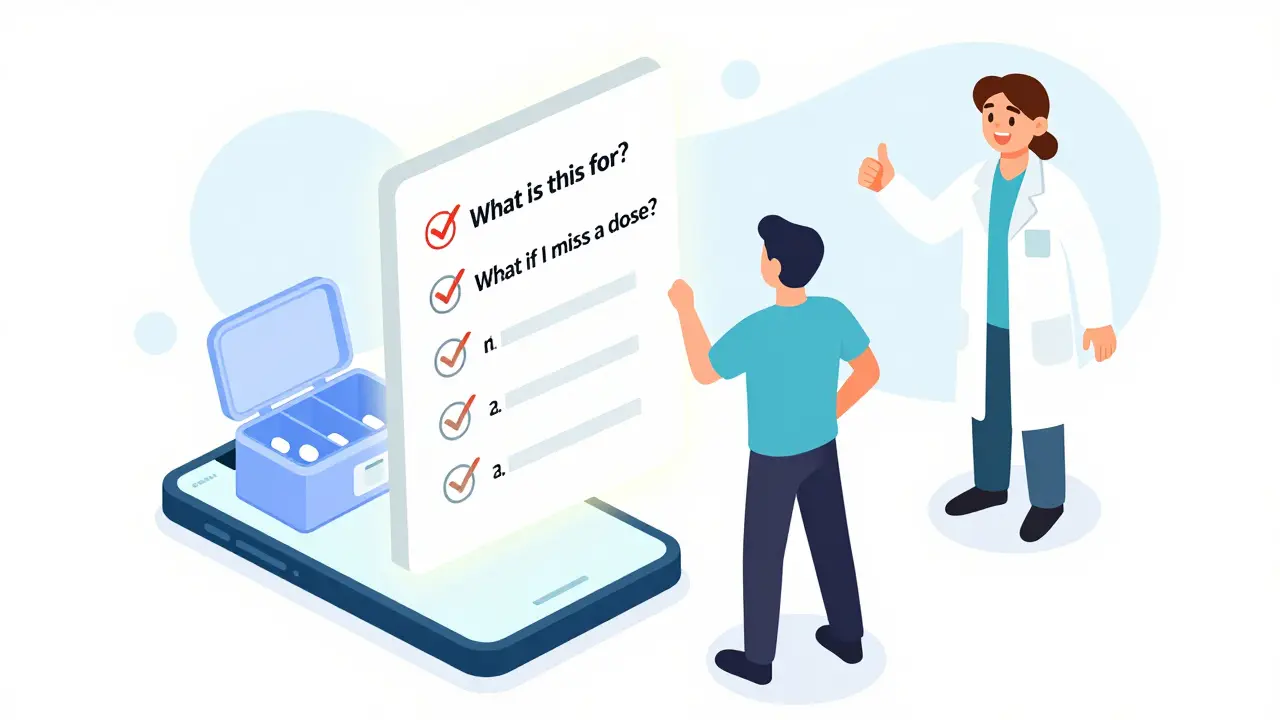
Tools to Help You Stay on Track
The CDC recommends setting reminders. Use your phone. Set alarms. Use a pill organizer with labeled compartments. If you take five pills a day, a weekly pill box with AM/PM slots can prevent double-dosing. Write down your schedule. Put it on the fridge. Or use a free app like Medisafe or MyTherapy. These apps send alerts, track doses, and even let you share your schedule with a family member. And if you’re ever unsure? Don’t guess. Don’t assume. Don’t look it up on Google and hope for the best. Call your pharmacy. Ask your doctor. Ask again if you still don’t understand. Medication safety isn’t about being perfect-it’s about being careful.What to Do If You Already Took It Wrong
You took two pills instead of one. You took it with grapefruit juice. You took it at 6 am instead of 8 pm. Now you’re worried. Don’t panic. Call your pharmacist or doctor immediately. They’ve seen this before. Many side effects are mild and pass quickly. But some-like liver damage from acetaminophen or low blood pressure from beta blockers-need quick action. If you’re in Australia (like in Sydney), call NPS MedicineWise at 1800 633 424. They’re a free, expert service that helps people understand their meds. In the U.S., call Poison Control at 1-800-222-1222. These services exist for exactly this reason.Final Thought: Your Health Is Your Responsibility
No one else will double-check your meds the way you should. Doctors write prescriptions. Pharmacists fill them. But you’re the one who swallows the pill. If the instructions are unclear, it’s not your fault. But if you don’t ask for clarity, it becomes your risk. Ask. Always. Even if you’ve taken the drug for years. Even if you think you "know" how it works. Medications change. Your body changes. Instructions change. Stay curious. Stay clear. Stay safe.What should I do if my medication instructions change when I refill my prescription?
If the instructions on your new prescription differ from your last refill, stop and don’t take the medication until you’ve called your pharmacist or doctor. Different manufacturers may have different directions-even for the same generic drug. Your provider needs to review both versions to ensure the change is safe for you.
Is it okay to take "as needed" medications whenever I feel like it?
No. "As needed" doesn’t mean "whenever you want." It means you can take it only if a specific symptom occurs, and you must follow the maximum daily limit. For example, ibuprofen might say "take 1 tablet every 6 hours as needed for pain, not more than 4 tablets in 24 hours." Taking more than the max can cause serious liver or kidney damage.
Why do some medications need to be taken at bedtime?
Some drugs work better at night because your body’s natural rhythms affect how they’re processed. Cholesterol-lowering statins, for example, are most effective when taken at bedtime because your liver produces the most cholesterol overnight. Blood pressure meds taken at night may also reduce heart attack risk more than morning doses, according to recent studies.
Can I ask my pharmacist to explain my medication even if I didn’t have any questions?
Absolutely. Pharmacists are trained to counsel patients on medication use. You don’t need a reason to ask. Say: "Can you walk me through how to take this?" or "I want to make sure I’m doing it right." Most pharmacies encourage this. If they refuse, find a different pharmacy.
What should I do if I accidentally take the wrong dose?
Call your pharmacist or poison control immediately. In Australia, dial 1800 633 424 (NPS MedicineWise). In the U.S., call 1-800-222-1222. Don’t wait for symptoms. Even if you feel fine, some overdoses cause delayed damage. Keep the medication bottle handy when you call-they’ll need the exact name and strength.
Dennis Santarinala
February 17, 2026 AT 05:51Man, I can't believe how many people just swallow pills without reading anything. I had a friend take a whole bottle of ibuprofen because the label said 'as needed' and she 'needed' a headache gone. She ended up in the ER. Don't be that person. Seriously.
Always read the fine print. Even if you've taken it for years. Even if your grandma took it the same way. Medications change. Your body changes. Instructions change. And yeah, I'm one of those people who puts commas everywhere. Can't help it.
Liam Earney
February 19, 2026 AT 05:43It's not just the labels, you know? It's the entire system. The pharmaceutical industry is a labyrinth of profit-driven obfuscation. They don't want you to understand your meds-they want you to depend on them. The FDA? They're not your friend. They're a regulatory body that gets funded by the very companies they're supposed to regulate. And don't get me started on how pharmacists are overworked and underpaid, so they just hand you a bottle and say 'take one daily' like you're a robot. I've seen it. I've lived it. I've cried over pill bottles. And yet, here we are. Still trusting a system that doesn't trust us.
Sam Pearlman
February 21, 2026 AT 01:45Wait wait wait-I have to say this. The whole 'as needed' thing? I think it's hilarious. Like, 'oh, you have a headache? Take a pill!' No, buddy. Take a pill if you're in actual pain. Not because you're bored. Not because your dog looked at you funny. I once took two Advil because I was 'feeling low.' I ended up with a stomach ulcer. So yeah. I'm a little sensitive now. But hey, I'm alive. And I read every label like it's a contract with the devil.
Steph Carr
February 22, 2026 AT 19:14Let’s be real-the real issue isn’t the labels. It’s that we’re taught to be passive about our health. 'Trust the expert.' 'The doctor knows best.' 'Pharmacists are busy.' Yeah, and? You’re the one who has to live with the consequences. I had my mom on blood thinners for years. She never asked questions. Then one day she started bleeding internally. Turns out, she was taking it with grapefruit juice because the label said 'take with food' and she thought orange juice was food. It wasn't. She almost died. Now I carry a laminated card in my wallet that says: 'Ask. Always. Even if you're embarrassed.' Because silence kills.
Brenda K. Wolfgram Moore
February 23, 2026 AT 11:17Thank you for this. Seriously. I work in a pharmacy. I see this every day. People come in, grab their meds, and walk out without a word. I offer counseling. 90% say 'no thanks.' Then they come back a week later saying they got sick. We’re not mind readers. We’re not magicians. We’re just trying to keep you alive. If you don’t ask, we can’t help. And yes, I’m tired. But I still do it. Because someone has to.
PRITAM BIJAPUR
February 24, 2026 AT 05:06Medication safety is not just a medical issue-it’s a philosophical one. We live in an age of information overload, yet we are taught to surrender agency to institutions. The label is a text. The pharmacist is a mediator. But the body? The body is the final interpreter. No algorithm, no FDA guideline, no pharmacist can replace the intimate knowledge of how your own system responds. When you take a pill, you are not receiving a command-you are entering into a dialogue with chemistry. And dialogue requires questions. Always. Even if the answer is silence.
Carrie Schluckbier
February 24, 2026 AT 08:34Here’s the truth they don’t want you to know: pharmaceutical companies design labels to be confusing on purpose. Why? So you’ll keep coming back. So you’ll need more prescriptions. So you’ll blame yourself when you get sick. They know most people won’t read the fine print. They count on it. And don’t even get me started on how insurance companies push generics without telling you the instructions might differ. This isn’t negligence. It’s business. And we’re the product.
Geoff Forbes
February 24, 2026 AT 14:33Look I'm not saying this is bad but come on. 'Take with food'? What does that even mean? A snack? A burrito? A whole Thanksgiving dinner? And 'as needed'? Like, if I feel like it? I mean, I've taken Tylenol before bed just because I'm tired. That's not dangerous. It's just... life. People are too scared. Chill out. You're not going to die from taking a pill wrong once. Unless it's lithium. Then yeah, maybe. But otherwise? Stop freaking out.
Jonathan Ruth
February 25, 2026 AT 23:30Everyone's making this out to be a crisis. It's not. You want clarity? Ask. That's it. No magic. No conspiracy. Pharmacists are trained to explain. If they don't, switch pharmacies. Simple. I've been on 5 different meds in 3 years. I ask every time. I read every label. I call if I'm confused. And I'm alive. You can be too. Stop looking for villains. Be the hero. Ask. Then do it. It's not hard.
Philip Blankenship
February 27, 2026 AT 13:34I used to be the guy who just took pills and hoped for the best. Then my cousin died from an interaction between his blood pressure med and a herbal supplement he bought online. He didn’t even know it could interact. He thought 'natural' meant 'safe.' That broke me.
Now I keep a notebook. I write down every med I take. The dose. The time. The reason. I take a picture of the label. I call the pharmacy if it looks different. I even have a spreadsheet. My wife thinks I’m weird. I don’t care. I’m alive. And I’m not letting some corporate label kill me because I was too lazy to read it.
So yeah. I’m weird. But I’m here. And you can be too. Just don’t guess. Ask. Always.