Telepharmacy Safety Impact Calculator
Find Telepharmacy Availability & Safety Impact in Your State
Telepharmacy can reduce hospitalization rates by up to 27.3 percentage points compared to areas without telepharmacy services.
Safety Impact Results
Telepharmacy Availability
Hospitalization Rate Reduction
Medication Error Comparison
Important Notes
When you live in a rural town with no pharmacy within 50 miles, getting your prescription filled isn’t just inconvenient-it can be dangerous. Missing doses, delayed refills, or not being able to ask a pharmacist about side effects can lead to hospital visits or worse. That’s where telepharmacy comes in. It’s not science fiction. It’s real. And since the pandemic, it’s grown fast. But does it keep patients safe? What do the numbers actually say?
What Telepharmacy Really Does
Telepharmacy isn’t just video calls with a pharmacist. It’s a full system: remote medication verification, automated dispensing machines, secure electronic records, and real-time consultations-all delivered over high-definition video. Pharmacies set up a central hub, often in a city, and connect to small clinics, nursing homes, or rural stores using secure networks. A technician on-site loads the meds, but a licensed pharmacist hundreds of miles away reviews every prescription, checks for interactions, and talks to the patient face-to-face via screen. This isn’t about replacing pharmacists. It’s about extending their reach. In places like rural Montana or the Navajo Nation, there simply aren’t enough pharmacists to go around. Telepharmacy fills that gap. By 2023, over 40% of areas officially labeled as “health professional shortage zones” in the U.S. had at least one telepharmacy site. That’s up from just 10% in 2019.How Safe Is It? The Data
The big question: Are people getting the right meds, at the right time, without harm? Studies show telepharmacy matches traditional pharmacies on core safety metrics. A 2021 review of six major studies found dispensing accuracy rates between 99.2% and 99.8% for telepharmacies. Traditional pharmacies? 99.3% to 99.9%. The difference? Statistically meaningless. Medication errors dropped by 15-20% in telepharmacy settings, according to the same review. Why? Because remote pharmacists often have more time to double-check each script. In busy brick-and-mortar pharmacies, staff are rushing. In telepharmacy hubs, workflows are streamlined. One South Dakota telepharmacy team catches about 1.2 errors per 100 prescriptions-right in line with urban pharmacies. But here’s the twist: telepharmacy doesn’t just prevent errors. It prevents hospitalizations. A 2021 study tracked 3,782 patients over a year. Those using telepharmacy had a 12.9% hospitalization rate. Those without access? 40.2%. That’s not a small difference. It’s life-changing.Where Telepharmacy Falls Short
It’s not perfect. A 2022 survey of 450 telepharmacy users found that nearly 3 in 10 worried the pharmacist couldn’t fully assess their condition remotely. And they’re right to worry. Pharmacists rely on more than just what patients say. They watch for trembling hands, confusion, skin rashes, or signs of depression. These cues vanish over a pixelated screen. Dr. Jerry Fahrni, writing in the Journal of the American Pharmacists Association, pointed out that missing these non-verbal signals could mean overlooking opioid misuse or early signs of adverse reactions. Then there’s tech. In 35% of telepharmacy sites, poor internet connections caused delays or dropped calls. One Reddit user from North Dakota described how a bad video link led to a missed insulin allergy warning. The patient had an adverse reaction. That’s not a failure of the model-it’s a failure of infrastructure. And it’s common in places that need telepharmacy the most. Training matters too. Pharmacy students in one study performed consultations 15-20% less effectively via telepharmacy than in person. That’s not because they’re bad pharmacists. It’s because they weren’t trained for it. The American Society of Health-System Pharmacists now recommends 16-24 hours of specialized training for any pharmacist doing remote work. Only sites with full training programs saw a 22% drop in dispensing errors.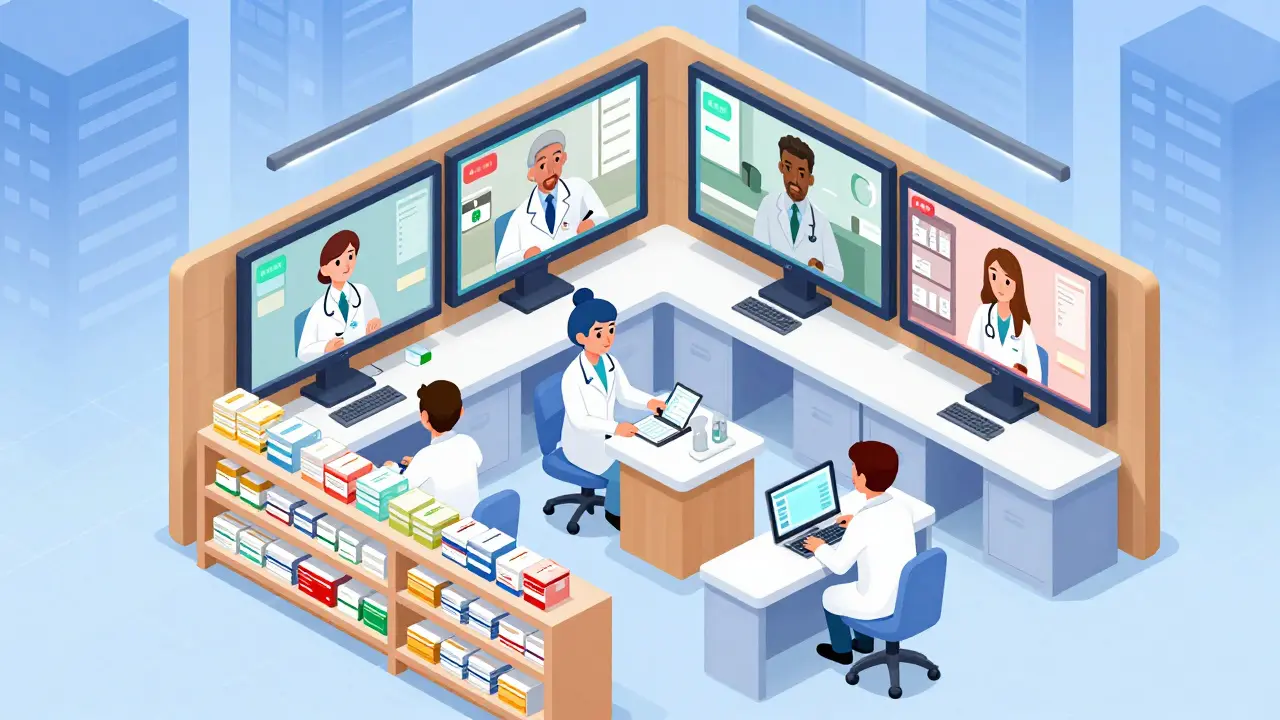
Real-World Success Stories
The Indian Health Service’s telepharmacy program for Navajo Nation communities is one of the most successful examples. They added two rules: every high-risk medication needs dual verification, and any complex case gets immediately transferred to an in-person pharmacist. Result? A medication error rate of 0.45%. The national average? 0.67%. In rural Minnesota, a critical access hospital switched to telepharmacy in 2021. Within six months, prescription turnaround time dropped from 90 minutes to under 15 minutes after hours. No more patients skipping doses because they couldn’t wait until morning. And it’s not just about speed. One patient in rural Montana told a reporter, “Being able to video chat about my warfarin dosing without driving two hours has probably prevented at least two ER visits.” That’s the kind of impact no spreadsheet can fully capture.Regulation and the Road Ahead
Right now, telepharmacy rules vary wildly. As of early 2026, 28 states have clear laws. The other 22? No guidelines. That’s dangerous. A pharmacist in California can’t legally approve a script for a patient in Alabama if that state doesn’t recognize out-of-state telepharmacy services. The federal government is starting to catch up. In late 2022, Medicare expanded reimbursement for telepharmacy under Part D. That means more clinics can afford to set up the tech. The FDA launched a safety monitoring project in January 2023 to track adverse drug events tied specifically to telepharmacy. And the Patient-Centered Outcomes Research Institute is funding a three-year randomized trial across 12 rural communities-the first of its kind-to finally compare safety outcomes head-to-head. The biggest game-changer? Artificial intelligence. Companies like MedsAI are training algorithms to flag risky prescriptions before a pharmacist even sees them. Early trials show these tools reduce predicted adverse drug events by nearly 19%. Think of it as a second set of eyes-always on, always checking.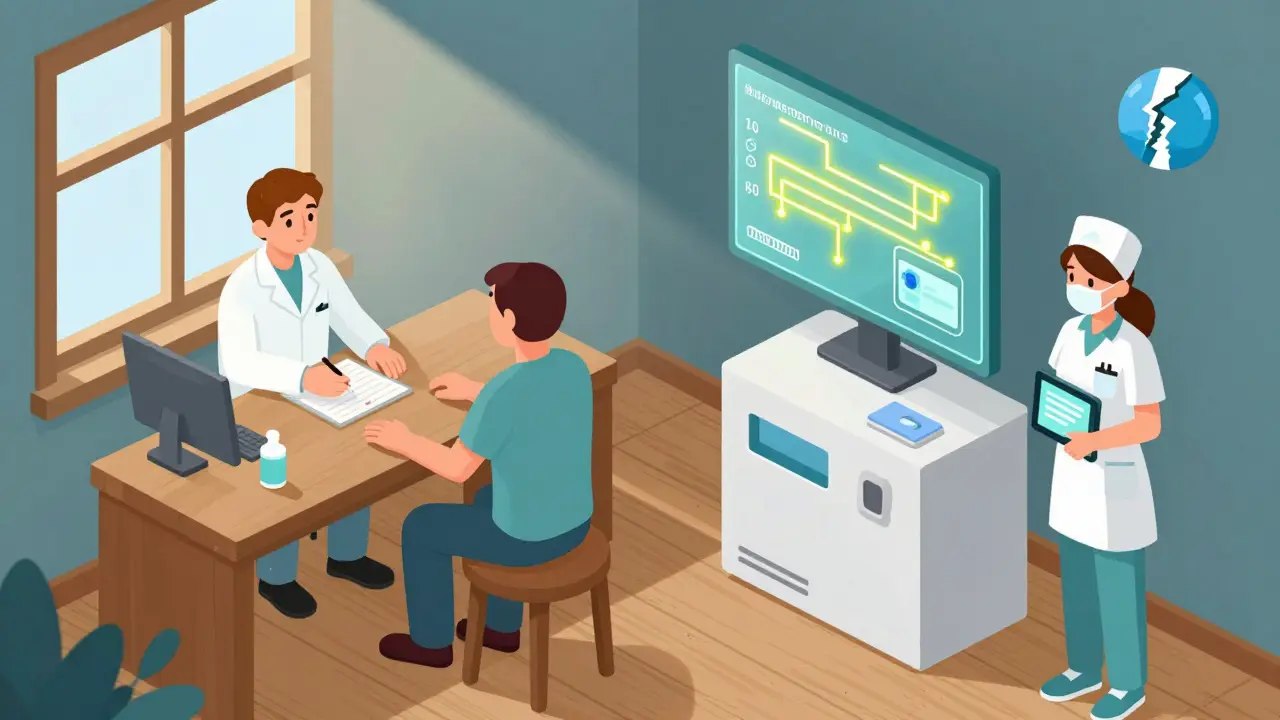
What This Means for You
If you live in a rural area, telepharmacy might already be your best option for consistent, safe medication access. If you’re a patient, ask your provider: “Is there a telepharmacy I can use?” If you’re a pharmacist, get trained. The field is growing fast, and the demand for skilled remote pharmacists is outpacing supply. If you’re skeptical, that’s fair. Technology isn’t magic. It needs good people, solid training, and reliable internet. But when those pieces come together, telepharmacy doesn’t just make care more convenient-it saves lives.What’s Next?
By 2026, experts predict telepharmacy will match traditional pharmacy safety levels across the board. But that’s only true if we fix the gaps. Better broadband. Standardized training. Uniform regulations. More research. The technology is ready. The evidence is growing. Now it’s up to policymakers, providers, and patients to make sure no one gets left behind because they live too far from a pharmacy.Is telepharmacy legal everywhere in the U.S.?
No. As of early 2026, only 28 states have specific laws regulating telepharmacy. The other 22 states either have no clear rules or rely on patchwork policies that make cross-state services risky. Pharmacists must be licensed in the state where the patient is located, and prescriptions must follow that state’s laws. Always check your state’s pharmacy board website for current rules.
Can telepharmacy handle complex medications like chemotherapy or blood thinners?
Yes-but with safeguards. High-risk medications like warfarin, insulin, or chemo require extra steps. Successful programs use dual verification (two pharmacists review the script), automated alerts for dangerous interactions, and clear protocols to transfer complex cases to in-person pharmacists. The Indian Health Service’s Navajo program, for example, never dispenses high-risk drugs without a second pharmacist sign-off. These protocols make telepharmacy safe even for the most sensitive medications.
Do telepharmacies cost more than regular pharmacies?
No. In fact, many telepharmacy sites offer lower prices because they operate with lower overhead. Since they don’t need a large physical storefront, staff, or parking facilities, savings are passed on. Medicare and Medicaid now cover telepharmacy services under the same terms as traditional pharmacies. Patients typically pay the same copay, whether they pick up at a local store or a remote kiosk.
What if my internet goes down during a telepharmacy consultation?
Reputable telepharmacy systems require redundant connections-like backup cellular hotspots or landline failovers. If the video drops, the technician on-site can still dispense the medication if it’s already verified, but they cannot approve new prescriptions without a live connection. Emergency situations trigger an alert to nearby clinics or on-call pharmacists. Most programs also require patients to have a backup contact, like a local nurse or family member, in case of tech failure.
Are telepharmacy pharmacists as qualified as those in physical pharmacies?
Yes. All telepharmacy pharmacists are fully licensed, same as in-person pharmacists. Many have additional training in telehealth, remote patient assessment, and emergency protocols. Some even work across multiple states. The difference isn’t their credentials-it’s their environment. They work from a central hub, often with fewer distractions and more time per prescription, which can actually improve decision-making.
Will telepharmacy replace my local pharmacy?
Not in most places. In urban areas, traditional pharmacies still dominate. Telepharmacy’s main role is filling gaps where no pharmacy exists. In rural towns, it often works alongside a small clinic or grocery store with a kiosk. It’s not about replacing people-it’s about making sure everyone, no matter where they live, has access to a pharmacist when they need one.
Carolyn Rose Meszaros
January 20, 2026 AT 06:37My grandma uses telepharmacy in rural Idaho and she’s obsessed. She says the pharmacist remembers her name, asks about her cats, and even reminded her to stop taking that sketchy supplement. 🙌 No more driving 45 minutes in the snow just to get blood pressure meds. This isn’t just tech-it’s care with a heartbeat.
Greg Robertson
January 21, 2026 AT 14:28I work in a small clinic that switched to telepharmacy last year. The biggest win? Patients actually show up for their med reviews now. Before, half of them just didn’t come. Now they’re videoing in from their couches in pajamas. It’s weirdly intimate in a good way.
Crystal August
January 22, 2026 AT 13:35Let’s be real-this is just corporate cost-cutting dressed up as innovation. Pharmacists are being replaced by screens while profits rise. And don’t even get me started on how many elderly people can’t even operate a webcam. This isn’t progress. It’s neglect with a Wi-Fi signal.
Nadia Watson
January 23, 2026 AT 02:33As someone who grew up in a town where the nearest pharmacy was 70 miles away, I can’t express how vital this is. The data speaks for itself. But I want to emphasize the human side: the pharmacist who remembers your dog’s name, the extra five minutes they take to explain why you shouldn’t mix that medication with grapefruit juice-it’s not just about accuracy, it’s about dignity. We need more of this, not less. And yes, training and infrastructure must improve-but that’s not a reason to stop. It’s a reason to invest.
Courtney Carra
January 23, 2026 AT 19:01Is telepharmacy really ‘extending reach’… or is it just extending capitalism’s reach into the last remaining pockets of human connection? We’ve outsourced empathy to bandwidth. The algorithm checks for interactions, but who checks for the silence in a patient’s voice? Who sees the tremor in their hands when they say ‘I’m fine’? Maybe the real question isn’t whether it works-but whether we’ve stopped caring enough to notice what it’s replacing.
clifford hoang
January 25, 2026 AT 01:55They say telepharmacy is safe… but have you seen the NSA’s involvement in the MedsAI data pipeline? 🤔 The FDA’s ‘safety monitoring project’? Total distraction. They’re building a centralized drug control system under the guise of rural care. You think your insulin dosage is private? Think again. This is Phase 1 of the pharmaceutical surveillance state. Wake up. 🚨
Arlene Mathison
January 26, 2026 AT 20:36My cousin in West Virginia got her chemo script approved via telepharmacy during a blizzard. No delays. No panic. Just a calm voice on the screen saying, ‘We’ve got you.’ That’s the kind of moment that changes lives. This isn’t futuristic-it’s necessary. Let’s fix the internet, not the idea.
Emily Leigh
January 28, 2026 AT 01:23Edith Brederode
January 28, 2026 AT 12:54I’m a pharmacy tech and I’ve helped run two telepharmacy kiosks. The training changed everything. Once we added the 24-hour telehealth module, our error rate dropped like crazy. And patients? They love the consistency. Same pharmacist every time, even if they’re 500 miles away. It’s not perfect-but it’s better than nothing. And honestly? Better than some urban pharmacies where the pharmacist is yelling into a phone while scanning 12 scripts at once.
Art Gar
January 30, 2026 AT 03:24While the statistical outcomes appear favorable, one must critically examine the epistemological foundations of remote pharmaceutical oversight. The ontological disconnect between embodied clinical practice and mediated interaction introduces an irreducible risk domain that cannot be quantified by current metrics. Regulatory fragmentation further compounds this epistemic instability. Until a unified federal framework is established, any claim of ‘equivalent safety’ remains methodologically unsound.
Renee Stringer
January 31, 2026 AT 11:56People are dying because we’re letting machines handle medicine. That’s not innovation. That’s arrogance. And don’t pretend it’s about access-this is about saving money on salaries. We used to care. Now we just click ‘approve’.
thomas wall
February 1, 2026 AT 00:53As a British observer, I find this both admirable and profoundly concerning. In the UK, we have a national health service precisely because we believe healthcare is a right-not a product of broadband speed. Your telepharmacy model, while ingenious, risks creating a two-tier system: those with good internet get care, those without… don’t. This is not equity. This is digital elitism dressed in white coats.
Shane McGriff
February 1, 2026 AT 13:31I’ve seen this work firsthand. One patient, 82, diabetic, lives alone in the woods. Last winter, her glucose levels spiked. She called the telepharmacy. The pharmacist noticed her voice sounded off-not just from the numbers, but from the pause before she answered. They sent a local nurse over. Turned out she had a UTI that was throwing off her insulin. That’s not tech. That’s intuition. And yes, the tech helped-but the person behind it made the difference. We need more of those people. And we need to train them right.