When you have PCOS, unwanted facial or body hair isn’t just a cosmetic issue-it’s a constant reminder of a hormonal imbalance you didn’t ask for. About 70 to 80% of women with PCOS deal with hirsutism: thick, dark hair growing where it shouldn’t-on the chin, upper lip, chest, or back. It’s not just about appearance. For many, it affects confidence, mental health, and daily routines. You might be spending hours threading, waxing, or bleaching, only to see the hair grow back stronger. That’s where antiandrogens come in. But they’re not a quick fix. And they’re not for everyone.
Why Antiandrogens Are Used for Hirsutism in PCOS
PCOS causes your body to make too many androgens-male hormones like testosterone. Even though women naturally have some androgens, too much turns fine body hair into coarse, dark terminal hair. Antiandrogens work by blocking those hormones from binding to hair follicles. They don’t stop hair growth completely. They slow it down, make it finer, and reduce density over time.
The most common antiandrogens used are spironolactone, finasteride, and eflornithine cream. Spironolactone blocks androgen receptors and lowers testosterone conversion. Finasteride stops the enzyme that turns testosterone into dihydrotestosterone (DHT), the more potent form that triggers hair growth. Eflornithine is a topical cream that slows hair growth at the follicle level by inhibiting an enzyme called ornithine decarboxylase.
None of these work overnight. The Monash University 2023 meta-analysis showed that visible results take at least six months. Maximum improvement often comes after 18 to 24 months of daily use. If you expect to see changes in three weeks, you’ll be disappointed. But if you stick with it, many women report fewer threading sessions, lighter hair texture, and less noticeable growth.
Spironolactone: The Most Common Choice
Spironolactone is the go-to oral antiandrogen for PCOS-related hirsutism. It’s usually started at 25 or 50 mg per day and slowly increased to 100-200 mg if needed. It’s not a diuretic here-it’s being used for its hormone-blocking effects. Studies show daily use leads to better results than taking it every other day. One patient on Reddit shared that after eight months on Yaz plus 100 mg of spironolactone, her modified Ferriman-Gallwey score dropped from 18 to 11. That’s a real, measurable improvement.
But it’s not without side effects. Around 30-40% of users report dizziness, fatigue, or menstrual irregularities. Some women experience heavier or more frequent periods. Because it can raise potassium levels, people with kidney problems need monitoring. And because it’s teratogenic, you must use two forms of contraception while taking it-even if you’re not sexually active, because accidental pregnancy can happen.
Cost-wise, generic spironolactone is affordable-about $46 for 60 tablets of 100 mg. That’s one reason it’s widely prescribed. But if side effects are too much, your doctor might switch you to finasteride.
Finasteride: A Different Approach
Finasteride targets DHT specifically. It’s the same drug used for male pattern baldness, but at a lower dose for women-usually 2.5 to 5 mg daily. It’s often better tolerated than spironolactone, with fewer reports of dizziness or fatigue. One woman on Reddit said finasteride worked better for her than spironolactone, even though it cost $85 a month out of pocket.
But finasteride has its own risks. The FDA has a black box warning about possible long-term sexual side effects, even after stopping the drug. It’s also FDA Category X-meaning it’s strictly off-limits during pregnancy. If you’re planning to conceive, you must stop it at least a month before trying. And while it’s effective, it’s not always covered by insurance for hirsutism, making it expensive for some.
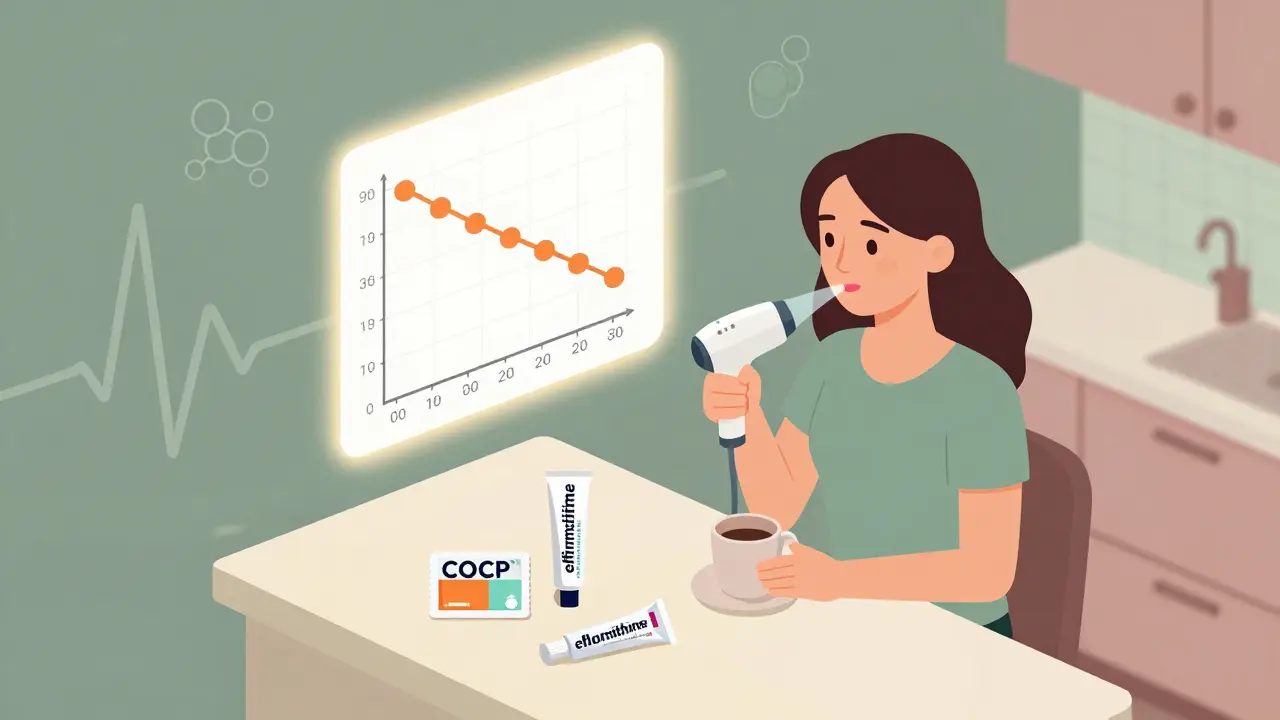
Eflornithine Cream: A Non-Systemic Option
If you can’t tolerate pills or don’t want to take them, eflornithine cream (brand name Vaniqa) is an option. Applied twice daily to affected areas, it slows hair growth by disrupting the hair follicle’s growth cycle. It doesn’t remove hair-it just makes it grow slower. In clinical studies, 60% of users saw improvement after six months.
It works even better when combined with laser treatment. One study showed eflornithine plus laser reduced hair by 35% more than laser alone. That’s a big deal if you’re tired of spending hundreds on laser sessions with little payoff.
The downside? Cost. A 30-tube pack of Vaniqa runs around $245. Insurance rarely covers it for PCOS, so many pay out of pocket. It’s also messy-you have to apply it to each area, and it takes time to dry. But for women who can’t take oral meds or want to avoid systemic side effects, it’s a solid tool.
Why Birth Control Pills Come First
Here’s the hard truth: antiandrogens are not first-line treatment. Combined oral contraceptive pills (COCPs) are. They lower androgen production from the ovaries and increase sex hormone-binding globulin (SHBG), which binds free testosterone. Studies show COCPs are more effective than antiandrogens alone for reducing hirsutism.
The 2023 International Evidence-based Guideline for PCOS says antiandrogens should only be used when COCPs don’t work, aren’t tolerated, or are contraindicated. That means if you’ve been on Yaz, Loestrin, or another pill for six months with no change, then-and only then-should you consider adding an antiandrogen.
Some women do better on a combo: COCP + spironolactone. One review found this combo improved hirsutism more than COCP alone. But there’s a catch. Combining them can worsen lipid profiles in some cases, raising cholesterol slightly. Your doctor should check your liver and lipid levels before and during treatment.
What Doesn’t Work (and Why)
Not all antiandrogens are safe. Flutamide was once used but was pulled from use because it caused rare but severe liver damage. Cyproterone acetate is banned in many countries due to meningioma risk. Bicalutamide is sometimes used off-label but lacks long-term safety data in women.
Metformin, often prescribed for insulin resistance in PCOS, doesn’t do much for hirsutism on its own. One meta-analysis found that metformin plus lifestyle changes didn’t outperform antiandrogens plus lifestyle for hair reduction. So if your goal is to reduce hair, don’t count on metformin alone.
Real People, Real Results
Online forums are full of stories. On r/PCOS, users share their wins and setbacks. One woman said she went from needing to thread her upper lip every two weeks to once a month after 10 months on spironolactone. Another quit after three months because she felt constantly tired and her periods became unpredictable.
On RealSelf, spironolactone has a 3.7 out of 5 rating. About 58% of users say it was “worth it.” Eflornithine? 3.2 out of 5. Nearly half say it wasn’t worth the cost or effort. The common thread? Patience. Everyone who saw results said they stuck with it for at least six months.
Cost is another big factor. In the U.S., spironolactone is cheap. Finasteride and eflornithine are not. In Australia, where I live, spironolactone is subsidized under the PBS-so it’s under $10 a script. Eflornithine still costs over $100 without a subsidy. That makes access uneven.
What You Need to Know Before Starting
- You need to be on reliable contraception. Two methods are recommended-like the pill plus condoms.
- Results take 6-12 months. Don’t quit too soon.
- Spironolactone can raise potassium. Avoid salt substitutes and get blood work done if you have kidney issues.
- Finasteride can cause lasting sexual side effects. Talk to your doctor if you’re concerned.
- Eflornithine won’t remove hair-it just slows growth. Pair it with laser or threading.
- Never use these drugs if you’re pregnant or planning to be.
What’s Next for Treatment?
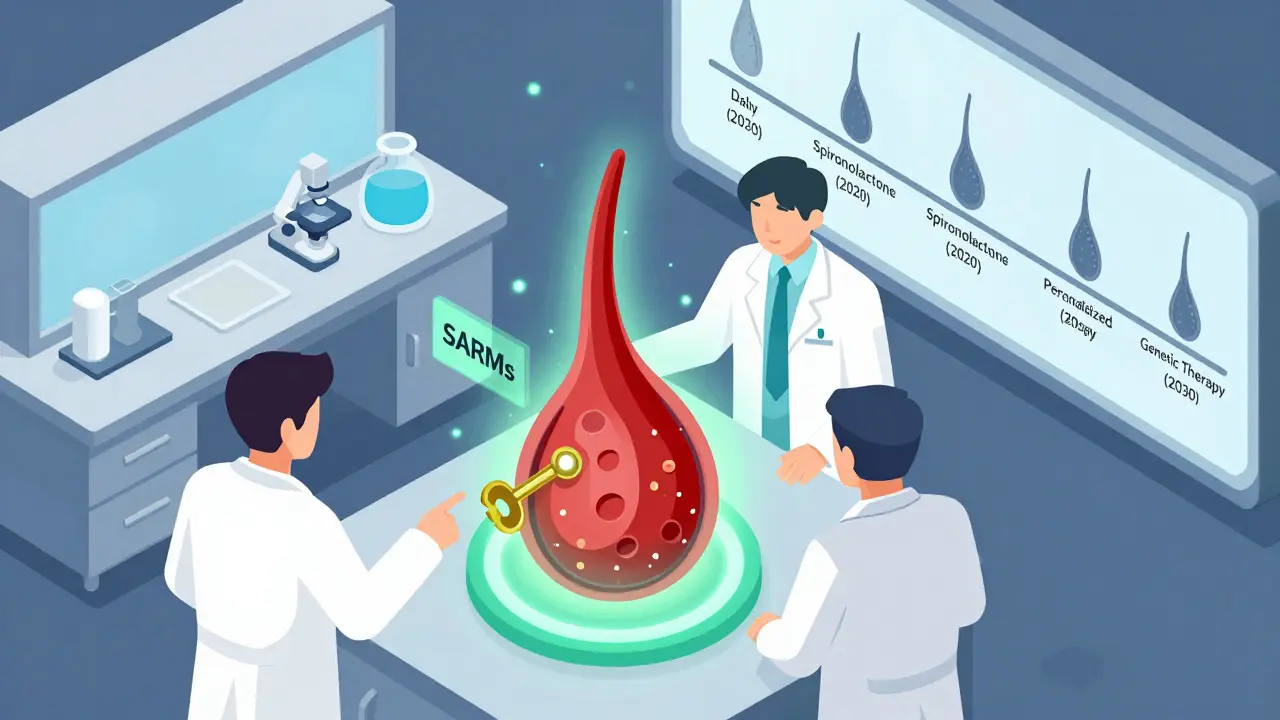
Research is moving fast. New drugs called SARMs (selective androgen receptor modulators) are in Phase II trials. One, enobosarm, showed 28% better hair reduction than placebo in early studies. If approved, it could offer the benefits of antiandrogens without the side effects.
Doctors are also moving toward personalized treatment. Genetic testing for androgen sensitivity might one day tell you which drug will work best for you. For now, it’s trial and error-but with better tools than ever before.
The future of hirsutism treatment isn’t just pills or lasers. It’s combination therapy: COCP + antiandrogen + eflornithine + laser. That’s becoming the gold standard for moderate to severe cases. And it’s working-for those who stick with it.
How long does it take for antiandrogens to reduce hair growth in PCOS?
Visible results typically take 6 to 12 months of daily use. Maximum improvement is usually seen after 18 to 24 months. Hair doesn’t disappear-it becomes finer, lighter, and grows slower. Stopping early means you won’t see the full benefit.
Can I use spironolactone without birth control?
No. Spironolactone is teratogenic and can cause serious birth defects. The FDA and international PCOS guidelines require two forms of contraception while taking it-even if you’re not sexually active. This includes options like the pill, IUD, implant, or condoms with spermicide.
Is finasteride safer than spironolactone for PCOS hirsutism?
Finasteride is often better tolerated with fewer side effects like dizziness or menstrual changes. But it carries a black box warning for possible long-term sexual side effects, even after stopping. Spironolactone has more common side effects but doesn’t have the same sexual risk profile. The choice depends on your health history and priorities.
Does eflornithine cream remove hair?
No. Eflornithine cream slows hair growth by blocking an enzyme in the follicle. It doesn’t remove hair or kill follicles. You still need to shave, thread, or use laser to remove existing hair. But with the cream, hair grows back slower and finer, making maintenance easier.
Why aren’t antiandrogens the first treatment for PCOS hirsutism?
Combined oral contraceptives (COCPs) are more effective at lowering androgen levels overall and are safer for long-term use in most women. Antiandrogens are reserved for when COCPs don’t work, aren’t tolerated, or are contraindicated. Guidelines say they’re second-line options-not replacements.
Can I use antiandrogens if I want to get pregnant in the future?
You must stop all antiandrogens at least one to three months before trying to conceive. Spironolactone clears from your system in a few days, but finasteride can linger. Always consult your doctor before stopping or starting any medication when planning pregnancy. There are safe alternatives for hair management during preconception, like laser or eflornithine.
Bennett Ryynanen
December 31, 2025 AT 16:40Bro. I was on spironolactone for 14 months. At first I thought it was a waste of time-nothing changed for six months. Then one day I looked in the mirror and realized I hadn’t threaded my upper lip in three weeks. I cried. Not because I was sad-because I finally felt like myself again. It’s not magic, but it’s real. Stick with it.
Chandreson Chandreas
January 2, 2026 AT 09:08Man, this post hit different. 🙏 I’m from India and we don’t talk about this stuff. My sister tried eflornithine-it cost more than her monthly phone bill. She said it felt like applying glue and then waiting. But after 8 months? Her chin hair got so fine she stopped bleaching it. No one even noticed. Sometimes the quiet wins are the biggest.
Darren Pearson
January 3, 2026 AT 08:14While the anecdotal evidence presented in this thread is compelling, one must critically evaluate the methodological rigor of the cited meta-analyses. The Monash University study, while peer-reviewed, exhibits significant heterogeneity in outcome measures across included trials. Furthermore, the reliance on self-reported Ferriman-Gallwey scores introduces substantial observer bias. A more robust approach would involve standardized photogrammetric analysis over longitudinal intervals. Until then, I remain skeptical of claims regarding 'measurable improvement' without objective biomarkers.
Frank SSS
January 3, 2026 AT 12:54Okay but why does everyone act like spironolactone is the holy grail? I took it for six months, got dizzy every time I stood up, and my period became a horror movie. Then I switched to finasteride and now I can’t even remember what my libido used to feel like. Like… is this worth it? I’m not even mad, I’m just disappointed. Also, why is Vaniqa so expensive? It’s just cream. Why does it cost more than my rent?
Paul Huppert
January 3, 2026 AT 14:45Does anyone know if the hair that grows back after stopping these meds is the same as before? Like, does it go back to being coarse and dark, or does it stay finer? Just curious before I start something I might have to quit later.
Harriet Hollingsworth
January 5, 2026 AT 14:22If you’re taking hormones just to look ‘normal,’ you’re already losing. Society tells women they can’t have body hair and you’re just playing along. Why not just shave it all off and call it a day? Stop letting pharmaceutical companies profit off your insecurity.
Deepika D
January 6, 2026 AT 09:43Hey everyone, I’ve been managing PCOS for 12 years and I want to say this: you’re not broken. Hirsutism doesn’t define you, but I get how exhausting it is to fight it every day. I started with birth control, then added spironolactone, then laser, then eflornithine. It took me three years. I had to quit twice because of side effects. But here’s the thing-I didn’t do it to be ‘perfect.’ I did it so I could walk into a room without feeling like everyone was staring at my chin. And guess what? No one was. But I was. So do what feels right for YOU. If you need pills, take them. If you need laser, get it. If you need to just let it grow and wear a turtleneck? Do that too. Your worth isn’t tied to your hairline. But if you want to fight it? I’m here with you. You’re not alone. And yes, it gets better. I promise.
Branden Temew
January 6, 2026 AT 19:06So let me get this straight-we’ve got a medical condition that affects 70% of women with PCOS, and the solution is to take a diuretic that’s been repurposed as a hormone blocker, pay $245 for a cream that feels like glue, and hope a pill doesn’t wreck your sex life forever… and this is the best we’ve got? I’m not impressed. Next up: a laser-powered hair-removal toaster. I’ll preorder.