For decades, proving that a generic drug works the same as the brand-name version meant running clinical trials with healthy volunteers. These studies, called in vivo bioequivalence tests, cost anywhere from $500,000 to $2 million per trial and took months to complete. Now, a smarter, faster method is changing the game: IVIVC. It’s not magic-it’s science. IVIVC stands for In Vitro-In Vivo Correlation, and it uses lab-based dissolution tests to predict how a drug will behave inside the human body. When done right, it can replace entire clinical trials. That’s not just efficient-it’s revolutionary.
What Exactly Is IVIVC?
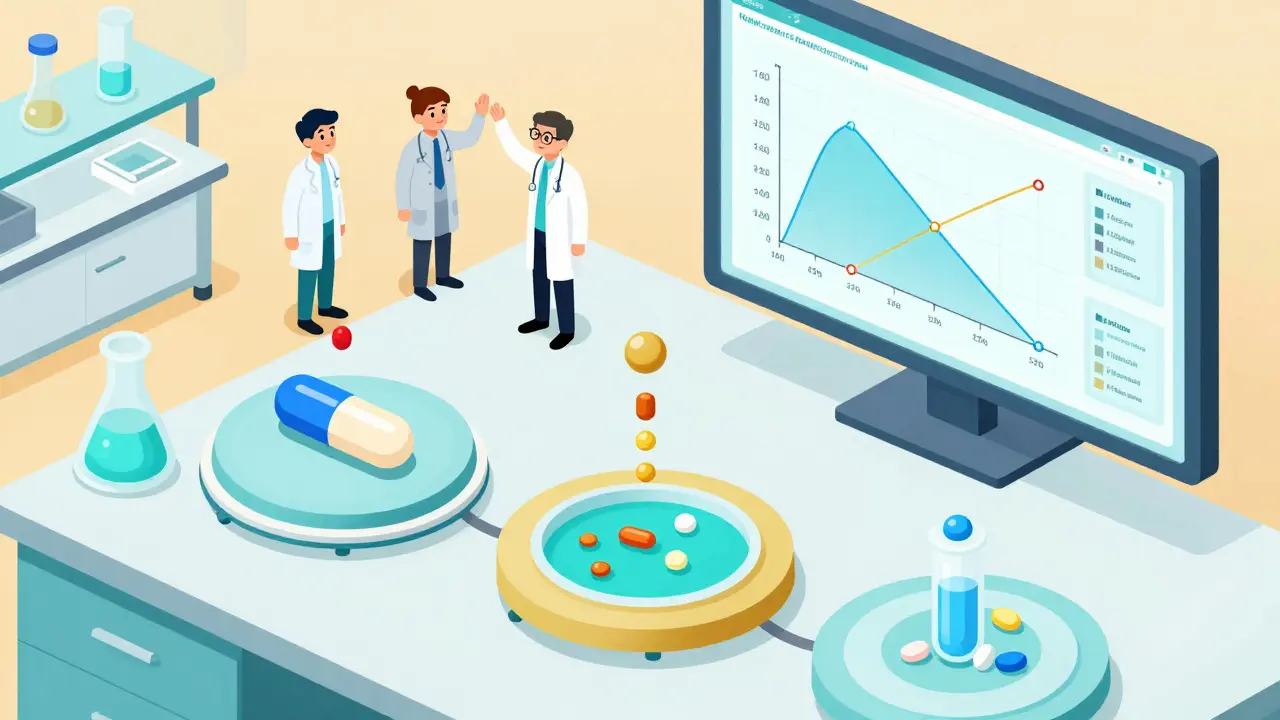
IVIVC links what happens in a test tube to what happens in a person’s bloodstream. Imagine you’re testing a pill’s release rate in a machine that mimics stomach fluid. If you can show, with high precision, that the speed at which the drug dissolves in that machine directly predicts how fast and how much of it enters the blood, you’ve built an IVIVC. The FDA first laid out the rules for this in 1996, and since then, it’s become a cornerstone for approving generic drugs without running human trials.
There are four levels of IVIVC, and only one really counts for waivers: Level A. This is the gold standard. It’s a point-to-point match between dissolution at every time interval and drug concentration in the blood. Think of it like a perfect mirror: if the pill releases 20% of its drug at 1 hour in the lab, then 20% shows up in the blood at exactly that time in people. For this to be accepted, the model must predict AUC (total drug exposure) within ±10% and Cmax (peak concentration) within ±15%. The correlation coefficient (R²) needs to be above 0.95. That’s not easy to achieve.
Why Do Companies Even Bother?
Because the savings are massive. A single bioequivalence study with 24-36 volunteers can cost over $1 million. For a company developing a complex extended-release tablet, they might need five different formulations during development. That’s five studies-$5 million gone. With a validated Level A IVIVC, they can skip those studies entirely. The FDA allows manufacturers to make minor changes to the formulation or manufacturing process without retesting in humans, as long as the dissolution profile stays within accepted limits. That means faster approvals, quicker market entry, and lower prices for patients.
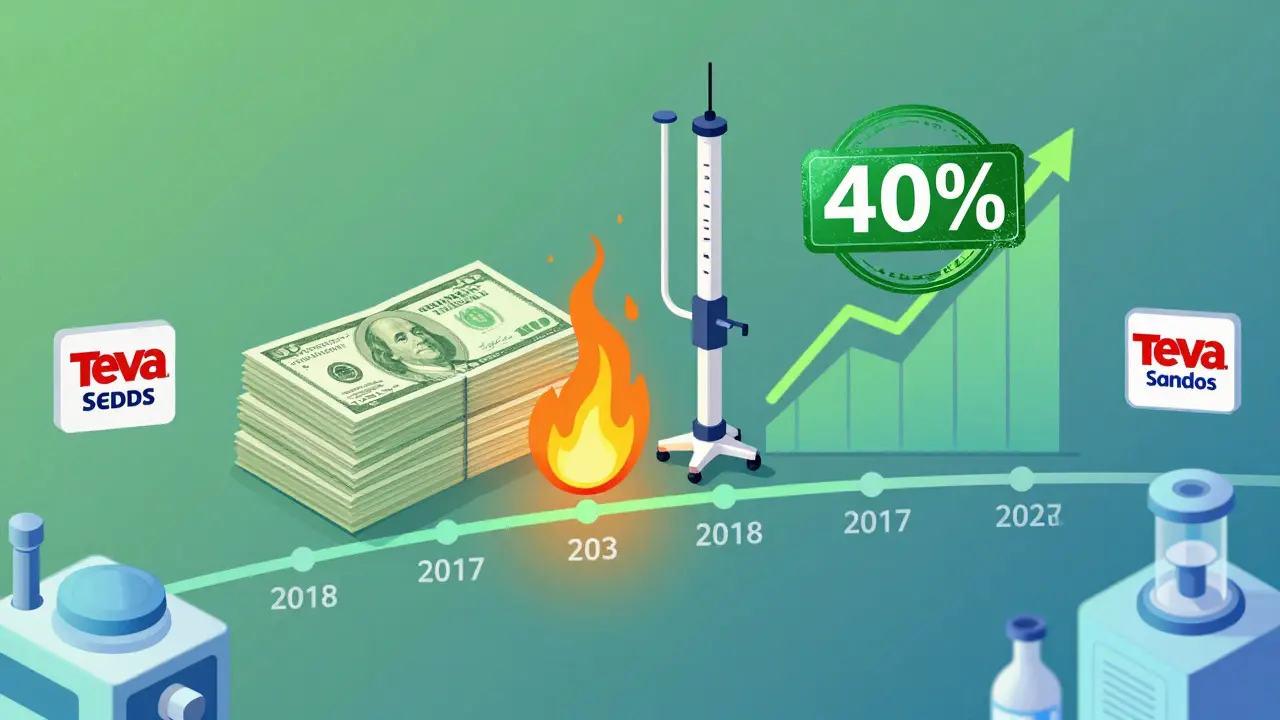
Take Teva’s oxycodone extended-release generic. Their team spent 14 months building an IVIVC model, testing three different formulations, and running multiple pharmacokinetic studies. They failed twice before getting it right. But once approved, they avoided five full bioequivalence studies. That’s more than $5 million saved-and patients got access to the generic months earlier.
When Does IVIVC Work Best?
IVIVC shines with modified-release products-tablets or capsules designed to release drug slowly over hours. These are notoriously hard to replicate. A small change in binder or coating can alter release patterns in unpredictable ways. That’s why regulators require in vivo testing for these products. IVIVC gives companies a scientific way to prove equivalence without human trials.
For immediate-release drugs, the Biopharmaceutics Classification System (BCS) is often the easier route. If a drug is highly soluble and highly permeable (BCS Class I), regulators may grant a biowaiver based on dissolution alone-no IVIVC needed. But for Class II, III, or IV drugs-especially those with complex release profiles-IVIVC is often the only viable path to a waiver.
It’s not a one-size-fits-all tool. IVIVC doesn’t work well for drugs with narrow therapeutic windows (like warfarin or digoxin), non-linear metabolism, or erratic absorption. In those cases, human testing is still mandatory. The FDA’s 2014 guidance is clear: if the drug’s behavior in the body can’t be reliably predicted from dissolution, you can’t skip the clinical study.
The Hard Truth: Why Most IVIVC Submissions Fail
Despite the potential, only about 42% of IVIVC submissions to the FDA are approved today-up from 15% in 2018, but still low. Why? Three reasons dominate:
- Non-physiological dissolution conditions. Many companies test dissolution in plain water or buffer at pH 6.8. That’s not what’s happening in the gut. Real stomach fluid has bile salts, enzymes, and varying pH. Biorelevant media-those that mimic human intestinal conditions-have become essential. A 2019 University of Maryland study showed that using biorelevant dissolution improved IVIVC success rates by over 50%.
- Insufficient formulation variation. To build a predictive model, you need to test a range of formulations. Not just one slow-release and one fast-release. You need at least three, ideally five, with clear differences in release rate. If you don’t, the model can’t distinguish between good and bad performance. According to a 2022 survey, 76% of failed submissions lacked this.
- Poor model validation. A model that fits the data you used to build it is not a model that will predict new data. True validation means testing it against data it’s never seen before. Many companies skip this step or use weak statistical methods. The FDA requires predictive accuracy within tight limits. If your model can’t hit those, it gets rejected.
Contract labs like Alturas Analytics and Pion report success rates of 60-70% for Level A IVIVC-because they start early, use biorelevant media, and validate rigorously. In-house teams without that expertise? Their success rate hovers around 30%.
What’s Changing in 2025?
The rules are evolving. In June 2023, the FDA released draft guidance on IVIVC for topical products-creams, gels, patches. That’s a big deal. If it works for skin delivery, it could work for implants, inhalers, and injectables too. The EMA and FDA held a joint workshop in 2024 on machine learning-enhanced IVIVC models. These aren’t black boxes-they’re transparent, physics-based models trained on massive datasets. Early results show they can predict complex release patterns better than traditional linear regression.
The market is responding. Dissolution testing equipment sales hit $487 million in 2022 and are growing at 6.2% annually. More companies are hiring pharmacokinetic modeling specialists. The American Association of Pharmaceutical Scientists now offers certification in IVIVC development. And by 2025, 75% of new IVIVC submissions are expected to use biorelevant dissolution methods, according to AAPS projections.
But adoption is still uneven. Only five of the top ten generic manufacturers-Teva, Mylan, Sandoz, Sun Pharma, and Lupin-have full-time IVIVC teams. Smaller companies still struggle with cost and expertise. That’s why contract research organizations are seeing a surge in demand.
Is IVIVC the Future?
Yes-but not everywhere. IVIVC won’t replace all in vivo testing. It’s not a shortcut. It’s a sophisticated, resource-intensive science that demands deep expertise. But for the right products-complex modified-release oral solids-it’s the most powerful tool we have.
By 2027, McKinsey & Company predicts IVIVC-supported waivers will account for 35-40% of all extended-release generic approvals, up from 22% in 2022. That’s not just progress-it’s transformation. It means faster access to affordable medicines, fewer human trials, and smarter regulation. The goal has always been to ensure safety and efficacy without unnecessary testing. IVIVC doesn’t cut corners. It finds better ones.
Can IVIVC be used for all types of drugs?
No. IVIVC works best for modified-release oral products where dissolution is the main factor controlling absorption. It’s not suitable for drugs with narrow therapeutic windows, non-linear pharmacokinetics, or those absorbed in the colon. Immediate-release drugs often qualify for simpler BCS-based biowaivers. Injectable, ophthalmic, and transdermal products are still under evaluation-regulators are exploring IVIVC for these, but no standard framework exists yet.
How long does it take to develop a Level A IVIVC?
Typically 12 to 18 months. The timeline includes 3-6 months to develop a discriminatory dissolution method, 6-9 months to conduct pharmacokinetic studies with multiple formulations, and 3-6 months to build and validate the model. Rushing this process leads to failure. Companies that engage experts early and use biorelevant media cut this time by 20-30%.
What’s the difference between IVIVC and BCS biowaivers?
BCS biowaivers rely on a drug’s solubility and permeability to predict absorption. If it’s highly soluble and highly permeable (Class I), you can skip human trials based on dissolution alone. IVIVC is more complex-it builds a mathematical model linking dissolution rate to actual blood levels. BCS is simpler but only applies to a small subset of drugs. IVIVC is harder to build but works for complex formulations that BCS can’t handle.
Why do so many IVIVC submissions get rejected?
Three main reasons: using non-physiological dissolution media (like plain water instead of simulated intestinal fluid), testing too few formulations (not enough variation), and failing to properly validate the model with independent data. The FDA rejected 64% of 2023 submissions due to poor physiological relevance. It’s not that the science doesn’t work-it’s that many companies skip the critical steps.
Is IVIVC only for generic drugs?
No. While most IVIVC applications are for generics, brand-name companies also use it during development to optimize formulations and reduce the number of clinical trials needed. It’s a tool for efficiency, not just cost-cutting. For example, a company developing a new extended-release version of a branded drug might use IVIVC to screen 10 formulations in the lab before testing just one or two in humans.
What Comes Next?
If you’re working in pharmaceutical development, the message is clear: IVIVC isn’t optional anymore for complex products. It’s a core competency. The regulatory agencies are investing in it. The science is advancing. The market is demanding it. The companies that master it will bring better drugs to market faster. The ones that don’t will keep paying for expensive, slow clinical trials-and losing ground to competitors who don’t.
The future of bioequivalence isn’t about doing more tests. It’s about doing smarter ones. IVIVC is how we get there.
Lynsey Tyson
December 18, 2025 AT 20:58Honestly, this is one of those quiet revolutions in pharma that most people never hear about. I work in regulatory affairs, and seeing IVIVC cut down trial times by months has been a game-changer for patient access. No more waiting a year for a generic just because a lab needs 36 volunteers.
Dikshita Mehta
December 19, 2025 AT 17:17Just to add: the real bottleneck isn't the science-it's the investment. Many small labs still use outdated dissolution apparatuses calibrated for water, not biorelevant media. If you're serious about IVIVC, you need HPLC-grade equipment, simulated intestinal fluid, and at least five formulation variants. Skip any of that, and you're just wasting everyone's time.
Nicole Rutherford
December 20, 2025 AT 09:17They say IVIVC saves money, but let’s be real-this is just Big Pharma’s way of avoiding real human testing. What if the model is wrong? What if someone gets sick because a tablet dissolved 2% faster in a machine than in a real gut? We’re trading safety for speed, and it’s scary.
Mark Able
December 21, 2025 AT 23:23Wait, so if I’m a startup with $200k and no pharmacokinetic team, I’m just screwed? This whole system feels rigged. The big guys get to skip trials, and everyone else pays $1M to play catch-up. That’s not innovation-that’s gatekeeping.
Gloria Parraz
December 23, 2025 AT 20:25This is why we need more transparency. If a company claims an IVIVC waiver, the full dataset-dissolution curves, PK profiles, model equations-should be public. Not just for regulators, but for the public. If we’re trusting machines to predict human biology, we deserve to see the math.
Andrew Kelly
December 25, 2025 AT 09:48Oh please. IVIVC is just a fancy word for 'we don't want to do real science.' The FDA approves these because they’re under pressure to speed things up-not because the models are reliable. And don’t even get me started on how they use 'R² > 0.95' like it’s a magic number. Correlation isn’t causation, folks.
Ashley Bliss
December 25, 2025 AT 20:00There’s something deeply spiritual about this-how we’ve replaced the sacred act of human trial with cold, mechanical dissolution curves. We used to honor the body’s mystery. Now we reduce it to a graph. Is this progress, or are we losing our soul to algorithms? The pill dissolves in a beaker… but does it still speak to the soul?
Anna Sedervay
December 27, 2025 AT 12:48While the technical merits of IVIVC are commendable, one must consider the epistemological implications: the substitution of empirical human observation with instrumental proxy metrics constitutes a paradigmatic shift in pharmacological epistemology. The reduction of bioequivalence to a mathematical correlation, however robust, risks the ontological erasure of the lived physiological experience-rendering the patient an abstract variable in a regression model.
Dorine Anthony
December 29, 2025 AT 02:47Just read the FDA’s 2024 guidance on topical IVIVC-this is going to explode. Imagine patch manufacturers skipping human trials for pain creams. It’s wild, but if the science holds, it could mean faster access to treatments for millions. Let’s not panic. Let’s get better at it.