Your lungs might look fine on a standard X-ray, but you still can’t catch your breath walking up the stairs. This disconnect is the defining frustration for many people living with long-term lung effects of COVID-19, also known as pulmonary long COVID. For years, doctors were stumped because traditional tests showed clear lungs while patients reported severe shortness of breath. Recent breakthroughs in imaging and cellular analysis have finally revealed what’s happening inside the smallest airways, offering a path toward targeted treatment and recovery.
The good news? You are not broken, and your symptoms are real. The bad news? Standard care often misses the mark because it treats the wrong problem. Understanding the specific mechanics of how SARS-CoV-2 damages the respiratory system-and knowing exactly which tests and therapies actually work-is the difference between stagnating and regaining your life.
The Hidden Damage: Why Your Lungs Hurt When Scans Are Clear
To understand why you feel so out of breath despite "normal" test results, we need to look at the biology beneath the surface. The core issue isn't usually large-scale scarring visible on a CT scan; it's microscopic chaos in the small airways.
Research from the Centre for Heart Lung Innovation (HLI) at the University of British Columbia, published in the European Respiratory Journal in April 2025, identified the primary culprit: persistent neutrophilic inflammation. Neutrophils are immune cells that act like first responders during an infection. In most cases, they do their job and retreat. In pulmonary long COVID, however, these cells remain active even after the virus is gone.
Dr. Don Sin, Director of HLI, describes these lingering neutrophils as "dirty bombs." They continue to trigger inflammatory responses, damaging the delicate lining of the small airways where oxygen exchange happens. Because this damage occurs at a cellular level in tiny structures, conventional imaging tools like chest X-rays or standard CT scans simply cannot see it. This explains the gas exchange abnormalities that leave you feeling air-starved.
This condition accounts for approximately one-third of all long COVID cases. It manifests through four distinct clusters of gas exchange abnormalities, only recently mapped using advanced technology. If you have been told your lungs are "fine" but you still struggle with fatigue and breathlessness, this invisible inflammation is likely the driver.
Diagnosing the Invisible: Advanced Imaging and Testing
If standard tests aren't working, what should you ask for? The diagnostic landscape has shifted dramatically in 2025, moving away from guesswork toward precise visualization.
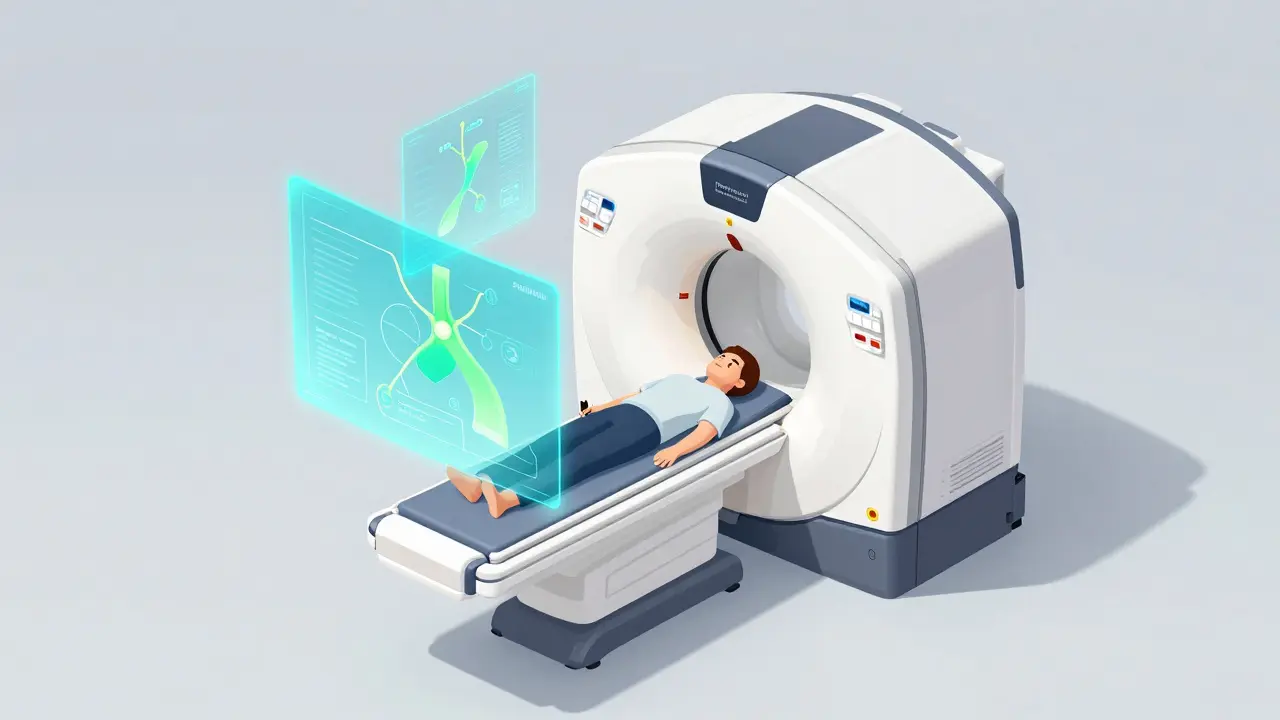
Hyperpolarized xenon MRI is the game-changer here. Unlike standard MRIs that show structure, xenon MRI visualizes function-specifically, how well oxygen moves from your airways into your blood. Dr. Sin notes that this technology lets us "see beneath the surface," revealing gas exchange problems that were previously undetectable. Centers like Duke University and the University of Kansas Medical Center are now part of collaborative networks using this tool to assess pulmonary long COVID.
However, access to xenon MRI is still limited. In the meantime, clinicians rely on a combination of functional tests:
- mMRC Dyspnea Scale: A simple questionnaire measuring breathlessness. A score of ≥2 at one month post-infection is a strong predictor of residual respiratory dysfunction (OR 1.49). If you score high here, flag it immediately.
- 30-Second Sit-to-Stand Test (30STS): Used by the RECOVER Initiative, this measures physical capacity. Patients with burdensome symptoms perform significantly fewer repetitions, indicating functional limitations linked to pulmonary issues.
- Lung Function Tests (Spirometry): While less sensitive than xenon MRI, these track forced vital capacity (FVC) and diffusion capacity. Studies show measurable differences between inpatient and outpatient recovery trajectories here.
If your doctor dismisses your symptoms because your spirometry is "within normal limits," push for further evaluation. Normal range doesn't mean optimal function, especially when gas exchange is compromised.
Who Is Most at Risk? Understanding Vulnerability Factors
Not everyone develops severe long-term lung effects, but certain groups face significantly higher risks. Knowing where you stand helps tailor prevention and monitoring strategies.
| Risk Factor | Impact / Statistic | Clinical Implication |
|---|---|---|
| Hospitalization | 2.60-fold higher risk of persistent breathlessness | Requires intensive follow-up and early rehab referral |
| Pre-existing COPD | Mortality rate 4.6% vs 0% in non-COVID COPD patients | Higher exacerbation frequency; needs modified rehab protocols |
| Severe Acute Infection | 12.6% develop post-COVID pulmonary fibrosis (PCPF) | Permanent structural changes requiring ongoing management |
| Baricitinib Use | Associated with increased risk of PCPF | Review medication history with pulmonologist |
Patients with chronic obstructive pulmonary disease (COPD) who contracted COVID-19 face a particularly steep challenge. Data shows they experience nearly double the annual acute exacerbation frequency compared to those with COPD alone. If you fall into any of these categories, do not wait for symptoms to worsen. Proactive monitoring is essential.

Rehabilitation That Works: Evidence-Based Recovery Protocols
Resting won't fix pulmonary long COVID. In fact, prolonged inactivity can worsen deconditioning. The key is structured, multidisciplinary pulmonary rehabilitation tailored to your specific deficits.
Research documented by the Lung Foundation Australia confirms that comprehensive rehab programs produce significant improvements in objective metrics like FEV1 (forced expiratory volume) and diffusion capacity. Here is what an effective protocol looks like:
- Timing: Begin no earlier than 4 weeks post-infection, once the acute phase has passed. Starting too soon can trigger post-exertional malaise (PEM).
- Frequency: Aim for 2-3 sessions per week, continuing for 8-12 weeks. Consistency matters more than intensity.
- Components:
- Breathing Exercises: Diaphragmatic breathing and pursed-lip techniques to improve efficiency.
- Aerobic Conditioning: Low-impact activities like stationary cycling or walking, paced to avoid PEM spikes.
- Strength Training: Focus on major muscle groups to reduce the oxygen cost of daily movements.
For patients with pre-existing conditions like COPD, protocols must be modified. These individuals require closer monitoring due to their higher mortality risk and tendency for rapid decline. Work with a specialist who understands both chronic lung disease and long COVID nuances.
The goal isn't just to breathe better-it's to reclaim your independence. Improvements in the 6-minute walk distance (6MWD) directly correlate with reduced dyspnea scores and better quality of life.
Future Treatments: Targeting the Root Cause
We are moving past symptomatic management toward targeted therapies. The identification of persistent neutrophilic inflammation has opened new doors for pharmacological intervention.
The RECOVER Initiative, funded by the National Institutes of Health, outlined planned clinical trials in September 2025 testing neutrophil-targeted therapies. These drugs aim to calm the "dirty bomb" effect without suppressing the entire immune system. Preliminary data tracking treatment responses via xenon MRI is expected in Q2 2026, which could revolutionize care within the year.
Additionally, the American Thoracic Society and European Respiratory Society are finalizing specialized diagnostic criteria and treatment guidelines for late 2025. This standardization will help ensure you receive consistent, evidence-based care regardless of where you live.
In the meantime, focus on what you can control: adherence to rehabilitation, monitoring your mMRC scores, and advocating for advanced diagnostics if standard tests fail to explain your symptoms. Your lungs may have taken a hit, but with the right approach, they can heal.
How long does it take for lung function to recover after COVID-19?
Recovery timelines vary widely. Most patients with moderate to severe infection see measurable improvements in lung function over six months. However, some individuals experience persistent symptoms for years. Early engagement in pulmonary rehabilitation can accelerate recovery, but permanent changes like fibrosis occur in about 12.6% of hospitalized patients, requiring long-term management.
What is the best test to detect long-term lung damage from COVID?
While standard CT scans and spirometry are useful, hyperpolarized xenon MRI is currently the most advanced tool for detecting subtle gas exchange abnormalities in small airways. It reveals inflammation and damage that other tests miss. If xenon MRI is unavailable, a combination of mMRC dyspnea scoring and 30-second sit-to-stand tests provides valuable functional insights.
Can pulmonary rehabilitation reverse lung fibrosis caused by COVID?
Pulmonary rehabilitation cannot reverse existing fibrosis (scarring), but it significantly improves lung efficiency and symptom management. By strengthening respiratory muscles and improving cardiovascular fitness, rehab helps compensate for lost lung capacity. It is crucial for preventing further decline and enhancing quality of life.
Why do I feel short of breath if my lung tests are normal?
Standard tests often miss microscopic inflammation in the small airways caused by persistent neutrophils. This "invisible" damage impairs gas exchange without showing up on X-rays or basic spirometry. Conditions like post-viral dysautonomia or deconditioning can also contribute to breathlessness despite structurally normal lungs.
Are there specific medications to treat pulmonary long COVID?
Currently, there are no FDA-approved drugs specifically for pulmonary long COVID. However, clinical trials are underway for neutrophil-targeted anti-inflammatory therapies. In the meantime, treatments focus on managing symptoms and supporting recovery through rehabilitation. Some studies suggest remdesivir use during acute infection may reduce fibrosis risk, while baricitinib may increase it.