Pharmacists Are the Last Line of Defense
Every time a patient walks into a pharmacy with a prescription, there’s a silent risk: the medicine might be fake. Counterfeit drugs don’t just miss the active ingredient-they can contain toxic chemicals, wrong dosages, or even rat poison. In 2024, global law enforcement uncovered over 6,400 incidents of pharmaceutical counterfeiting across 136 countries. These weren’t just random scams. Criminals targeted life-saving drugs: cancer treatments, heart medications, insulin, and even vaccines. And the people standing between these fake drugs and patients? Pharmacists.
Why This Training Isn’t Optional Anymore
It used to be enough to check the label, compare the packaging, or call the manufacturer. That’s not enough anymore. Counterfeiters now use high-quality printing, tamper-proof seals, and even fake batch numbers that match real ones. In 2025, Interpol’s Operation Pangea XVI shut down 13,000 illegal online pharmacies and seized over 50 million fake pills. Many of these were sold as legitimate products through social media ads and fake websites. If a pharmacist doesn’t know how to spot the signs, the medicine goes to the patient-and the damage is done.
The U.S. Drug Supply Chain Security Act (DSCSA), passed in 2013, forced the industry to track drugs from manufacturer to pharmacy. But tracking alone doesn’t stop fakes. It only helps trace them after the fact. What’s needed is real-time detection at the point of sale. That’s where training comes in-not just to recognize old-school fakes, but to understand the new ones.
What Modern Training Looks Like
Today’s pharmacist education on counterfeit detection isn’t a one-hour lecture. It’s a mix of skills, tools, and mindset shifts.
The World Health Organization (WHO) and the International Pharmaceutical Federation (FIP) launched a competency-based curriculum in 2021, tested on 355 pharmacy students in Cameroon, Senegal, and Tanzania. Within months, students showed a 40% increase in their ability to identify falsified drugs. The training covered red flags: prices 50% below wholesale cost, packaging with blurry text, mismatched lot numbers, and drugs sold outside authorized channels.
In the U.S., continuing education programs like TrainingNow.com’s 45-minute Medicare Fraud, Waste, and Abuse (FWA) course are popular. While focused on compliance, they now include modules on counterfeit detection. Pharmacists can complete them on their phones during breaks. Completion rates are high because the content is practical: “You get a shipment of metformin priced at $2 a bottle. The wholesale cost is $18. What do you do?”
But the biggest shift is in technology. Companies like RxAll now provide handheld devices that use spectral analysis and AI to scan pills in seconds. These devices detect chemical differences invisible to the eye-like a fake version of rivaroxaban that has the wrong crystal structure. Pharmacists don’t need to be scientists. They just need to know how to use the tool. One community pharmacy in Ohio reported that after installing these scanners, their verification time dropped from 15 minutes per drug to 10 seconds-and their confidence in drug authenticity jumped from 68% to 94%.
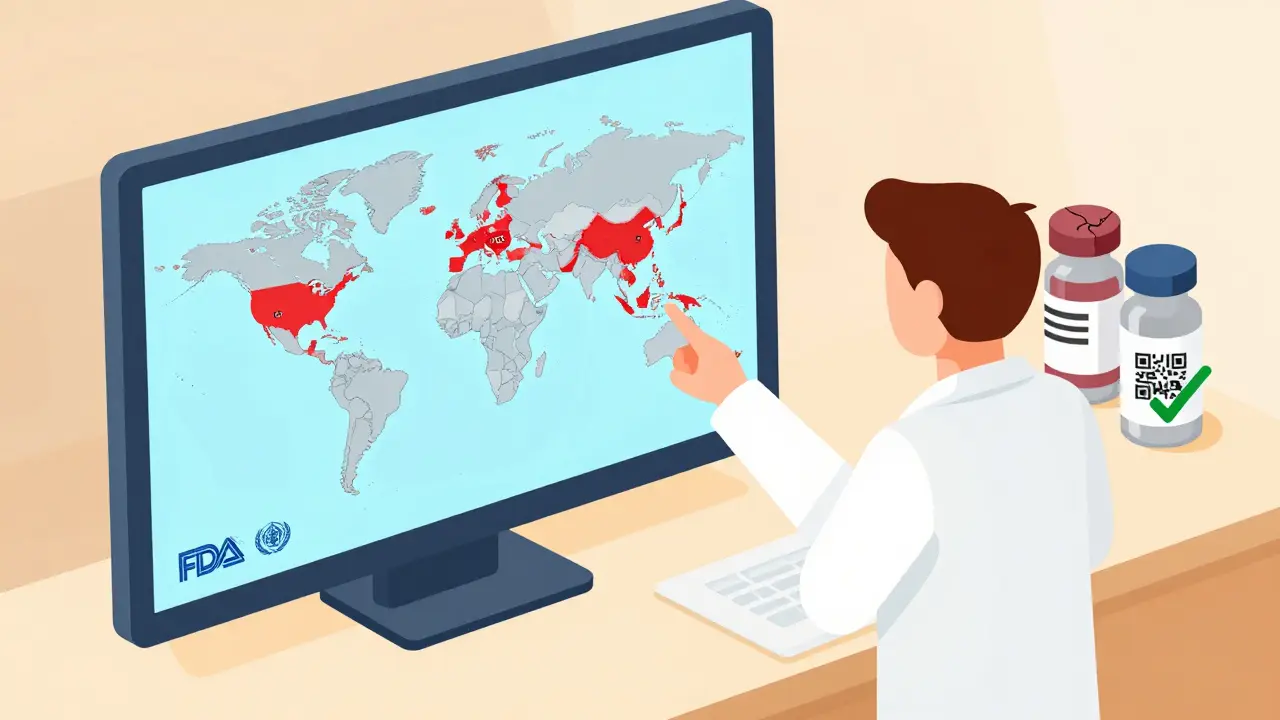
Red Flags Every Pharmacist Must Know
Training isn’t just about tech. It’s about habits. Here are the top five warning signs that should trigger a deeper check:
- Price too good to be true. If a drug is being sold at 30% or more below the wholesale acquisition cost (WAC), it’s a red flag. Counterfeiters undercut prices to lure buyers-and they don’t care if it kills someone.
- Unusual packaging. Look for spelling errors, mismatched fonts, or seals that don’t match the manufacturer’s official images. Pfizer’s anti-counterfeiting team has documented over 300 variations of fake Lipitor packaging.
- Unrecognized distributor. Check the manufacturer’s website for their list of authorized distributors. If the supplier isn’t on it, don’t accept the shipment. Specialty drugs like oncology biologics are often distributed through only one or two authorized channels.
- Online sales without a prescription. Any pharmacy selling controlled substances without a valid prescription is illegal-and likely selling fakes. Interpol estimates 90% of online pharmacies are fake.
- Drug recalls you didn’t hear about. If a drug is pulled from the market, it’s often because of contamination or counterfeiting. Pharmacies should subscribe to FDA and WHO alerts. Missing one alert could mean dispensing a fake.
Global Gaps and Local Solutions
The U.S. has the most advanced drug tracking system in the world. But in many low-income countries, pharmacists still rely on paper records and phone calls. WHO’s new toolkit, set for release in late 2024, will help bridge that gap. It includes downloadable checklists, mobile apps for scanning barcodes, and training videos in multiple languages.
In India, fake COVID vaccines were sold in rural areas in 2021. No one had training. No one had scanners. The result? Hospitalizations, deaths, and lost trust in vaccines. That’s why WHO is now pushing for mandatory counterfeit detection training in pharmacy school curricula worldwide. The goal: make it as standard as learning how to calculate dosages.
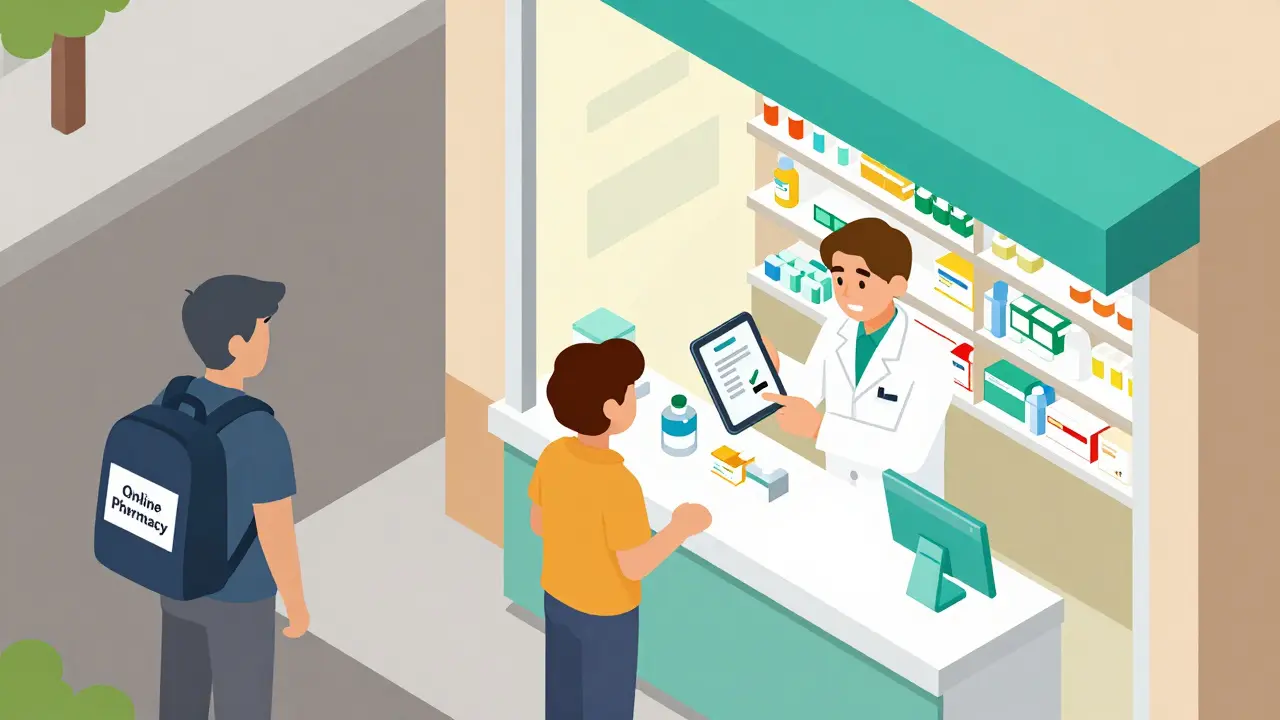
What’s Next? AI, Biologics, and Patient Education
The threat is evolving. Counterfeiters are now targeting biologics-expensive, complex drugs like Humira and Keytruda. These can’t be copied like pills. But they can be diluted, re-labeled, or sold as “refurbished” vials. AI tools are being trained to detect these subtle differences.
Pharmacies are also starting to educate patients. RxAll’s platform includes resources patients can use to check if a drug is real before they buy it online. “Don’t buy insulin from a Facebook ad,” one video says. “Check the manufacturer’s website. If it’s not on their list, it’s fake.”
By 2026, expect more integration: AI-powered scanners in automated dispensing machines, real-time alerts when a batch number matches a known counterfeit, and mandatory annual recertification for pharmacists.
Training Works-When It’s Done Right
Pharmacists aren’t detectives. But they’re the only ones who touch the medicine right before it’s given to a patient. That’s why training matters. The FIP/WHO pilot showed that with the right education, students went from guessing to knowing. Community pharmacists using RxAll’s devices reported fewer errors and more confidence. Law enforcement agencies in 183 countries now work with Pfizer’s training program to shut down fake drug networks.
It’s not about fear. It’s about responsibility. The next fake drug might not be found in a warehouse. It might be sitting on your shelf. And if you don’t know how to spot it, who will?
What are the most common counterfeit drugs being sold today?
The most commonly counterfeited drugs include antibiotics like amoxicillin, erectile dysfunction pills like sildenafil (Viagra), cancer treatments like paclitaxel and trastuzumab, insulin, and blood pressure medications. In 2024, oncology drugs and biologics saw the fastest growth in counterfeiting, according to the Pharmaceutical Security Institute. Fake versions of these drugs often contain no active ingredient or harmful fillers like talc, boric acid, or paint pigments.
Is pharmacist training on counterfeit detection mandatory?
In the U.S., there’s no federal law requiring specific counterfeit detection training-but many employers require it. The Centers for Medicare & Medicaid Services (CMS) mandates Fraud, Waste, and Abuse training within 90 days of hire, and many of these courses now include counterfeit modules. In the EU and parts of Africa, pharmacy schools are starting to make it part of the core curriculum. The WHO’s new 2024 toolkit is designed to help countries adopt this as a standard.
Can I really tell if a drug is fake just by looking at it?
Sometimes-but not reliably. Many fake drugs now look identical to the real thing. Packaging, colors, and even blister packs can be copied perfectly. The only way to be sure is to use verification tools like spectral scanners or check the manufacturer’s authorized distributor list. Don’t rely on visual inspection alone. Even experienced pharmacists have been fooled by high-quality fakes.
What should I do if I suspect a drug is counterfeit?
Don’t dispense it. Isolate the product, document the batch number, packaging details, and supplier. Report it to your state board of pharmacy and the FDA’s MedWatch program. If you’re in a hospital or large pharmacy, notify your compliance officer. In many countries, pharmacists who report fakes are protected by whistleblower laws. The goal isn’t to blame the supplier-it’s to stop the drug from reaching patients.
Are online courses enough for pharmacist training?
Online courses are a good start, especially for compliance and awareness. But they’re not enough on their own. The most effective training combines online learning with hands-on practice using verification tools, real-world case studies, and regular drills. Pharmacies that use AI scanners and run monthly counterfeit detection drills report 70% fewer incidents than those relying only on e-learning.
Jay Amparo
January 11, 2026 AT 02:00Man, I remember when we used to just glance at the bottle and call it a day. Now I got a handheld scanner on my counter that costs more than my first car-but it’s the only thing keeping me sane. Saw a fake insulin batch last month. Looked perfect. Scanner flagged it. Saved a guy’s life. No exaggeration.
Saumya Roy Chaudhuri
January 13, 2026 AT 00:42Let me tell you something-most pharmacists are clueless. I worked at a chain in Hyderabad and they were selling fake metformin like it was candy. No training, no scanners, just ‘oh it’s cheaper so it must be real.’ The FDA doesn’t care about India. Nobody does. Until someone dies. Then they’ll write a press release.
McCarthy Halverson
January 13, 2026 AT 09:59Use the scanner. Report it. Don’t wait. It’s that simple.
Ian Cheung
January 14, 2026 AT 04:58Real talk-most of these fake drugs come from places where regulation is a suggestion not a law. And guess who’s buying them? People who can’t afford the real stuff. So yeah we need training but we also need affordable meds. Fix the system or we’re just playing whack-a-mole with poison
Ashlee Montgomery
January 15, 2026 AT 23:03I wonder if we’re treating the symptom and not the disease. The real problem isn’t that pharmacists lack training-it’s that the global drug supply chain is designed for profit, not safety. When a cancer drug costs ten times more in the U.S. than in India, and people turn to shady online vendors… is it really their fault? Or is it the system that made them desperate?
lisa Bajram
January 16, 2026 AT 08:49OMG I JUST SAW THIS ON THE NEWS!! My cousin’s aunt in Ohio used one of those AI scanners and caught a fake heart med-turns out it had LYE in it?? Like, actual LYE. She was so shaken she started a TikTok series called ‘Pharmacist Diaries’ and now 50K people follow her!! 🙌❤️💊 #FakeDrugsAreKillingUs
Lisa Cozad
January 18, 2026 AT 00:24My pharmacy just got the new WHO toolkit. The barcode scanner app works even on old Android phones. We trained all staff last week. We’ve already flagged three suspicious shipments. It’s not glamorous-but it’s necessary. This isn’t about fear. It’s about showing up for people when they’re at their most vulnerable.
neeraj maor
January 18, 2026 AT 17:32Let’s be real-this is all a distraction. The real counterfeiters are the big pharma companies. They’re the ones overpricing drugs so people go online. They’re the ones lobbying against price caps. The ‘fake drugs’ are just a sideshow. The real crime is making medicine a luxury. They want you scared of street vendors so you don’t ask why your insulin costs $300.
Paul Bear
January 20, 2026 AT 11:01While the adoption of AI-powered spectral analysis tools represents a significant advancement in pharmaceutical integrity assurance, it is imperative to recognize that such technologies are merely augmentative. The foundational competency remains the pharmacist’s clinical acumen and adherence to the DSCSA framework. Without proper credentialing and standardized validation protocols, reliance on hardware alone constitutes a systemic vulnerability.
Ritwik Bose
January 21, 2026 AT 03:23❤️🙏 This is so important. I’m from India and I’ve seen families pay for fake insulin. Please, if you’re a pharmacist-learn. If you’re a student-study. If you’re a patient-ask. We can’t afford to wait for someone to die before we act.
Jake Kelly
January 22, 2026 AT 20:03My grandma got a fake blood pressure pill last year. She didn’t know. I found out because the bottle had a typo. We reported it. Took three months. Nothing happened. But I still sleep better knowing we tried.
Jaqueline santos bau
January 24, 2026 AT 01:30Okay but have you seen the YouTube videos of people opening fake vaccines? Like… they’re literally just sugar pills in fancy bottles? And people are crying because they thought they were protected? I’m not even mad-I’m just… devastated. Someone needs to make a Netflix doc on this. Like, NOW.