When you pick up a generic prescription at the pharmacy, you might assume the price you pay is simple: lower cost, same medicine. But behind that $4.50 copay or $12 out-of-pocket charge is a tangled web of federal and state laws, reimbursement formulas, and corporate contracts that determine exactly how much the pharmacy gets paid - and whether they can even afford to fill your script.
How Generic Drugs Get Paid For
Generic drugs make up 90% of all prescriptions filled in the U.S., yet they account for only about 23% of total drug spending. That’s the whole point: save money without sacrificing health. But saving money doesn’t happen automatically. It’s engineered by reimbursement models that dictate how pharmacies are paid for dispensing these drugs. The two main systems are Average Wholesale Price (AWP) and Maximum Allowable Cost (MAC). AWP used to be the standard for brand-name drugs, based on a published list price that often had little to do with what pharmacies actually paid. For generics, though, most payers switched to MAC. This is a fixed dollar amount set by the payer - usually a Medicare Part D plan, Medicaid program, or private insurer - based on what the generic drug actually costs in the wholesale market. If the pharmacy buys the drug for $1.80 and the MAC is $2.00, they make 20 cents. If the MAC is $1.70 and they paid $1.80? They lose money. This is where substitution laws come in. Many states require pharmacists to substitute a generic for a brand-name drug unless the prescriber writes "dispense as written" or the patient refuses. But here’s the catch: if the brand-name drug is dispensed anyway - maybe because the generic was out of stock - the pharmacy still gets reimbursed at the MAC rate for the generic. That means they eat the difference. A pharmacy might pay $12 for a brand-name pill but only get $2 back. That’s not sustainable.The Role of Medicare Part D
Medicare Part D covers over 50 million seniors and people with disabilities. Its formularies - the lists of covered drugs - are designed to push patients toward generics. Plans structure their copays so that generics cost less than brand-name drugs. Some even have three tiers: generic, preferred brand, and non-preferred brand. The non-preferred brand tier can cost more than the brand-name drug itself. Part D plans are also required to have a pharmacy and therapeutics committee review new drugs within 90 days. But here’s where the system gets messy: even if a generic is approved by the FDA, the plan might not cover it unless it’s on their preferred list. In 2022, 28% of Part D plans required prior authorization for at least one generic drug. That means your doctor has to jump through hoops just to get you a drug that’s already on the market. And then there’s the donut hole - the coverage gap in Part D where you pay more out-of-pocket after hitting your initial coverage limit. Even though the Inflation Reduction Act of 2022 capped out-of-pocket spending at $2,000 starting in 2025, the path to that cap still depends heavily on how your plan reimburses generics. If your plan pays less for generics, you might hit your deductible faster - meaning you pay more before the cap kicks in.How PBMs Control the Game
Pharmacy Benefit Managers (PBMs) - CVS Caremark, Express Scripts, and OptumRX - control over 80% of all prescription claims in the U.S. They’re not pharmacies. They’re middlemen between insurers, drugmakers, and pharmacies. Their revenue comes from three places: rebates from drugmakers, the spread between what insurers pay and what pharmacies get paid, and steering patients to their own pharmacies. The spread is the hidden cost. A PBM might tell your insurer they’ll pay $10 for a generic drug. They tell the pharmacy they’ll pay $7. The $3 difference? That’s their profit. And because pharmacies have to sign contracts to be in-network, they often can’t refuse. Independent pharmacies, in particular, are squeezed. In 2023, the average profit margin on generic drugs was just 1.4%. In 2018, it was 3.2%. That’s not a drop - that’s a collapse. And for years, PBMs used "gag clauses" to stop pharmacists from telling you that the drug might cost less if you paid cash. These were banned in 2018, but the damage lingers. Many patients still don’t know they could pay $5 out-of-pocket at Walmart or Costco instead of $15 with insurance.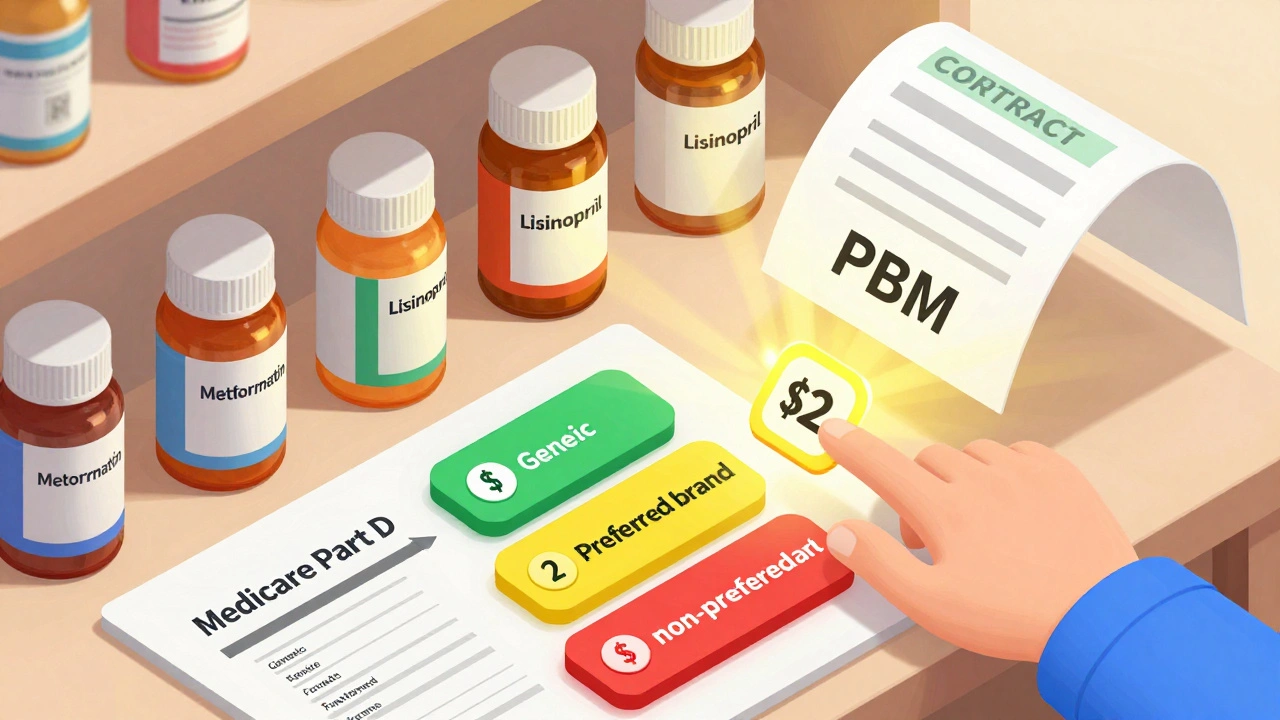
State Laws and the Fight for Fair Pay
Forty-four states have passed laws to regulate PBMs and protect pharmacies. Some require PBMs to reimburse at or above the pharmacy’s actual acquisition cost. Others ban spread pricing entirely. A few states mandate that pharmacies be paid the same rate for generics regardless of whether they’re dispensed as a substitution or a direct prescription. In states with strong substitution laws, pharmacies are protected from losing money when a brand is dispensed. But in states without those protections, pharmacies are left holding the bag. One pharmacist in Ohio told me she had to turn away a patient because the MAC for a generic antibiotic was $1.50 - and her cost was $1.80. She couldn’t afford to lose 30 cents on every script. The Medicaid Drug Rebate Program also plays a role. Drugmakers must pay rebates to states, which helps lower the cost of drugs for Medicaid patients. But those rebates are negotiated behind closed doors. The more a drugmaker pays in rebates, the more they can raise their list price - and that trickles down. PBMs get a cut of those rebates. Pharmacies? Usually not.The $2 Drug List: A New Direction?
In 2025, the Centers for Medicare & Medicaid Services (CMS) is testing a new model: the Medicare $2 Drug List. It’s simple: select about 100 to 150 clinically important generic drugs - like metformin, lisinopril, or levothyroxine - and cap the patient copay at $2. No formulary tiers. No prior authorizations. No surprise costs. This isn’t just about price. It’s about adherence. Studies show that when patients pay less, they take their meds. AARP found that patients on high-deductible plans often skip generics because they can’t afford the upfront cost - even if the drug is cheap. The $2 model could change that. But it’s voluntary. Only Part D plans that opt in will offer it. And while it’s a step in the right direction, it doesn’t fix the underlying problem: pharmacies still get paid based on MAC, not what they actually pay. If the $2 list doesn’t also raise reimbursement rates for pharmacies, many won’t be able to participate.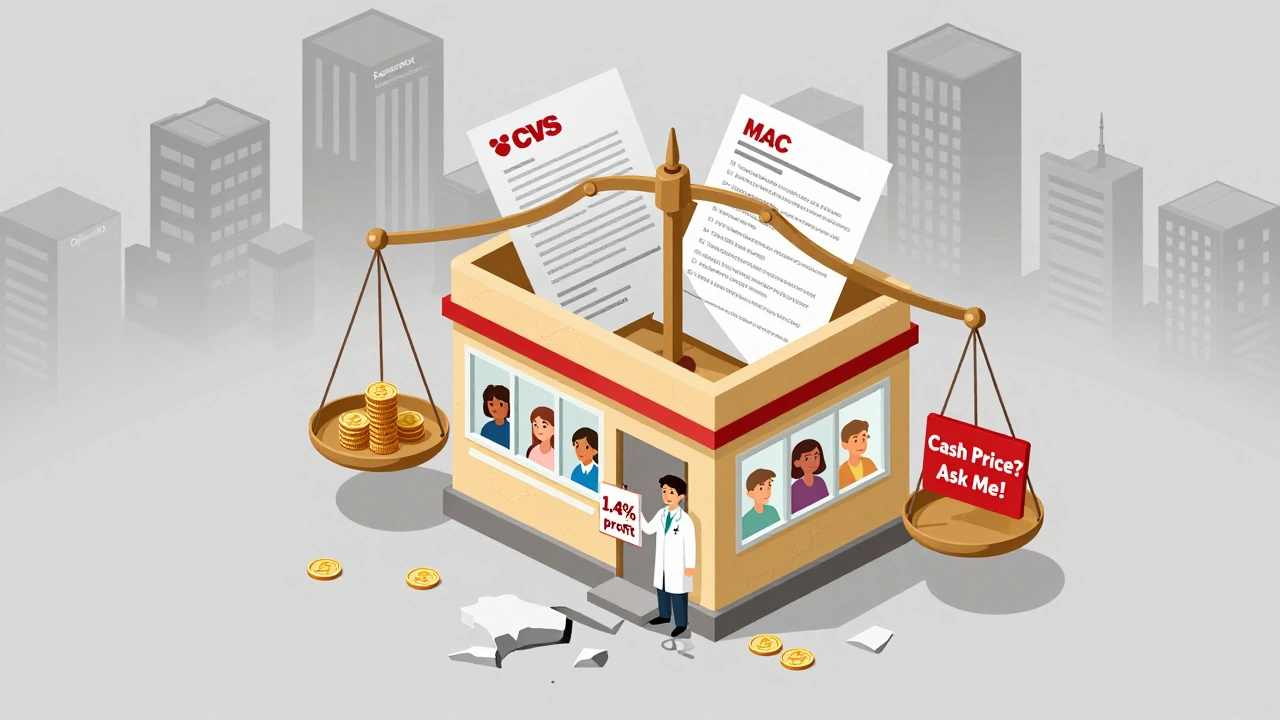
What This Means for Patients
You might think generic drugs are always cheaper. They are - but not always for you. Your out-of-pocket cost depends on:- Whether your plan uses MAC or AWP
- Whether your pharmacy is in-network
- Whether your drug is on the preferred list
- Whether your state has laws protecting pharmacy reimbursement
What’s Next for Generic Payments
The future of generic reimbursement is uncertain. PBMs are under increasing scrutiny from the FTC and Congress. The FDA’s GDUFA program is helping smaller generic manufacturers enter the market by lowering fees - which could mean more competition and lower prices. But until pharmacies are paid fairly, and patients are told the truth about costs, the system will keep failing the people it’s meant to serve. The next big shift might be value-based payment models - where pharmacies are rewarded for keeping patients healthy, not just for filling scripts. But that’s years away. In the meantime, the laws that govern generic payments are still written by lobbyists, not patients. And until that changes, the real cost of a generic drug won’t be on the receipt. It’ll be on the pharmacy’s balance sheet - and in your health.Why do I pay more for a generic drug than the cash price at Walmart?
Your insurance plan may reimburse your pharmacy at a rate lower than what the pharmacy actually paid for the drug. Meanwhile, stores like Walmart and Costco buy generics in bulk and sell them at a fixed low price - often below what insurance pays. That’s why paying cash can be cheaper. Always ask your pharmacist: "Can I pay cash instead?"
Do substitution laws guarantee I’ll get a generic?
No. Substitution laws allow pharmacists to swap a brand for a generic unless the doctor says "dispense as written" or you refuse. But if the generic isn’t in stock, the pharmacy can dispense the brand. Also, some states don’t require substitution at all. Check your state’s rules - they vary widely.
How do PBMs affect the price I pay for generics?
PBMs set the reimbursement rate pharmacies get paid. They often pay pharmacies less than what insurers pay them, keeping the difference as profit. This "spread pricing" reduces pharmacy margins, which can lead to higher out-of-pocket costs for patients if pharmacies raise prices to stay afloat. PBMs also control which drugs are covered and at what tier.
Why do some generic drugs cost more than others?
It’s not about the drug - it’s about the plan. A generic like metformin might cost $4 at one pharmacy and $12 at another because of different reimbursement rates, formulary tiers, or whether the drug is on a preferred list. Some generics have multiple manufacturers, driving prices down. Others are made by just one company - and those can be expensive.
What is MAC pricing, and why does it matter?
Maximum Allowable Cost (MAC) is the highest amount a payer will reimburse a pharmacy for a generic drug. If the pharmacy paid more than the MAC, they lose money. If the MAC is too low, pharmacies may refuse to fill the prescription. MAC rates are set by PBMs and insurers - often based on outdated data - and don’t always reflect real market prices.
Mark Curry
December 4, 2025 AT 16:33It's wild how something so simple like a $4 pill can have this much behind it. I just take mine and assume it's fine. Turns out I'm just a pawn in a game I didn't even know I was playing. 😔
aditya dixit
December 4, 2025 AT 17:57The system is designed to optimize for profit, not health. It's not broken-it's working exactly as intended. The real tragedy is that we've normalized this exploitation as 'healthcare.' We need structural reform, not band-aids.
Annie Grajewski
December 6, 2025 AT 16:31so like… the pharmacy loses money but i still pay $12?? like what even is this, a magic trick?? 🤡
Mark Ziegenbein
December 7, 2025 AT 13:35Let’s not pretend this is about affordability-it’s about control. The PBM-industrial complex has turned medicine into a derivatives market. The FDA approves drugs, but the real gatekeepers are the spreadsheet wizards in Charlotte who decide if your levothyroxine is ‘preferred’ or ‘non-preferred.’ We’re not patients. We’re line items.
Norene Fulwiler
December 8, 2025 AT 22:39I work with seniors who skip meds because they can’t afford the copay-even for generics. I’ve seen people choose between insulin and groceries. This isn’t healthcare. It’s a moral failure wrapped in bureaucracy.
Krishan Patel
December 10, 2025 AT 06:23People blame PBMs, but the real culprits are the politicians who took bribes from Big Pharma. You think this is an accident? No. It’s a carefully engineered system to bleed the poor while the rich get tax breaks. Wake up, America.
Stephanie Bodde
December 12, 2025 AT 00:42Always ask if cash is cheaper. I did last week for my blood pressure med-saved $11. It felt good to outsmart the system, even just a little. 💪
Philip Kristy Wijaya
December 13, 2025 AT 18:31One must consider the epistemological framework of pharmaceutical capitalism wherein the commodification of biological necessity is rendered invisible through linguistic obfuscation and contractual opacity. The patient is not a subject but a data point in a ledger of extracted surplus value.
Jennifer Patrician
December 14, 2025 AT 17:05They’re hiding the truth. I know it. The government, the PBMs, the pharmacies-they’re all in on it. The $2 drug list? A distraction. They’re preparing for the next phase. Mark my words: soon, you won’t even be allowed to pay cash. They want you dependent. They want you broken.
Ali Bradshaw
December 15, 2025 AT 19:50Interesting read. I’m from the UK-we don’t have this mess. NHS sets the price, pharmacies get paid fairly, and patients pay £9.35 or nothing at all. It’s not perfect, but at least no one goes bankrupt for insulin.
an mo
December 17, 2025 AT 03:04Let’s be clear: this is a direct consequence of deregulation and neoliberal capture. The PBM oligopoly is a textbook case of rent-seeking behavior. The MAC system is a regulatory shell game designed to extract surplus from the most vulnerable. The solution? Nationalize pharmacy reimbursement. End of story.
Jimmy Jude
December 18, 2025 AT 06:45They’ll never fix this. The system is too profitable for too many people. The only thing worse than paying $12 for a generic? Knowing you’re being robbed and having no power to stop it. Welcome to America.
Rupa DasGupta
December 20, 2025 AT 03:58My grandma cried because she couldn’t afford her thyroid med. She said, ‘I’ve paid taxes my whole life.’ Now she takes half pills. I hate this. 😭
William Chin
December 21, 2025 AT 07:24While the foregoing analysis presents a compelling narrative regarding the structural inequities embedded within contemporary pharmaceutical reimbursement paradigms, it is imperative to acknowledge that market-based mechanisms remain the most efficient allocative apparatus for resource distribution in a capitalist society. Any interventionist policy risks unintended consequences, including reduced innovation and supply chain fragility. The optimal solution lies in enhancing transparency, not eliminating intermediaries.