Heart Disease is a group of conditions affecting the heart and blood vessels, including coronary artery disease, heart attacks, and heart failure. It remains the leading cause of death worldwide, responsible for approximately 18 million fatalities annually.
Understanding heart disease risk factors is crucial for prevention. Most heart disease cases are preventable through lifestyle changes and managing risk factors. Let’s break down what you need to know.
Non-Modifiable Risk Factors: What You Can’t Change
Age is a major factor. Men over 45 and women over 55 face higher risks. Each decade of life adds about 10% to your chance of heart disease. The Framingham Heart Study shows lifetime risk jumps from 50% for men at age 40 to 70% by age 70.
Family History matters too. If a parent or sibling developed heart disease before age 55 (men) or 65 (women), your risk increases 30% to 75%. Multiple affected relatives? Risk climbs even higher. The INTERHEART study found this link is stronger than previously thought.
Racial disparities exist. African Americans have a 30% higher death rate from heart disease than white Americans. Mexican Americans, American Indians, and some Asian groups also face elevated risks due to genetic and social factors. For example, Native Americans experience 20% higher heart disease mortality than non-Hispanic whites.
Modifiable Risk Factors: What You Can Change
Smoking is the top preventable cause. Even one cigarette a day increases heart disease risk by 50%. Quitting cuts your risk in half within a year. The CDC reports smoking causes 1 in every 4 cardiovascular deaths in the U.S.
High Blood Pressure affects 116 million American adults (47% of the population). Uncontrolled, it triples heart disease risk. The SPRINT trial showed targeting below 120 mmHg systolic reduced cardiovascular events by 25% in high-risk patients.
High Cholesterol is another key player. LDL above 100 mg/dL raises risk by 50%. High-intensity statins lower LDL by 30-50%, reducing heart attack risk by 25-35%. The Cholesterol Treatment Trialists’ Collaboration confirms this benefit.
Diabetes doubles or quadruples heart disease risk. SGLT2 inhibitors and GLP-1 receptor agonists provide additional 14-26% cardiovascular risk reduction beyond glucose control. Managing blood sugar isn’t optional-it’s essential.
Physical Inactivity is a silent killer. Just 150 minutes of moderate exercise weekly cuts risk by 20%. The CDC recommends brisk walking, swimming, or cycling for heart health. A 2023 study found even short daily walks reduce heart disease risk by 15%.
Unhealthy Diet contributes significantly. High sodium intake raises blood pressure. Communities reducing sodium by 14% saw a 5.8% drop in hypertension cases. Diets rich in fruits, vegetables, and whole grains lower risk. Swap processed snacks for nuts or berries for a simple change.
Air Pollution is an emerging risk. PM2.5 exposure increases CVD mortality by 10-15% per 10 μg/m³ increase. The Global Burden of Disease Study 2022 confirms this link. Living near busy roads or industrial areas may heighten your risk.
Socioeconomic Status plays a role. Individuals in the lowest quartile have 2-3 times higher CVD mortality than the highest quartile. Access to healthcare and healthy food options matter greatly. Stress from financial instability also directly impacts heart health.
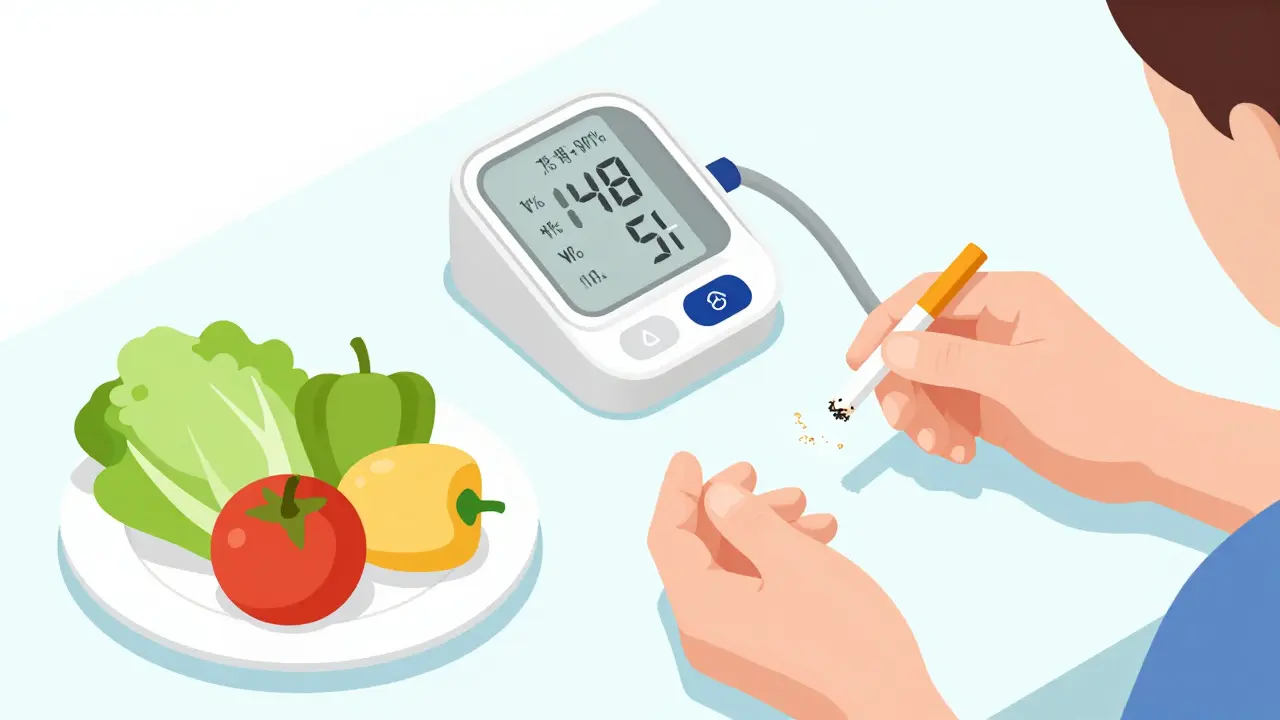
Why Risk Factors Work Together
Risk factors often interact. Having both hypertension and diabetes increases heart disease risk by 8-10 times compared to having neither condition. This synergy means managing multiple risks is critical. Dr. Spencer Kroll, a preventive cardiologist, explains: "It’s not just about one risk factor-it’s how they compound."
For example, smoking plus high cholesterol creates a perfect storm. A 2020 JAMA Internal Medicine study found smokers with high LDL had a 500% higher heart attack risk than non-smokers with healthy cholesterol. Addressing both simultaneously makes a huge difference.
Assessing Your Personal Risk
Doctors use tools like the ASCVD calculator to estimate your 10-year risk. It factors in age, sex, cholesterol, blood pressure, smoking status, and diabetes. A score over 20% means high risk. The European SCORE2 model considers socioeconomic status and gives country-specific estimates. The Reynolds Risk Score adds family history and CRP levels, improving prediction by 15-20%.
These tools aren’t perfect, but they guide action. If your 10-year risk is 15%, your doctor might recommend statins. If it’s 5%, lifestyle changes alone may suffice. Knowing your exact risk helps tailor prevention strategies.

Taking Action: ABCS and Beyond
The CDC’s Million Hearts initiative recommends the ABCS approach: Aspirin when appropriate, Blood pressure control, Cholesterol management, and Smoking cessation. For blood pressure, targeting below 120 mmHg systolic reduces events by 25% in high-risk patients. High-intensity statins cut risk by 25-35% for those with existing heart disease. Quitting smoking is the single most effective step.
Lifestyle changes matter too. A plant-based diet rich in oats, beans, and leafy greens lowers LDL cholesterol. Regular exercise improves blood flow and reduces stress. Even small changes add up-like taking a 10-minute walk daily or swapping soda for water. A 2022 American Heart Association case study showed a 48-year-old man with family history, smoking, hypertension, and obesity reduced his 10-year ASCVD risk from 18.2% to 6.3% through consistent effort.
Frequently Asked Questions
What's the biggest preventable risk factor for heart disease?
Smoking is the single most preventable cause. Quitting smoking reduces heart disease risk by 50% within one year and reaches near-normal levels after 15 years. Even light smoking (1-5 cigarettes daily) increases risk by 50%.
How does family history affect my heart disease risk?
Having a first-degree relative with heart disease before age 55 (men) or 65 (women) increases your risk by 30% to 75%. Multiple affected relatives further raise the risk. Genetic factors account for 40-60% of cardiovascular risk variation between individuals.
Can I lower my risk if I have a family history of heart disease?
Yes. A 2022 American Heart Association case study showed a 48-year-old man with family history, smoking, hypertension, and obesity reduced his 10-year ASCVD risk from 18.2% to 6.3% through lifestyle changes and medication adherence. Managing modifiable risks can offset genetic predisposition.
What's the ideal blood pressure for heart health?
The SPRINT trial found targeting systolic blood pressure below 120 mmHg reduces cardiovascular events by 25% in high-risk patients. For most adults, keeping it under 130/80 mmHg is recommended. Regular monitoring and medication if needed are key.
How much does smoking really increase my risk?
Current smokers have a 2-4 times higher risk of coronary heart disease compared to non-smokers. Even light smoking (1-5 cigarettes daily) increases risk by 50%. Quitting smoking cuts your risk in half within a year, and after 15 years, it's nearly the same as someone who never smoked.
Can diet changes alone prevent heart disease?
Yes, but it’s most effective combined with other changes. The Mediterranean diet-rich in olive oil, fish, and vegetables-lowers heart disease risk by 30%. However, adding exercise and quitting smoking multiplies the benefits. No single change works alone; a holistic approach is key.
Is air pollution a real risk factor?
Absolutely. The Global Burden of Disease Study 2022 found PM2.5 exposure increases cardiovascular mortality by 10-15% per 10 μg/m³ increase. In cities like Los Angeles or Beijing, air pollution contributes to 15% of heart disease deaths. Reducing exposure by avoiding outdoor activity on high-pollution days helps.
What’s the first step I should take?
Talk to your doctor about your personal risk factors. Get your blood pressure, cholesterol, and blood sugar checked. If you smoke, quit today-support programs exist. Start with one small change: walk 10 minutes daily or swap processed snacks for fruit. Small steps build momentum toward a healthier heart.
Joey Gianvincenzi
February 6, 2026 AT 08:57The Framingham Heart Study clearly shows age is a major risk factor. Men over 45 and women over 55 face significantly increased risks. Ignoring this data is reckless.
Sarah B
February 6, 2026 AT 09:52Smoking kills. Quit now.
Amit Jain
February 6, 2026 AT 22:19Age isn't everything. My grandfather smoked 2 packs a day until 90. Genetics trump lifestyle. Stop fearmongering.
Tola Adedipe
February 8, 2026 AT 13:09Smoking does kill, but quitting isn't easy. We need support systems, not just commands.
Eric Knobelspiesse
February 10, 2026 AT 02:22Is it really about smoking? Or is it about societal structures that make quitting hard? Maybe the real issue is capitalissm's role in promoting cigarettes.
Heather Burrows
February 10, 2026 AT 05:41Hmm. I guess it's all about genetics. But maybe I'm just too lazy to care. Whatever.
Ritu Singh
February 11, 2026 AT 10:41It's important to address both modifiable and non-modifiable factors. While age and genetics can't be changed, lifestyle choices like diet and exercise can significantly mitigate risks. A balanced approach is key.
Lakisha Sarbah
February 12, 2026 AT 08:35Yeah, diet and exercise help. But also, stress management matters. I've read studies on that. Just a thought.