It happens in a blink. You find a bottle of pills on the floor, or your teenager swallows something they shouldn't have. Panic sets in immediately. Your first instinct is often to rush to the nearest emergency room. But before you grab your keys, there is a faster, smarter, and free option that saves lives and money every single day. The Poison Control Hotline is not just a number; it is a sophisticated public health safety net designed to handle exactly this kind of crisis.
If you are dealing with a potential medication ingestion, knowing how to use this service correctly can mean the difference between a scary night at home and a serious hospital admission. This guide breaks down exactly how the system works, what information you need to have ready, and why experts recommend calling before driving to the ER for many common medication exposures.
What Is the Poison Control Hotline?
The Poison Control Hotline is a nationwide network of expert toxicologists, pharmacists, and nurses who provide immediate medical advice for poison exposures. In the United States, this service is unified under a single toll-free number: 1-800-222-1222. When you call this number, you are connected to one of 53 accredited poison control centers based on your area code. These centers operate 24 hours a day, 7 days a week, 365 days a year.
The people on the other end of the line are not automated bots. They are Specialists in Poison Information (SPIs). Most of these specialists are registered nurses, pharmacists, or physicians with advanced training in toxicology. According to data from America's Poison Centers, approximately 70% of these specialists hold advanced degrees in health sciences. Their job is to assess risk quickly and accurately using evidence-based protocols.
This service is completely free. There is no charge for the call, no identification required, and no insurance needed. The system is funded through a mix of government appropriations, hospital subsidies, and state grants, totaling around $125 million annually. The goal is simple: prevent unnecessary emergency department visits while ensuring that anyone who truly needs critical care gets it fast.
How the System Works: More Than Just a Phone Call
While the phone number is the most well-known access point, the Poison Control system has evolved into a multi-channel resource. Understanding these options can help you get help faster depending on your situation.
- Phone: Dial 1-800-222-1222. You will be routed to your local center. Average wait times are minimal, and consultations typically last 8-12 minutes for medication cases.
- Text: You can text 'poison' to 797979. This is useful if you cannot speak safely or are in a noisy environment.
- Online Tool: The webPOISONCONTROL platform at poisonhelp.org allows you to input details and receive algorithmic recommendations. This tool uses a decision tree that asks for six specific data points and generates advice in an average of 2.6 minutes.
When you call about medications, which account for roughly 45% of all poison exposures, the specialist uses standardized algorithms. There are over 1,500 evidence-based protocols covering specific substances. For example, if someone ingests acetaminophen, the specialist checks the amount against the patient’s weight and time since ingestion to determine if liver toxicity is a risk. If the risk is low, they may advise monitoring at home. If the risk is high, they will direct you to the ER immediately.
A study published in Clinical Toxicology found that these recommendations save the U.S. healthcare system approximately $1.8 billion annually by preventing unnecessary hospital visits. For every dollar invested in poison control centers, society gains $7.67 in medical cost savings and productivity preservation.
What to Report About Medications: The Critical Checklist
The speed and accuracy of the advice you receive depend entirely on the information you provide. When you call, do not guess. Have the following details ready before you dial. If you are unsure, gather them as quickly as possible without delaying the call.
- Exact Medication Name: Provide both the brand name (e.g., Tylenol) and the generic name (e.g., acetaminophen). If the bottle is available, read it directly. Specialists need to know if it is "Extra Strength" or "PM," as these contain different active ingredients.
- Strength and Dosage: Note the milligram (mg) strength per tablet or milliliter. For example, "500mg per tablet" is crucial information.
- Precise Amount Ingested: Estimate how much was taken. "15 tablets" is better than "a handful." If the bottle is empty, count the missing pills. For liquids, estimate the volume in teaspoons or milliliters.
- Patient Age and Weight: Weight is a key factor in toxicity calculations. If you don't know the exact weight, give your best estimate in pounds or kilograms. Age matters because children and elderly patients metabolize drugs differently.
- Time of Exposure: Be as precise as possible. "3:15 PM" is ideal. If you aren't sure, give a window, such as "between 2:00 and 2:30 PM." Time elapsed determines whether antidotes like N-acetylcysteine for acetaminophen are still effective.
- Current Symptoms: Describe any signs of distress. "Nausea with two episodes of vomiting" or "difficulty breathing" helps the specialist triage the urgency. If the person is unconscious or seizing, hang up and call 911 immediately.
If multiple medications were involved, list them all. Polypharmacy-interactions between two or more drugs-is a major risk factor. About 32% of serious medication outcomes involve drug interactions. Reporting all substances, including over-the-counter meds, supplements, and herbal remedies, is vital.

When to Call vs. When to Go to the ER
One of the biggest misconceptions is that you should always go to the ER for any ingestion. While the ER is necessary for life-threatening emergencies, poison control specialists can often manage cases at home safely. Here is how to decide.
| Situation | Action | Reasoning |
|---|---|---|
| Accidental pediatric ingestion of a few pills | Call Poison Control | Specialists can assess risk and often advise home monitoring, avoiding trauma of an ER visit. |
| Unconsciousness, seizures, or difficulty breathing | Call 911 Immediately | These are life-threatening symptoms requiring immediate resuscitation and airway management. |
| Ingestion of unknown substance | Call Poison Control | They can help identify the substance based on packaging or description and guide next steps. |
| Intentional overdose or suicide attempt | Call 911 or Go to ER | These cases require psychiatric evaluation and intensive medical monitoring beyond standard poison control scope. |
| Mild nausea after taking too much ibuprofen | Call Poison Control | They can advise on symptom management and hydration without unnecessary lab work. |
In 2022, 60% of medication-related cases handled by poison control did not require referral to a healthcare facility. This means that for more than half of calls, the specialist provided enough guidance to resolve the issue at home. However, if the specialist advises you to go to the ER, follow their instructions. They often coordinate with hospitals so your medical team knows what to expect.
Follow-Up and Monitoring
Calling poison control is not a one-time interaction. For certain medications, follow-up is critical. Acetaminophen, for example, can cause delayed liver damage. If you ingest a risky amount, the specialist may schedule callbacks at 4, 8, and 24 hours to monitor for symptoms. Data shows that 92% of these follow-up attempts are successfully completed.
You will also receive an emailed summary of the consultation. This document includes the product identification, risk assessment, and management instructions. Many users keep this record for future reference or to share with their primary care doctor. This documentation ensures continuity of care and provides a clear timeline of events.
Common Misconceptions About Poison Control
Despite its effectiveness, several myths persist about the Poison Control Hotline. Let’s clear them up.
Myth: I need to know exactly what was ingested.
Truth: You don’t need to be a chemist. Bring the container, pill, or plant sample to the phone. Specialists can often identify substances by description, color, shape, or even barcode scans via the mobile app.
Myth: It only handles children.
Truth: While pediatric cases are common (accounting for 47% of accidental ingestions), adults make up a significant portion of calls, particularly involving prescription medications, opioids, and sedatives. Pharmaceutical exposures rose 18.7% from 2018 to 2022.
Myth: They will judge me.
Truth: Poison control specialists are trained in non-judgmental communication. Whether it’s a curious toddler, a confused elderly patient, or a mental health crisis, their focus is purely on medical safety and harm reduction.
Myth: The online tool is less accurate than a human.
Truth: The webPOISONCONTROL tool has a 97.3% accuracy rate compared to human specialist recommendations. However, it excludes intentional overdoses and complex multi-substance cases, which must be handled by phone.
Preparing for Emergencies: Pro Tips
Preparation can reduce panic when seconds count. Here are practical steps to take now.
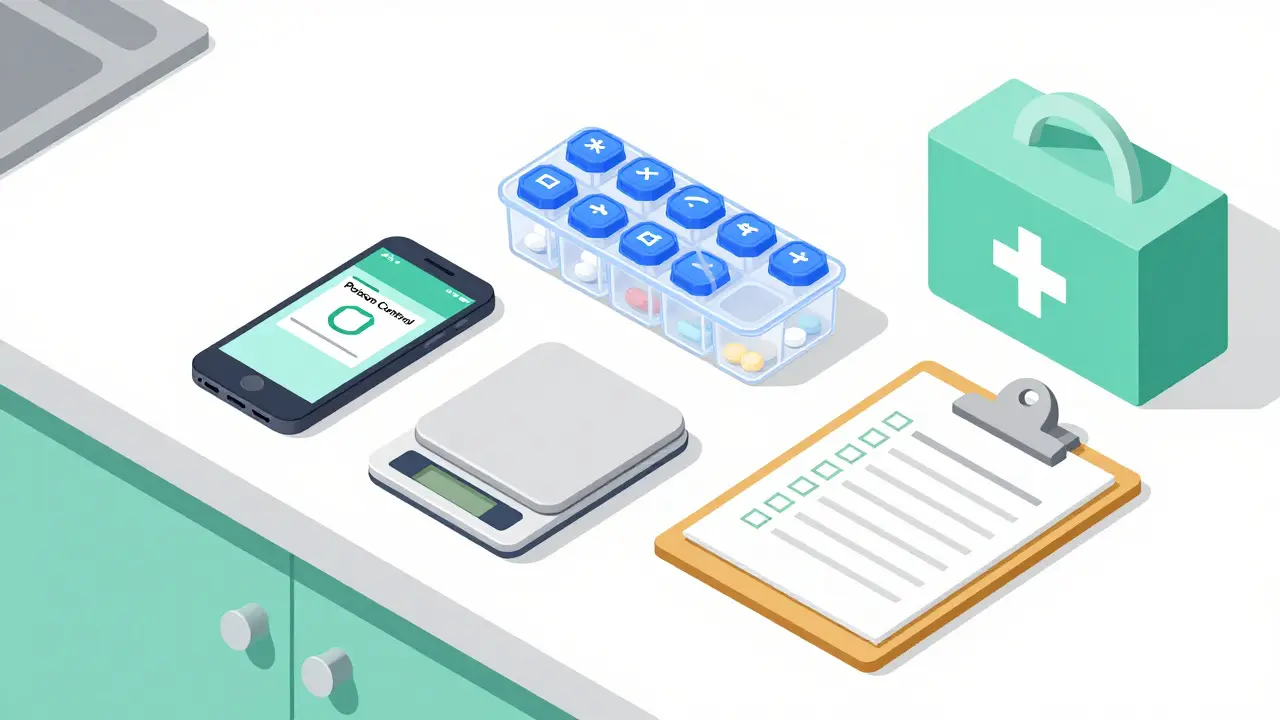
- Save the Number: Add 1-800-222-1222 to your phone contacts as "Poison Control." Also, enable the Poison Control app on your smartphone for quick access to the online tool and barcode scanner.
- Organize Medications: Keep all medications in their original containers with labels intact. Avoid transferring pills to unmarked bottles, especially for elderly family members.
- Childproofing: Use child-resistant caps and store medications out of reach and sight. Never refer to medicine as "candy" to encourage compliance.
- Know Your Weights: Write down the current weights of household members, especially children, and keep this list in a visible place like the refrigerator. This saves precious time during a call.
- Understand Drug Interactions: If you or a family member takes multiple prescriptions, ask your pharmacist about potential interactions. Knowing these risks beforehand helps you report them accurately in an emergency.
The Poison Control Hotline is a powerful tool in modern healthcare. It bridges the gap between home care and emergency medicine, providing expert, evidence-based guidance when you need it most. By understanding how it works and what information to provide, you empower yourself to act calmly and effectively in a crisis.
Is the Poison Control Hotline really free?
Yes, the service is completely free for callers. It is funded through government appropriations, hospital subsidies, and state grants. There are no hidden fees, charges, or insurance requirements.
Can I use the Poison Control Hotline for pet poisonings?
The national hotline 1-800-222-1222 primarily focuses on human exposures. For pets, you should contact the ASPCA Animal Poison Control Center at (888) 426-4435 or the Pet Poison Helpline at (855) 764-7661. Note that these veterinary services may charge a consultation fee.
What if I don't know the name of the medication?
You can still call. Describe the pill’s color, shape, size, and any markings. If you have the bottle or packaging, describe the label. The mobile app also features a barcode scanner that can identify products instantly. Specialists are trained to identify substances based on limited information.
Will my call be kept confidential?
Yes, all communications are HIPAA-compliant and strictly confidential. No personal identifying information is shared without consent, except in rare cases mandated by law, such as suspected child abuse. The primary goal is medical assistance, not reporting.
How long does it take to get advice?
Average consultation times for medication exposures are 8-12 minutes. The online webPOISONCONTROL tool provides recommendations in an average of 2.6 minutes. Wait times on the phone are generally short due to the high capacity of the 53 national centers.
Does Poison Control replace a doctor?
No, but it complements emergency care. Poison control specialists provide immediate triage and risk assessment. If they determine that your condition requires hospital treatment, they will direct you to the ER and often notify the hospital staff to prepare for your arrival.
What should I do if the person is unconscious?
If the person is unconscious, having seizures, or having trouble breathing, call 911 immediately. Do not wait for poison control advice. These are life-threatening emergencies that require immediate ambulance response and advanced life support.
Can I call for advice on natural supplements or herbs?
Yes, poison control centers handle exposures to dietary supplements, herbal remedies, and vitamins. Bring the product container to the phone to provide accurate ingredient lists, as some natural substances can interact dangerously with prescription medications.