Have you ever picked up a prescription at the corner drugstore and noticed the bottle said 'generic' instead of the brand name your doctor wrote? Or maybe you were in the hospital, got better, went home, and found out your new medication was completely different from what you took during your stay? These aren't random glitches. They are the result of two very different worlds colliding: retail pharmacy is community-based outpatient dispensing focused on accessibility and cost containment through generic substitution and hospital pharmacy is institutional inpatient care management focused on clinical optimization through therapeutic interchange protocols.
The way these two settings handle medication substitution is fundamentally different. One is driven by insurance rules and state laws; the other is driven by medical committees and patient safety pathways. Understanding these differences isn't just academic-it explains why your meds change, who decides that change, and where the risks lie.
Who Makes the Call?
In a retail setting, the decision to substitute often happens right at the counter. The pharmacist has the legal authority under state law to swap a brand-name drug for a generic equivalent. This is usually automatic unless the doctor specifically writes 'Dispense as Written' or the patient refuses it. According to the 2023 IQVIA National Prescription Audit, about 90.2% of eligible medications undergo this kind of generic substitution in retail pharmacies.
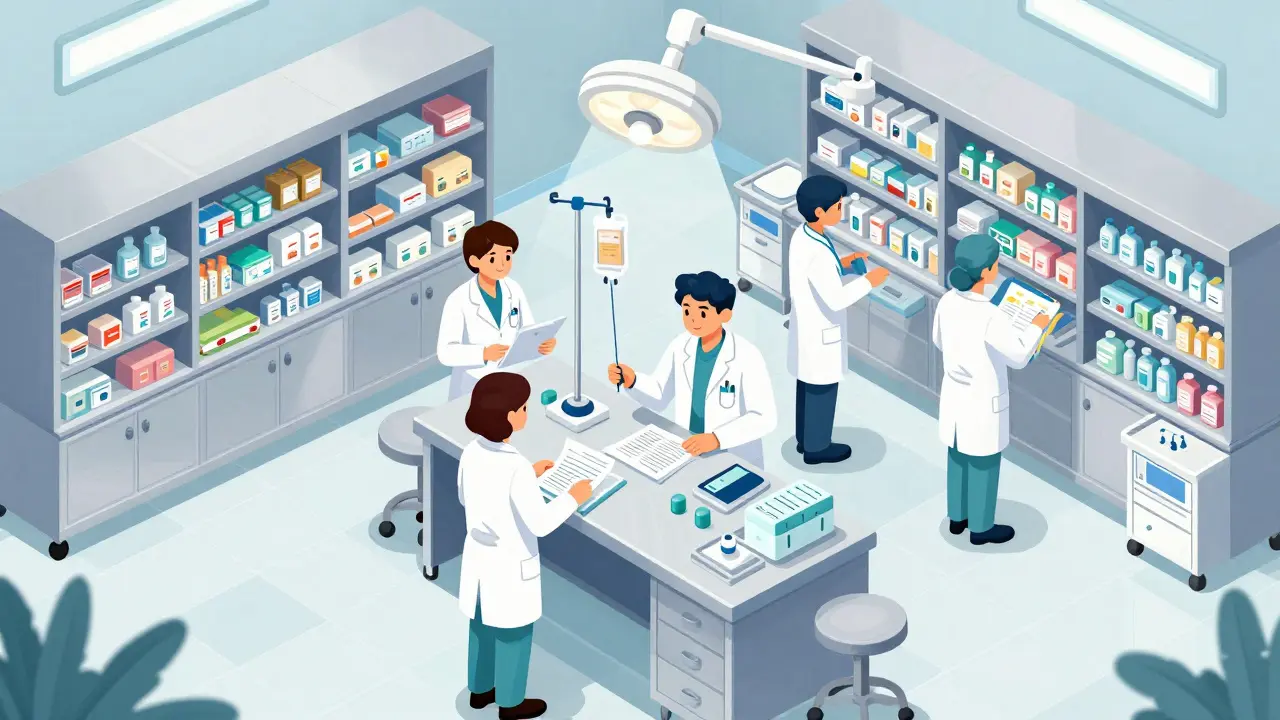
Hospital pharmacy works differently. Here, the pharmacist rarely makes a unilateral swap. Instead, they rely on therapeutic interchange is a protocol-driven process where healthcare providers substitute one drug for another within the same therapeutic class based on institutional guidelines. A Pharmacy and Therapeutics (P&T) committee is a multidisciplinary group of physicians, pharmacists, and administrators that establishes formulary policies and substitution protocols in hospitals sets the rules. If a patient needs an antibiotic, the P&T committee might have already decided that Drug B is preferred over Drug A due to cost or resistance patterns. The hospital pharmacist follows that protocol. A 2022 ASHP survey found that nearly 90% of acute care hospitals have formal interchange protocols covering dozens of medication classes.
| Feature | Retail Pharmacy | Hospital Pharmacy |
|---|---|---|
| Decision Maker | Individual Pharmacist + State Law | P&T Committee + Clinical Protocols |
| Primary Driver | Insurance Formulary & Cost | Clinical Outcomes & Safety |
| Substitution Type | Generic (Therapeutic Equivalent) | Therapeutic Interchange (Different Drug Class) |
| Notification | Patient (Verbal/Written per state) | Physician (Within 24 hours) |
| Regulatory Body | State Board of Pharmacy | Joint Commission / CMS |
Why Do They Swap Meds?
Motivation matters. In retail, the biggest push for substitution is money. Insurance companies create formularies-lists of covered drugs-and they almost always prefer generics because they are cheaper. A 2023 Pharmacy Times survey showed that 92.4% of retail pharmacists cite insurance requirements as the main reason for swapping drugs. It’s about keeping costs down for the payer and the patient. The Generic Pharmaceutical Association reports that these retail substitutions save roughly $317 billion annually.
In the hospital, the goal is clinical optimization. Yes, cost matters, but patient-specific factors drive the bus. Is the patient’s kidney function declining? Does the hospital want to reduce the risk of C. difficile infections by limiting broad-spectrum antibiotics? Hospital pharmacists look at the whole picture. An ASHP survey noted that 84.6% of hospital pharmacists say patient-specific clinical factors are their primary driver for substitution. For example, switching from vancomycin to linezolid for MRSA might be part of a stewardship program designed to protect future patients from resistant bacteria.
What Kinds of Drugs Are Swapped?
You won’t see many IV drips being swapped at your local CVS. Retail substitution is heavily skewed toward oral solids-pills and capsules. Data from the NCPA shows that 97.3% of retail substitutions involve these easy-to-manage forms. It’s simple, standardized, and low-risk.
Hospitals deal with complexity. Their interchanges frequently involve intravenous medications, biologics, and specialized compounded preparations. About 68.4% of hospital therapeutic interchanges involve IV meds, according to ASHP. Think about insulin infusions, chemotherapy agents, or complex pain management regimens. These require close monitoring and clinical expertise that goes beyond checking a box for generic equivalence.
The Communication Gap
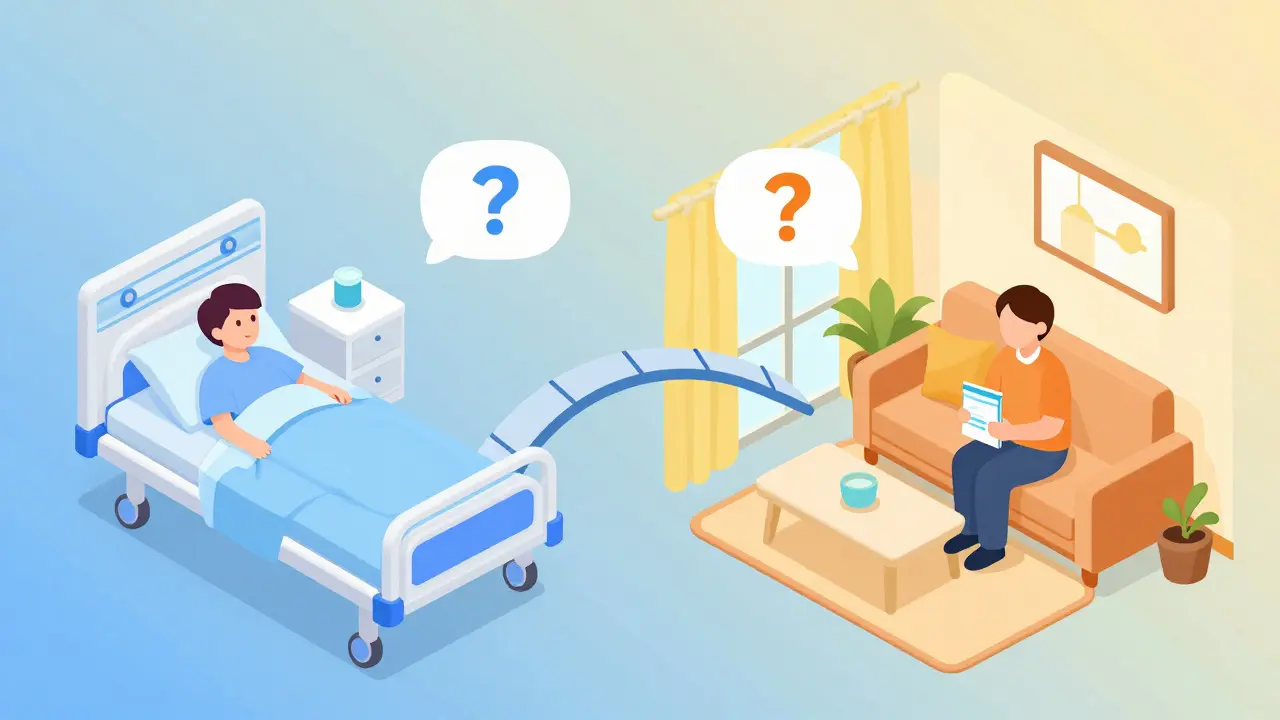
Here is where things get tricky for patients. In retail, you are the one who gets notified. Depending on your state, the pharmacist must tell you verbally or get your written consent before swapping your med. But do you always understand what changed? Consumer Reports found that 14.3% of patients misunderstand these substitutions, leading to confusion or non-adherence.
In hospitals, the physician gets the notification, not necessarily the patient. Joint Commission standards require doctors to be informed within 24 hours of a therapeutic interchange. The assumption is that the care team will manage the transition. However, when you leave the hospital, that communication chain can break. The Institute for Safe Medication Practices (ISMP) warns that poorly coordinated substitutions between hospital and retail settings account for 17.4% of medication discrepancies reported in 2022. You might go home expecting Drug A, but your discharge summary says Drug B, and your retail pharmacist doesn’t know why.
Real-World Challenges
Retail pharmacists often battle prior authorization delays. Imagine needing a specific brand because your body reacts badly to generics, but insurance denies it. The pharmacist spends hours calling insurers to fight for coverage. Meanwhile, hospital pharmacists face physician resistance. Doctors are used to prescribing their favorite drugs, and changing to a hospital-preferred alternative requires education and trust. ASHP data shows 57.2% of hospital pharmacists cite physician resistance as a top challenge.
Both sides agree on one thing: transitions of care are risky. When a patient moves from the closed-loop system of the hospital to the open-world environment of retail pharmacy, substitution histories often don’t transfer smoothly. That’s why new regulations like the 2023 CMS Interoperability Rule aim to standardize documentation so both systems can talk to each other.
Can my retail pharmacist refuse to give me a generic drug?
Yes. If your prescriber indicates "Dispense as Written" or if you request the brand name and pay the difference, the pharmacist must honor that. However, most states require the pharmacist to notify you of the generic option first. You have the right to choose, but insurance may not cover the full cost of the brand.
What is the difference between generic substitution and therapeutic interchange?
Generic substitution swaps a brand-name drug for its identical generic version (same active ingredient, dose, and form). Therapeutic interchange swaps one drug for a *different* drug in the same therapeutic class (e.g., switching from one statin to another). Interchange requires more clinical judgment and is typically governed by hospital protocols rather than simple state laws.
Why did my medication change after I left the hospital?
Hospitals often use therapeutic interchange protocols to optimize care or control costs within their facility. When discharged, your care transitions to retail pharmacy, which follows different formulary rules. Sometimes the hospital drug isn't available or covered in the retail setting, or the retail pharmacist substitutes a generic version of the brand you were given. Always verify your discharge medications with your pharmacist.
Are hospital substitutions safer than retail ones?
They are designed to be clinically rigorous, involving P&T committees and physician oversight. However, they carry a higher risk of errors during care transitions if communication fails. Retail substitutions are simpler and highly regulated for consistency, but they lack the individualized clinical review of hospital interchanges. Safety depends on clear communication between all parties.
How can I ensure my medications are consistent between hospital and home?
Ask your hospital pharmacist for a detailed list of any interchanges made during your stay. When you fill your prescriptions at retail, explicitly ask if the drug matches what you had in the hospital. If there's a difference, ask your doctor or pharmacist to explain why and whether it affects your treatment plan. Keeping a personal medication log also helps track changes.