Lamotrigine & Valproate Dosing Safety Checker
Dosing Protocol Calculator
25 mg daily
Risk Assessment & Timeline
Titration Schedule Preview
Rash Risk Factors
Protocol Comparison Reference
| Scenario | Starting Dose | Titration Speed | Mechanism Note |
|---|---|---|---|
| Lamotrigine Monotherapy | 25 mg daily | Increase by 25-50 mg weekly | Standard clearance |
| Lamotrigine + Valproate | 25 mg every other day | Increase by 25 mg every 2 weeks | Valproate inhibits glucuronidation enzymes, reducing lamotrigine clearance by ~50% |
You might be taking Valproate, also known as valproic acid, for mood stabilization or seizure control. Your doctor may have decided to add Lamotrigine (often sold under the brand name Lamictal) to your regimen. This combination is powerful, but it comes with a specific, well-documented warning: if you do not adjust the dose of lamotrigine correctly, you significantly increase your risk of developing a severe skin rash.
This isn't just a minor side effect like a mild itch. We are talking about potentially life-threatening conditions such as Stevens-Johnson Syndrome (SJS) and Toxic Epidermal Necrolysis (TEN). The good news? These risks drop dramatically when you follow the right dosing protocol. Understanding why this happens and how to prevent it is the difference between a successful treatment plan and a medical emergency.
The Mechanism: Why Valproate Changes Everything
To understand the risk, you need to look at what happens inside your body. Lamotrigine is metabolized, or broken down, by your liver through a process called glucuronidation. When you introduce valproate into the mix, it acts as an inhibitor. Specifically, valproate inhibits the enzymes responsible for clearing lamotrigine from your system.
The result is stark: valproate reduces the clearance of lamotrigine by approximately 50%. In plain English, this means that if you take the standard starting dose of lamotrigine while also taking valproate, your blood levels of lamotrigine will effectively double. You are essentially taking twice the intended amount of medication without realizing it. This pharmacokinetic interaction-where one drug changes the concentration of another-is the primary driver behind the increased rash risk. It is not necessarily that the two drugs chemically react to create a toxin; it is that the high concentration of lamotrigine overwhelms the body’s tolerance, triggering an immune response.
Historical Context: How We Learned to Titrate Slowly
This interaction was not always fully understood. In the early 1990s, shortly after lamotrigine was introduced to the market, doctors prescribed it using standard dosing schedules regardless of other medications patients were taking. The consequences were alarming. Data from the German registry of severe cutaneous disorders in 1993 showed 5 cases of SJS out of 4,450 exposures to lamotrigine. That is a relatively high incidence rate for a serious condition.
However, once clinicians recognized the link with valproate and implemented revised dosing guidelines, the numbers dropped precipitously. By 1994, the rate fell to 2 cases out of 7,610 exposures. By 1999, it had decreased further to 3 cases out of 17,648 exposures. Today, with proper protocols, the rate of serious rashes in adults treated with lamotrigine monotherapy is around 0.08%, and slightly higher at 0.13% when used as adjunctive therapy with valproate. While these numbers still represent real risks, they are manageable outcomes compared to the initial surge in adverse events.
Dosing Protocols: The Critical Difference
The key to safety lies in the titration schedule-the gradual increase of the dose over time. Because valproate slows down the elimination of lamotrigine, you must start lower and go slower. Here is how the protocols differ:
| Scenario | Starting Dose | Titration Speed | Risk Profile |
|---|---|---|---|
| Lamotrigine Monotherapy | 25 mg daily | Increase by 25-50 mg weekly | Lower risk of rash |
| Lamotrigine + Valproate | 25 mg every other day | Increase by 25 mg every 2 weeks | Higher risk if not adjusted |
Notice the difference. With valproate, you start with half the frequency (every other day instead of daily) and double the time between increases (two weeks instead of one). This slow ramp-up allows your body to adapt to the higher serum concentrations of lamotrigine without triggering a hypersensitivity reaction. For children and adolescents, some protocols are even more conservative, recommending starting doses as low as 12.5 mg every other day. Always follow the specific instructions provided by your healthcare provider, as individual factors can influence the ideal schedule.

Recognizing the Signs: What to Watch For
Rash is the most common sign of a problem, but it is not the only one. Symptoms typically appear within the first eight weeks of treatment, particularly during the initial titration phase. However, reactions can occur later, especially if the dose is increased too quickly. You should watch for:
- A flat, red rash that may spread across the body.
- Blisters or peeling skin, which are signs of more severe conditions like SJS or TEN.
- Swollen lymph nodes (lymphadenopathy), which indicates a systemic immune response.
- Fever, sore throat, or flu-like symptoms accompanying the rash.
- Facial swelling or difficulty breathing, which requires immediate emergency care.
A case report published in Frontiers in Pharmacology in 2023 highlighted an 18-year-old female who developed a generalized rash and swollen lymph nodes just 12 days after starting combination therapy with lamotrigine and magnesium valproate. Her symptoms progressed even after she stopped taking the medication, underscoring the importance of early intervention. If you notice any of these signs, do not wait. Contact your doctor immediately. Early discontinuation of the offending agent is crucial to preventing progression to severe necrolysis.
Management and Mitigation Strategies
If a rash develops, the standard medical advice is usually to stop the lamotrigine immediately. In many cases, mild rashes resolve on their own once the drug is cleared from your system. For more severe reactions, doctors may prescribe corticosteroids or antihistamines to manage inflammation and itching. The mortality rates for SJS and TEN are significant-ranging from 5-10% for SJS and up to 35% for TEN-making prevention through correct dosing the most effective strategy.
It is also important to note that having a rash from one antiepileptic drug increases your risk of having a rash from another. A study in Neurology found that prior occurrence of an AED rash was a significant predictor of future reactions, with an odds ratio of 3.1. If you have a history of drug-induced rashes, inform your doctor before starting this combination. They may consider alternative treatments or implement even stricter monitoring protocols.
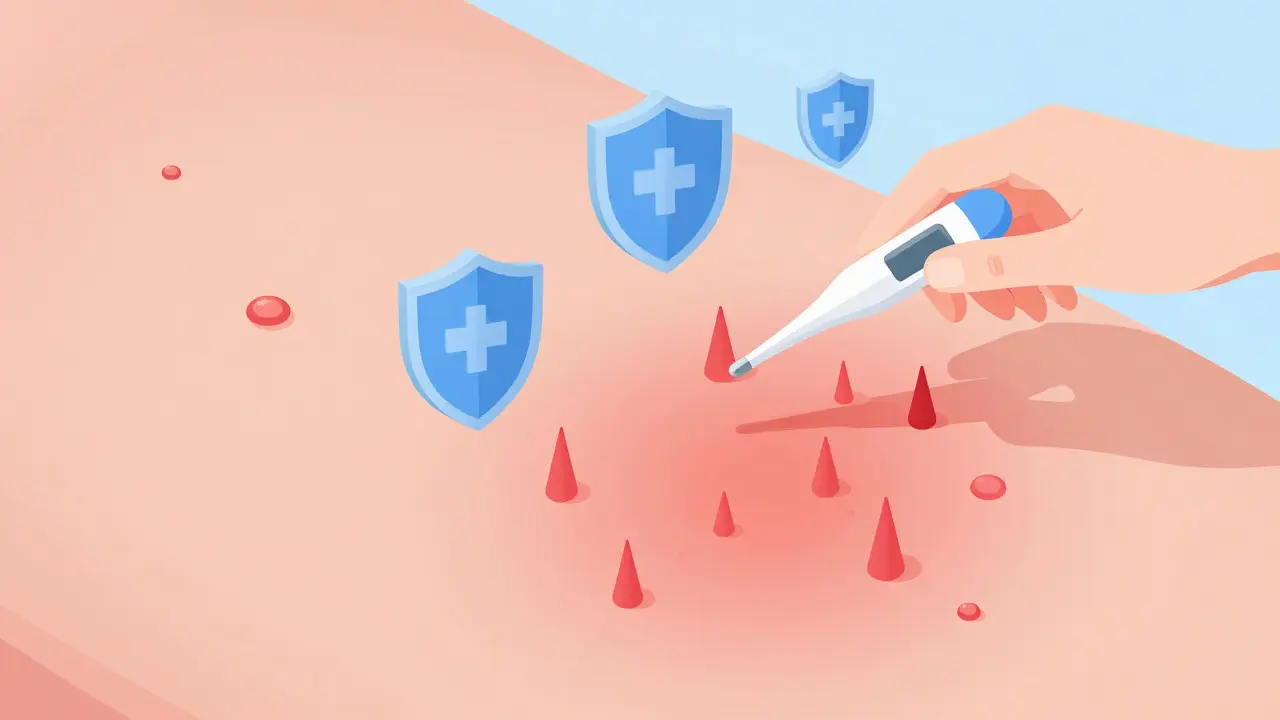
Real-World Tolerance and Patient Experiences
Despite the scary statistics, many patients tolerate this combination well. A recent study in the Namik Kemal Medical Journal involving 80 patients treated with both lamotrigine and valproate for mood disorders and irritability found that severe side effects were rare. Only 2.5% of patients experienced a rash. More common side effects included sedation and fatigue, which are typical for both medications individually. This suggests that while the risk is real, it is not inevitable. With careful management, the therapeutic benefits of combining these mood stabilizers often outweigh the potential downsides.
Patient adherence plays a huge role here. Missing doses or accidentally doubling up can cause fluctuations in blood levels that might trigger a reaction. Using pill organizers or setting phone reminders can help maintain the steady, slow titration required for safety. Remember, the goal is stability. Rapid changes in dosage are the enemy of safe treatment with this particular drug pair.
When to Consider Alternatives
If you have struggled with rash issues in the past, or if the slow titration schedule feels unmanageable, talk to your doctor about alternatives. There are other mood stabilizers and antiepileptics that do not interact with valproate in the same way. For example, lithium or certain atypical antipsychotics might be viable options depending on your specific diagnosis. The choice depends on your medical history, other medications you take, and personal preference. There is no one-size-fits-all solution, but there are multiple paths to stability.
How long does it take for the rash risk to decrease?
The highest risk period is the first 8 weeks of treatment, particularly during the initial titration phase. Once you reach a stable maintenance dose and have tolerated it for several months, the risk of developing a new rash decreases significantly, though it never completely disappears.
Can I drink alcohol while taking valproate and lamotrigine?
Alcohol can increase the sedative effects of both medications and may interfere with your sleep and mood stability. While it doesn't directly increase the rash risk, it can exacerbate side effects like dizziness and fatigue. It is generally recommended to limit or avoid alcohol while on these medications. Consult your doctor for personalized advice.
What should I do if I miss a dose of lamotrigine?
If you miss a dose, take it as soon as you remember unless it is almost time for your next dose. Do not double the dose to catch up. Sudden spikes in lamotrigine levels can trigger a rash. Consistency is key to maintaining safe blood concentrations.
Is the rash risk higher in children than in adults?
Yes, pediatric patients are generally at a higher risk for severe cutaneous reactions. This is why dosing protocols for children are often more conservative, starting with lower doses and slower titration speeds. Close monitoring by a pediatric specialist is essential.
Does valproate affect the effectiveness of lamotrigine?
Valproate increases the blood levels of lamotrigine, which can enhance its therapeutic effect. This is why lower doses of lamotrigine are needed when combined with valproate. However, this synergy also increases the risk of side effects if not managed correctly.