Imagine sending an email about your new gym discount to every single staff member, only to watch it sit unread in their inbox. Or picture a wellness newsletter filled with generic tips about drinking water that nobody opens. Many companies throw money at workplace wellness educationsystematic initiatives implemented by employers to inform employees about the comprehensive benefits of participating in wellness programs, yet see almost no change in engagement. The real issue isn't the budget; it's the message. When you explain benefits poorly, you waste money and frustrate your team.
In 2026, we know that simply handing out flyers doesn't work anymore. Employees want to see how these programs impact their lives directly. They need to understand the connection between a step challenge and lower insurance premiums. Without clear communication, even the best-funded programs fail to stick. This guide breaks down exactly how to teach your team about these benefits without sounding like a robot reading from a policy document.
Why Generic Benefit Messaging Fails
We often treat wellness like a checkbox. HR sends a calendar invite, someone gives a boring slide deck, and everyone leaves hoping they don't get sick. Research shows this approach has a 19% engagement rate at best. That means eight out of ten employees ignore the offer entirely. Dr. Laura Putnam found that personalized benefit communication tailored to employee demographics achieves a 68% participation rate. The difference is massive.
The problem lies in the word 'generic'. A fitness class might sound fun to some, but useless to others. If you are a parent trying to save time for childcare, a midday yoga session doesn't help your stress levels. You need to translate those activities into tangible value. Does that yoga class mean fewer doctor visits? Does it mean better sleep so you can code better? When you stop talking about 'wellness' and start talking about 'savings' and 'energy', people listen.
Consider the data from Johnson & Johnson’s program reviews. Employees praised clear explanations of how wellness activities translate to reduced premiums. Conversely, Trustpilot reviews of major vendors highlight negative feedback when promised savings don't match reality. One review mentioned expecting $1,200 annual savings but seeing only $217. Your education must be honest about numbers. If you claim big returns without backing it up, trust evaporates instantly.
The Business Case for Deep Education
Employers hesitate to spend heavily on teaching benefits because they can’t see the return immediately. However, Harvard Business Review studies show an average ROI of $3.27 for every $1 invested in certified wellness programs. This isn't just about lowering medical claims. It's about productivity.
| Metric | Generic Education | Targeted Education |
|---|---|---|
| Participation Rate | 18% | 34% |
| Turnover Reduction | Baseline | 11% Lower |
| Engagement Score | Baseline | 27% Higher |
| Sick Days | Average | 28% Fewer |
You might wonder where those numbers come from. SHRM’s 2024 Workplace Wellness Report documented 27% higher employee engagement in organizations using multi-channel wellness benefit communication versus single-channel approaches. When you combine email, intranet portals, manager talking points, and personalized benefit statements, you hit 53% higher engagement according to Personify Health's case study.
This aligns with the Affordable Care ActUS federal law incentivizing employer wellness programs through premium differential provisions. Since 2010, the ACA allowed employers to adjust premiums by up to 30% for wellness participation. Educating employees on how to qualify for these discounts is a financial literacy move. You aren't just selling health; you are helping them keep more of their paycheck.

Implementation Roadmap for Human Resources
Starting a new education campaign feels overwhelming until you have a plan. The CDC launched its Work@Health Program back in 2012, and it remains a gold standard today. Their curriculum suggests a structured 12-month timeline. Here is how you adapt that for 2026.
- Months 1-2: Get leadership buy-in. This is non-negotiable. Executive participation needs to be at least 70%. If the CEO doesn't use the app, the staff won't either.
- Months 3-4: Develop your communication strategy. Move away from one-off emails. Plan a mix of in-person chats, digital dashboards, and workshops.
- Months 5-8: Roll out the phases. Start with the most requested benefits. Maybe that is mental health support rather than weight loss coaching.
- Months 9-12: Evaluate and refine. Look at the data. Are claims dropping? Is absenteeism down?
Most successful programs dedicate 3-5% of their total wellness budget specifically to education components. Don't skimp here. If you spend millions on gyms and therapy but zero dollars on telling people how to access them, you will lose money.
Certified Corporate Wellness Specialists (CCWS) play a vital role here. These professionals hold credentials requiring 120 hours of training. They understand the difference between promoting healthy eating and legally compliant incentives. Hiring them can pay off quickly, especially as regulations tighten.
Navigating Legal and Compliance Risks
We cannot talk about workplace wellness without addressing the legal landmines. The Equal Employment Opportunity CommissionFederal agency enforcing civil rights laws including workplace accommodations reported 2,147 wellness-related complaints in 2023 alone. That was a 37% increase from the previous year. Ignorance is not a defense here.
Two laws dominate this space: the Americans with Disabilities Act (ADA) and the Genetic Information Nondiscrimination Act (GINA). Under these rules, you cannot force employees to participate if it risks exposing private medical data. Incentives must remain voluntary, or at least perceived as such. For example, a reward for completing a health risk assessment must not exceed 30% of the total cost of self-only coverage under current ACA provisions.
The Department of Labor proposed new disclosure requirements by Q2 2025, mandating 'clear, conspicuous, and specific explanation of all program benefits' for each demographic group. By March 2026, this means your documentation must be crystal clear. Ambiguity triggers audits. If an employee thinks a wellness check-up is mandatory for keeping their job, you could face penalties up to $119,556 per affected employee under EEOC enforcement guidelines.
Small businesses face unique hurdles here. Only 38% of firms with under 50 employees offer structured wellness education compared to 83% of large employers. The barrier isn't just money; it's expertise. Small teams often lack the bandwidth to manage compliance alongside daily operations.
The Role of Mental and Financial Wellbeing
Traditional wellness focused on physical health. Step counts, blood pressure checks, and BMI goals dominated the conversation a decade ago. Today, employees rank financial stress as their top concern. 68% of workers say this impacts their wellbeing more than diet.
WELCOA launched its updated 7 Dimensions certification in January 2025, requiring 20% more content on financial wellbeing education. This reflects the shift. Teaching employees how to budget, save for retirement, or reduce debt is now part of the core wellness mandate. A financially stressed employee is less likely to participate in physical challenges anyway.
Mental health integration is equally critical. The CDC updated its curriculum in March 2024 to add modules on mental health benefit communication. Analysis showed 47% of employees misunderstand mental health components. They might think counseling is only available during crises, not for preventative maintenance. Clear education changes that narrative. When you normalize therapy sessions as routine care, utilization goes up and burnout goes down.
Future Trends: AI and Hyper-Personalization
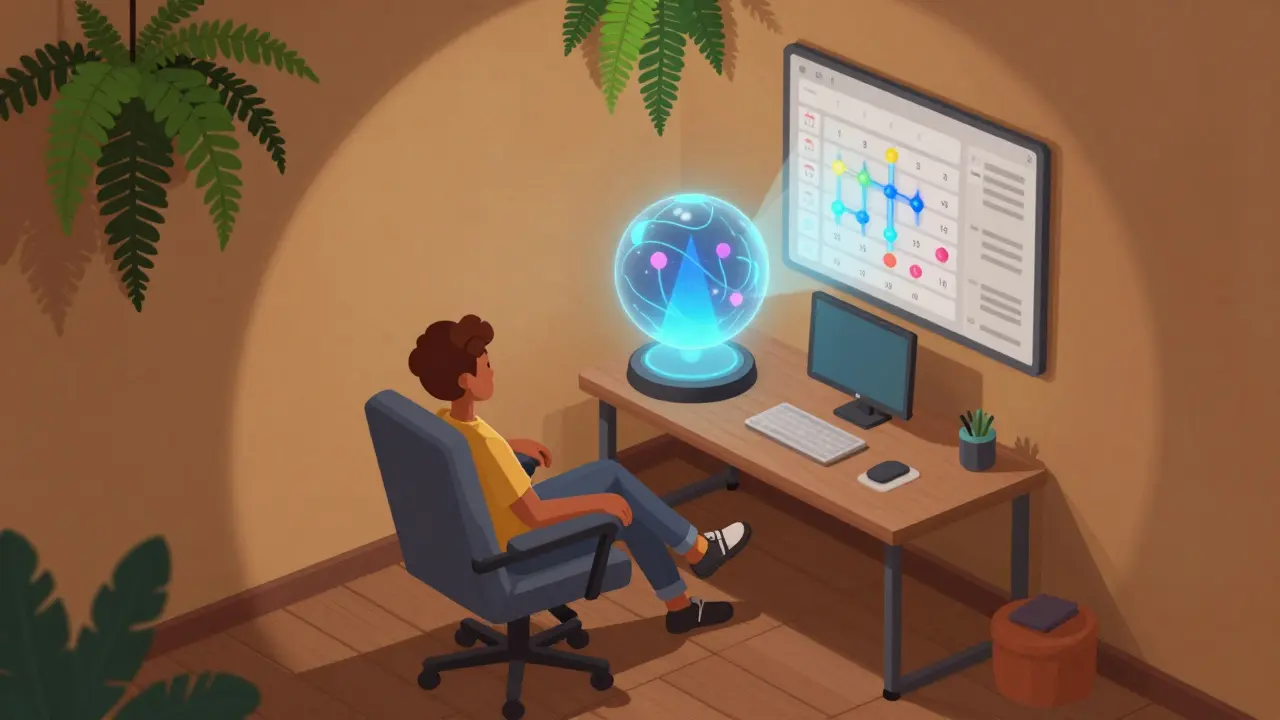
Looking ahead from March 2026, technology is reshaping how we deliver information. Forrester predicts 45% of large employers will implement AI-driven personalized wellness benefit statements by 2026, up from 12% in 2024. This is happening faster than expected.
These systems analyze individual usage patterns. Instead of a generic 'Join our walkathon', an AI model might suggest 'Your sleep data shows low recovery scores. Try our meditation module before bed.' This level of specificity drives behavior. McKinsey's 2024 Outlook notes that programs with robust, continuously updated benefit education components have 87% five-year survival rates. Static content dies fast. Dynamic, data-driven stories keep employees engaged for years.
Integration with existing HRIS platforms like Workday or SAP SuccessFactors is now standard for Fortune 500 companies. 67% of these enterprises use integrated modules. Siloed apps create friction. If my benefit info is locked behind three logins I already struggle to remember, I won't open them.
What is the primary purpose of workplace wellness education?
The primary purpose is to systematically inform employees about the comprehensive benefits of participating in wellness programs. This extends beyond immediate physical health improvements to encompass business, economic, and organizational advantages.
How does personalized communication improve participation?
Personalized benefit communication tailored to employee demographics and health risks achieves 68% participation rates, whereas generic wellness messaging produces only 19% engagement according to recent expert analysis.
Are there legal restrictions on wellness incentives?
Yes, under ACA provisions, any incentive offered for wellness program participation must not exceed 30% of the total cost of self-only coverage. Employers must also comply with ADA and GINA regulations regarding privacy and voluntariness.
What ROI can companies expect from wellness education?
Harvard Business Review studies indicate an average ROI of $3.27 for every $1 invested in certified wellness programs, driven by reduced healthcare claims, improved productivity, and lower turnover rates.
How long does it take to implement a successful program?
The CDC Work@Health Program recommends a 12-month implementation timeline, covering leadership buy-in, strategy development, phased rollouts, and final evaluation and refinement stages.
Why do generic benefit messages often fail?
Generic messages fail because they do not connect specific activities to tangible personal benefits. Employees need to see how wellness actions translate to reduced premiums, energy, or financial savings to stay engaged.
Is AI being used in 2026 wellness programs?
Yes, Forrester predicts 45% of large employers will implement AI-driven personalized wellness benefit statements by 2026, potentially increasing participation rates by 33 percentage points over manual methods.
What are the compliance risks for small businesses?
Small businesses often struggle with resources. Regulatory non-compliance can trigger penalties up to $119,556 per affected employee, making specialized expertise crucial despite limited budgets.
How much should be spent on education components?
Successful programs typically dedicate 3-5% of their total wellness program budgets to education components, ensuring clear communication channels and ongoing training for staff.
Does leadership involvement matter?
It is critical. Certification programs require minimum 70% executive participation for program success. If leadership does not visibly engage, employee skepticism increases significantly.
Austin Oguche
March 28, 2026 AT 19:20the connection between step challenges and insurance premiums is actually quite logical when you break it down properly we see results often when people understand the personal gain rather than just corporate mandates its a win win situation really
Jordan Marx
March 30, 2026 AT 00:19leveraging multi-channel comms is key here especially when integrating HRIS platforms like Workday for seamless data flow regarding premium differentials under ACA provisions which definitely impacts retention metrics significantly over time frames.
Aaron Olney
March 30, 2026 AT 19:44THIS IS HUGE! nobody told us earlier about the money stuff!! i mean seriously my boss keeps sending emails and i just delete them but if they said ill get cash back maybe id read it lol
Jeannette Kwiatkowski Kwiatkowski
March 31, 2026 AT 20:38most of these programs are just fluff anyway execs care about numbers not your yoga class honestly
Sabrina Herciu
March 31, 2026 AT 22:20Please note!!! The EEOC guidelines are strict!!! Do not exceed 30% incentives!!! Privacy laws matter!!!
Eva Maes
April 1, 2026 AT 03:40the landscape has shifted dramatically since 2024 with hyper-personalization becoming the new gold standard for engagement strategies globally
Sophie Hallam
April 1, 2026 AT 15:43i appreciate the detailed breakdown of the implementation roadmap provided in the original post
gina macabuhay
April 2, 2026 AT 23:46you think employees actually care about your budget optimization plans when they are drowning in debt right now
Philip Wynkoop
April 4, 2026 AT 20:29great points made above :)
Monique Louise Hill
April 5, 2026 AT 22:21companies owe transparency to their workforce especially regarding health data privacy standards 🌍💪
Richard Kubíček
April 6, 2026 AT 16:57we should think about the bigger picture of human potential when we design these systems instead of just treating symptoms
Monique Ball
April 6, 2026 AT 17:23We really need to focus more! Mental health is big now! Financial stress matters too! Everyone ignores generic stuff! It just looks spammy! You probably know what i mean! Personalization works better! AI helps us do that! It predicts what you need! Sleep data is useful info! Meditation helps recovery scores! Companies save money long term! Employees feel happier also! Its a good cycle! Let us do this! 😊✨