Steroid Tapering Calculator
How to Use This Tool
This calculator helps determine a safe steroid tapering schedule based on your current dose and treatment duration. It also assesses your risk of adrenal insufficiency and advises on emergency actions.
Stopping corticosteroids like prednisone or dexamethasone suddenly can trigger a medical emergency most people don’t see coming. It’s not just fatigue or feeling run down. It’s a full-body collapse - low blood pressure, vomiting, confusion, even shock. This isn’t rare. Every year, tens of thousands of people in the U.S. end up in the hospital because their body stopped making cortisol after years of taking steroid pills. And many of them didn’t even know they were at risk.
What Happens When You Stop Steroids
Your body doesn’t make cortisol - the hormone that keeps you alive under stress - when you’re on long-term steroid pills. It shuts down. That’s not a bug. It’s how your system responds. The more you take, and the longer you take it, the more your adrenal glands forget how to work. When you stop suddenly, your body has no backup. No cortisol means no energy, no blood pressure control, no way to handle even minor stress like a cold or a fall.
It used to be thought you needed to be on high doses for months to risk this. That’s outdated. A 2023 study in Endocrine Abstracts found even five milligrams of prednisone a day for just four weeks can suppress your adrenal axis. And if you took it irregularly - like skipping doses during a flare-up - your body still gets confused. The damage isn’t always obvious until you stop.
Early Signs You Can’t Ignore
Most people think they’re just tired after stopping steroids. But fatigue is just the first clue. Look for these patterns:
- Severe, unexplained exhaustion that doesn’t improve with rest (85% of cases)
- Loss of appetite and weight loss (72%)
- Nausea, vomiting, or stomach pain (68%)
- Weakness in arms or legs (65%)
- Mood changes - irritability, depression, or brain fog (58%)
These aren’t "just stress" or "post-viral fatigue." They’re your body screaming for cortisol. If you’ve been on steroids for more than four weeks and you’re experiencing three or more of these, you’re likely in the early stages of adrenal insufficiency. Waiting to see if it gets better is dangerous.
When It Turns Into a Crisis
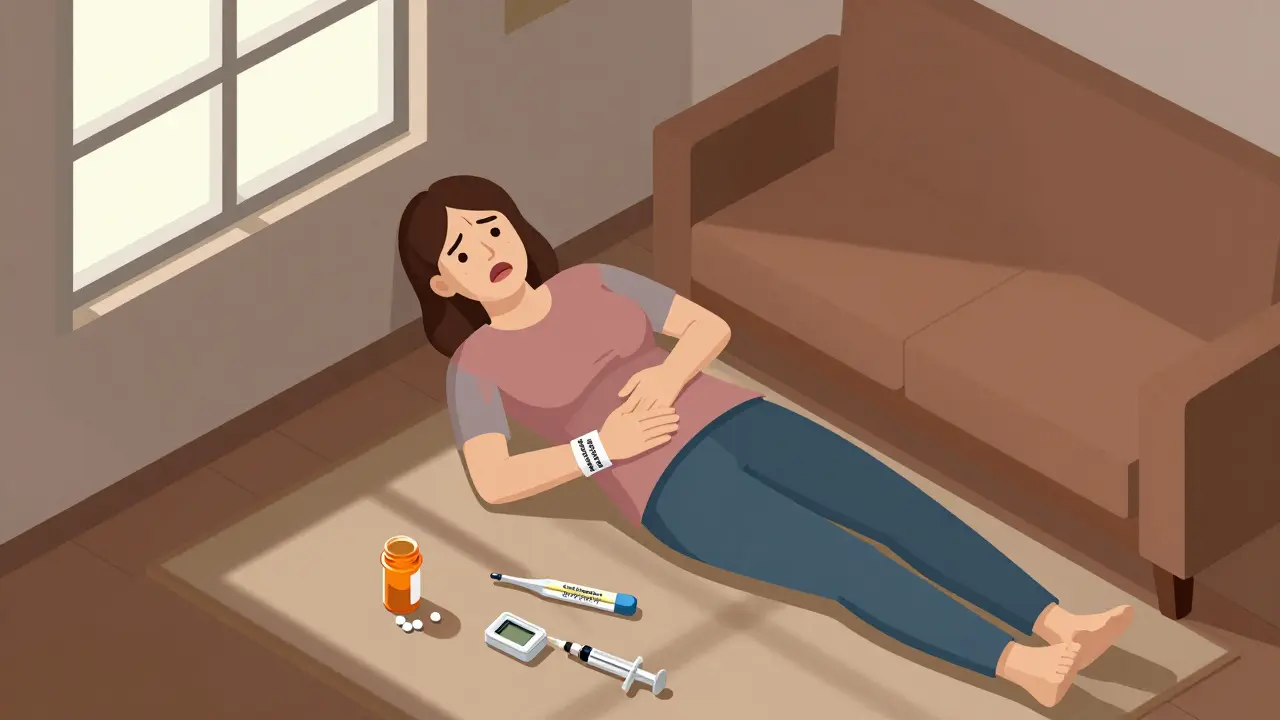
If ignored, this becomes an adrenal crisis. It’s not a slow decline. It’s rapid. Blood pressure crashes. Heart rate spikes. You get dehydrated fast. Your skin turns pale or gray. You might feel dizzy, confused, or pass out. Fever and abdominal pain often show up too. In the ER, doctors see this as a stroke or infection - until they check cortisol levels.
According to the Cleveland Clinic’s 2023 protocol, 6% of patients hospitalized with adrenal crisis die. That’s one in every 17. Most of those deaths happen because the diagnosis was missed. A 45-year-old woman in a 2023 case report was treated for a UTI for weeks after stopping dexamethasone. She kept getting worse - vomiting, fever, low blood pressure - until someone finally tested her cortisol. Her level was 2.1 μg/dL. Normal is above 10. She got IV hydrocortisone. Within hours, she was sitting up. She’s alive because someone finally asked: "Did she stop steroids?"
Not All Withdrawal Is the Same
There’s a big difference between primary, secondary, and tertiary adrenal insufficiency. Primary means your adrenals are destroyed - think Addison’s disease. Secondary means your pituitary stopped making ACTH. Tertiary? That’s what happens when you stop steroids. Your hypothalamus stopped making CRH. Your pituitary got lazy. Your adrenals shrank. It’s reversible - but only if caught early.
That’s why testing matters. A simple morning cortisol test right after your last dose can tell you if you’re at risk. If it’s below 5 μg/dL, you’re in danger. If it’s above 10, you’re probably okay. But don’t wait for the test if you’re already sick. Symptoms come before numbers.
How to Taper Safely
There’s no one-size-fits-all taper. But here’s what experts agree on:
- If you’ve been on more than 20 mg of prednisone daily for over three weeks, get tested before stopping.
- For doses above 20 mg, reduce by 2.5-5 mg every 3-7 days.
- For doses between 5-20 mg, drop by 1-2.5 mg every 1-2 weeks.
- If you’ve been on steroids longer than six months, slow down even more - maybe 1 mg every two weeks.
And don’t skip doses. One JAMA Internal Medicine study found 47% of patients didn’t follow their taper plan. They stopped because they felt better. Or because it cost too much. Or because they thought "it can’t hurt." It can. That’s how you end up in the ER.
What You Need to Carry
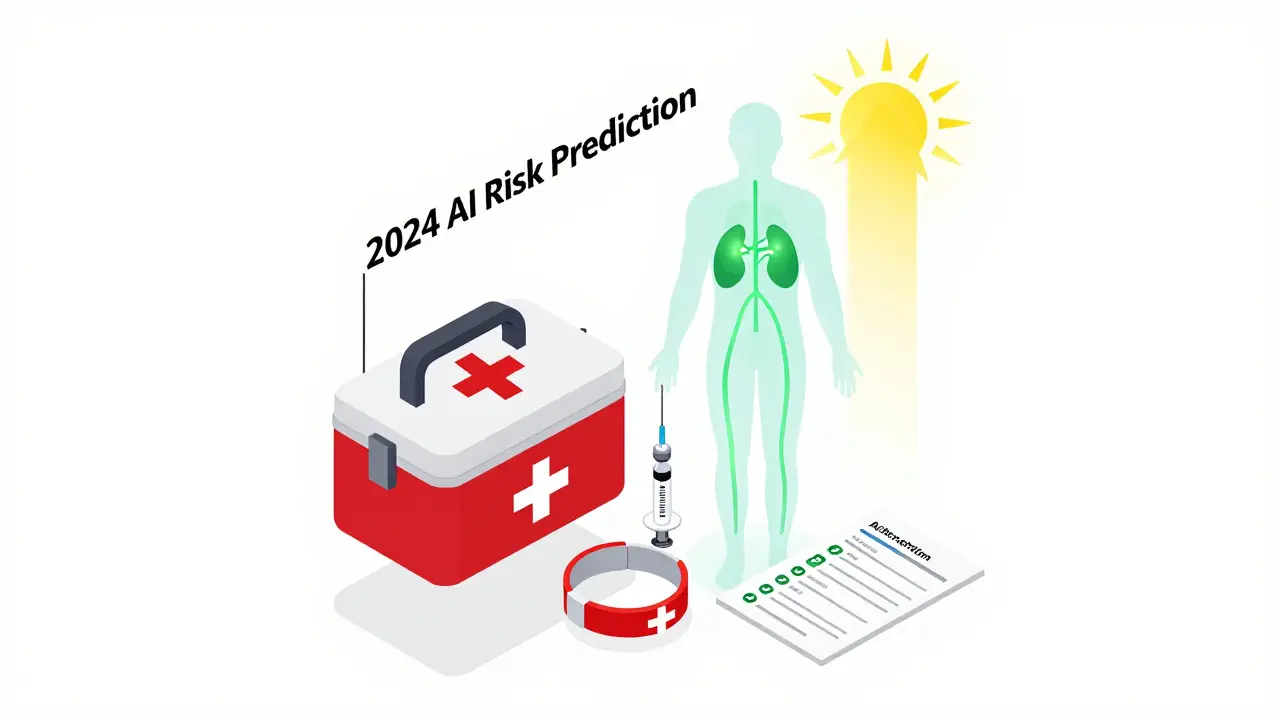
If you’ve been on steroids for more than four weeks, you need an emergency kit. Not a pill. Not a note. A hydrocortisone injection. Yes, you read that right. A syringe. A vial. A plan.
The NIDDK recommends every patient on long-term steroids get trained on how to give themselves a shot. Why? Because in an adrenal crisis, you won’t be able to swallow a pill. You’ll be too weak. Too nauseous. Too confused. An injection in the thigh can save your life while you’re being rushed to the hospital.
Also, wear a medical alert bracelet. Say: "Steroid-dependent. Risk of adrenal crisis." Paramedics see that and know what to do. No waiting for labs. No guessing. Just inject and stabilize.
Why Doctors Miss This
It’s not that they’re careless. It’s that the symptoms look like everything else. Fatigue? Must be depression. Nausea? Must be the flu. Low blood pressure? Must be dehydration. A 2023 JAMA commentary by Dr. Eleanor Fishman found that 68% of patients had their symptoms misdiagnosed - often for weeks.
One Reddit user, u/AdrenalWarrior, wrote: "My doctors told me it was just post-viral fatigue for six weeks after stopping prednisone. Then I collapsed. Now I carry hydrocortisone everywhere." That’s the story too many people live.
Doctors need to ask: "Have you taken steroids recently?" Not just when you’re sick - when you’re tired. When you’re moody. When you’re losing weight. It’s not a stretch. It’s standard.
What’s Changing Now
The FDA now requires all systemic steroid packages to include a warning about adrenal insufficiency. The European Medicines Agency has rolled out patient alert cards in 28 countries. And in 2024, AI tools started predicting who’s at risk by analyzing electronic records - with 92% accuracy.
But the biggest shift? Patient empowerment. A 2023 Mayo Clinic study showed that when patients got written action plans and injection training, 79% had better outcomes. No more guessing. No more waiting. Just clear steps: if I feel this, I do that.
There’s hope. The Endocrine Society projects a 30% drop in adrenal crises by 2030. But that won’t happen unless you know the signs. Unless you carry the shot. Unless you ask your doctor: "What do I do if I stop this?"
Can adrenal insufficiency happen after just a few weeks of steroids?
Yes. Even short-term use - as little as four weeks - can suppress your adrenal axis, especially if you were on more than 5 mg of prednisone daily. The old belief that only long-term, high-dose therapy caused this risk has been disproven. A 2023 study in Endocrine Abstracts confirmed that low-dose, short-term steroid use still carries a significant risk of adrenal suppression.
What should I do if I stop steroids and feel sick?
If you’ve been on steroids for more than four weeks and you develop fatigue, nausea, dizziness, or low blood pressure, don’t wait. Seek medical help immediately. Tell the provider you recently stopped steroids. If you have an emergency hydrocortisone injection, use it. Then go to the ER. Delaying treatment can lead to adrenal crisis, which is life-threatening. Symptoms often appear 24-72 hours after the last dose.
Is it safe to stop steroids on my own if I feel better?
No. Feeling better doesn’t mean your adrenal glands have recovered. Stopping steroids abruptly can cause your body to crash because it hasn’t restarted cortisol production. Always follow a tapering schedule under medical supervision. Even if you took steroids for a short time, you still need a plan. The risk isn’t about how you feel - it’s about what your body can no longer do on its own.
Do I need a cortisol test before stopping steroids?
If you’ve been on more than 20 mg of prednisone daily for over three weeks, yes. Your doctor should check your morning cortisol and ACTH levels before discontinuing. A cortisol level below 5 μg/dL after your last dose signals high risk. But if you’re already symptomatic - vomiting, fainting, low BP - don’t wait for the test. Treat immediately. Symptoms come before numbers.
Why do I need an emergency injection if I’m not in crisis?
Because adrenal crisis can strike suddenly - during a minor illness, injury, or even emotional stress. If you can’t swallow pills, you can’t take oral steroids. An injection in your thigh can keep you alive until you reach the hospital. It’s not about prevention - it’s about survival. The American College of Physicians and the NIDDK both recommend that anyone on long-term steroids carry emergency hydrocortisone. It’s as important as an EpiPen for allergies.
What Comes Next
Don’t wait for a crisis to learn this. If you’re on steroids, talk to your doctor now. Ask: "What’s my taper plan?" "Do I need a cortisol test?" "Should I carry an injection?" Write it down. Practice the injection. Tell a family member. Keep your medical alert ID on. This isn’t fear. It’s control.
The next time someone says, "It’s just fatigue," you’ll know better. And if you’re the one feeling it? You’ll know what to do - before it’s too late.
Daniel Dover
February 14, 2026 AT 20:33Mike Hammer
February 16, 2026 AT 00:53Josiah Demara
February 17, 2026 AT 15:00Betty Kirby
February 18, 2026 AT 12:39Sarah Barrett
February 19, 2026 AT 21:31Kapil Verma
February 21, 2026 AT 06:08Mandeep Singh
February 22, 2026 AT 13:15Virginia Kimball
February 22, 2026 AT 18:55Joe Grushkin
February 24, 2026 AT 13:41Kaye Alcaraz
February 26, 2026 AT 04:27Esha Pathak
February 26, 2026 AT 13:09Chiruvella Pardha Krishna
February 27, 2026 AT 14:51Charlotte Dacre
March 1, 2026 AT 10:25Erica Banatao Darilag
March 1, 2026 AT 11:23