Imagine your doctor prescribes a medication you’ve taken for years. You walk into the pharmacy, expecting the usual low-cost generic version to slide out of the bag. Instead, the pharmacist tells you it’s unavailable. The brand-name company has quietly pulled that specific formulation from the market, replacing it with a slightly modified version that costs hundreds of dollars more. This isn’t just bad luck; it’s often a calculated legal strategy known as product hopping, which is a tactic where brand-name drug manufacturers introduce a new formulation while withdrawing the old one to block generic competition.
This practice sits at the center of complex antitrust issues in generic substitution. These legal battles determine whether patients get affordable medicines or if corporations can legally engineer monopolies to keep prices high. For decades, state laws allowed pharmacists to automatically substitute cheaper generics for brand-name drugs when they were bioequivalent. But savvy companies found ways to exploit loopholes, effectively breaking those substitution chains before generic competitors could enter the market.
The Mechanics of Blocking Generic Entry
To understand why this is an antitrust issue, you have to look at how generic drugs actually compete. Unlike consumer goods, generics don’t win by advertising better features. They win on price, relying on state automatic substitution laws. When a brand’s patent expires, generic makers launch identical versions. Pharmacists swap them out automatically, capturing 80% to 90% of the market share within months.
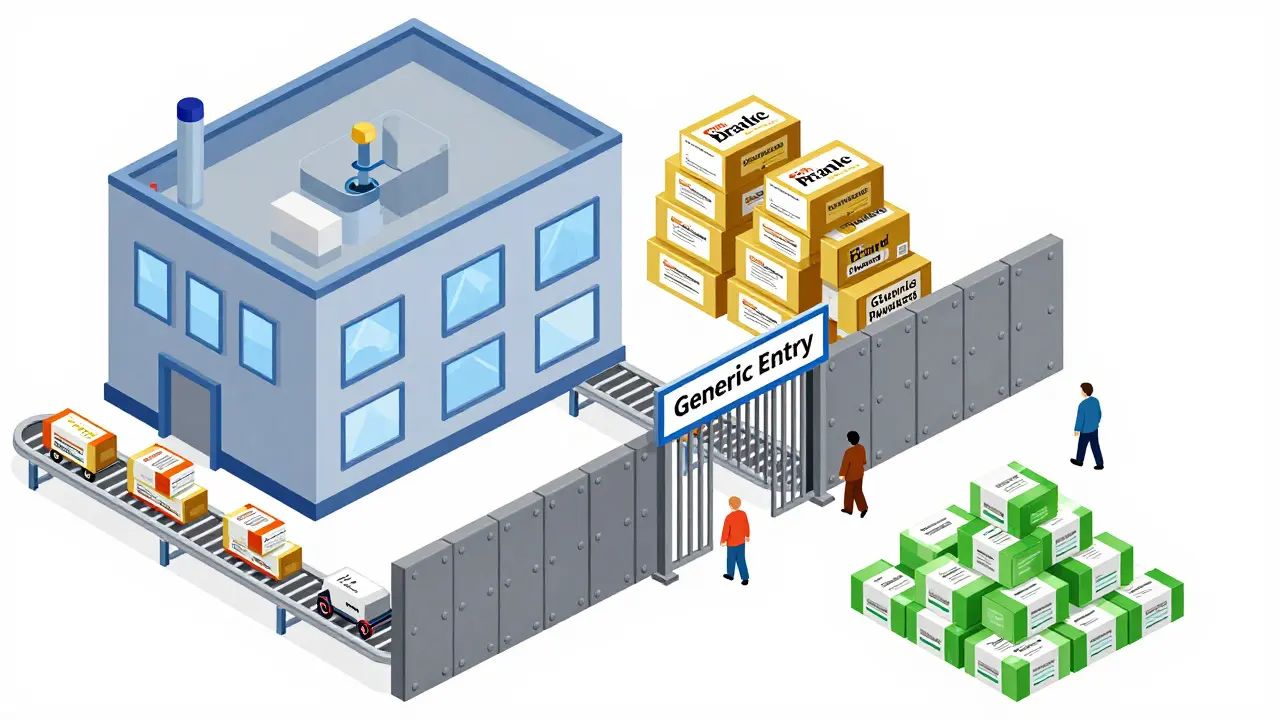
Hard switching disrupts this process. A brand-name manufacturer might introduce an extended-release version of a drug while simultaneously pulling the immediate-release version from the shelves. Because the original formulation is gone, pharmacists can no longer substitute the generic. Patients are forced to switch to the new, expensive brand because going back to the old generic requires a new prescription, doctor visits, and insurance approvals-what experts call "high transaction costs."
A classic example is the case involving Namenda, a drug used for Alzheimer’s disease. The manufacturer, Actavis, introduced Namenda XR (extended release) and withdrew Namenda IR (immediate release) just 30 days before generic entry. The Second Circuit Court ruled in 2016 that this was anticompetitive conduct. By removing the original drug, Actavis prevented generic manufacturers from using the only cost-efficient way to compete: automatic substitution.
Legal Frameworks and Key Court Rulings
The legal landscape for these practices is split. Courts haven’t always agreed on what constitutes illegal behavior versus legitimate innovation. The turning point came with the New York v. Actavis decision. Before this ruling, many courts dismissed claims against companies like AstraZeneca, who switched patients from Prilosec to Nexium but kept the original drug available. Those cases failed because adding a new product is generally seen as procompetitive.
However, the *Actavis* court drew a sharp line. It ruled that completely withdrawing the original formulation before generic entry was exclusionary. The logic was simple: if the brand removes the target for substitution, the generic company is left with no viable path to market without spending millions on advertising to convince doctors to rewrite prescriptions-a burden no other industry faces.
Contrast this with the In re Nexium Antitrust Litigation from 2009. In that case, AstraZeneca maintained the availability of Prilosec while promoting Nexium. The court dismissed antitrust claims, viewing the switch as a result of superior marketing rather than coercion. The key difference? In *Nexium*, patients still had a choice. In *Actavis*, the choice was engineered away.
FDA Regulations and REMS Abuse
Another layer of complexity involves the Food and Drug Administration (FDA). Under the Hatch-Waxman Act, generic makers must prove their drugs are bioequivalent to the brand name. To do this, they need samples of the original drug for testing. Some brands have weaponized Risk Evaluation and Mitigation Strategies (REMS), which are safety programs required for certain dangerous drugs.
Brands argue that sharing samples violates patient privacy or safety protocols under REMS. However, critics point out that this is often a pretext to block competition. According to analysis by Professor Michael A. Carrier, more than 100 generic firms have complained about being denied sample access. A study of 40 drugs subject to these restricted programs showed that the inability for generics to enter cost consumers over $5 billion annually. This tactic doesn’t improve drug safety; it simply delays cheaper alternatives.
| Tactic | Description | Legal Outcome Example | Impact on Generics |
|---|---|---|---|
| Hard Switching | Withdrawing original formulation before generic entry | New York v. Actavis (2016): Found anticompetitive | Blocks automatic substitution entirely |
| Soft Switching | Introducing new version but keeping old one available | In re Nexium (2009): Claims dismissed | Generics can still substitute, but lose market share |
| REMS Denial | Refusing sample access via safety programs | Ongoing litigation; FTC scrutiny increasing | Prevents bioequivalence testing |
| Disparagement | Campaigning against efficacy/safety of old version | Suboxone Case (2019): Settlement reached | Coerces doctors/patients to switch |
Enforcement Actions and Regulatory Response
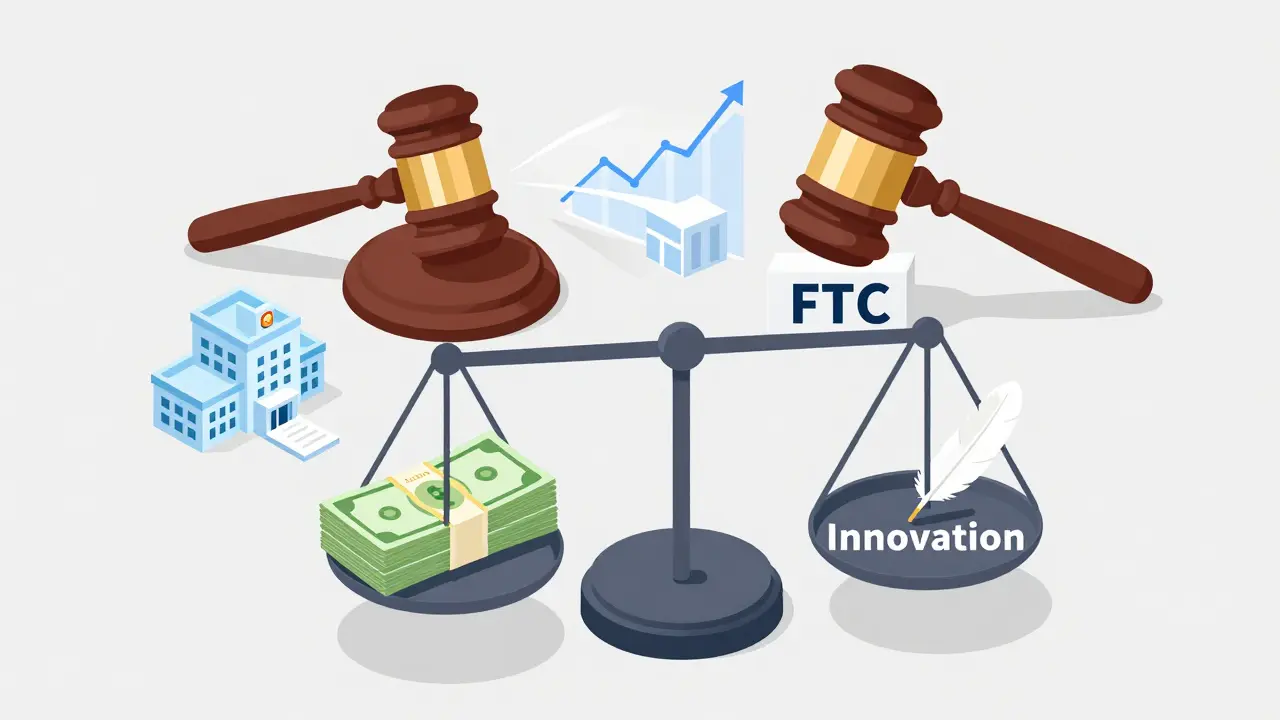
The Federal Trade Commission (FTC) has stepped up its game. In October 2022, the FTC released a comprehensive report on pharmaceutical product hopping, signaling a renewed focus on these tactics. Chair Lina Khan directed the agency to outline actions taken over the past 15 years, highlighting that these strategies often lack procompetitive justification.
One notable enforcement action involved Suboxone, a medication for opioid addiction. Reckitt Benckiser and its subsidiary Indivior were accused of disparaging the tablet form of Suboxone while promoting a film version. The court found that threatening to remove tablets from the market, combined with fabricated safety concerns, coerced patients and doctors. This led to settlements in 2019 and 2020. The FTC also obtained a preliminary injunction in the Namenda case, forcing Actavis to continue selling the older drug for 30 days after generic entry to allow market stabilization.
The Department of Justice (DOJ) has also pursued criminal charges against generic manufacturers for price-fixing cartels, showing that antitrust enforcement applies across the board. Teva Pharmaceuticals paid a $225 million criminal penalty in 2023, the largest ever for a domestic antitrust cartel. While this targets generic collusion, it underscores the high stakes of maintaining competitive markets.
Economic Impact on Consumers and Taxpayers
The financial consequences of these legal maneuvers are staggering. Delayed generic entry costs consumers and taxpayers billions annually. Take Revlimid, a cancer drug. Its price increased from $6,000 to $24,000 per month over 20 years due to delayed generic competition. Experts estimate that $167 billion was wasted on just three drugs-Humira, Keytruda, and Revlimid-in the U.S. compared to the European Union, where generic entry occurred earlier.
When automatic substitution works, generics capture the vast majority of the market quickly. But product hopping can slash generic market share from 80-90% down to 10-20%. In the Ovcon case, a manufacturer introduced a chewable version and stopped selling the original, destroying the market for generic Ovcon. This isn’t just corporate profit; it’s a direct transfer of wealth from patients and insurers to shareholders.
Future Outlook and Legislative Gaps
Despite increased scrutiny, inconsistencies remain. Some courts still ignore the role of state substitution laws, arguing that generics can overcome switching by spending revenue on advertising. This view ignores the reality that generic companies operate on thin margins and cannot afford massive marketing campaigns. Legal scholars like Peter H. Jones have noted that while some states have secured injunctions, others allow product hopping schemes to continue unchecked.
Legislative reform may be necessary to clarify antitrust boundaries. Congress has begun directing the FTC to address these issues, with hearings held in 2023 focusing on regulatory barriers to generic approval. The goal is to ensure that innovation rewards genuine therapeutic improvements, not minor formulation tweaks designed solely to extend monopolies. As enforcement agencies gain momentum, the pharmaceutical industry will face stricter scrutiny of practices that undermine the core promise of the Hatch-Waxman Act: affordable access to medicine.
What is product hopping in the pharmaceutical industry?
Product hopping is a strategy where a brand-name drug manufacturer introduces a new formulation of a drug (such as a different dosage or delivery mechanism) while withdrawing the original version from the market. This tactic is designed to prevent pharmacists from substituting cheaper generic versions, thereby maintaining the brand's monopoly pricing.
Why is hard switching considered an antitrust violation?
Hard switching is considered an antitrust violation because it blocks the primary method generic competitors use to enter the market: automatic substitution under state laws. By removing the original drug before generics can launch, the brand forces patients to pay higher prices for the new formulation, eliminating fair competition without offering significant therapeutic benefits.
How did the New York v. Actavis case change the legal landscape?
The 2016 New York v. Actavis ruling established that withdrawing an original drug formulation immediately before generic entry is anticompetitive conduct. The court recognized that state substitution laws are the only cost-efficient way for generics to compete, and undermining them harms consumers and restricts market access.
What role does the FTC play in enforcing antitrust laws for generic substitution?
The Federal Trade Commission (FTC) investigates and litigates cases where pharmaceutical companies engage in deceptive or anticompetitive practices like product hopping. The FTC has issued reports detailing these tactics, secured injunctions to keep older drugs on the market during generic transition periods, and pushed for legislative reforms to strengthen competition.
How much money do consumers lose due to delayed generic entry?
Delayed generic entry costs consumers and taxpayers billions annually. For example, it is estimated that $167 billion was wasted on just three major drugs (Humira, Keytruda, and Revlimid) in the U.S. compared to the European Union due to tactics that postponed generic competition. Individual drug prices can increase by over 300% when generics are blocked.
Can generic companies fight back against product hopping?
Generic companies can file antitrust lawsuits, but success depends on proving that the brand’s actions were exclusionary rather than innovative. They rely on court rulings like *New York v. Actavis* to show that withdrawing original formulations blocks competition. However, legal battles are costly and time-consuming, often delaying generic entry further.
What is the difference between soft switching and hard switching?
Soft switching involves introducing a new drug version while keeping the original available, allowing generics to still substitute the old version. Hard switching involves withdrawing the original formulation entirely before generic entry, making substitution impossible and forcing patients to switch to the new, more expensive brand.
How do REMS programs contribute to antitrust issues?
Risk Evaluation and Mitigation Strategies (REMS) are FDA-mandated safety programs for certain drugs. Some brand manufacturers abuse these programs by denying generic companies access to drug samples needed for bioequivalence testing. This prevents generics from entering the market, costing billions annually without improving patient safety.