Medication Safety Decision Tool
Is this a life-threatening reaction?
Is this medication dangerous to stop suddenly?
Do you have access to medical help?
Not every side effect means you should quit your medication. But some do. And waiting too long can cost you your life.
What Makes a Side Effect an Emergency?
Most side effects are annoying, not dangerous. A dry mouth from an antihistamine. Nausea after antibiotics. Dizziness when you first start a blood pressure pill. These usually fade. But when a reaction turns serious, it doesn’t wait. It hits fast and hard.The FDA defines a serious adverse drug reaction as one that causes death, hospitalization, permanent disability, or a life-threatening condition. These aren’t theoretical risks. In the U.S., over 1.3 million emergency room visits each year come from bad reactions to medications. About 350,000 of those patients end up in the hospital.
There are only a handful of reactions that demand you stop the drug immediately - no waiting, no calling your doctor tomorrow. You act now.
Anaphylaxis: Your Body’s Alarm System
Imagine your throat closing. Your tongue swelling. Your skin breaking out in hives. Your blood pressure dropping so fast you feel like you’re going to pass out. That’s anaphylaxis. It’s rare - about 1 to 15 cases per 10,000 people taking a medication - but it kills if you don’t act.Penicillin is the most common trigger. But any drug - even something you’ve taken for years - can cause it. If you’ve ever had a bad reaction before, you’re at higher risk. If you feel any of these symptoms within minutes or hours of taking a pill:
- Swelling of the lips, tongue, or throat
- Difficulty breathing or wheezing
- Rapid, weak pulse
- Dizziness or fainting
- Severe rash or hives
Stop the medication. Call 911. Use an epinephrine auto-injector if you have one. Don’t wait to see if it gets better. It won’t.
Stevens-Johnson Syndrome and Toxic Epidermal Necrolysis
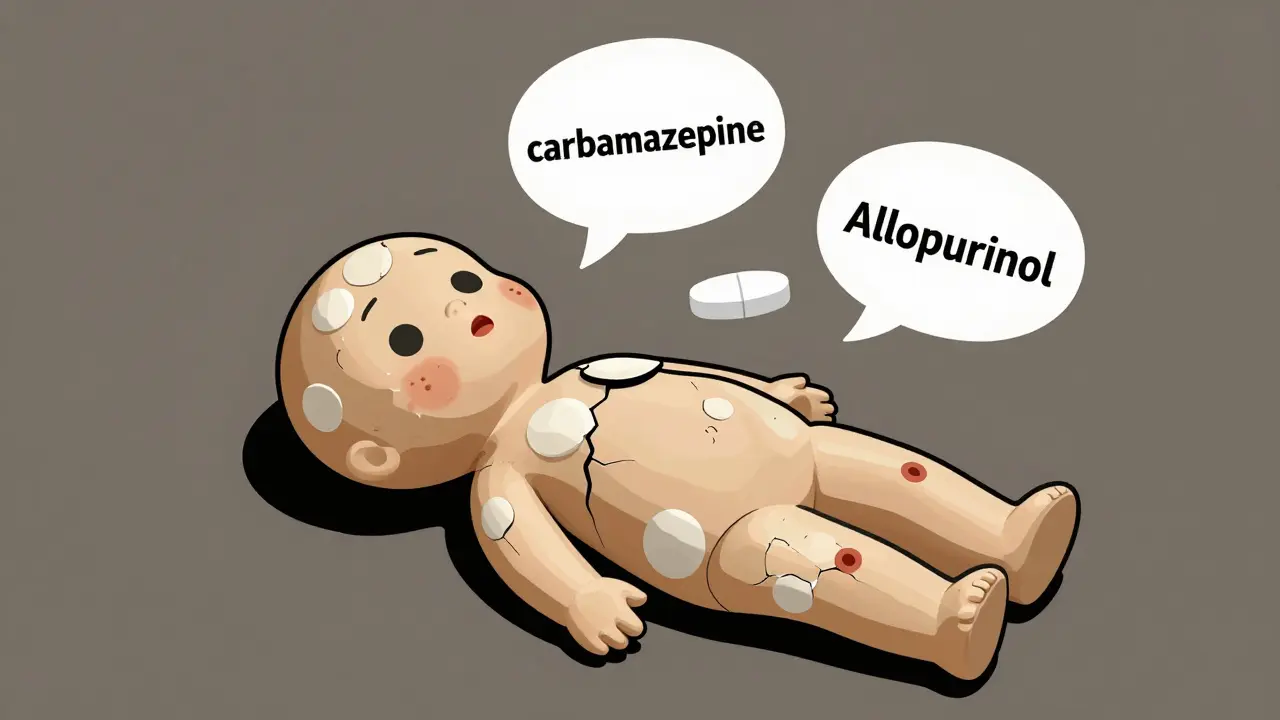
These are rare but devastating skin reactions. They start like a bad flu - fever, sore throat, burning eyes. Then, within days, your skin begins to blister and peel, like a severe burn. Mucous membranes in your mouth, eyes, and genitals start to die.It’s not a rash. It’s not a sunburn. It’s a medical emergency. Mortality rates? Up to 50% for the most severe form, toxic epidermal necrolysis. And it’s often caused by common medications:
- Carbamazepine (for seizures)
- Lamotrigine (for epilepsy and bipolar)
- Allopurinol (for gout)
- Sulfonamide antibiotics
The FDA requires black box warnings on these drugs - the strongest safety alert. If you’re of Asian descent and take carbamazepine, you’re at higher risk if you carry the HLA-B*1502 gene. Testing for this gene is standard in some countries before prescribing. If you develop a rash - even a small one - within the first few weeks of starting one of these drugs, stop it. Go to the ER. Don’t wait.
Acute Liver Failure
Your liver processes everything you take. Sometimes, it can’t handle a drug. That’s when things turn dangerous.Medications like isoniazid (for tuberculosis), acetaminophen (in high doses), and certain antibiotics can cause liver damage. Early signs? Nausea, fatigue, dark urine, yellow eyes or skin (jaundice). But here’s the catch: you might feel okay until it’s too late.
Doctors look at blood tests. If your ALT (a liver enzyme) is more than three times the normal level and you have symptoms, stop the drug. If it’s five times higher - even without symptoms - stop it. Delaying means risking permanent liver failure. You might need a transplant.
Agranulocytosis: When Your Immune System Collapses
Your body needs white blood cells to fight infection. Agranulocytosis means your bone marrow stops making them. You can go from feeling fine to fighting a deadly infection in hours.This reaction is rare - 1 to 15 cases per million users - but deadly if missed. Medications linked to it include:
- Antithyroid drugs (like methimazole)
- Antipsychotics (clozapine)
- Some antibiotics and anti-inflammatories
Signs? Sudden fever, sore throat, mouth ulcers, chills. If you have these and are on one of these drugs, stop it and get blood work immediately. Your white blood cell count will be dangerously low. Without quick action, sepsis can kill you.
But Don’t Stop Everything Cold Turkey
Here’s where people get hurt. They see a side effect - maybe dizziness, or weight gain, or a weird taste - and they quit. No warning. No plan. That’s just as dangerous.Some drugs can’t be stopped suddenly. Your body adapts. If you cut them off fast, your system goes into reverse.
- Beta blockers (like metoprolol): Stopping suddenly can spike your heart rate and blood pressure. In people with heart disease, this raises heart attack risk by 300% in the first week.
- Benzodiazepines (like Xanax or Valium): Abrupt stoppage can trigger seizures, hallucinations, or extreme anxiety. Withdrawal can be life-threatening.
- Antidepressants (SSRIs, SNRIs): 20-50% of people get withdrawal symptoms - brain zaps, nausea, insomnia. It’s not dangerous for most, but it’s awful. And it’s avoidable with a slow taper.
- Clonidine (for high blood pressure): Stopping it can cause a dangerous spike in blood pressure - sometimes over 200/120.
These aren’t side effects you ignore. They’re risks you manage with your doctor. Stopping them suddenly doesn’t fix the problem - it makes a new one.
The 5-Question Rule: When to Stop, When to Wait
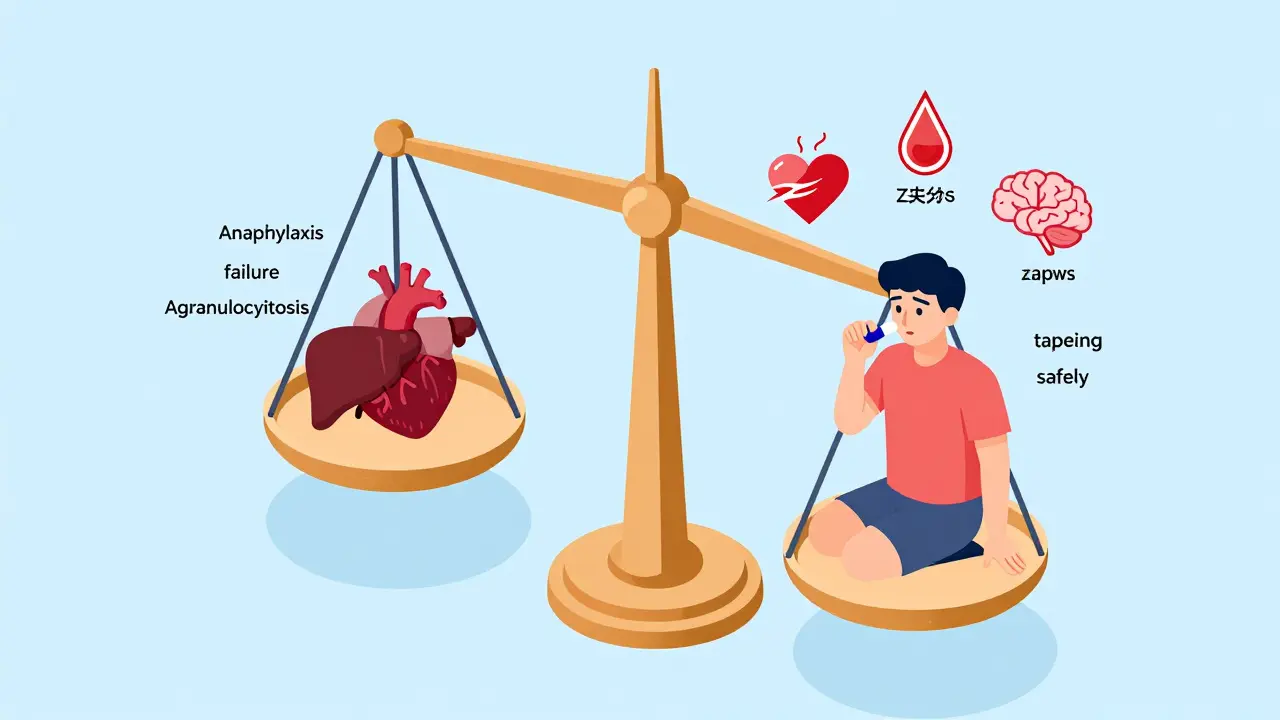
A 2021 study with over 1,200 patients tested a simple decision tool. It worked 92% of the time. Here’s what it says:- Is this reaction life-threatening? (Anaphylaxis? SJS? Liver failure?) → Stop now.
- Is this a drug that causes withdrawal if stopped suddenly? (Beta blockers? Antidepressants? Anti-seizure meds?) → Don’t quit cold turkey. Call your doctor.
- Are there safer alternatives? Maybe a different drug in the same class? A lower dose? → Talk to your provider.
- Does the benefit still outweigh the risk? Is the side effect worse than the condition you’re treating? → Reassess with your doctor.
- Do you understand what’s happening? If you’re confused, you’re more likely to make a dangerous choice. Ask questions.
This isn’t just for doctors. Patients who use this framework are far less likely to stop something they shouldn’t - or keep something they should quit.
Why So Many People Get It Wrong
A 2022 study found that 31% of people quit statins because of muscle pain. But only 5% of those cases were real statin-induced myopathy. Most people could’ve stayed on the drug with a lower dose or a different statin.On Reddit, hundreds of people post about stopping antidepressants cold turkey after side effects. Doctors reply: “You didn’t need to quit. You could’ve tapered.” But they didn’t know. No one told them.
Even worse - 42% of patients stop meds because of side effects without talking to anyone. And 18% of those end up in worse shape because of withdrawal or rebound effects.
Pharmacists are trained to spot this. That’s why the American Pharmacists Association now pushes structured medication reviews using tools like STOPP/START. They look for drugs that are no longer needed - or that are more dangerous than helpful. But they never tell you to quit high-risk meds without a plan.
What You Should Do Right Now
If you’re on any medication:- Know the red flags. Write them down. Keep them on your phone.
- Don’t assume every side effect means stop. Most don’t.
- Don’t assume you can stop anything cold turkey. Most you can’t.
- Keep a list of your meds and why you take them. Share it with every doctor.
- If you feel something scary - stop the drug and get help immediately.
- If you feel something annoying - call your doctor. Don’t quit.
The goal isn’t to never have side effects. It’s to manage them right. Some reactions need to be stopped fast. Others need to be eased out slowly. The difference between life and death isn’t always the drug - it’s the decision you make when things go wrong.
What side effects mean I should stop my medication right away?
Stop immediately if you have signs of anaphylaxis (swelling, trouble breathing, low blood pressure), Stevens-Johnson Syndrome or toxic epidermal necrolysis (blistering skin, mouth sores), acute liver failure (yellow skin, dark urine, severe nausea), or agranulocytosis (sudden fever, sore throat, chills). These are rare but life-threatening. Don’t wait.
Can I stop my blood pressure medication if I feel dizzy?
No. Dizziness is a common side effect, especially when you first start. Stopping suddenly can cause rebound high blood pressure - sometimes dangerously so. Call your doctor instead. They may lower your dose or switch you to a different drug. Never quit blood pressure meds without medical advice.
Is it safe to stop antidepressants if I feel worse?
Most side effects from antidepressants - nausea, insomnia, anxiety - improve within weeks. Stopping suddenly can cause withdrawal symptoms like brain zaps, dizziness, and mood crashes. In rare cases, it can worsen depression. Talk to your doctor. They can help you taper slowly or switch to a different medication. Don’t quit on your own.
What if I don’t know if my reaction is serious?
When in doubt, call your doctor or go to urgent care. If you’re having trouble breathing, your skin is peeling, or you’re extremely unwell - go to the ER. It’s better to be checked and find out it’s nothing than to wait and risk serious harm. Don’t second-guess life-threatening signs.
Why do some medications need to be tapered instead of stopped?
Your body adjusts to some drugs over time. Stopping them suddenly causes your system to overreact. For example, beta blockers slow your heart. If you quit fast, your heart races. Benzodiazepines calm your brain. Stop them cold, and your brain goes into overdrive - causing seizures or panic. Tapering lets your body readjust safely.
How do I know if my side effect is from the drug or something else?
Track when it started. Did it begin after you started the new drug? Did it get worse when you increased the dose? Did it improve when you lowered it? These patterns help your doctor decide. Blood tests, skin exams, and symptom logs are key. Don’t guess - get checked.
jeremy carroll
December 15, 2025 AT 19:47Dwayne hiers
December 15, 2025 AT 23:11Sarthak Jain
December 17, 2025 AT 19:22Jonny Moran
December 19, 2025 AT 02:08Wade Mercer
December 20, 2025 AT 08:08Natalie Koeber
December 21, 2025 AT 22:52Sinéad Griffin
December 23, 2025 AT 04:07Rulich Pretorius
December 24, 2025 AT 19:12Edward Stevens
December 26, 2025 AT 09:24Rich Robertson
December 27, 2025 AT 00:30Daniel Wevik
December 28, 2025 AT 02:41Alexis Wright
December 28, 2025 AT 20:18Tim Bartik
December 30, 2025 AT 09:30Daniel Thompson
December 31, 2025 AT 02:36