For people living with type 1 diabetes, managing blood sugar has always been a constant, exhausting job. Wake up, check glucose, calculate carbs, inject insulin, repeat every few hours. Sleep with one ear open for alarms. Plan every meal around insulin peaks. It’s not just medical-it’s mental labor that never stops. But in the last five years, something has changed. Closed-loop systems are turning that reality on its head. These aren’t sci-fi fantasies anymore. They’re FDA-approved, real-world tools used by hundreds of thousands of people-and the results are transforming daily life.
What Exactly Is a Closed-Loop System?
A closed-loop system, often called an "artificial pancreas," links three things: a continuous glucose monitor (CGM), an insulin pump, and a smart algorithm. The CGM checks your blood sugar every 5 minutes. The algorithm reads that data, predicts where your glucose is headed, and tells the pump to deliver tiny, automatic doses of insulin-no manual input needed. It works like a thermostat for your blood sugar: if it’s rising, it adds insulin. If it’s dropping, it slows or stops delivery. This isn’t the same as older low-glucose suspend (LGS) pumps, which only paused insulin when levels got too low. Closed-loop systems actively adjust insulin up and down, 24/7. The most common type today is called hybrid closed-loop (HCL). "Hybrid" means you still have to tell the system when you eat-enter carbs manually for mealtime insulin. But once you do, the system handles everything else: overnight, between meals, after snacks, even after unexpected activity. Three major systems dominate the market right now: Tandem’s t:slim X2 with Control-IQ, Insulet’s Omnipod 5, and Beta Bionics’ iLet. Each works differently. Control-IQ can give automatic correction boluses if your glucose is high, even without a meal announcement. Omnipod 5 requires you to announce meals but has a tubeless, wearable pod design. The iLet is the closest to a true "fully closed-loop" system-it doesn’t need you to input insulin settings like carb ratios or correction factors. You just enter your weight, and it learns over time.Real Results: What Happens When You Use One?
Numbers don’t lie. Clinical studies show people using hybrid closed-loop systems spend 70-75% of their time in the target glucose range (70-180 mg/dL). Before these systems, most people were lucky to hit 50-60%. That’s a 15-point jump-just from automation. That extra time in range means fewer highs, fewer lows, and fewer emergencies. Studies show hypoglycemic events (blood sugar under 70 mg/dL) drop from 5-7% of the day to just 2-4%. HbA1c, the 3-month average blood sugar marker, typically falls by 0.3-0.5%. For someone with an HbA1c of 8.0%, that’s moving toward 7.5%-a meaningful shift toward long-term health. But the biggest win isn’t in the numbers-it’s in the quiet moments. People report sleeping through the night without alarms. Waking up with stable blood sugar. Not having to think about insulin during meetings, workouts, or family dinners. One user on Reddit wrote: "I haven’t had a severe low in 8 months. Before Control-IQ, I had one every month. I didn’t realize how much fear was part of my life until it was gone." The CLEAR study, a 2-year real-world analysis of over 1,000 users, confirmed these gains. Time-in-range stayed high. No new safety issues popped up. Quality-of-life scores jumped 22%. People said they felt like diabetes was finally working around their lives-not the other way around.How Do the Major Systems Compare?
| Feature | Tandem t:slim X2 (Control-IQ) | Insulet Omnipod 5 | Beta Bionics iLet |
|---|---|---|---|
| Meal Bolus Required? | Yes, but system can auto-correct | Yes (updated 2023: "Autonomous" mode in beta) | No-uses adaptive algorithm |
| Insulin Capacity | 300 units | 200 units per pod (3-day use) | 300 units |
| Setup Complexity | High-requires carb ratios, correction factors | Medium-requires carb ratios, but no basal settings | Low-only body weight needed |
| Device Form | Traditional pump with tubing | Tubeless, wearable pod | Two-device system (pump + CGM receiver) |
| App Compatibility | iOS 13+, Android 8+ | iOS 13+, Android 8+ | iOS only (as of 2026) |
| Estimated Annual Cost (USD) | $6,800 (pump + software) | $3,900 (pods only) | $7,200 (device + supplies) |
Control-IQ leads in automation-especially for correcting high sugars without user input. Omnipod 5 wins on convenience: no tubing, no pump to carry. The iLet is the most "set it and forget it" option, but it’s still new, and iOS-only limits its reach. Cost varies widely. Omnipod 5’s pod-only model saves money over time-no $6,500 pump to buy upfront. But you’re replacing pods every 3 days. Control-IQ users pay a $299 annual software fee. The iLet is the most expensive upfront.
What Doesn’t Work Yet?
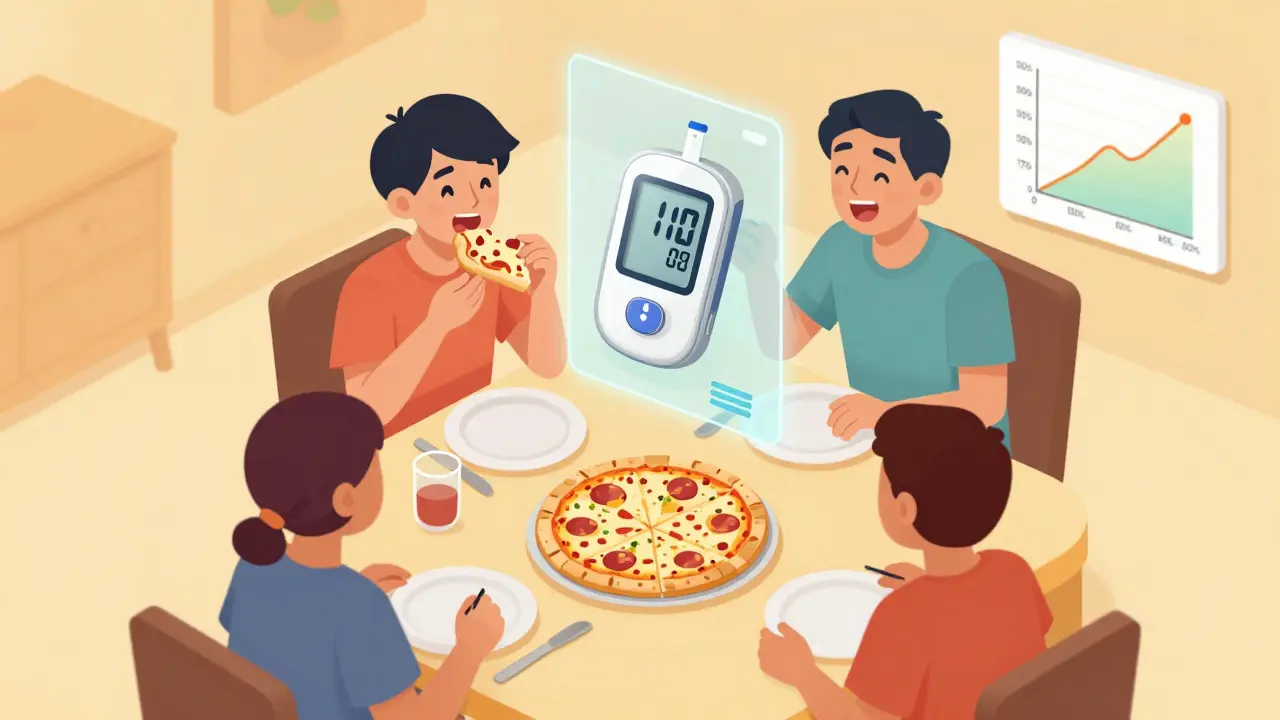
No system is perfect. The biggest gap? Meals. Even the best systems struggle with large, fatty, or delayed-carb meals. Pizza, Chinese food, or a late-night snack can still spike blood sugar hours later because the algorithm can’t predict how your body will digest it. That’s why you still need to announce meals. Sensor lag is another issue. CGMs take 5-15 minutes to catch up to real-time blood sugar changes. If you eat a candy bar and your glucose shoots up in 10 minutes, the system might not respond fast enough. Users report needing to manually bolus 15-20 minutes before eating high-carb meals to stay ahead. Some users experience "algorithm fatigue." After weeks of automation, the system might overcorrect, or misread stress or illness as a glucose trend. One person described it: "It kept giving me insulin when I was sick, and my sugar kept rising. I had to turn it off and go back to manual for 3 days." That’s why knowing when to pause automation is critical. And there’s the DKA risk. A 2023 Lancet study found HCL users had a 1.2x higher rate of diabetic ketoacidosis than those on manual pumps. Why? Because if the pump fails, the system doesn’t alert you as clearly as a manual user would notice a high reading. That’s why backup plans-like checking ketones during illness-are non-negotiable.Who Benefits the Most?
Children and teens are the biggest success stories. Parents report fewer nighttime lows, better school performance, and less anxiety. One mother said: "My daughter used to cry before bed because she was scared of low blood sugar. Now she sleeps through the night. I sleep too." Young adults and professionals benefit from reduced mental load. No more sneaking off to check glucose during meetings. No more panic before social events. But not everyone thrives. People with erratic schedules-shift workers, caregivers, or those with unpredictable eating patterns-have higher abandonment rates. One JDRF survey found 35% of these users stopped using their system within a year because it couldn’t adapt to their lifestyle. Access is still a barrier. In the U.S., Medicare covers only 80% of pump costs. That leaves $1,300-$2,000 out-of-pocket annually for many. Private insurance varies wildly. In Australia, the National Disability Insurance Scheme (NDIS) covers some users, but most still pay privately. The cost isn’t just the device-it’s sensors, pods, batteries, and ongoing support.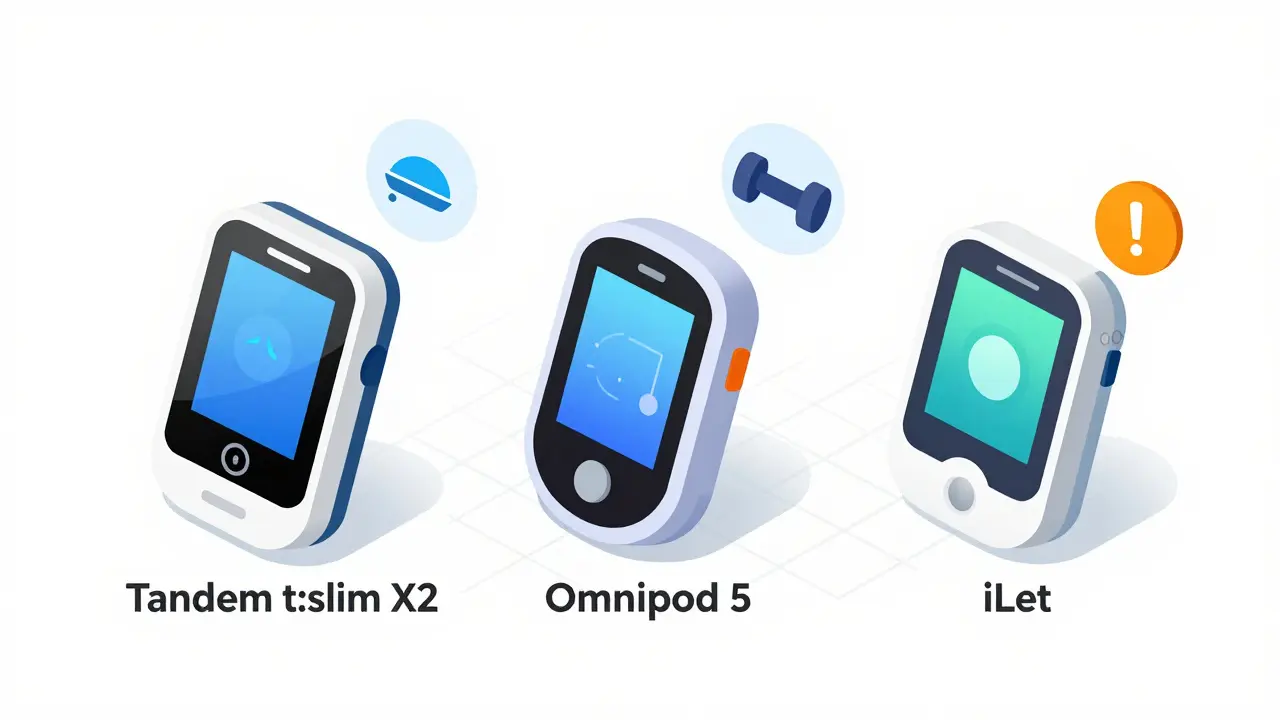
What’s Next?
The future is coming fast. Tandem’s Control-IQ 3.0, released in late 2023, reduces hypoglycemia by another 1.8%. Omnipod 5’s "Autonomous" mode, currently in beta, eliminates meal announcements entirely. Beta Bionics’ Project Eiger, targeting 2026, will add activity tracking and stress biomarkers to the algorithm. By 2027, most experts believe fully closed-loop systems-no carb counting, no meal alerts-will be standard. Interoperability is also coming: you’ll be able to mix and match CGMs and pumps from different brands. No more being locked into one ecosystem. But the biggest shift won’t be technical. It’ll be cultural. Endocrinologists are now trained to recommend closed-loop systems as first-line therapy-not just for people who struggle, but for anyone with type 1 diabetes who wants their life back.Getting Started
If you’re considering a closed-loop system, here’s what to do:- Ask your endocrinologist if you’re a candidate. Most people with type 1 diabetes qualify.
- Check your insurance coverage. Call your provider and ask about pump and CGM reimbursement.
- Try a demo. Tandem, Insulet, and Beta Bionics offer trial programs with loaner devices.
- Join a community. Reddit’s r/insulinpumps, T1D Exchange, and the OpenAPS Forum are full of real users sharing tips.
- Expect a learning curve. It takes 2-4 weeks to feel comfortable. Don’t give up if the first week feels messy.
Don’t wait for perfection. These systems aren’t flawless-but they’re better than anything we’ve had before. They don’t cure diabetes. But they give you back hours of your life, nights of sleep, and peace of mind. And that’s worth more than any number on a screen.
Are closed-loop systems only for type 1 diabetes?
Currently, all FDA-approved closed-loop systems are designed and approved for people with type 1 diabetes. However, clinical trials are underway for type 2 diabetes patients who use insulin and struggle with glucose control. Early results show promise, but these systems are not yet approved for type 2 use. Some users with advanced type 2 diabetes on multiple daily injections are experimenting with off-label use, but this should only be done under medical supervision.
Can I use a closed-loop system if I’m active or exercise a lot?
Yes, but you’ll need to adjust. Exercise can cause blood sugar to drop quickly, and algorithms aren’t perfect at predicting this. Most systems have an "exercise mode" that reduces basal insulin for a few hours. You can also temporarily suspend automation if needed. Many users find that pre-bolusing less or eating a small snack before activity helps. Tracking your patterns over time lets you fine-tune how the system responds to your workouts.
What happens if my CGM sensor fails or the pump stops working?
You need a backup plan. Always carry fast-acting glucose, a backup glucose meter, and insulin pens. If your pump stops delivering insulin, you may need to switch to manual injections until it’s fixed. Most systems send alerts if the pump is offline or if glucose readings are inconsistent, but you can’t rely on automation alone. Never skip manual checks-especially during illness or stress. Your body still needs your attention, even with a closed-loop system.
How often do I need to replace parts?
CGM sensors typically last 7-14 days, depending on the brand. Insulin pods (like Omnipod 5) are replaced every 3 days. Pump reservoirs and infusion sets are changed every 2-3 days. The pump device itself lasts 4-7 years with proper care. Software updates happen automatically over Bluetooth, so you don’t need to buy new hardware for new features. Always keep spare sensors and pods on hand-running out can mean going back to manual management.
Is it safe to use a closed-loop system while pregnant?
Yes, and many pregnant women find these systems life-changing. Tight glucose control during pregnancy reduces risks to both mother and baby. Studies show closed-loop systems improve time-in-range during pregnancy more than manual methods. However, insulin needs change dramatically during pregnancy, so close monitoring and frequent adjustments with your care team are essential. Most systems can be safely used during pregnancy, but always consult your endocrinologist before starting.
vivek kumar
January 18, 2026 AT 04:15The data here is solid, but let’s not romanticize this. Closed-loop systems reduce hypoglycemia, sure-but they also create a false sense of security. I’ve seen people ignore ketone checks because ‘the algorithm’s got it.’ That’s not automation-it’s complacency wrapped in tech. And don’t get me started on the iLet’s iOS-only restriction. It’s exclusion disguised as innovation.
waneta rozwan
January 19, 2026 AT 23:39I cried reading this. Not because I’m dramatic-though I am-but because my 12-year-old daughter finally slept through the night. Before Control-IQ, I’d wake up every hour to check her. Now? I sleep. I actually sleep. And when she woke up last week with a 110 mg/dL? No panic. No scramble. Just… peace. This isn’t a device. It’s a lifeline.
john Mccoskey
January 20, 2026 AT 15:27Let’s dissect the HbA1c claims. A 0.3–0.5% reduction sounds impressive until you realize that’s a 3.75–6.25% relative improvement from an 8.0% baseline. That’s statistically significant, yes-but clinically? Marginal. And the 22% quality-of-life jump? How was that measured? Subjective surveys? Self-reported anecdotes? Where’s the double-blind, placebo-controlled data? The real win here isn’t the tech-it’s the placebo effect of believing the machine is in control. We’ve done this before with insulin pens in the ‘80s. People thought they were cured. They weren’t. They were just less terrified.
Joie Cregin
January 22, 2026 AT 13:13My cousin started using Omnipod 5 last year. She’s a dancer-always on the move, never on schedule. Before? She’d have to stop mid-rehearsal to bolus. Now? She just taps her phone, goes full throttle, and comes out of class with a stable glucose. She says it’s like having a quiet guardian angel who doesn’t judge you for eating pizza at 2 a.m. I didn’t know tech could feel so… human.
Melodie Lesesne
January 23, 2026 AT 19:23I’ve been on Control-IQ for 11 months. The first week was a mess-too many corrections, too many alarms. But after a month, it just… clicked. I don’t think about diabetes anymore. Not during work. Not at brunch. Not even when I forget to eat. That’s the magic. It’s not perfect, but it’s the closest thing to freedom I’ve ever had.
brooke wright
January 25, 2026 AT 17:05Wait-so you’re telling me this thing doesn’t work with Android? And the iLet is iOS-only? That’s not just inconvenient, that’s unethical. Millions of people use Android. This isn’t a luxury gadget-it’s a medical device. Why are companies still treating diabetic tech like a fashion accessory? And why are we all just nodding along like it’s fine?
Kasey Summerer
January 26, 2026 AT 08:02So the iLet doesn’t need carb ratios? Cool. So I just tell it my weight and it magically knows I ate a whole pizza and a tub of ice cream? Next they’ll make a device that reads my emotional state and gives me insulin based on how mad I am at my boss. 🤡
kanchan tiwari
January 27, 2026 AT 00:34THIS IS A GOVERNMENT PLOT. They want us dependent on these devices so they can track our blood sugar, our location, our sleep patterns. The FDA approved this? Ha. The same FDA that let Big Pharma push opioids. They’re not helping us-they’re harvesting data. And the cost? $7,200 a year? That’s not healthcare. That’s extortion. They’re turning diabetes into a subscription service. Wake up.
Bobbi-Marie Nova
January 28, 2026 AT 23:56John Mccoskey’s comment made me laugh so hard I spilled coffee. But honestly? He’s not wrong. We do need to ask harder questions. Still… I’d take ‘false security’ over waking up to a 48 mg/dL reading any day. I’m not saying tech is perfect. I’m saying it’s better than what we had. And that’s enough for now.
Allen Davidson
January 30, 2026 AT 21:48For anyone thinking about this-don’t wait for perfect. Don’t wait for Android support. Don’t wait for the price to drop. Start with a demo. Try it for two weeks. You’ll learn more in 14 days than you will in 14 months of research. The system adapts to you. You don’t have to adapt to it. And if you’re a parent? Do this for your kid. Not because it’s trendy. Because they deserve to sleep. They deserve to be kids. And you deserve to breathe.