Fish Oil & Blood Thinner Risk Estimator
You’re taking your daily blood thinner to stay safe from clots. You also take a fish oil capsule because you want healthy joints or a strong heart. It sounds like a harmless combo, right? Wrong. Mixing fish oil is a supplement rich in omega-3 fatty acids that can mildly thin the blood by inhibiting platelet aggregation with prescription anticoagulants isn’t just about adding two pills together. It’s about how they talk to each other inside your veins.
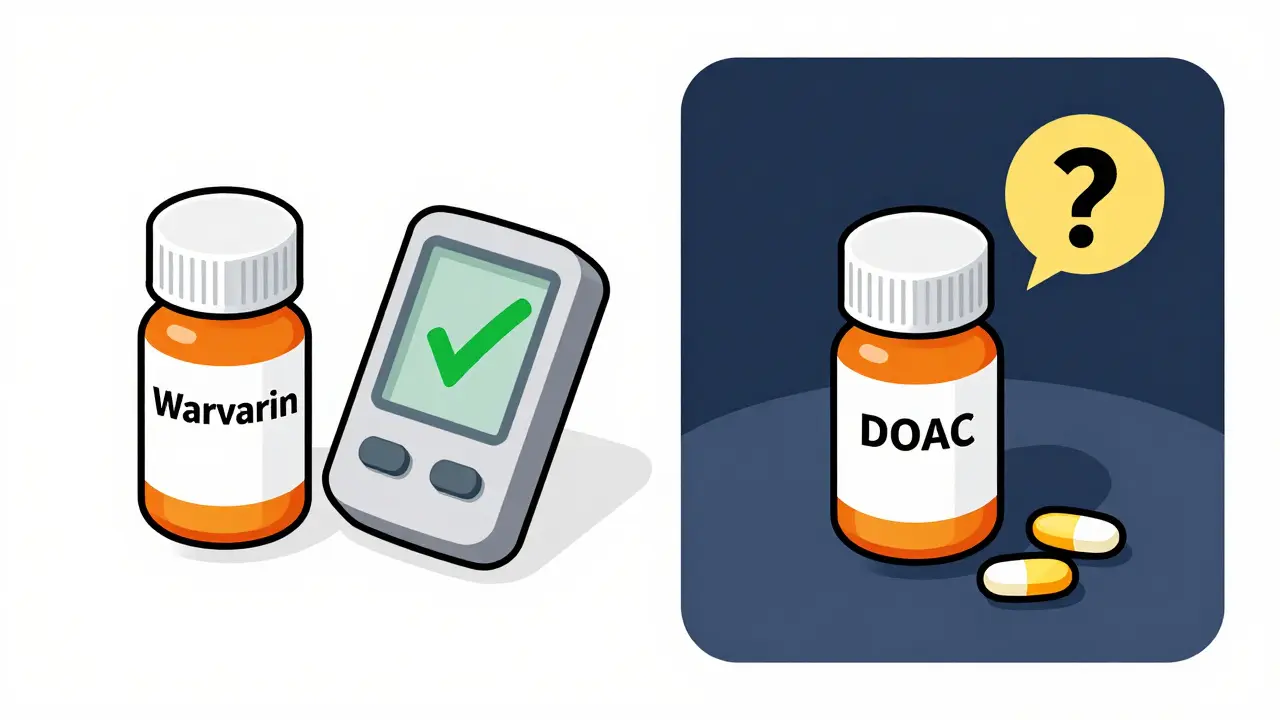
The big question isn't whether you *can* take them-it's whether you should, and if so, how much. The answer depends heavily on which blood thinner you are on. If you are on Warfarin is an older vitamin K antagonist anticoagulant that requires regular INR monitoring to maintain therapeutic levels between 2.0 and 3.0, you have a clear metric (INR) to watch. If you are on newer drugs called DOACs, you are flying blind without routine lab tests. This guide breaks down the real risks, the confusing data, and exactly what you need to ask your doctor before popping that next capsule.
The Science Behind the Bleeding Risk
To understand why doctors hesitate, we have to look at what these substances actually do. Your body stops bleeding through a complex cascade involving clotting factors and platelets. Platelets are tiny cell fragments that stick together to plug leaks in your blood vessels.
Fish oil contains EPA and DHA, two types of omega-3 fatty acids. At high doses, these fats interfere with platelet function. They reduce the production of thromboxane A2, a chemical signal that tells platelets to clump up. Think of it like putting a light coating of oil on a sticky surface; the platelets slide past each other instead of sticking firmly. This is a mild antiplatelet effect.
Anticoagulants work differently. Direct Oral Anticoagulants (DOACs) are modern blood thinners like apixaban, rivaroxaban, dabigatran, and edoxaban that directly inhibit specific clotting factors (IIa or Xa) without requiring routine monitoring block the proteins that create the fibrin mesh holding a clot together. Warfarin blocks the liver’s ability to make those same proteins using Vitamin K.
When you combine an agent that stops platelets from sticking (fish oil) with an agent that stops the clotting mesh from forming (warfarin or DOACs), you get a "double hit" on your hemostasis system. The result? If you get cut, you might bleed longer than usual. In severe cases, this can lead to internal bleeding or bruising from minor bumps.
Warfarin and Fish Oil: What the Data Says
If you are on Warfarin, you are likely familiar with the anxiety of your INR test results. The goal is usually to keep your INR between 2.0 and 3.0. Too low, and you risk clots. Too high, and you risk bleeding.
Here is where the medical literature gets messy. For years, package inserts for Warfarin warned broadly against botanical products due to potential bleeding risks. WebMD classifies the interaction as "moderate." However, clinical trials tell a more nuanced story.
A pivotal study published in *Nutrients* in 2016 analyzed data from over 600 patients. One group took placebo, another took 4 grams of omega-3 daily alongside their Warfarin. After nine months, there was no significant increase in major bleeding events or changes in long-term INR control in the fish oil group. This suggests that for many people, standard to high-dose fish oil is safe with Warfarin.
But don’t throw caution to the wind just yet. Smaller studies and expert guidelines still flag the risk. The UC San Diego Anticoagulation Clinic explicitly lists fish oil under "Increased Risk of Bleeding due to Antiplatelet Effect." Their protocol is strict: check your INR within 3 to 5 days of starting or stopping fish oil, then weekly until stable.
The consensus among experts like Dr. Larry Saslow of UCSF is that the dose matters immensely. Below 3 grams of combined EPA/DHA per day, the risk is minimal. Above 3 grams, the bleeding risk increases substantially. Since most over-the-counter capsules contain only 300mg to 1000mg of omega-3s, you would need to swallow several pills to hit that danger zone. But if you are taking prescription-strength omega-3s, you are already in the high-risk category.
| Medication Class | Monitoring Method | Evidence Quality | Risk Level |
|---|---|---|---|
| Warfarin | Regular INR blood tests | High (Multiple large trials) | Moderate (Dose-dependent) |
| DOACs (Apixaban, Rivaroxaban, etc.) | Clinical observation (No routine labs) | Low (Few specific studies) | Unknown/Theoretical Moderate |
The DOAC Blind Spot: Apixaban, Rivaroxaban, and More
This is the trickiest part of the conversation. If you take Apixaban is a Factor Xa inhibitor commonly prescribed for atrial fibrillation and stroke prevention, known for having a lower bleeding risk compared to warfarin, Rivaroxaban is another Factor Xa inhibitor often taken once daily, requiring consistent dosing timing relative to meals depending on dosage, or Dabigatran is a direct thrombin inhibitor that works by blocking the final step in the coagulation cascade, you probably haven’t had a blood draw in months. That’s the beauty of DOACs-they are predictable enough that you don’t need constant INR checks.
But that predictability becomes a vulnerability when you add supplements. Because you aren’t checking your blood chemistry regularly, you won’t know if your fish oil is pushing your bleeding tendency into the red zone until you see a problem-like a nosebleed that won’t stop or unexplained bruising on your legs.
As of 2023, there are virtually no major clinical trials specifically studying the interaction between fish oil and DOACs. Most warnings are theoretical, based on the mechanism of action. The MedShadow Foundation cautions that while fish oil has mild blood-thinning properties, the lack of data means we must assume similar risks apply as with Warfarin. The Institute for Safe Medication Practices classifies this as a moderate risk requiring monitoring, even if that monitoring is visual rather than laboratory-based.
If you are on a DOAC, the rule is simpler but stricter: keep your fish oil dose low (under 2 grams of EPA/DHA daily) and watch your body closely. Do not assume safety just because your drug doesn’t require lab tests.
Dosing Matters: How Much Is Too Much?
Not all fish oil is created equal, and not all doses carry the same risk. The American Heart Association generally recommends 1 gram of EPA/DHA daily for patients with coronary heart disease. This dose is widely considered safe even with anticoagulants, provided your INR is stable (for Warfarin users).
The danger zone starts creeping in above 3 grams daily. At this level, the antiplatelet effects become clinically significant. Here is a quick breakdown of what to look for on your bottle:
- Standard OTC Capsules: Often list "1000mg Fish Oil" on the front, but the back label reveals only 300mg of actual EPA/DHA. You would need to take 10 of these to hit the 3g threshold. This is rarely dangerous unless you are also taking aspirin or NSAIDs.
- Prescription Omega-3s: Drugs like Vascepa (icosapent ethyl) or Lovaza deliver high concentrations of purified EPA or mixed EPA/DHA. These easily exceed 3 grams daily. If you are on Warfarin or a DOAC, you must be under strict medical supervision when taking these.
- Krill Oil: Contains omega-3s bound to phospholipids. While some argue it has less impact on bleeding, the data is insufficient to declare it safer than fish oil. Treat it with the same caution.
Remember, food sources count too. Eating salmon twice a week adds roughly 2-3 grams of omega-3s to your diet. If you are eating fatty fish regularly and taking high-dose supplements, you are stacking the deck against your clotting system.
Red Flags: When to Call Your Doctor
Since you might not have frequent lab tests, you need to become your own monitor. Watch for these signs that your combination of meds and supplements is causing issues:
- Prolonged Bleeding: Cuts from shaving or cooking that take more than 10 minutes to stop oozing.
- Easy Bruising: Large bruises appearing after minor bumps you barely remember.
- Nosebleeds: Frequent or hard-to-stop epistaxis.
- Gum Bleeding: Blood in your saliva after brushing teeth.
- Dark Stools: Black, tarry stools can indicate gastrointestinal bleeding, a serious side effect of anticoagulants.
If you notice any of these, do not just stop the fish oil and hope for the best. Contact your healthcare provider. They may need to adjust your anticoagulant dose or order urgent labs to check your status.
Safer Alternatives and Mitigation Strategies
If you love the idea of omega-3s but your doctor says the risk is too high, you have options. Not all healthy fats affect platelets the same way.
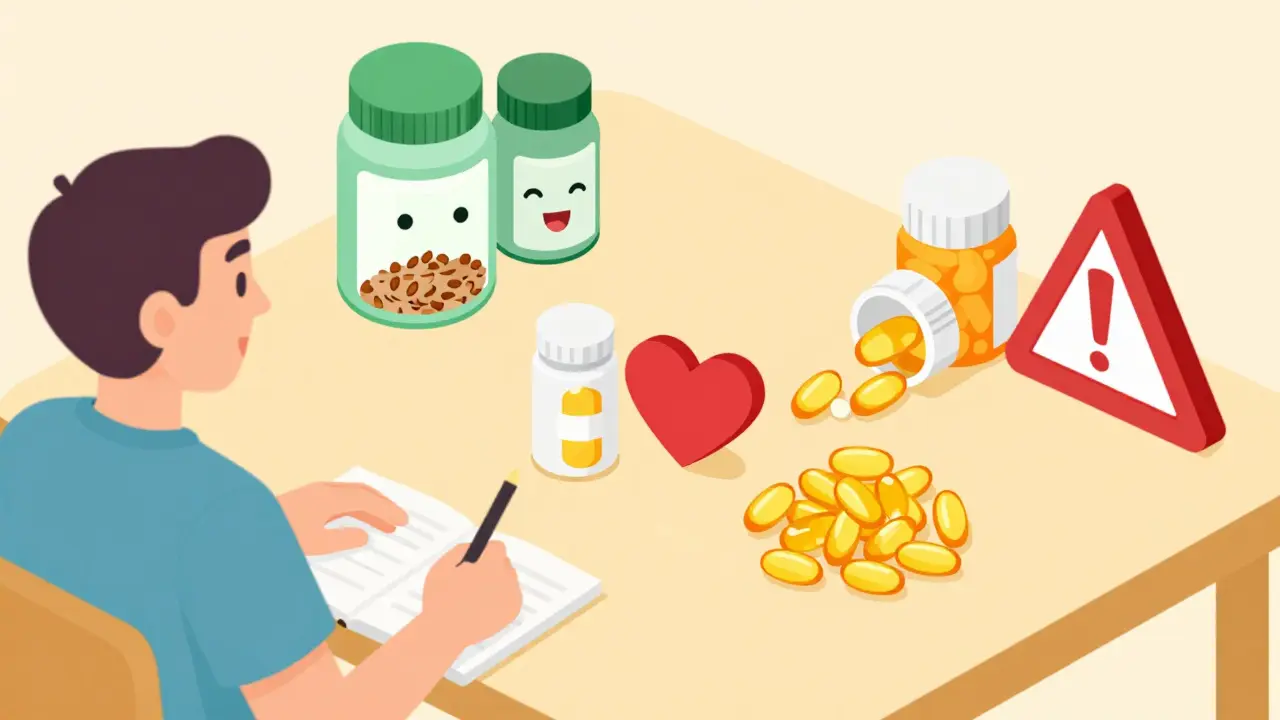
Dr. Saouma from the MedShadow Foundation suggests looking at plant-based omega-3 sources. Flaxseed oil, hemp seed oil, and walnut oil are rich in ALA (alpha-linolenic acid). While ALA converts poorly to EPA and DHA in the human body, it does not carry the same potent antiplatelet warning labels as marine-derived omega-3s. These oils can support general health without significantly interfering with your blood thinners.
If you insist on fish oil, try these mitigation strategies:
- Stick to Low Doses: Keep total EPA/DHA intake below 2 grams per day.
- Take With Food: This reduces gastrointestinal side effects like heartburn, which affects nearly 40% of users.
- Freeze Your Capsules: A simple trick to prevent the dreaded "fish burps" and improve tolerance.
- Choose Third-Party Tested Brands: The FDA does not pre-approve supplements. Look for seals from USP, NSF, or ConsumerLab to ensure the potency matches the label and that the oil is free from mercury and PCBs.
Next Steps for Patients
Don’t guess. The gap between "safe" and "dangerous" is narrow when mixing supplements with life-saving medications. Here is your action plan:
- List Everything: Write down every supplement you take, including the exact milligram amount of EPA and DHA.
- Talk to Your Pharmacist: Pharmacists are medication experts. Ask them specifically: "Does my current dose of fish oil interact with my [Warfarin/Apixaban/etc.]?"
- Establish a Baseline: If you are on Warfarin, get your INR checked before starting fish oil. Recheck in 3-5 days.
- Monitor Visually: If you are on a DOAC, inspect your skin daily for new bruises and watch for gum bleeding.
The goal is to enjoy the benefits of omega-3s without compromising the protection your blood thinner provides. With careful dosing and open communication with your care team, you can often find a safe middle ground.
Can I take fish oil if I am on Eliquis (apixaban)?
Yes, but with caution. There are no specific clinical trials proving the interaction between fish oil and apixaban, but theoretically, high doses of fish oil (above 3g daily) could increase bleeding risk due to its mild antiplatelet effects. Stick to low doses (under 2g EPA/DHA daily) and monitor for unusual bruising or bleeding. Always consult your doctor first.
Does fish oil raise or lower INR in Warfarin patients?
Fish oil does not directly affect Vitamin K metabolism, so it doesn't typically cause dramatic swings in INR like dietary changes do. However, by inhibiting platelet function, it can increase bleeding time even if your INR remains stable. Some studies show no change in INR, while others suggest slight increases. Monitoring is essential when starting or stopping fish oil.
What is the maximum safe dose of fish oil with blood thinners?
Most experts consider doses up to 2-3 grams of combined EPA and DHA per day to be relatively safe for most patients on anticoagulants, provided they are monitored. Doses exceeding 3 grams daily significantly increase the risk of bleeding and should only be taken under strict medical supervision.
Are there safer alternatives to fish oil for heart health?
Plant-based oils like flaxseed, hemp, and walnut oil provide alpha-linolenic acid (ALA), an omega-3 fatty acid that has less impact on platelet aggregation than EPA and DHA. While they don't convert efficiently to the potent marine forms, they offer cardiovascular benefits with a potentially lower bleeding risk profile for those on anticoagulants.
Should I stop taking fish oil before surgery if I am on blood thinners?
Absolutely. Surgeons and anesthesiologists typically recommend stopping all non-essential supplements, including fish oil, at least 7-14 days before any surgical procedure. This allows your platelet function to return to normal, reducing the risk of excessive bleeding during and after surgery. Always follow your surgeon's specific instructions.
Aditya Singh
June 15, 2026 AT 08:53It is fascinating to observe the pharmacokinetic interplay between omega-3 fatty acids and anticoagulant therapy. The distinction between Warfarin's vitamin K antagonism and DOACs' direct factor inhibition creates a unique risk profile for supplement interactions. We must consider that while platelet aggregation is mildly inhibited by EPA/DHA, the synergistic effect with thrombin or Factor Xa inhibitors remains largely theoretical in clinical literature. This necessitates a cautious approach to dosing.
Lee Coates
June 16, 2026 AT 15:45Another day, another scare tactic from the medical industrial complex trying to sell you more tests instead of just letting people live their lives. Fish oil has been around forever and nobody died until the lawyers got involved. Typical US healthcare nonsense where they treat every supplement like it's poison because they want you dependent on their expensive monitoring protocols. :P
Brett Webster
June 18, 2026 AT 14:39I appreciate the detailed breakdown here. As someone who manages patients on both Warfarin and DOACs, I can confirm that the 'blind spot' with DOACs is real and concerning. Without INR monitoring, we rely entirely on patient vigilance. I always advise my patients to keep their fish oil intake under 2 grams of combined EPA/DHA if they are on Eliquis or Xarelto. It’s not about fear; it’s about managing the unknown variables in hemostasis. If you see unexplained bruising, stop the supplement immediately and call your provider.
Miranda River
June 19, 2026 AT 15:47look i dont know much about science but my mom takes fish oil and she bleeds from her gums all the time so clearly this stuff is dangerous right? its probably the mercury or something bad in the water. why do doctors let us take these pills if they are so risky? its all a big conspiracy to make us sick so we buy more meds. also typos happen when u type fast lol
shreya sinha
June 21, 2026 AT 02:30It is truly disheartening to witness the sheer negligence displayed by individuals who presume to self-medicate without consulting a qualified medical professional, thereby disregarding the intricate biochemical pathways that govern human coagulation and exposing themselves to potentially catastrophic hemorrhagic events which could have been easily avoided through simple adherence to established clinical guidelines and respectful dialogue with one's healthcare provider regarding the precise dosage and potential contraindications of such supplements.
Callie Skipper
June 23, 2026 AT 01:13i just eat salmon twice a week and never take pills for it feels way better than swallowing capsules anyway
Ganesh Honikol
June 23, 2026 AT 12:23Indeed, the consumption of whole food sources such as fatty fish provides a natural and regulated intake of omega-3 fatty acids which is generally considered safer than high-dose supplementation, especially for those on anticoagulants. It is important to remember that the body processes nutrients from food differently than concentrated extracts, and thus the risk of sudden spikes in antiplatelet activity is significantly lower. One should always prioritize a balanced diet rich in ALA from plant sources like flaxseeds and walnuts as a complementary strategy to maintain cardiovascular health without compromising hemostatic balance. :)
Sherry Wheeler
June 23, 2026 AT 20:06Oh my goodness, this is exactly what I needed to hear! I was so worried about starting fish oil for my joints while being on Apixaban. The idea that I have to watch for bruises is scary but empowering at the same time. It makes me feel like I am taking control of my own destiny rather than just blindly following orders. Thank you for shedding light on this hidden danger! I will definitely check my labels today.
Brandon Brodsky
June 24, 2026 AT 06:03Let me guess, you're one of those people who thinks reading a blog post makes you a doctor? Please. The data is messy because biology is messy. But sure, go ahead and play roulette with your blood clotting factors. I'm sure your pharmacist will be thrilled to explain why your nosebleed won't stop. Classic.
Talilla Bailey
June 26, 2026 AT 02:57We must remain vigilant and proactive in our health management strategies. It is imperative that we respect the boundaries set by medical professionals and adhere strictly to prescribed dosages. Let us collaborate to ensure safety and well-being for all. Do not ignore the signs your body gives you. Stay strong and stay informed.
AnneKatherine Stiekes
June 27, 2026 AT 20:54i think everyone should just talk to their doctor before mixing anything no need to panic but good info here
Emily Barnhill
June 29, 2026 AT 16:34Listen up. You are putting yourself at risk by ignoring these warnings. I don't care if you feel fine now. Bleeding risks are real and silent until it's too late. Check your doses. Stop taking random supplements without approval. Your health is not a game. Get educated and get compliant. I am saying this because I care about your survival.