Why generic prescribing isn’t just about saving money
When you write a prescription for atorvastatin instead of Lipitor, you’re not just cutting costs-you’re making a clinical decision that affects how patients take their medicine, how often they refill it, and even whether they end up back in the hospital. Generic prescribing isn’t a cost-cutting trick. It’s a proven, evidence-based standard that works for the vast majority of patients. And yet, many clinicians still hesitate. Why? Because they’ve heard stories. A patient said their generic thyroid med didn’t work. Someone had a seizure after a switch. A pharmacist warned about a modified-release pill that didn’t match the brand. These aren’t myths. They’re real concerns. But they’re also exceptions-not the rule.
What exactly is generic prescribing?
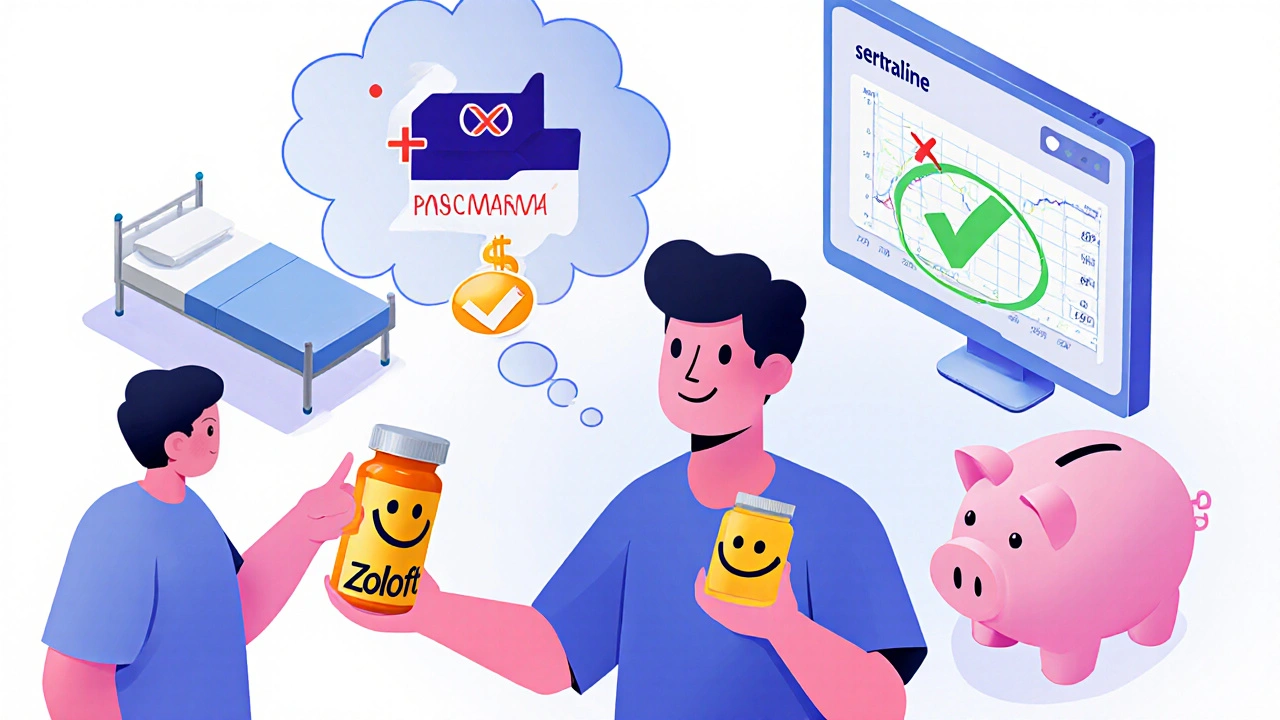
Generic prescribing means writing the prescription using the International Non-proprietary Name (INN)-the official, non-brand name of the active ingredient. So instead of writing ‘Lipitor 20mg,’ you write ‘atorvastatin 20mg.’ The same goes for omeprazole instead of Losec, sertraline instead of Zoloft, metformin instead of Glucophage. This isn’t new. The World Health Organization started the INN program in 1950 to bring clarity to drug names worldwide. Today, 193 countries use it. In England, NHS guidelines say 90% of prescriptions should be generic. In the U.S., the FDA requires generics to match the brand in active ingredient, strength, dosage form, and route of administration. They must also prove they’re bioequivalent-meaning they deliver the same amount of drug into the bloodstream within 80-125% of the brand’s rate. That’s not a guess. It’s science.
How much money do we actually save?
The numbers are staggering. Generic drugs cost, on average, 80-85% less than their brand-name equivalents. In the NHS, switching from branded Lipitor to generic atorvastatin saves about £27.50 per patient per month. Omeprazole drops from £15 to £1.80. That’s not a rounding error-it’s thousands of pounds saved across a single practice. In 2022, generic medicines accounted for 89.7% of all prescription items dispensed in England, but only 26% of total drug spending. That gap? That’s the savings. The American College of Physicians estimates generic prescribing could save the U.S. healthcare system $158 billion a year. The Generic Pharmaceutical Association says generics saved $2.2 trillion between 2009 and 2019. That’s not theoretical. That’s real money flowing back into the system-money that can fund more screenings, more mental health services, more time with patients.
When should you stick with the brand?
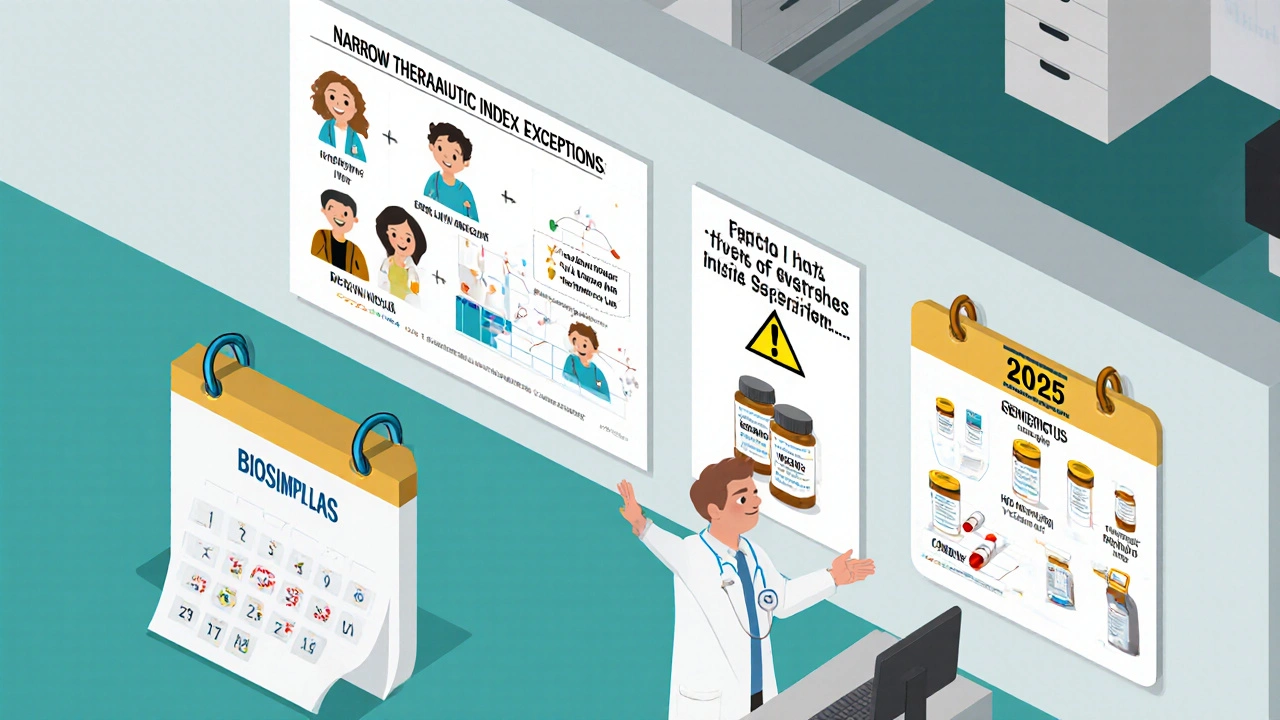
Not every drug is the same when switched. There are three clear exceptions, backed by NHS England’s British National Formulary (BNF) and the MHRA:
- Narrow therapeutic index drugs-where small changes in blood levels can cause big problems. These include carbamazepine, phenytoin, digoxin, levothyroxine, and warfarin. For warfarin, even a slight shift in INR can mean bleeding or clotting. For levothyroxine, a 10% change in absorption can throw thyroid levels out of balance. That’s why many clinicians stick to one brand for these, especially if the patient is stable.
- Modified-release formulations-like theophylline SR or certain extended-release opioids. These rely on complex coatings or matrices to release the drug slowly. Not all generics replicate this perfectly. Pharmacists report that 41% of them have had to explain to patients why a generic version didn’t work the same way. The formulation matters.
- Biologics and biosimilars-insulin, TNF inhibitors, monoclonal antibodies. These are complex molecules made from living cells. The MHRA and FDA both require these to be prescribed by brand name to avoid automatic substitution. Switching between biosimilars and originators can trigger immune reactions. That’s not speculation-it’s in the regulatory guidance.
That’s about 2% of all prescriptions. The rest? Safe to prescribe generically.
Do generics really work as well?
Yes-98% of the time. The FDA and EMA don’t approve generics unless they’re bioequivalent. That means clinical trials prove they work the same way in the body. A 2017 JAMA study found patients on generic blood pressure, cholesterol, and diabetes meds had 15% fewer hospitalizations than those on brand-name versions-because they could afford to take them. Generic prescribing improves adherence by 8-12%, according to the American College of Physicians. A 2021 study of 3,200 patients showed that when doctors explained why they were switching to a generic, patient acceptance jumped from 67% to 89%. The biggest barrier? Perception. The nocebo effect-where expecting something to fail makes it fail-is responsible for up to 30% of reported differences in effectiveness. Patients think generics are weaker. They’re not. They’re the same drug, just cheaper.
What about epilepsy and thyroid patients?
These are the two areas where concerns are loudest. The American Epilepsy Society advises against multiple switches for patients on antiepileptic drugs. A 2018 meta-analysis found a 1.5-2.3% increase in seizure recurrence after switching between generic manufacturers. That’s small-but real. For thyroid patients, levothyroxine is the most common culprit. Some brands use different fillers or coatings that affect absorption. That’s why many endocrinologists prefer to keep patients on the same brand. But here’s the key: if a patient is stable on a generic, don’t switch them to a brand unless there’s a clear reason. And if you do switch, monitor TSH levels closely. Don’t assume the brand is better. Assume consistency is better.
How to make generic prescribing stick
It’s not enough to write ‘metformin’ on the script. You need to manage expectations. The NHS recommends the ‘Explain, Empower, Engage’ approach:
- Explain: ‘This medicine has the same active ingredient as the one you were taking. It’s been tested to work exactly the same way.’
- Empower: ‘You’re saving about £12 a month. That’s enough for a week’s groceries or a bus pass.’
- Engage: ‘If you notice anything different-like a change in how you feel-let me know. We’ll check it out.’
Also, use your electronic prescribing system. Most now default to generic names. Set it up. Turn off brand-name suggestions unless absolutely necessary. Audit your prescribing every quarter. In practices that do this, generic rates hit 92-95% within six months.
What’s changing in 2025?
Regulators are getting smarter. The FDA’s GDUFA III, launched in 2023, now requires manufacturers to report any formulation changes that might affect absorption. The MHRA has added complex generics like glatiramer acetate to the brand-prescribing list because their manufacturing process is too sensitive to replicate reliably. By 2025, 75% of small-molecule drugs will have generics-but biologics? Only 40% will have biosimilars. That means more patients will be on expensive biologics for longer. The future of prescribing isn’t just about choosing generic over brand. It’s about choosing the right version for the right patient. That’s personalized prescribing. And it starts with knowing when to stick with the brand-and when to let go.
Bottom line: Prescribe generically, unless you have a clear reason not to
For 98% of your patients, generic prescribing is safer, cheaper, and just as effective. The exceptions exist, but they’re narrow and well-documented. Don’t let fear of rare side effects stop you from doing what works for most. Save money. Improve adherence. Reduce hospitalizations. And when you do switch, explain it. Patients don’t hate generics. They hate being left in the dark. If you tell them why, they’ll trust you. And that’s the real prescription.
Tina Dinh
November 30, 2025 AT 07:11Andrew Keh
December 1, 2025 AT 01:56Peter Lubem Ause
December 2, 2025 AT 17:50linda wood
December 3, 2025 AT 07:38LINDA PUSPITASARI
December 3, 2025 AT 10:04gerardo beaudoin
December 5, 2025 AT 02:10Latika Gupta
December 5, 2025 AT 07:00Sullivan Lauer
December 6, 2025 AT 10:28Richard Thomas
December 7, 2025 AT 10:04Steven Howell
December 8, 2025 AT 04:27Robert Bashaw
December 8, 2025 AT 12:31jamie sigler
December 10, 2025 AT 06:19