That burning sensation in your chest after a heavy meal isn't just discomfort; it's a signal that your body's internal valve is failing. Gastroesophageal reflux disease (GERD) affects roughly 20% of adults in the United States, turning simple meals into sources of anxiety and pain. While proton pump inhibitors (PPIs) are the go-to prescription for millions, they aren't a magic bullet without risks. Managing GERD effectively requires balancing powerful medication with specific, evidence-backed lifestyle shifts.
You might think swallowing a pill solves the problem, but understanding why acid rises in the first place helps you control it better. This guide breaks down how to use PPIs safely, what lifestyle changes actually work, and when to look beyond standard treatments.
Understanding GERD: More Than Just Heartburn
Acid reflux happens when stomach contents leak backward into the esophagus. In healthy individuals, the lower esophageal sphincter (LES) acts as a tight one-way valve. It relaxes to let food down and closes immediately to keep acid out. In GERD, this muscle weakens or relaxes at the wrong times, allowing highly acidic gastric juice-often with a pH between 1.5 and 3.5-to burn the sensitive lining of the esophagus.
The American College of Gastroenterology defines GERD not by occasional indigestion, but by symptoms occurring at least twice a week. If you experience heartburn or regurgitation regularly, it’s no longer just "indigestion." It’s a chronic condition that, if left untreated, can lead to serious complications like Barrett’s esophagus, a precancerous change in the esophageal tissue affecting 10-15% of long-term sufferers.
| Symptom | Frequency in GERD | Note |
|---|---|---|
| Heartburn | 90% | Burning sensation in the center of the chest |
| Regurgitation | High | Sour or bitter taste in the mouth |
| Chronic Cough | 50-75% | Often worse at night or after eating |
| Dysphagia | 10-20% | Difficulty swallowing; indicates potential stricture |
Lifestyle Management: The First Line of Defense
Before reaching for medication, guidelines recommend lifestyle modifications. These aren't vague suggestions like "eat healthier." They are specific mechanical and dietary adjustments that reduce pressure on the LES and limit acid production.
- Weight Loss: Excess abdominal fat pushes up against the stomach, forcing acid upward. Losing just 5-10% of your body weight can reduce symptoms by 50%. For someone weighing 200 pounds, that’s a 10-20 pound loss making a massive difference.
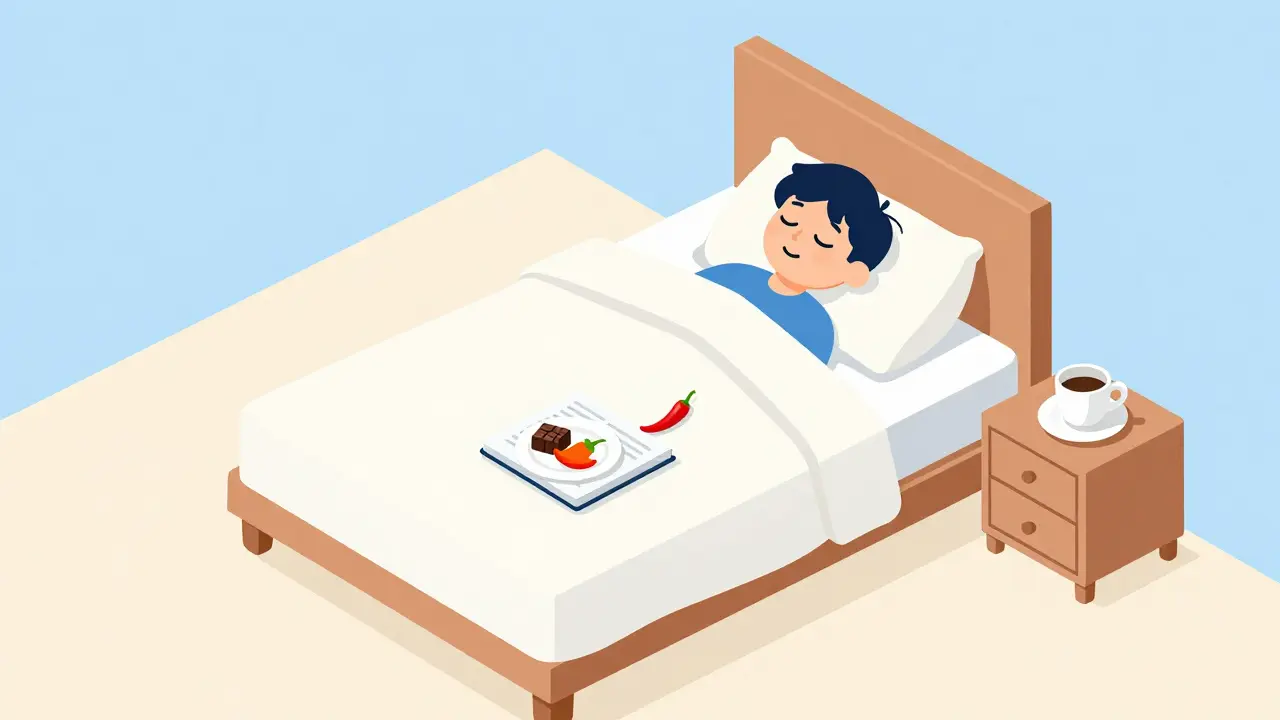
- Timing Matters: Gravity helps keep acid down. Eating within 2-3 hours of bedtime increases nocturnal acid exposure significantly. Finish dinner early, and avoid late-night snacks entirely.
- Elevate Your Head: Propping yourself up with pillows often doesn't work because it bends your waist, increasing abdominal pressure. Instead, elevate the head of your bed by 6-8 inches using blocks or a wedge pillow. This uses gravity to keep acid in the stomach while you sleep.
- Identify Triggers: Common culprits include coffee, tomatoes, chocolate, alcohol, and spicy or fatty foods. Studies show eliminating these exacerbates symptoms in 70-80% of patients. Keep a food diary for two weeks to pinpoint your personal triggers.
Many people struggle with social eating, but planning ahead helps. If you’re going out, choose grilled chicken over fried fish, and skip the dessert if it involves chocolate or citrus. Small, consistent changes yield better results than strict, short-term diets that fail.
PPIs: Potent Relief with Hidden Risks
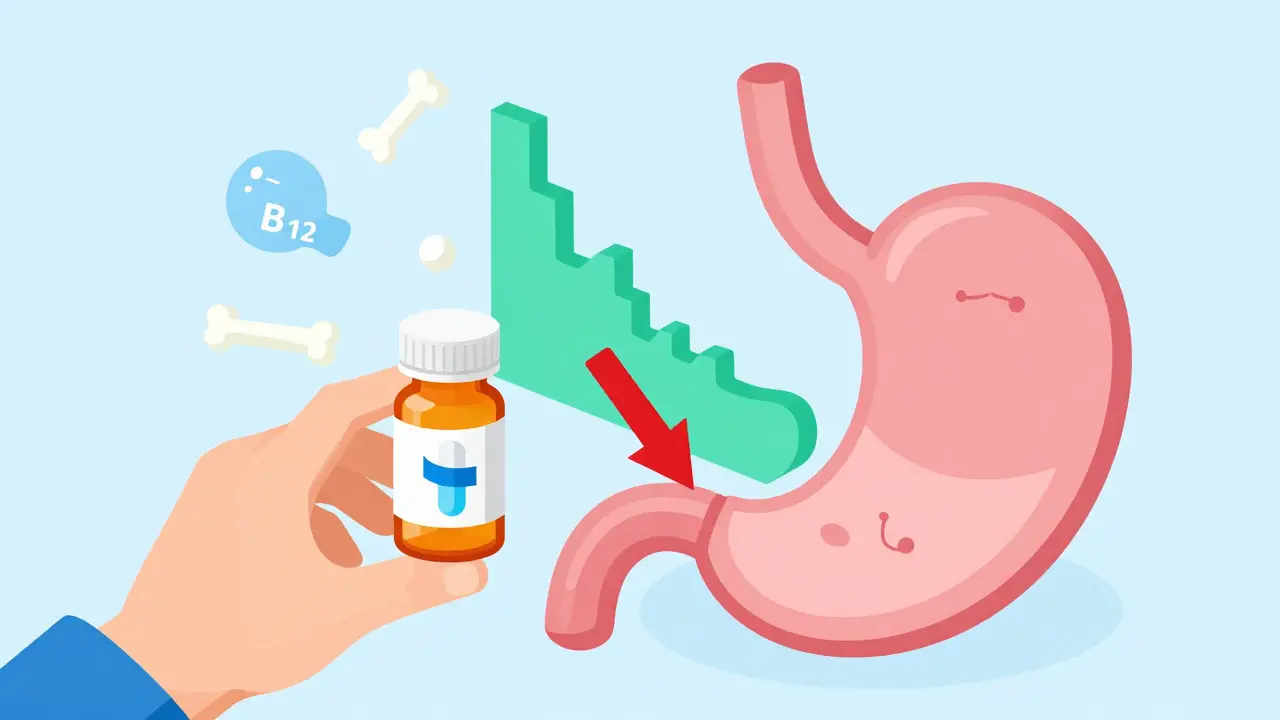
When lifestyle changes aren’t enough, doctors prescribe Proton Pump Inhibitors (PPIs) such as omeprazole, pantoprazole, and esomeprazole. Unlike antacids that neutralize existing acid, PPIs block the enzyme in stomach cells that produces acid. They reduce acid secretion by 90-98%, allowing inflamed esophageal tissue to heal.
PPIs are remarkably effective. Clinical trials show healing rates of 70-90% for erosive esophagitis, compared to 50-60% for H2 blockers like famotidine. However, their power comes with caveats. You must take them correctly: 30-60 minutes before your first meal of the day. Taking them with food or at random times drastically reduces their effectiveness.
Long-term use raises concerns. The FDA has warned that high-dose, long-term PPI therapy (three years or more) may increase the risk of hip fractures in older adults by 35%. Other risks include vitamin B12 deficiency, magnesium depletion, and a higher susceptibility to certain infections like Clostridium difficile. A study published in JAMA Internal Medicine found prolonged use associated with a 20-50% increased risk of enteric infections.
The goal is to use the lowest effective dose for the shortest time necessary. After 8 weeks of treatment, reevaluate. Can you step down to an H2 blocker? Can you manage with on-demand therapy? Don’t stay on daily PPIs indefinitely without medical supervision.
Avoiding the Rebound Effect
One of the biggest challenges in stopping PPIs is rebound acid hypersecretion. When you stop taking a PPI abruptly, your stomach may produce even more acid than before, causing severe symptoms that make you feel like you need the drug again. This affects about 44% of users who try to quit cold turkey.
To avoid this, taper off gradually. Work with your doctor to reduce the dose slowly over 4-8 weeks. Many doctors bridge the gap by switching you to an H2 blocker like famotidine during the taper. This allows your body to adjust without the shock of sudden acid spikes.
Newer Treatments and Future Directions
If PPIs don’t work or cause too many side effects, other options exist. In 2023, the FDA approved Vonoprazan (Voquezna), a potassium-competitive acid blocker. It’s the first new class of acid-suppression drug in 30 years, showing faster and sometimes more effective healing than traditional PPIs in some studies.
For severe cases unresponsive to medication, surgical options like fundoplication or endoscopic procedures like the LINX device offer long-term solutions. Fundoplication wraps the top of the stomach around the LES to strengthen it, with a 90% success rate at 10 years. Newer techniques like transoral incisionless fundoplication (TIF) allow for less invasive repairs, with 85% of patients reporting improved quality of life at two-year follow-ups.
Personalized medicine is also emerging. AI-powered apps are beginning to predict individual food triggers with high accuracy, helping patients tailor their diets precisely. Combined with digital monitoring, these tools aim to create a "GERD management ecosystem" that reduces reliance on daily medication.
When to See a Doctor Immediately
Not all heartburn is harmless. Seek immediate medical attention if you experience:
- Difficulty swallowing (dysphagia)
- Unintentional weight loss
- Vomiting blood or material that looks like coffee grounds
- Black, tarry stools
- Chest pain that radiates to the arm, neck, or jaw (could be heart-related)
These "alarm features" suggest complications like strictures, ulcers, or even cancer. An endoscopy may be needed to visualize the esophagus and take biopsies.
How long does it take for PPIs to start working?
PPIs typically begin reducing acid production within 1-4 hours, but maximum effect takes 2-5 days of consistent use. Full healing of esophageal inflammation can take 4-8 weeks.
Can I stop taking PPIs suddenly?
No. Stopping abruptly can cause rebound acid hypersecretion, leading to worse symptoms. Taper off gradually over 4-8 weeks under medical guidance, often bridging with H2 blockers.
What are the best lifestyle changes for GERD?
The most effective changes include losing 5-10% of body weight if overweight, avoiding eating 2-3 hours before bed, elevating the head of your bed by 6-8 inches, and eliminating personal trigger foods like caffeine, alcohol, and spicy dishes.
Is GERD curable?
GERD is a chronic condition, but it can be managed effectively. Some patients achieve long-term remission through significant weight loss and strict lifestyle adherence. Surgical options like fundoplication can provide durable relief for those who don’t respond to medication.
What is Vonoprazan, and how is it different from PPIs?
Vonoprazan is a potassium-competitive acid blocker (P-CAB) approved in 2023. Unlike PPIs, which require activation in acidic environments, Vonoprazan works directly on the proton pump regardless of pH, offering faster and potentially more consistent acid suppression.