Most people with diabetes expect side effects like low blood sugar or sore injection sites-but an insulin allergy is something else entirely. It’s rare, often misunderstood, and can be mistaken for a routine irritation. But when your skin breaks out in hives right after an injection, or your throat starts swelling hours later, this isn’t just a bad day at the pump. This is your immune system reacting-and it needs urgent, specific attention.
What an Insulin Allergy Really Looks Like
Insulin allergy isn’t one thing. It shows up in different ways, at different times, and affects different people. About 2.1% of insulin users report some kind of immune reaction, according to the Independent Diabetes Trust. Most of those-around 97%-are localized. That means the reaction stays right where the needle went in: redness, swelling, itching, or a tender lump under the skin. These usually pop up 30 minutes to six hours after the shot and fade within a day or two.
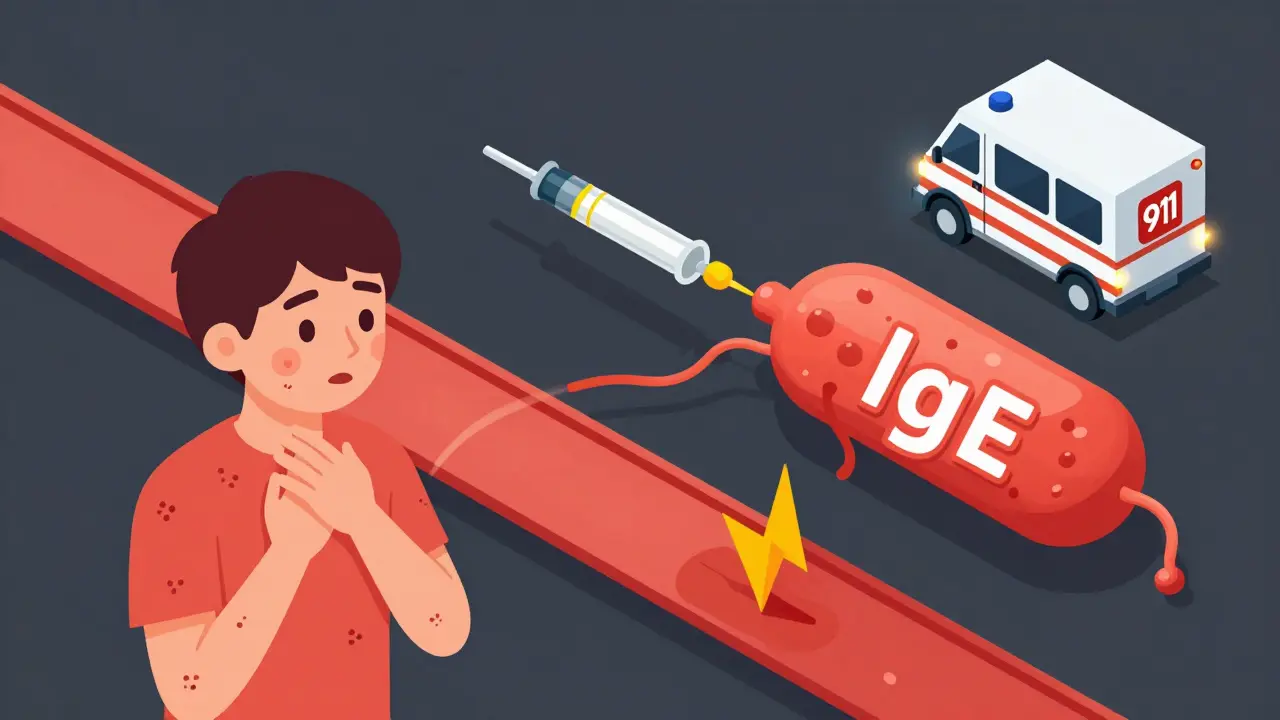
But then there’s the other 3%. These are the scary ones. Systemic reactions can hit within minutes: hives all over your body, swelling of the lips or tongue, trouble breathing, dizziness, or a sudden drop in blood pressure. These aren’t just uncomfortable-they can be life-threatening. About 40% of systemic reactions progress to anaphylaxis, which demands immediate emergency care.
And here’s something many don’t realize: you can develop an allergy even after using the same insulin for years. A delayed reaction can appear after 10 or more years of steady use. It might start as joint pain, muscle aches, or bruising that lasts for weeks. This isn’t a skin rash-it’s your T-cells going rogue, a completely different immune mechanism than the IgE-driven reactions that happen right after injection.
What’s Actually Causing It?
It’s not always the insulin itself. Modern human insulin is highly purified, so the protein molecule is less likely to trigger a reaction than the old animal insulins from the 1930s. But additives? Those are the usual suspects.
Metacresol and zinc are common preservatives and stabilizers in insulin formulations. Humalog, for example, has higher levels of metacresol than other brands. Some people react to these chemicals, not the insulin. That’s why switching insulin types often works-it’s not about changing the hormone, it’s about changing the packaging.
And yes, even insulin pens or syringes can contribute. Some reactions are linked to latex in older syringes or plasticizers in pen cartridges. It’s not just about what’s inside the vial-it’s about what’s touching your skin, your needle, your pump.
How to Tell the Difference
Not every itch or bump is an allergy. Common insulin side effects like sweating, trembling, or anxiety are signs of low blood sugar-not immune reactions. The NHS makes this clear: true allergies affect fewer than 1 in 100 users. So if you’re feeling shaky after a shot, check your glucose first. If it’s low, treat it. If it’s normal and you’re still breaking out in hives? That’s a red flag.
Timing matters. Immediate reactions (under 30 minutes) are IgE-mediated. Delayed reactions (2 to 24 hours) are T-cell driven. And if you notice bruising that takes 10 days to fade? That’s a delayed hypersensitivity pattern. These need different treatment. One isn’t just a milder version of the other-they’re different diseases with different rules.
What to Do If You React
Here’s the first rule: never stop insulin. Stopping insulin, even for a day, can trigger diabetic ketoacidosis-a medical emergency that kills faster than an allergic reaction. Call your diabetes team immediately. Don’t try to tough it out. Don’t Google symptoms. Don’t assume it’s just a rash.
For mild, localized reactions, antihistamines like cetirizine or loratadine can help. Topical corticosteroids, like flunisolide 0.05%, applied right after injection and again 4-6 hours later, reduce inflammation in delayed reactions. Some allergists recommend tacrolimus or pimecrolimus ointments, which calm the immune response without thinning the skin like steroids do.
For systemic reactions-hives, swelling, breathing trouble-call emergency services immediately. In Australia, that’s 000. Don’t drive yourself. Don’t wait. Anaphylaxis doesn’t wait. Epinephrine auto-injectors (like EpiPens) are not routinely prescribed for insulin allergy, but if you’ve had a previous systemic reaction, your allergist may recommend one as a precaution.
Testing and Diagnosis
Diagnosis isn’t guesswork. It’s science. Skin prick tests and intradermal testing are the gold standard. These aren’t painful-they’re quick. A tiny drop of insulin is placed under the skin to see if a reaction forms. Blood tests for specific IgE antibodies can confirm the reaction is immune-driven.
But here’s the catch: you need a specialist. A diabetes doctor alone can’t diagnose this. You need an allergist who’s worked with insulin reactions before. The most successful outcomes come from teams that include both. The American Academy of Allergy, Asthma & Immunology stresses this: close collaboration between diabetologist and allergologist is non-negotiable.
Management: What Actually Works
Switching insulin types works in about 70% of cases. Try a different brand, a different formulation, or even switch from a pen to a vial and syringe. Some patients react to preservatives in one brand but not another. For example, switching from Humalog to NovoLog or Lantus often resolves symptoms because the excipient profile is different.
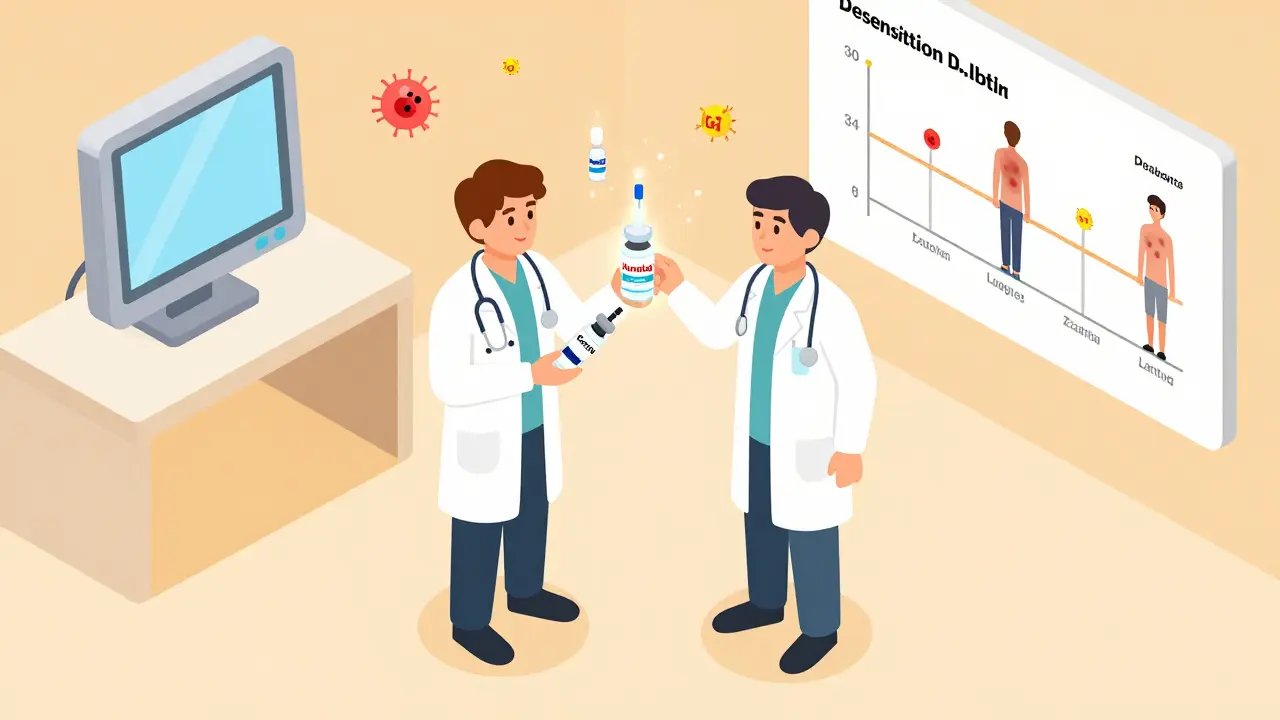
If that doesn’t work, specific immunotherapy is the next step. This isn’t a shot in the dark-it’s a structured, medically supervised process. Tiny, increasing doses of insulin are injected over weeks or months. The goal? Train your immune system to stop reacting. In one 2008 study, 66.7% of patients had complete symptom resolution. Another 33.3% saw major improvement. It’s not easy. It’s not fast. But it works.
For those who can’t tolerate insulin at all-rare, but possible-some type 2 patients have been successfully transitioned to oral medications like semaglutide or SGLT2 inhibitors. But for type 1 patients? Insulin is life. There’s no backup. That’s why desensitization is the only viable path forward.
Long-Term Outlook
Insulin allergy is rare, but it’s manageable. With the right team, the right testing, and the right plan, people continue insulin therapy for decades-even after a serious reaction. The key is early recognition and avoiding the trap of self-diagnosis.
Keep a log: when did the reaction happen? What insulin did you use? Was it a new vial? Did you switch pens? Did you have a cold or infection that day? Immune responses can be triggered by other stressors, and patterns emerge over time.
Future insulin formulations are getting better. Newer analogs are being designed with fewer immunogenic components. Continuous glucose monitors are helping doctors safely guide desensitization by catching subtle glucose shifts during treatment. We’re moving toward personalized insulin therapy-not just for blood sugar control, but for immune safety too.
What matters most is this: you’re not alone. You’re not broken. You’re not failing. You’re dealing with a rare, complex reaction-and there’s a path forward. It starts with talking to your care team. Not waiting. Not ignoring. Not guessing.
Can you develop an insulin allergy after years of using it without problems?
Yes. Delayed hypersensitivity reactions can appear even after 10 or more years of steady insulin use. These aren’t caused by IgE antibodies like immediate reactions, but by T-cells that suddenly start reacting to the insulin or its additives. Symptoms include joint pain, muscle aches, or slow-healing bruising at injection sites. This is why long-term insulin users should never ignore new skin or systemic symptoms.
Is insulin allergy the same as an infection at the injection site?
No. An infection shows signs like increasing redness, warmth, pus, or fever. An allergic reaction is usually itchy, swollen, and doesn’t get warmer. Infections are bacterial and need antibiotics. Allergic reactions are immune-driven and need antihistamines, steroids, or immunotherapy. If you’re unsure, get it checked-don’t assume it’s one or the other.
Can I switch to a different insulin to avoid an allergy?
Yes, and it works in about 70% of cases. Different insulins use different preservatives, stabilizers, and manufacturing processes. For example, switching from Humalog (which has higher metacresol) to NovoLog or Lantus often resolves symptoms. Even changing from a pen to a vial and syringe can help if the issue is with the pen’s plastic or rubber components.
What should I do if I have trouble breathing after an insulin injection?
Call emergency services immediately-in Australia, dial 000. Do not wait. Do not drive yourself. Trouble breathing, swelling of the throat or tongue, or a sudden drop in blood pressure are signs of anaphylaxis. This is life-threatening. If you have an epinephrine auto-injector, use it while waiting for help. But don’t rely on it alone-emergency responders are still needed.
Can I stop using insulin if I’m allergic to it?
No-not if you have type 1 diabetes. Stopping insulin leads to diabetic ketoacidosis, which can be fatal within hours. For type 2 patients, oral medications may be an option, but only under strict medical supervision. The goal isn’t to stop insulin-it’s to find a version your body tolerates. With proper testing and desensitization, most people can safely continue insulin therapy.
gemeika hernandez
March 17, 2026 AT 15:05So I had this weird rash after my insulin shot for like 3 weeks and I thought it was just dry skin. Turns out? T-cell reaction. No one told me this could happen after 12 years of using the same insulin. My endo just shrugged and said ‘it’s probably just irritation.’ No. It wasn’t. I had to go to an allergist on my own dime. They did the skin test and boom-positive for insulin. I switched from Humalog to Lantus and poof. Gone. Don’t let your doctor dismiss you. This isn’t ‘just a rash.’
Emily Hager
March 17, 2026 AT 15:28It is imperative to underscore, with the utmost gravity, that the pathophysiological mechanisms underlying delayed-type hypersensitivity to insulin are fundamentally distinct from those of immediate IgE-mediated anaphylaxis. The conflation of these two entities in public discourse is not merely misleading-it is clinically perilous.
Melissa Starks
March 19, 2026 AT 11:44OMG I FEEL YOU GEMEIKA!! I was terrified when I started getting these deep bruises that lasted for weeks-like, I thought I had leukemia or something. My mom cried. I cried. We Googled till 3am. Then I found this article and finally got my allergist to listen. They did the intradermal test and it was INSULIN. I switched to NovoLog and now I’m fine. I even started a little blog about it. If you’re reading this and you’re scared-you’re not alone. You’re not broken. You just need the right team. I’m rooting for you. 💖
Kal Lambert
March 19, 2026 AT 20:06Switching insulin brands fixed my reaction. No drama. No hospital. Just changed from Humalog to Fiasp. Done. If you’re having issues, talk to your endo about excipients-not just the insulin. It’s not always the hormone.
Gaurav Kumar
March 21, 2026 AT 01:23In India we don't have this problem because our insulin is made properly. No metacresol. No fancy chemicals. Just pure insulin. You Americans overthink everything. My cousin has type 1 and uses local insulin-no allergies, no tests, no panic. Just inject and live. Why make it complicated? 🇮🇳
David Robinson
March 21, 2026 AT 03:05So you're telling me people are allergic to a life-saving drug that's been around for 100 years? That's not an allergy-that's a failure of the medical system. Why aren't we just using animal insulin? It worked fine for decades before Big Pharma started adding preservatives to make more profit. This whole thing is a scam.
Jeremy Van Veelen
March 22, 2026 AT 12:44ANAPHYLAXIS. FROM INSULIN. I mean… HOW? I used to think diabetes was scary enough. But now? Now I’m terrified of the very thing that keeps me alive. I had a reaction last year. One minute I was fine. The next-swelling, wheezing, like my throat was being squeezed by invisible hands. I didn’t even know I was allergic. They said I was lucky I didn’t die. I still cry when I inject. This isn’t just a medical issue. It’s a psychological nightmare.
Andrew Mamone
March 23, 2026 AT 21:26Just want to say thank you to the author for writing this. I’ve been through desensitization. Took 8 months. 17 injections a week. Felt like a lab rat. But now? I’m on my third year on insulin without a single reaction. It’s not easy. But it works. And if you’re scared? Start with a specialist. Don’t wait. You got this. 🙌