When you’re managing a chronic condition like high blood pressure, diabetes, or asthma, the cost of medication doesn’t stop after a few months-it goes on for decades. And that adds up. A lot. For many people, the monthly pill bill becomes a silent stressor, forcing tough choices between medicine, food, or rent. But there’s a powerful, proven way to slash those costs: generic medications.
What Exactly Are Generic Drugs?
Generic drugs are the exact same as their brand-name cousins. Same active ingredient. Same dose. Same way of working in your body. The only real differences? The name on the bottle and the price tag. Generics hit the market after the original drug’s patent expires-usually after 20 years. Once that happens, other companies can make and sell the same medicine at a fraction of the cost. The U.S. Food and Drug Administration (FDA) doesn’t cut corners here. To get approved, a generic must prove it’s bioequivalent to the brand-name drug. That means it delivers the same amount of medicine into your bloodstream at the same rate. The FDA requires testing that shows the difference in absorption is within 80-125% of the brand. In plain terms? Your body can’t tell the difference. And yet, many people still hesitate. They worry generics are weaker, less reliable, or made with lower-quality ingredients. That’s a myth. The FDA inspects generic manufacturing facilities just as strictly as brand-name ones. In fact, many brand-name companies actually make their own generics under different labels. The science is clear: generics work just as well.How Much Money Can You Really Save?
Let’s get real about numbers. Take lisinopril, a common blood pressure medication. The brand version, Prinivil, can cost $40 to $50 a month. The generic? Around $4. That’s a 90% drop. Over a 10-year period, that’s $4,000 to $5,000 saved-just on one pill. For someone with type 2 diabetes taking metformin, the savings are even more dramatic. Brand-name Glucophage might cost $150 a month. Generic metformin? As low as $10. That’s $1,400 a year saved. Multiply that by 20 or 30 years of treatment, and you’re looking at $30,000 or more in lifetime savings. These aren’t hypotheticals. In 2020, generics made up 90% of all prescriptions filled in the U.S., but accounted for only 18% of total drug spending. That means Americans saved $338 billion that year alone by choosing generics over brand-name drugs. Over the past decade, the total savings from generics reached nearly $2.4 trillion.Why Cost Savings Lead to Better Health
Money isn’t just about budgets-it’s about adherence. When people can’t afford their meds, they skip doses. They cut pills in half. They stop taking them altogether. The CDC found that 25% of rural patients skip medications because of cost. That’s not just a financial problem-it’s a health crisis. Studies show patients on generic drugs are 18-22% more likely to stick with their treatment plan than those on brand-name versions. Why? Because they can actually afford to keep taking them. For chronic conditions, consistency is everything. Missing a dose of blood pressure medicine can spike your risk of stroke. Skipping insulin can land you in the ER. Generics don’t just save money-they save lives. Pharmacists who run Medication Therapy Management (MTM) programs report that when they switch patients to generics, adherence improves by 15-25%. That translates to fewer hospital visits, fewer complications, and lower overall healthcare costs. One study found that patients on generics had 20-30% fewer emergency room trips related to their chronic condition.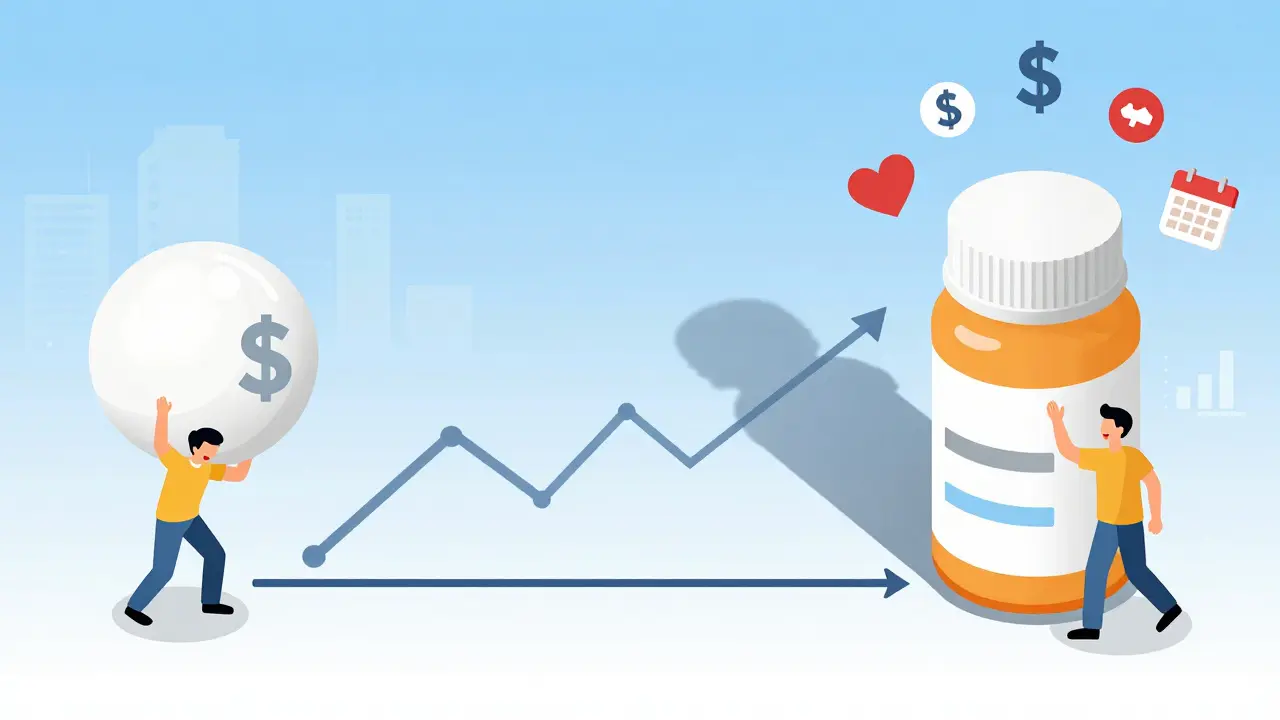
Real-World Impact: From India to Brazil
You don’t have to look far to see how powerful this is. In India, the widespread use of low-cost generic HIV drugs between 2005 and 2015 led to a 40% increase in treatment adherence and a 25% drop in deaths. In Brazil, government-backed policies pushing generic drugs for diabetes and hypertension increased access by 35% and cut related healthcare spending by $1.2 billion per year. These aren’t isolated cases. They’re proof that when cost barriers come down, health outcomes go up. And it’s not just low-income countries. In the U.S., patients in chronic care programs who switched to generics reported 30% lower out-of-pocket costs and 25% higher satisfaction with their treatment.What’s Holding People Back?
Despite all the evidence, many still avoid generics. Why? One big reason? Misinformation. Some believe generics are “second-rate.” Others think they cause side effects brand names don’t. In reality, any differences in how a drug feels are usually due to inactive ingredients-like fillers or dyes-not the medicine itself. These can rarely cause minor reactions in sensitive individuals, but they don’t affect how well the drug works. Another barrier? Insurance. Some plans still make patients pay more for generics if they’re not on the preferred list. Or they require prior authorization, creating delays. And some patients simply don’t know their options. A study found that when pharmacists took five minutes to explain generics to patients, acceptance rates jumped by 45%.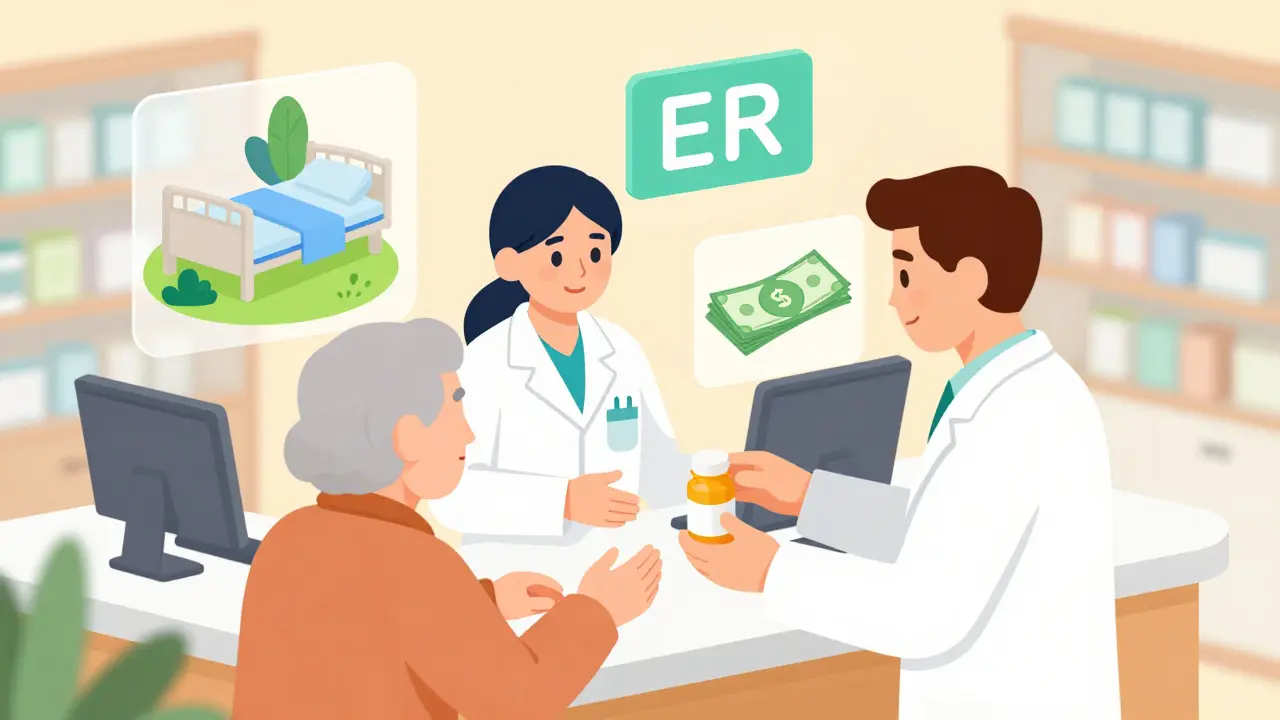
How to Maximize Your Savings
If you’re managing a chronic condition, here’s how to start saving today:- Ask your doctor or pharmacist: “Is there a generic version of this drug?”
- Check your insurance formulary. Many plans have tiered pricing-generics are usually Tier 1, meaning the lowest copay.
- Use mail-order pharmacies or discount programs like GoodRx. Even without insurance, generics can cost less than $10 a month.
- Ask about Medication Therapy Management (MTM). If you’re on Medicare Part D, you’re eligible for free consultations with a pharmacist to review all your meds and find cheaper alternatives.
- Don’t assume your current prescription is the only option. New generics come out all the time. A drug that was brand-only five years ago might now have three generic versions.
The Future Is Generic
The pipeline of expiring patents is massive. Between 2023 and 2027, around $150 billion in brand-name drug sales will face generic competition. That includes big-ticket drugs for heart disease, depression, and autoimmune conditions. And it’s not just small pills. Biosimilars-generic versions of complex biologic drugs used for conditions like rheumatoid arthritis and cancer-are now entering the market. These are harder to make, but they’re already cutting costs by 15-35%. IQVIA predicts biosimilars could save the U.S. healthcare system $300 billion over the next decade. The Inflation Reduction Act of 2022 also capped insulin costs at $35 a month for Medicare patients-and many insurers are extending that to non-Medicare users. That’s a direct win for people with diabetes.Bottom Line: Generics Are the Smartest Investment You’ll Make
Chronic conditions aren’t temporary. They’re lifelong. And so should be your strategy for managing them. Choosing generics isn’t about cutting corners-it’s about making smarter, sustainable choices. You get the same effectiveness. The same safety. The same results. But you pay a fraction of the price. Over a lifetime, that difference isn’t just a few hundred dollars. It’s tens of thousands. It’s the ability to keep taking your medicine without fear. It’s fewer hospital visits. Fewer complications. More years lived well. Your health matters. So does your wallet. Generics let you have both.Are generic drugs really as effective as brand-name drugs?
Yes. The FDA requires generics to have the same active ingredient, strength, dosage form, and route of administration as the brand-name drug. They must also prove bioequivalence-meaning they work the same way in your body. Studies consistently show no difference in effectiveness or safety between generics and brand-name drugs for chronic conditions like hypertension, diabetes, and asthma.
Why do generics cost so much less?
Generics don’t need to repeat expensive clinical trials because they’re proven to be equivalent to the original drug. That cuts development costs dramatically. Also, once multiple companies start making the same generic, competition drives prices down. Brand-name drugs recoup R&D costs through high prices during patent protection; generics don’t have that burden.
Can I switch from my brand-name drug to a generic without asking my doctor?
In most cases, yes-but it’s best to check first. Your pharmacist can usually substitute a generic unless your doctor writes “dispense as written” or “no substitution.” Even if substitution is allowed, it’s smart to talk to your doctor or pharmacist about the switch, especially if you’re on multiple medications or have a complex condition. They can confirm the generic is appropriate and monitor for any rare reactions.
What if I feel different on a generic version?
Some people report feeling different after switching, but this is often due to changes in inactive ingredients like fillers or dyes-not the active drug. Rarely, these can cause mild side effects in sensitive individuals. If you notice new symptoms, talk to your pharmacist. They can help you switch to a different generic manufacturer or back to the brand if needed. In most cases, the issue resolves quickly or is placebo-driven.
Are there any chronic conditions where generics aren’t available?
Generics are available for nearly all common chronic conditions: high blood pressure, cholesterol, diabetes, asthma, thyroid disorders, depression, and more. The only exceptions are newer drugs still under patent protection or very complex biologics, though biosimilars (generic-like versions of biologics) are now becoming available for conditions like rheumatoid arthritis and Crohn’s disease.
How do I find out when a brand-name drug will go generic?
The FDA’s Orange Book lists patent and exclusivity information for all approved drugs. You can search it online for free. Your pharmacist can also tell you when a generic is expected. Many drug manufacturers announce upcoming generic launches on their websites. If you’re on a long-term medication, check every 6-12 months-new generics appear regularly.
Does Medicare cover generic drugs?
Yes. All Medicare Part D plans cover generics, and they’re almost always the cheapest option. Many plans have $0 or $5 copays for Tier 1 generics. The Inflation Reduction Act also capped insulin at $35/month and out-of-pocket drug costs at $2,000/year for Medicare beneficiaries starting in 2025, making generics even more valuable for seniors.
Can I use discount apps like GoodRx with generics?
Absolutely. GoodRx and similar apps often show prices lower than your insurance copay-especially for generics. For example, a 30-day supply of metformin might cost $15 with insurance, but only $4 with GoodRx. Always compare the cash price with your insurance price before paying. You can even use these discounts with Medicare Part D.
James Hilton
December 29, 2025 AT 08:32So let me get this straight-we’re paying $50 for a pill that’s basically the same as the $4 one? And we call this a free market? 🤡
Mimi Bos
December 31, 2025 AT 04:45i just switched my bp med to generic and my bill went from $120 to $8 like wtf?? i feel like a genius 😅
Payton Daily
January 1, 2026 AT 17:40Let me tell you something about the pharmaceutical industry-they’re not selling medicine, they’re selling control. They want you dependent. They want you afraid. They want you to believe that if it doesn’t have a fancy name, it’s not real. But the truth? The truth is they’re just milking the system. Generics are the people’s rebellion against corporate greed. It’s not about pills-it’s about freedom.
Kelsey Youmans
January 2, 2026 AT 16:25It is truly remarkable how the adoption of generic medications has significantly improved medication adherence rates among populations with chronic illnesses. The data presented is both compelling and substantiated by numerous clinical studies. One must commend the regulatory rigor of the FDA in ensuring therapeutic equivalence.
Sydney Lee
January 4, 2026 AT 15:00Of course, you're all ignoring the fact that generics are manufactured in countries with lax oversight-China, India, etc.-and the fillers alone could be poisoning you. And yet, you’re happy to save $40 a month? What kind of reckless consumerism is this? You're gambling with your life for a discount.
oluwarotimi w alaka
January 5, 2026 AT 14:32usa always say generics safe but who make them? india and china. they poison our food too. you think they care about your blood pressure? they care about your money. you think your pills are clean? lol
Debra Cagwin
January 7, 2026 AT 01:40Wow, this is such an important topic-and so many people don’t know this. If you’re on a chronic med, please, please ask your pharmacist about generics. It’s not just about money-it’s about being able to keep living your life without stress. You deserve to feel safe and supported. 💛
Hakim Bachiri
January 8, 2026 AT 19:04Generics?? HA! I used to take the brand and then switched… and guess what? I felt ‘off’ for two weeks. Coincidence? I think NOT. Big Pharma doesn’t want you to know that the fillers in generics are literally designed to make you sick so you buy more drugs. I’m not stupid. I know how this works.
Celia McTighe
January 9, 2026 AT 15:16OMG YES!! I switched my metformin to generic and my bank account cried tears of joy 😭💸 I also started using GoodRx and now I pay $3 a month. I feel like I won the lottery. Also, my pharmacist was SO nice and explained everything-thank you to all the pharmacists out there!! 🙌💖
Ryan Touhill
January 11, 2026 AT 04:30It's fascinating how society has normalized the idea that cheaper equals worse. The psychological conditioning around pharmaceuticals is profound. People equate price with quality-even when science says otherwise. We’ve been trained to fear the unknown, even when the unknown is identical to what we already trust. It’s not irrational-it’s institutionalized.
Teresa Marzo Lostalé
January 11, 2026 AT 13:36Generics saved my life. I was skipping doses because I couldn’t afford my insulin. Switched to generic-same results, no drama. I’m alive because I chose the $10 pill over the $150 one. No heroics. Just common sense.
ANA MARIE VALENZUELA
January 13, 2026 AT 04:54People who take generics are just lazy. If you can’t afford your meds, maybe you shouldn’t have a chronic condition. Or maybe you should’ve gotten a better job. This isn’t a charity case-it’s personal responsibility. Stop blaming Big Pharma for your poor life choices.
Bradly Draper
January 15, 2026 AT 03:33I didn’t even know generics were the same. My doctor never told me. I’ve been paying $80 a month for my asthma pill. I just switched. I’m gonna cry. Thank you for this post.
Gran Badshah
January 15, 2026 AT 20:49in india we use generics since 1980s. our govt make it cheap so poor people live. you usa people pay $50 for pill? crazy. we pay 50 rupees. 60 cents. life is better here because medicine is not luxury.
Ellen-Cathryn Nash
January 17, 2026 AT 05:40It’s not just about the money-it’s about dignity. When you can afford your meds without choosing between rent and refills, you don’t feel like a burden. You feel like a person. And that? That’s priceless. Generics don’t just lower costs-they restore humanity.