Every year, over 1.3 million people in the U.S. end up in the emergency room because of problems with their medications. Many of these cases aren’t accidents-they’re preventable. The truth is, taking prescription drugs the wrong way can be just as dangerous as not taking them at all. Whether you’re managing one medication or five, how you use them matters more than you think.
What Medication Safety Really Means
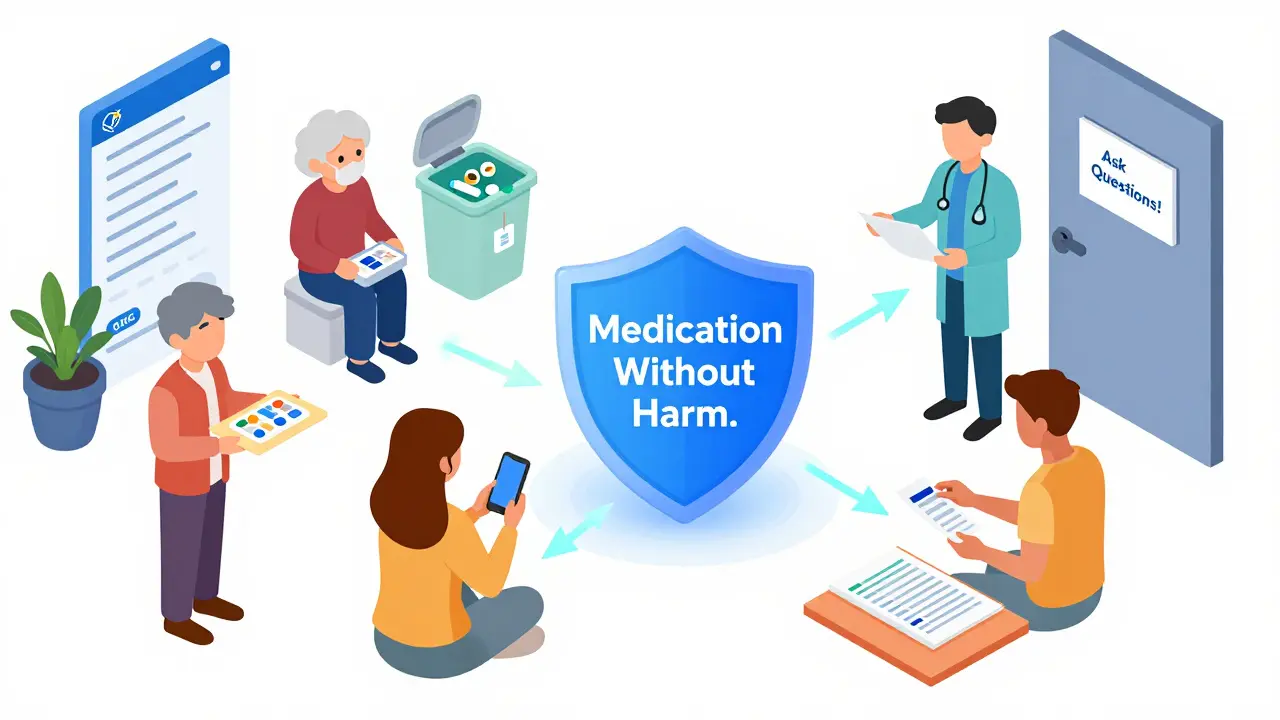
Medication safety isn’t just about not mixing pills. It’s a system of checks and balances designed to stop errors before they hurt someone. The World Health Organization calls it Medication Without Harm, a global push to cut serious medication-related harm by half. And it’s not just for hospitals. Most errors happen at home, where people forget doses, mix up pills, or take old prescriptions they shouldn’t.
Think of it like a chain. Every link matters: the doctor writing the script, the pharmacist filling it, the nurse giving it, and you taking it. Break one link, and the whole system fails. That’s why the five rights are the foundation: right patient, right drug, right dose, right route, right time. If any one of those is wrong, you’re at risk.
The Hidden Dangers: High-Alert Medications
Not all drugs are created equal. Some are called high-alert medications because even a tiny mistake can cause serious harm-or death. These include insulin, warfarin, heparin, and IV oxytocin. A single wrong dose of insulin can send someone into a coma. A miscalculated heparin dose can cause internal bleeding.
According to the American Society of Health-System Pharmacists, these few drugs account for 30% of all medication errors that lead to patient harm. That’s why pharmacies use Tall Man Lettering-writing similar-sounding names differently to avoid confusion. For example, predniSONE vs. predniSOLONE. It sounds small, but it cuts errors by nearly a third in places that use it.
Your Role: The Last Line of Defense
Pharmacists are often called the last line of defense. But you? You’re the first and most important one. No one knows your body like you do. No one knows what you’ve taken, what you’ve skipped, or what you’re feeling.
The CDC says 50% of medication errors happen during care transitions-when you move from hospital to home, or from one doctor to another. That’s why keeping a current list of everything you take is non-negotiable. Not just prescriptions. Include vitamins, supplements, herbal teas, and over-the-counter painkillers. Many people don’t realize that St. John’s Wort can mess with antidepressants, or that calcium supplements can block thyroid meds.
Here’s what to write down:
- Drug name (brand and generic if you know it)
- Dose (e.g., 5 mg, not “one pill”)
- How often (e.g., “once daily at bedtime”)
- Why you’re taking it (e.g., “for high blood pressure”)
- When you last refilled it
Carry this list in your wallet or save it on your phone. Bring it to every appointment-even if you think the doctor already knows.
Ask the Eight Questions (FDA’s Must-Ask List)
The FDA doesn’t just hand out advice. They’ve built a simple checklist everyone should use. Ask your provider these eight questions every time you get a new prescription:
- What’s the name of this medicine (brand and generic)?
- What’s it supposed to do?
- How and when should I take it?
- How long should I take it?
- What should I avoid while taking it (food, alcohol, other meds)?
- What are the possible side effects?
- What should I do if I miss a dose?
- How do I know it’s working-or if something’s wrong?
Don’t be shy. If they brush you off, find someone who won’t. You’re not bothering them-you’re protecting yourself.
Common Mistakes (And How to Avoid Them)
People make the same mistakes over and over. Here are the top three-and how to fix them.
1. Confusing Similar Names
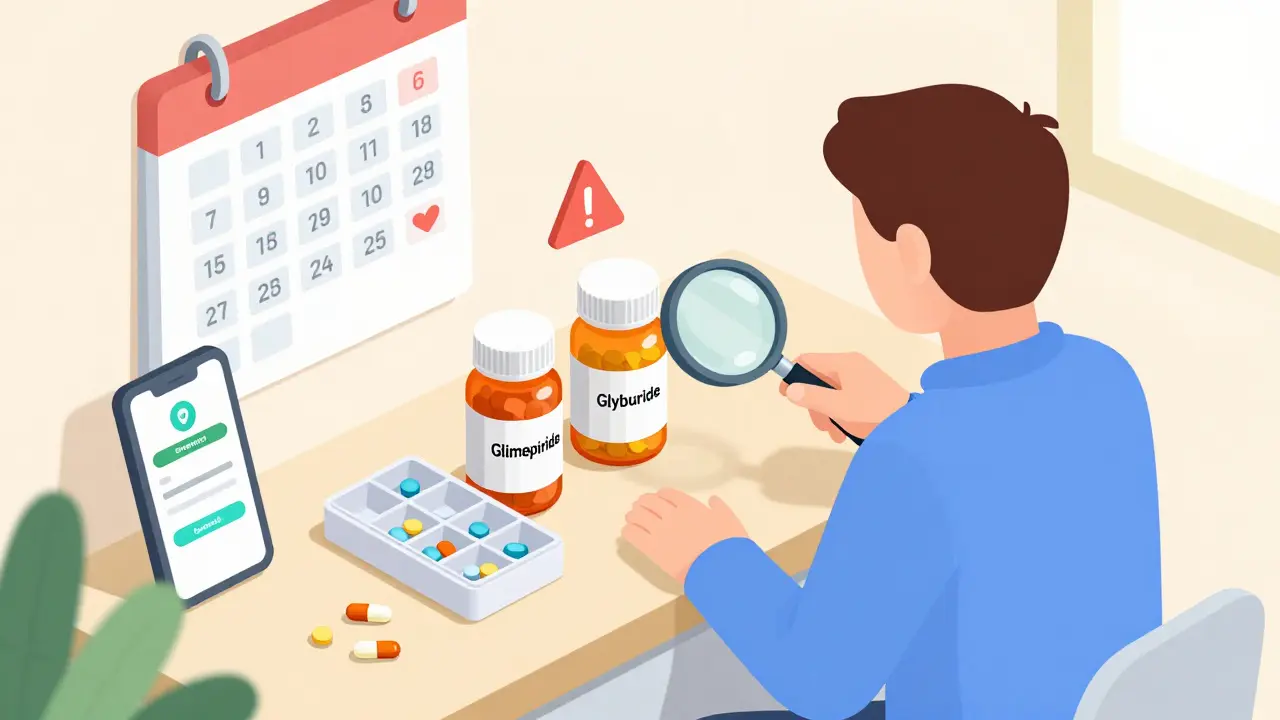
Glimepiride and glyburide. Zyrtec and Zantac. These names sound alike. They look alike. And patients mix them up all the time. One Reddit user shared how they took the wrong diabetes pill for three days before their blood sugar crashed. That’s not rare.
Solution: Always check the label. Compare the pill’s shape, color, and imprint to your last refill. If it looks different, call the pharmacy before you take it.
2. Skipping Doses or Stopping Early
Antibiotics are the worst offenders. People feel better after two days, so they stop. But that’s when the strongest bacteria survive-and come back stronger. The FDA says 23% of antibiotic treatment failures happen because people quit too soon.
Solution: Set phone alarms. Use a pill organizer. Write a note: “Finish all 10 pills, even if I feel fine.”
3. Taking Old or Someone Else’s Medication
“I’ve got leftover painkillers from last year’s surgery-why not use them?” That’s a dangerous mindset. Pills expire. Conditions change. What helped your sister’s headache might give you a liver injury.
Solution: Do a medicine cabinet clean-out twice a year. Toss anything expired, discolored, or unlabeled. Many states have drug take-back programs. Use them.
Tools That Actually Work
You don’t need fancy tech to stay safe. But simple tools make a huge difference.
- Pill organizers (weekly or daily) reduce errors by 35% in older adults.
- Smartphone reminders are more reliable than paper notes. Set them for morning, noon, and night.
- The CDC’s free Medication Safety Checklist app (launched Jan 2024) lets you log meds, set alerts, and share lists with caregivers.
- Pharmacist consultations-yes, they’re free. Ask them to review your full list. Patients who do this make 27% fewer mistakes.
When to Speak Up
Confusion isn’t normal. If you can’t explain why you’re taking a drug, or if you’re unsure how to take it, that’s a red flag. The CDC found that 39% of patients can’t name what their meds are for.
Use the teach-back method: After your doctor explains, say, “So just to make sure I got it right-you want me to take this at night because it makes me sleepy, and I shouldn’t drink alcohol with it?” If they nod, you’re good. If they hesitate, ask again.
And never, ever take a new prescription without knowing what to expect. If the side effects list includes “seizures” or “hallucinations,” ask: “How common is this? Should I call if it happens?”
What Happens When You Get It Right
Good medication safety doesn’t just prevent harm. It improves your life. People who manage their meds well report fewer hospital visits, better energy, and more control over their health. One study found that patients who used a simple medication list and set reminders had 40% higher adherence than those who didn’t.
It’s not about being perfect. It’s about being consistent. One missed dose here. One wrong pill there. Over time, those add up. But when you build habits-checking labels, asking questions, updating your list-you turn risk into control.
Final Thought: You’re the Guardian
Doctors prescribe. Pharmacists dispense. But you? You’re the one who swallows the pill. You’re the one who notices when something feels off. You’re the one who catches the error before it becomes a crisis.
Medication safety isn’t complicated. It’s simple: know what you’re taking, why you’re taking it, and how to take it right. And never be afraid to ask.
What should I do if I accidentally take the wrong medication?
If you realize you took the wrong pill, don’t panic. Call your pharmacist or poison control immediately (in the U.S., it’s 1-800-222-1222). Have the pill bottle, the name of the medication you took, and the one you meant to take ready. Even if you feel fine, some reactions are delayed. Don’t wait for symptoms.
Can I crush or split my pills to make them easier to take?
Not always. Extended-release pills, capsules, and coated tablets can become dangerous if crushed or split. You might release the full dose at once, leading to overdose. Always ask your pharmacist before altering a pill. If swallowing is hard, ask if there’s a liquid version or a different form.
Why do I need to tell my doctor about vitamins and supplements?
Many supplements interact with prescription drugs. For example, vitamin K can reduce the effect of warfarin, and St. John’s Wort can make birth control, antidepressants, or HIV meds ineffective. Even something as simple as grapefruit juice can interfere with over 85 medications. Your doctor can’t protect you if they don’t know what you’re taking.
How often should I update my medication list?
Update it every time you see a doctor, pharmacist, or go to the hospital. Also update it whenever you start, stop, or change a dose. Many people only update it once a year-and that’s too late. Medication changes happen fast. Your list should be current, not convenient.
Is it safe to take leftover antibiotics for a new infection?
No. Antibiotics are prescribed for specific infections, specific bacteria, and specific durations. Taking leftover pills might not match your new infection, could be expired, and may not be the right dose. This increases the risk of antibiotic resistance and can make future infections harder to treat. Always get a new prescription if you’re sick.
What’s the best way to store medications at home?
Keep them in a cool, dry place away from sunlight and moisture. The bathroom medicine cabinet is a bad idea-steam and heat degrade pills. A locked cabinet in a bedroom or closet is better. Keep them out of reach of children and pets. For medications that need refrigeration (like insulin), use a labeled container and never store them next to food.
Greg Scott
February 21, 2026 AT 20:06Been there. Took my grandpa’s blood pressure pill by accident once-thought they looked the same. Ended up dizzy on the couch for three hours. Never touch anyone else’s meds again. Simple as that.
Davis teo
February 23, 2026 AT 05:07Y’all are acting like this is some groundbreaking revelation. I’ve been telling my mom for YEARS to stop hoarding old prescriptions like they’re gold bars. She had a whole drawer of expired Xanax from 2017. I threw them out. She cried. Worth it.
Also-why is no one talking about how pharmacies still give you the same bottle for totally different drugs? I got a vial of metformin that looked EXACTLY like my dad’s glipizide. No color difference. No shape difference. Just a tiny print on the label. That’s not safety-that’s a waiting disaster.
James Roberts
February 24, 2026 AT 07:12Let me just say this: the fact that we need an entire article about not mixing up pills is both tragic and hilarious. We live in a world where a 72-year-old woman with dementia has to memorize 14 different pills, each with a different color, shape, and name that sounds like a sci-fi villain… and we’re surprised she messes up?
And don’t get me started on ‘Tall Man Lettering.’ Yes, it helps. But it’s like putting a Band-Aid on a severed artery. If we had standardized pill shapes by class-like blue = antihypertensive, green = anticoagulant, red = insulin-people wouldn’t need a PhD in pharmacy to stay alive.
Also, why is the CDC app not preloaded on every iPhone? It’s 2024. We have facial recognition for unlocking phones, but not for ‘don’t let grandma take your diabetes pill.’
And yes, I’ve used St. John’s Wort. And yes, it made my SSRIs useless. And yes, I felt like a dumbass. But now I know. And now you do too. Thanks for reading.
Danielle Gerrish
February 25, 2026 AT 08:14I just got off the phone with my pharmacist and I’m still shaking. I’ve been taking my thyroid med with my calcium supplement because I thought ‘both are white pills, same time of day’-NO. NO. NO. The calcium blocks absorption. I’ve been basically taking placebo pills for SIX MONTHS. My TSH levels are through the roof. My doctor said I’m lucky I didn’t have a heart attack.
And now I’m terrified to take anything. What if I’m taking something else wrong? What if my multivitamin is canceling out my blood thinner? What if my chamomile tea is making my anxiety meds useless? I feel like I need to hire a pharmacist to live with me. I’m not even joking.
Also, why is there no pill that just… tells you what to take? Like a smart pill that beeps when you open the wrong bottle? I’d pay $500 for that. I’d mortgage my house for that.
madison winter
February 25, 2026 AT 09:31It’s funny how we treat medicine like it’s magic. You take a pill, you feel better. But no one teaches you how to think about it. We’re raised to trust doctors like they’re gods, and then we’re shocked when things go wrong.
Also, I don’t keep a list. I just remember. And I’ve been fine. So maybe the whole ‘50% of errors happen during transitions’ thing is just a statistic made up by people who don’t trust human memory.
Also, I’ve taken someone else’s Advil before. Didn’t die. So maybe the fear is overblown?
Jeremy Williams
February 26, 2026 AT 18:14As someone who has worked in public health across three continents, I must commend the thoroughness of this article. The global parallels are striking: in Japan, they use color-coded pill dispensers with QR codes linked to pharmacy records; in Germany, pharmacists conduct mandatory home visits for polypharmacy patients. The U.S. system, while technologically advanced, remains fragmented.
However, I must note: the emphasis on individual responsibility, while necessary, risks placing undue burden on vulnerable populations-those without smartphones, digital literacy, or access to pharmacies. A systemic solution-standardized labeling, universal medication lists in EHRs, and pharmacist-led reconciliation at every transition-is not merely ideal. It is ethical.
Maddi Barnes
February 27, 2026 AT 19:21Okay but have you ever tried to explain to your 80-year-old aunt why she can’t take her neighbor’s ‘little white pill’ for her back pain? She says, ‘But honey, she said it helped her!’ And you’re just sitting there thinking: ‘Ma’am, she’s on dialysis and you’re not. Also, you have a pacemaker.’
And don’t even get me started on the pharmacy. I asked for my insulin and they gave me… a different insulin. Same bottle. Different color cap. I didn’t notice until I was at home. I called them. They said, ‘Oh, we switched to the new version.’ No warning. No note. Just… changed.
Also, I use emojis to track my meds now. 💊 = morning, 🌙 = night, 🚫 = don’t take with alcohol. It’s weird. It works. And I’m proud of it.
Benjamin Fox
February 28, 2026 AT 06:16Why are we making this so hard? Just make all pills the same shape and color. Put the name on the pill itself. Done. Problem solved.
Also stop telling people to carry lists. I carry my phone. I take a pic of my meds. That’s my list. End of story.
And if you’re scared of your meds? Don’t take them. Simple. You want to live? You take responsibility. Stop blaming the system. It’s your body.
🇺🇸💪