Statins & Diabetes Risk Calculator
Personal Risk Assessment
This tool helps you understand how different statins may affect your diabetes risk based on the latest clinical evidence.
Personalized Risk Assessment
Your baseline diabetes risk without statins:
Estimated risk with your current statin:
Recommended Statin Choice
May reduce your diabetes risk by up to 18% compared to other statins.
Statins Comparison
| Statin | Risk Rate (per 100 person-years) | Relative Risk |
|---|---|---|
| Pitavastatin | 2.03 | 1.00 (Reference) |
| Pravastatin | 1.87 | 0.92 |
| Simvastatin | 2.12 | 1.04 |
| Atorvastatin | 2.21 | 1.09 |
| Rosuvastatin | 2.45 | 1.21 |
Important Note: This tool provides general risk estimates based on clinical studies. Your actual risk may vary based on individual factors. Always consult your doctor for personalized medical advice.
Pitavastatin and Diabetes Risk: What You Need to Know About Metabolic Effects
If you’ve been prescribed a statin and you’re worried about your blood sugar, you’re not alone. Many people with prediabetes or metabolic syndrome are told to take statins to lower cholesterol - but then they hear stories about statins raising diabetes risk. The truth isn’t simple. Some statins clearly increase the chance of developing type 2 diabetes. Others? Not so much. Pitavastatin stands out in this conversation. Unlike atorvastatin or rosuvastatin, it doesn’t seem to push blood sugar higher in most people. In fact, some studies suggest it might be one of the safest choices if you’re already at risk for diabetes.
Let’s cut through the noise. What does the science actually say about pitavastatin and blood sugar? Is it truly better? And if so, who should be taking it?
How Pitavastatin Works Differently
Pitavastatin is a third-generation statin, approved by the FDA in 2009. Like all statins, it blocks HMG-CoA reductase - the enzyme your liver uses to make cholesterol. That lowers LDL (bad) cholesterol by 40-50% at the standard 4 mg daily dose. But here’s what makes pitavastatin different: it doesn’t rely heavily on liver enzymes like CYP3A4 or CYP2C9 to break down. About half of it leaves your body through the kidneys, the other half through the liver. That means fewer drug interactions and less stress on liver metabolism.
Why does this matter for blood sugar? Because many statins interfere with insulin signaling in muscle and fat cells. They reduce glucose uptake, raise fasting glucose, and can trigger insulin resistance. Pitavastatin doesn’t appear to do this to the same degree. A rigorous 2018 study published in the Journal of Clinical Endocrinology & Metabolism used the gold-standard euglycemic hyperinsulinemic clamp test - the most accurate way to measure insulin sensitivity - on men with insulin resistance. After six months on 4 mg of pitavastatin, their insulin sensitivity didn’t drop. Neither did their liver fat or fasting glucose. The same couldn’t be said for those on higher-intensity statins in other trials.
The Diabetes Risk Comparison: Pitavastatin vs. Other Statins
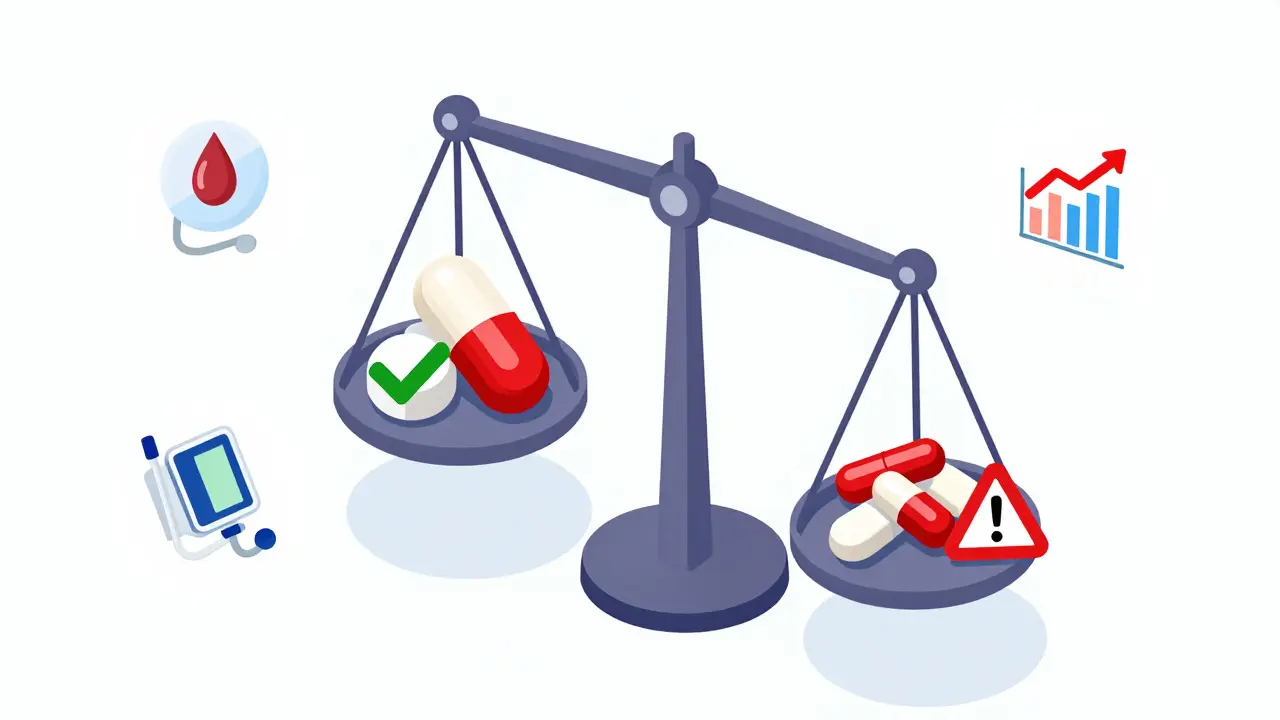
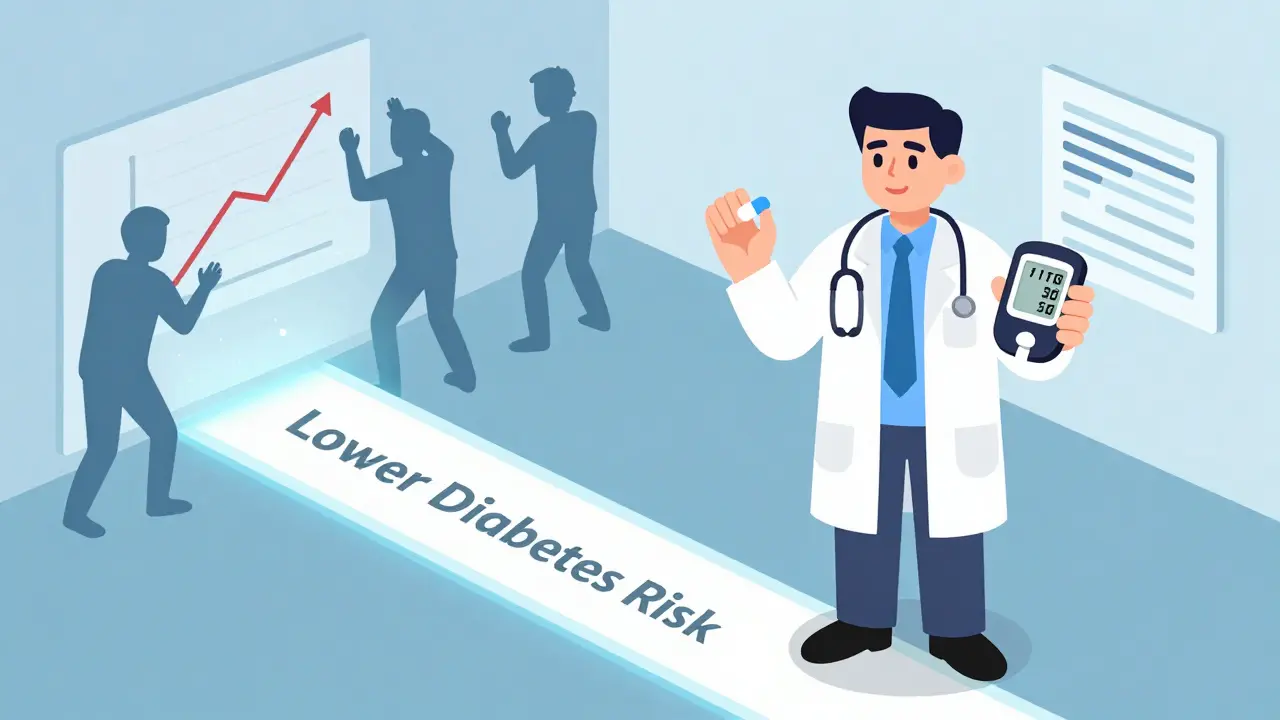
Not all statins are created equal when it comes to diabetes risk. A 2022 meta-analysis in Cardiovascular Diabetology looked at over 124,000 patients. It found pitavastatin had a hazard ratio of 0.82 for new-onset diabetes - meaning it was associated with an 18% lower risk compared to other statins. Atorvastatin? Hazard ratio of 1.14. Rosuvastatin? 1.18. That’s a clear pattern.
Another large study from Ontario, Canada, tracked nearly half a million people over five years. It showed pitavastatin users had a 12% lower risk of developing diabetes than those on atorvastatin, and 15% lower than rosuvastatin. These aren’t small differences. They’re clinically meaningful.
But here’s the catch: not every study agrees. A 2019 Korean study of 3,680 patients found pitavastatin had the highest risk of new diabetes among all statins studied. That study had limitations - it was retrospective, not randomized, and didn’t control for all confounding factors. Most experts consider it an outlier. The bulk of evidence, especially from large, well-designed trials, points the other way.
Here’s a quick snapshot of how different statins stack up in terms of new diabetes cases per 100 person-years:
| Statin | Incidence Rate | Compared to Pitavastatin |
|---|---|---|
| Rosuvastatin | 2.45 | Higher risk |
| Atorvastatin | 2.21 | Higher risk |
| Simvastatin | 2.12 | Higher risk |
| Pitavastatin | 2.03 | Reference |
| Pravastatin | 1.87 | Lower risk |
Pravastatin is the only statin with a lower incidence than pitavastatin. But pravastatin is less potent at lowering LDL. If you need strong cholesterol control and you’re at risk for diabetes, pitavastatin hits a sweet spot: good efficacy, low metabolic disruption.
Who Benefits Most From Pitavastatin?
Pitavastatin isn’t for everyone. But if you fit one of these profiles, it’s worth serious consideration:
- You have prediabetes (fasting glucose 100-125 mg/dL or HbA1c 5.7-6.4%)
- You have metabolic syndrome (high waist circumference, high triglycerides, low HDL, high blood pressure)
- You’re overweight or obese (BMI ≥30 kg/m²)
- You’re over 50 and have high LDL despite lifestyle changes
- You’ve tried another statin and noticed your blood sugar rising
A 2024 study in the Annals of Internal Medicine followed 387 people with HIV who were on pitavastatin. The group with three or more diabetes risk factors - high BMI, elevated fasting glucose, high triglycerides - had a 28.7% chance of developing diabetes over time. The group with fewer risk factors? Only 8.3%. That tells us something important: pitavastatin doesn’t cause diabetes in healthy people. It’s the combination of existing metabolic problems and statin use that creates risk. Pitavastatin minimizes that added risk better than most.
Doctors in real-world practice are noticing this too. One cardiologist on Reddit reported switching over 20 prediabetic patients from atorvastatin to pitavastatin. Seventeen of them saw their HbA1c stabilize or drop within six months. That’s not a fluke. It’s a pattern.
What About Cost and Access?
There’s no sugarcoating it: pitavastatin is expensive. The brand-name version, LIVALO, costs about $350 a month out-of-pocket. Generic atorvastatin? Around $4. That’s an 80x difference. For many patients, cost is a dealbreaker.
But here’s the reality check: 92% of Medicare Part D plans cover pitavastatin, usually at a tier 2 co-pay of about $45 per month. If you’re on insurance, the gap isn’t as wide as it seems. For those without coverage, patient assistance programs through Kowa Pharmaceuticals can bring the cost down significantly.
And while the upfront cost is higher, consider this: if pitavastatin helps you avoid developing diabetes, you’re saving on years of glucose monitoring, medications like metformin, potential kidney damage, nerve problems, and heart complications. The long-term savings - in both money and health - can be substantial.
What Doctors Are Saying
The American Diabetes Association’s 2022 guidelines say: when moderate-intensity statin therapy is needed for someone with diabetes or prediabetes, pitavastatin or pravastatin may be preferred to minimize additional diabetes risk. That’s a Class IIb recommendation - meaning it’s supported by evidence but not mandatory.
Dr. Betul Hatipoglu from Cleveland Clinic put it plainly: “Pitavastatin appears to be the safest statin option for patients with prediabetes based on current evidence.”
But even supporters agree: no statin is risk-free. Dr. Naveed Sattar from the University of Glasgow reminds clinicians: “All statins carry some diabetes risk. Monitor HbA1c regardless of which one you choose.”
That’s the key takeaway. Pitavastatin lowers the risk - it doesn’t eliminate it. If you’re on this medication, you still need regular blood sugar checks.
What You Should Do
If you’re considering pitavastatin - or already taking it - here’s what to do:
- Get your HbA1c and fasting glucose tested before starting any statin. This is your baseline.
- Retest at 3 months, then annually. Don’t wait for symptoms.
- If your blood sugar starts climbing on another statin, talk to your doctor about switching to pitavastatin. It’s not an emergency, but it’s worth discussing.
- Don’t stop your statin because you’re afraid of diabetes. The cardiovascular benefits - preventing heart attacks and strokes - far outweigh the small increased risk of diabetes for most people.
- Ask about cost assistance. Many patients pay far less than $350/month.
The future looks promising. Kowa Pharmaceuticals is running the PERISCOPE trial - a 5,200-patient study comparing pitavastatin to atorvastatin in people with diabetes. Results are expected in late 2026. If pitavastatin proves just as good at preventing heart events - but with less impact on blood sugar - it could become the go-to statin for millions.
Final Thoughts
Pitavastatin isn’t magic. It won’t fix your diet, your weight, or your inactivity. But if you need a statin and you’re worried about your blood sugar, it’s one of the best tools we have. The evidence is clear: compared to atorvastatin and rosuvastatin, it’s less likely to push you toward diabetes. For someone with prediabetes, that’s not just a small advantage - it’s a meaningful one.
Work with your doctor. Get your numbers checked. Ask about alternatives. And don’t let fear of side effects stop you from protecting your heart. The goal isn’t to avoid statins. It’s to choose the right one for your body.
Does pitavastatin cause diabetes?
Pitavastatin does not cause diabetes in most people. Large studies show it has a lower risk of triggering new-onset diabetes compared to other statins like atorvastatin and rosuvastatin. In fact, some data suggest it may have a neutral or even slightly protective effect on glucose metabolism. However, no statin is completely risk-free, and people with existing risk factors - like obesity or prediabetes - should still monitor their blood sugar.
Is pitavastatin better than pravastatin for people with prediabetes?
Both pitavastatin and pravastatin have favorable metabolic profiles. Pravastatin has the lowest reported incidence of new diabetes among statins, but it’s less potent at lowering LDL cholesterol. Pitavastatin lowers LDL more effectively - by 40-50% at 4 mg - while still maintaining a low diabetes risk. For someone who needs stronger cholesterol control and has prediabetes, pitavastatin is often the better choice because it balances efficacy with safety.
How long does it take for pitavastatin to affect blood sugar?
Most studies show no significant change in blood sugar levels within the first 3 months of pitavastatin use. In fact, some trials found no change even after 6 to 12 months. If your blood sugar starts rising after starting pitavastatin, it’s unlikely to be caused by the drug itself. Other factors - like weight gain, reduced activity, or worsening insulin resistance - are more likely culprits. Regular monitoring is still recommended.
Can I switch from atorvastatin to pitavastatin if my blood sugar is rising?
Yes, switching is a common and reasonable strategy. Many clinicians do this when patients on atorvastatin or rosuvastatin develop rising HbA1c or fasting glucose. Studies show that after switching to pitavastatin, a majority of patients see stabilization or improvement in their blood sugar within 6 months. Always consult your doctor before making any changes - don’t stop or switch statins on your own.
Are there natural ways to reduce the diabetes risk from statins?
Yes. Lifestyle changes are the most effective way to offset any statin-related metabolic risk. Losing 5-10% of body weight, getting 150 minutes of moderate exercise per week, and reducing refined carbs and sugar can dramatically improve insulin sensitivity. These changes are more powerful than any statin switch. In fact, many patients who combine pitavastatin with healthy habits see their prediabetes reverse entirely.
What’s Next?
The PERISCOPE trial, set to finish in late 2026, will be the biggest test yet. If pitavastatin proves just as good as atorvastatin at preventing heart attacks - while causing fewer cases of diabetes - it could change how doctors treat high-risk patients. Until then, the evidence we have is strong enough to make pitavastatin a top choice for those who need statin therapy but want to protect their metabolic health.
Donny Airlangga
January 8, 2026 AT 08:27I’ve been on pitavastatin for 8 months now after my HbA1c crept up on atorvastatin. My doctor was skeptical, but my numbers dropped from 6.1 to 5.6. No more 6 a.m. sugar crashes either. Just wanted to say - this stuff works if you’re prediabetic and need strong LDL control. Don’t write it off because of cost.
Molly Silvernale
January 9, 2026 AT 19:44Let’s be real: statins are like emotional support pills for our modern, fried, sugar-soaked lives-we take them because we’re too tired to change the diet, too busy to move, and too scared to face the mirror. Pitavastatin? It’s not magic-it’s just the least toxic version of a band-aid on a bullet wound. We’re treating symptoms like they’re the disease. And yet… I’m glad it exists. Because sometimes, survival isn’t about fixing the system-it’s about finding the least-bad option in a broken one.
Ken Porter
January 10, 2026 AT 07:54So what? It’s still a statin. You’re all acting like this is a miracle drug. Meanwhile, China and India are using cheaper, proven stuff. This is just Big Pharma selling a premium label. Stop hyping it. And no, I don’t care about your ‘metabolic syndrome’-get off the couch and eat real food.
Annette Robinson
January 11, 2026 AT 02:42If you’re reading this because you’re worried about your blood sugar, I see you. It’s scary to be told you need a daily pill just to stay healthy. But please don’t panic. Pitavastatin isn’t perfect, but if your doctor thinks it’s right for you, it’s worth trying. And yes, check your HbA1c. But also: walk after dinner. Drink water. Sleep. Tiny things matter more than you think.
Luke Crump
January 12, 2026 AT 11:16Oh wow. Another ‘science says’ article that ignores the fact that every statin is just a chemical leash on your liver. Who decided cholesterol is the enemy? The same people who sold you low-fat yogurt full of sugar. Pitavastatin? It’s just the new Tesla of statins-expensive, overhyped, and built for people who think they can out-medicine their bad habits. Wake up.
Aubrey Mallory
January 13, 2026 AT 11:36Ken, your comment is toxic. You don’t get to dismiss people’s health struggles because you think they’re lazy. This isn’t about willpower. It’s about biology, genetics, and access to care. If you had prediabetes and a 60-hour workweek, you’d be grateful for any tool that helps. Stop being an asshole.
Evan Smith
January 14, 2026 AT 01:59Wait so pitavastatin is the ‘good’ statin? Like the vegan version? I’m confused. So if I’m on atorvastatin and my sugar’s rising, I just swap it out? Like switching from Coke to Diet Coke? Is that even safe? Someone explain like I’m 5.
Lois Li
January 15, 2026 AT 15:04My dad switched from rosuvastatin to pitavastatin last year after his A1c went to 6.3. Three months later, it was 5.8. He didn’t change anything else. Just the pill. I know it’s not a cure, but for people like him-over 70, overweight, but trying-it’s a gift. I’m glad it exists. Even if it costs a fortune.
christy lianto
January 15, 2026 AT 15:13Stop overthinking it. You don’t need to be a biochemist to know this: if your blood sugar’s climbing on a statin, talk to your doctor. Pitavastatin isn’t perfect-but it’s one of the few that doesn’t make things worse. And yes, exercise and food matter more. But if you’re already taking a pill, why not pick the one that doesn’t sabotage your efforts? Just swap it. Then go for a walk. Done.