Ever wonder how a pharmacist knows for sure that a generic version of a drug is actually the same as the brand-name one? They aren't just guessing or relying on the manufacturer's word. They use a massive, official database called the FDA Orange Book is the Food and Drug Administration's official register of approved drug products that have been deemed safe and effective. Also known as Approved Drug Products With Therapeutic Equivalence Evaluations, it acts as the gold standard for deciding if a generic drug can be swapped for a brand-name version without changing the medical outcome.
Why the Orange Book Actually Matters
The Orange Book isn't just a list; it's a regulatory tool born from the Hatch-Waxman Act of 1984. Its main job is to balance two competing needs: protecting the patents of companies that invent new drugs and making sure patients can get affordable generics as soon as those patents expire. If you're a patient, it's the reason you can get a generic prescription that costs a fraction of the original price. For the industry, it's a roadmap for market entry.
In the U.S., roughly 90% of prescriptions are filled with generics. This massive scale is possible because the Center for Drug Evaluation and Research (CDER) maintains this database monthly, ensuring that when a doctor prescribes a brand name, the pharmacist has a verified list of equivalents they can legally and safely substitute.
How Generic Drugs Get Listed
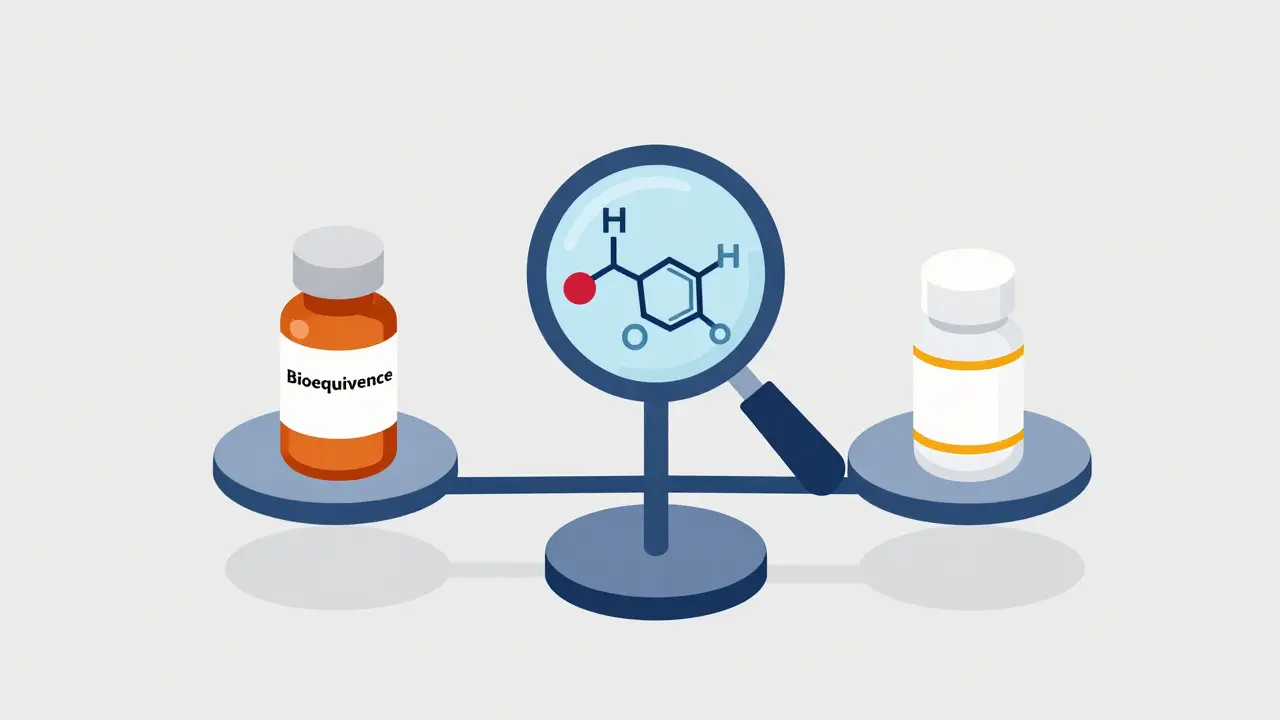
A generic drug doesn't just appear in the Orange Book by magic. It has to go through a specific legal pathway called the Abbreviated New Drug Application (ANDA). Unlike the original drug, which requires massive clinical trials to prove it works, a generic manufacturer only needs to prove bioequivalence. This means they show that the generic drug delivers the same amount of active ingredient into the bloodstream at the same rate as the original.
To do this, they must compare their product to a Reference Listed Drug (RLD), which is the brand-name drug the FDA identifies as the standard. In the Orange Book, the RLD is marked with a "Yes" in the RLD column. Once the FDA approves the ANDA, the generic is added to the list, usually in the month following approval.
Decoding Therapeutic Equivalence (TE) Codes
If you look at the Orange Book, you'll see two-letter codes next to the drugs. These are called TE codes, and they are the most important part of the listing for a pharmacist. The first letter tells you if the drug is chemically similar, and the second letter tells you if it's biologically equivalent.
| Code | What it Means | Substitution Action |
|---|---|---|
| AA | Therapeutically equivalent | Safe to substitute (most common) |
| AB | Therapeutically equivalent | Safe to substitute (most common) |
| BX | Not therapeutically equivalent | Cannot be substituted without a new prescription |
| BC | Not therapeutically equivalent | Cannot be substituted without a new prescription |
Basically, if you see an "A" rating, it's a green light. If you see a "B" rating, it means there are potential issues-perhaps with how the drug is absorbed or the specific formulation-that make it not a direct substitute for the RLD.
The Role of Patents and Exclusivity
The Orange Book also tracks patents. When a company gets a New Drug Application (NDA) approved, they list the patents that cover the drug's substance, formulation, or method of use. This is where things get messy. Generic companies often challenge these patents to enter the market early.
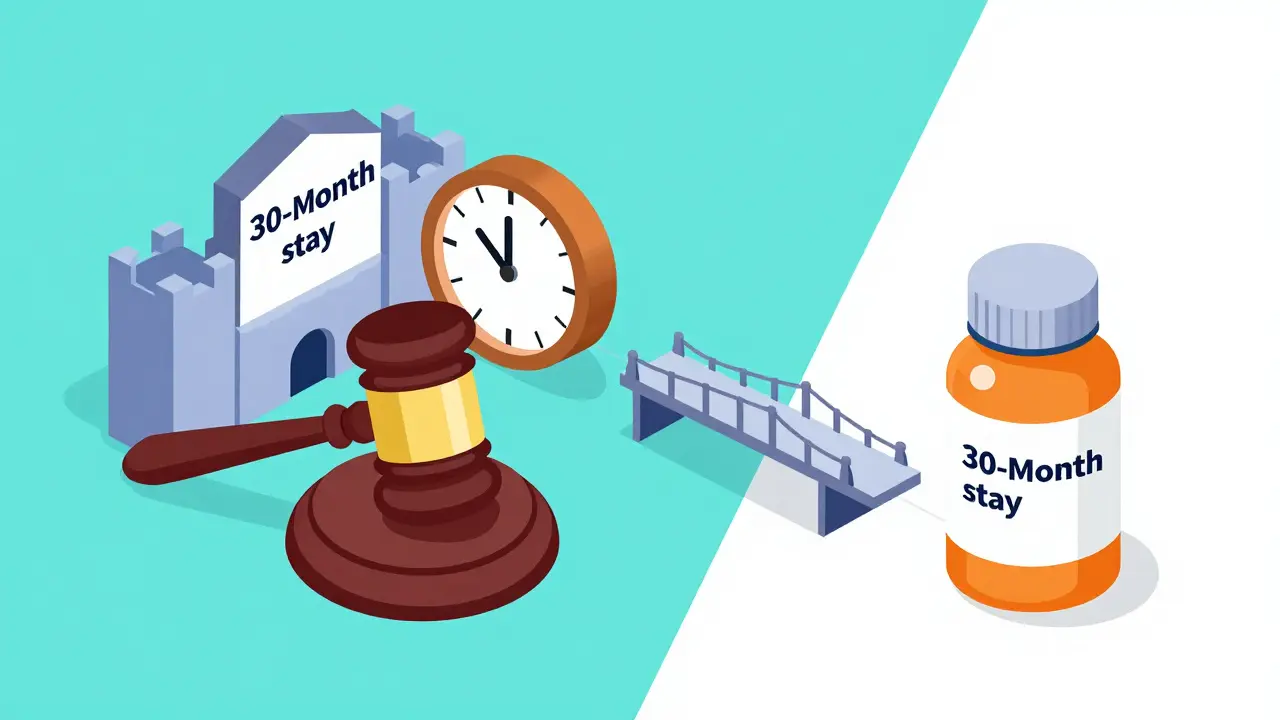
If a generic company files an ANDA claiming a patent is invalid or not infringed, it can trigger a 30-month stay. This means the FDA won't approve the generic for 30 months while the courts figure out who is right. Some critics call this "patent evergreening," where companies add minor changes to a drug to get new patents and keep generics off the market longer. In fact, patent listings in the book jumped from 8,000 in 2005 to over 14,000 in 2022.
Authorized Generics vs. Traditional Generics
There is a bit of a "secret" category called authorized generics. These are essentially brand-name drugs sold without the brand name. They are marketed under the same NDA as the original drug. Because they are technically the brand-name product, they aren't listed as separate generic entries with TE codes in the Orange Book. Instead, the FDA maintains a separate list of these products on its website, updated quarterly, to keep things transparent.
Navigating the Database: Pro Tips
Searching the electronic version of the Orange Book can be overwhelming. If you're trying to find a generic, don't just search for the generic name. Instead, search for the Proprietary Name (the brand name). Once you find the brand, use the ingredient search to see every approved product containing that active ingredient.
Be careful with complex products like inhalers. Some pharmacists report that while the Orange Book might give an "A" rating, real-world use of the device (like a specific inhaler mechanism) can vary. Always check the specific dosage form and route of administration to ensure the match is perfect.
Is the Orange Book the same as the Purple Book?
No. The Orange Book is for non-biologic drugs (traditional chemicals). The Purple Book was created later for biological products, which are much more complex and follow different approval rules based on the Biologics Price Competition and Innovation Act of 2009.
What happens if a drug is in the Discontinued section?
If a drug is moved to the Discontinued Drug Product List, it no longer has an RLD status or a TE code. It's essentially an archive showing the drug was once approved but is no longer on the market.
How often is the Orange Book updated?
The electronic version is updated monthly by the FDA's Center for Drug Evaluation and Research (CDER) to reflect new approvals and patent changes.
Do OTC drugs have TE codes?
No. Products in the Over-the-Counter (OTC) section are not evaluated for therapeutic equivalence, so you won't find those specific A or B codes there.
What is the 30-month stay?
It's a legal pause. If a brand-name company sues a generic company over a patent listed in the Orange Book, the FDA pauses the generic's approval for 30 months to allow the legal dispute to be resolved.
Next Steps for Users
If you are a patient, you can use the electronic Orange Book to verify if a generic your pharmacy suggested is truly equivalent. If you are a healthcare professional, integrating the Orange Book API into your system can automate these checks and reduce errors. For those tracking a drug's availability, keep an eye on the "Active Section" of the book, as new approvals typically appear there one month after the official approval letter is issued.