Warfarin & NSAID Risk Estimator
Check Medication Risk Profile
Select a medication to see how it impacts your bleeding risk when taken with Warfarin. Note: This tool is for educational purposes and not a substitute for medical advice.
Naproxen
Taking a common over-the-counter painkiller while on a blood thinner might seem harmless, but it can actually be a recipe for a medical emergency. If you are taking Warfarin is a vitamin K antagonist anticoagulant used to prevent and treat thromboembolic diseases, such as blood clots in the legs or lungs , adding a nonsteroidal anti-inflammatory drug (NSAID) to your routine doesn't just slightly increase your risk-it can effectively double it. This isn't just a theoretical worry; it's a systemic pharmacological clash that affects millions of people every year.
Why the Combination is So Dangerous
To understand the risk, you have to look at how these two types of drugs attack the blood's ability to clot from different angles. Warfarin works by blocking the vitamin K epoxide reductase complex, which stops the body from producing critical coagulation factors (II, VII, IX, and X). Essentially, it slows down the chemical process that creates a clot.
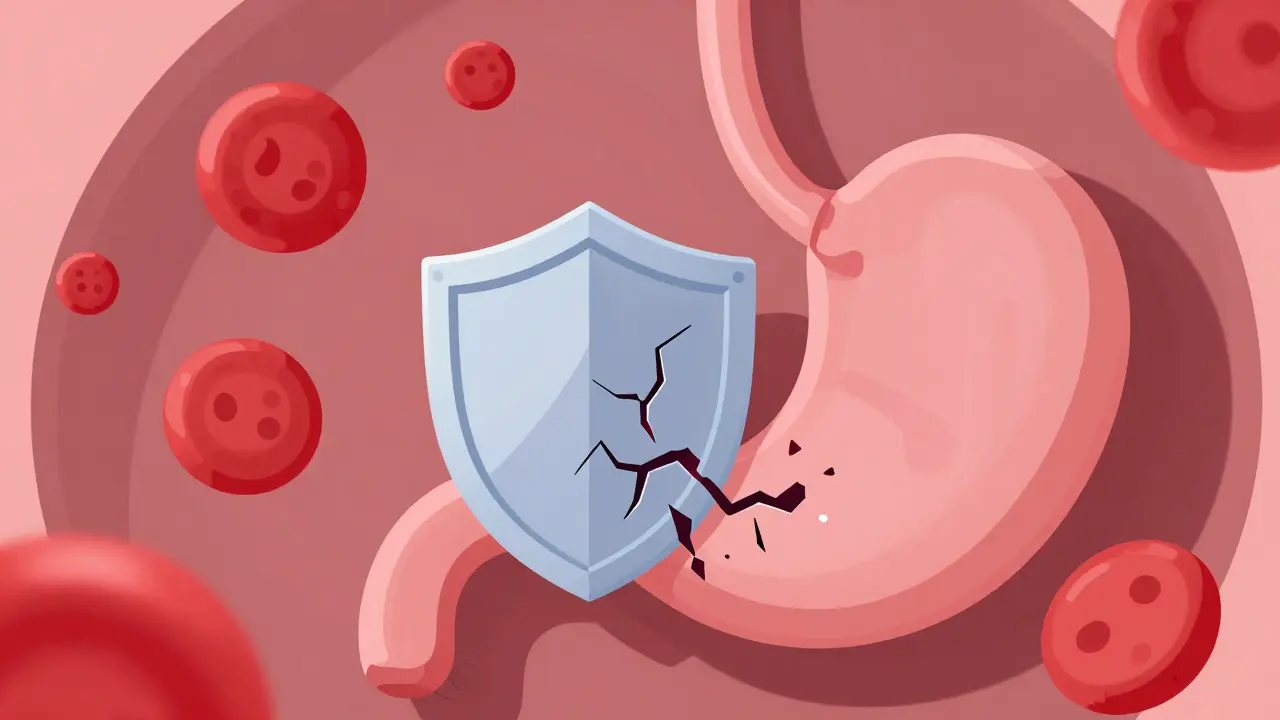
Then you have NSAIDs is a class of medications, including ibuprofen and naproxen, used to reduce pain and inflammation by inhibiting cyclooxygenase (COX) enzymes . These drugs do two things that make Warfarin's job even more dangerous. First, they impair platelet function, meaning your blood can't "plug" a leak as effectively. Second, they eat away at the protective lining of your stomach.
When you combine them, you get a synergistic effect. You have blood that refuses to clot and a stomach lining that is prone to bleeding. It's like removing the brakes from a car and then pressing the gas pedal at the same time. Research from Aarhus University Hospital has shown that this combination leads to a 2.09-fold higher risk of bleeding compared to taking the anticoagulant alone.
Not All NSAIDs Are Created Equal
You might think that some pain relievers are safer than others, but the data shows a wide spectrum of risk. Some common NSAIDs are significantly more aggressive when paired with Warfarin. For instance, Naproxen is a long-acting NSAID frequently used for arthritis and acute pain carries the highest risk, with bleeding events 4.1 times more likely than with Warfarin alone. Diclofenac is a potent NSAID often prescribed for joint inflammation follows at 3.3 times the risk, while ibuprofen is slightly lower at 1.79 times.
| NSAID Type | Relative Bleeding Risk | Risk Level |
|---|---|---|
| Naproxen | 4.1x | Extreme |
| Diclofenac | 3.3x | Very High |
| Ibuprofen | 1.79x | High |
| Celecoxib (COX-2) | ~2.0x | High |
There was a time when doctors thought selective COX-2 inhibitors, like Celecoxib, would be a safer bet because they are gentler on the stomach. However, meta-analyses have debunked this. Whether it's a traditional NSAID or a newer COX-2 inhibitor, the bleeding risk-especially in the gastrointestinal tract-remains nearly double.
Where the Bleeding Happens
Bleeding doesn't just happen in one place. While most people worry about stomach ulcers, the risk extends to every organ system. The most dramatic increase is seen in intracranial bleeding (bleeding in the brain), which jumps 3.22-fold. Gastrointestinal bleeding is also a massive concern, increasing 2.24-fold. Other areas, like the lungs (1.36-fold) and urinary tract (1.57-fold), also see a rise in hemorrhage events.
The real-world consequences are severe. Data from the FDA's Adverse Event Reporting System shows that gastrointestinal bleeds make up over 62% of these interaction cases. For many, this isn't just a "bruise"-it's a trip to the ER. Some patients have reported their hemoglobin levels plummeting from 14 to 8 g/dL in a single day after taking a simple dose of ibuprofen for a headache.
Who Is Most at Risk?
While the combination is dangerous for everyone, certain people are in the crosshairs more than others. If you fall into these categories, the danger is amplified:
- High Dose Users: People taking more than 40 mg of Warfarin per week.
- The Elderly: Those over 75 years old face a 3.7 times higher bleeding risk.
- Low Baseline INR: Surprisingly, those with a low initial International Normalized Ratio (INR) can see a sharper spike in INR levels (some by 15% or more) when an NSAID is introduced.
- Polypharmacy Patients: If you are already taking multiple other medications, the likelihood of a severe interaction increases.
Managing Pain Safely on Blood Thinners
If you're struggling with pain, you don't have to settle for nothing, but you do have to be smart about what you choose. The general medical consensus from the American College of Cardiology is clear: avoid NSAIDs entirely if you can. But what are the alternatives?
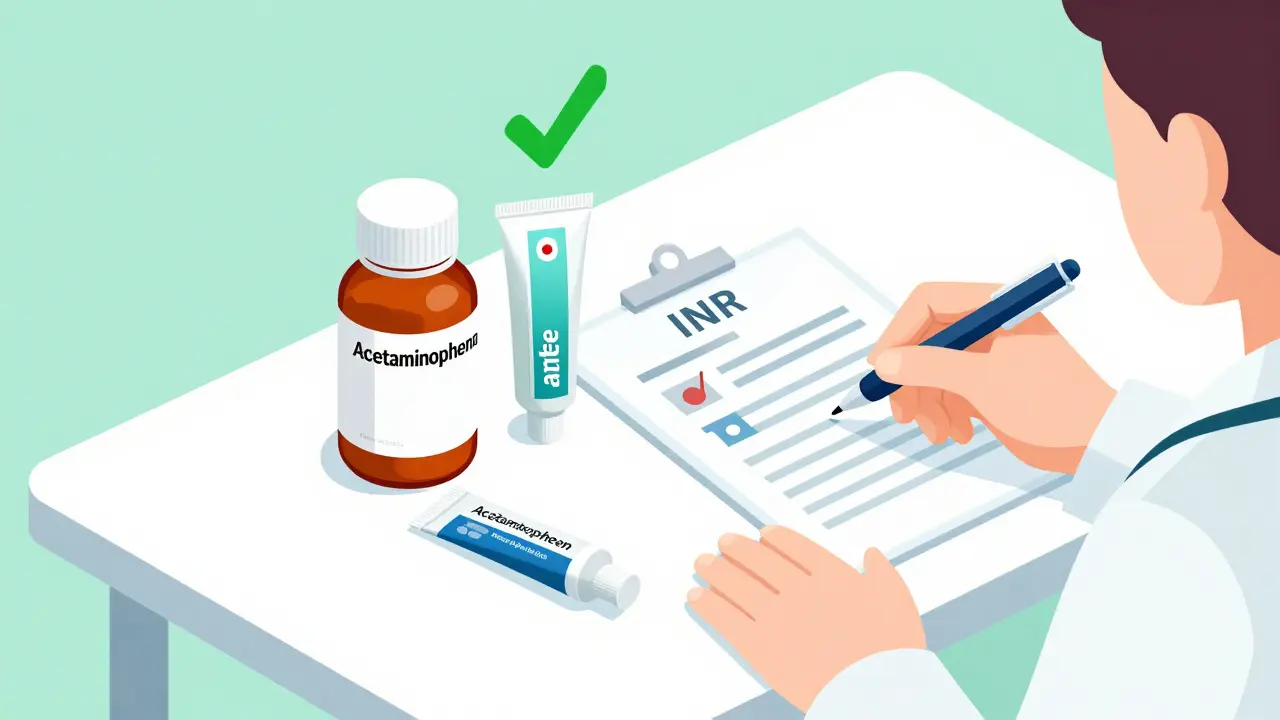
Acetaminophen is a non-aspirin pain reliever and fever reducer that does not affect platelet function is the gold standard alternative. It doesn't interfere with the clotting process the way NSAIDs do. Additionally, topical analgesics (like creams or gels) are becoming more popular because they don't enter the bloodstream in large enough quantities to cause systemic bleeding.
In rare cases, a doctor might decide that a very short course of a low-dose NSAID is necessary. If this happens, you cannot just "take the pill and forget it." You need a strict monitoring protocol:
- Get a baseline INR test before you start the NSAID.
- Re-check your INR 3 to 5 days after starting the medication.
- Continue weekly INR checks for as long as you are taking the NSAID.
- Discuss the use of a Proton Pump Inhibitor (PPI) with your doctor to help protect your stomach lining from acid damage.
The "Newer Drug" Misconception
There is a dangerous trend emerging where patients believe newer anticoagulants-often called NOACs or DOACs (like Apixaban or Rivaroxaban)-are safe to mix with NSAIDs. While some studies suggest Apixaban might have a slightly different risk profile than Warfarin, the core danger remains. The bleeding risk is still significantly elevated regardless of which blood thinner you use. In fact, co-prescribing of NSAIDs with these newer drugs has actually increased by nearly 35% recently, likely due to this false sense of security.
Can I take ibuprofen for a one-time headache while on Warfarin?
It is strongly advised against. Even a single dose of ibuprofen can impair platelet function and increase the risk of bleeding. Acetaminophen is a much safer alternative for acute pain relief.
Are COX-2 inhibitors like Celebrex safer than Ibuprofen?
While COX-2 inhibitors were designed to be easier on the stomach, research shows they still carry a similar risk of major bleeding when combined with Warfarin, with gastrointestinal risks nearly doubling.
What are the warning signs of a bleeding event?
Watch for unusual bruising, blood in the urine (pink or red), stools that look like black tar, coughing up blood, or sudden, severe headaches which could indicate internal bleeding.
How does an NSAID affect my INR level?
NSAIDs can cause your INR to spike, meaning your blood becomes "too thin." Some patients have seen an INR increase of 15% or more, which drastically elevates the risk of spontaneous hemorrhage.
Why do doctors suggest Proton Pump Inhibitors (PPIs) if I must take an NSAID?
PPIs reduce the amount of acid your stomach produces. Since NSAIDs weaken the stomach lining and Warfarin prevents clotting, the PPI acts as a shield to prevent the acid from creating a bleeding ulcer.
Next Steps for Patients
If you are currently taking both Warfarin and an NSAID, do not stop your medication abruptly, as this could increase your risk of a blood clot. Instead, call your healthcare provider immediately to discuss a safer alternative. If you are managing a chronic condition like arthritis, ask your doctor about topical treatments or physical therapy options that don't rely on systemic medication.
Always keep a full list of your medications-including over-the-counter pills and supplements-handy for every doctor's visit. Many bleeding events happen simply because a patient forgot to mention a daily aspirin or a few ibuprofen tablets to their physician.
Darius Prorok
April 7, 2026 AT 13:04Everyone knows this. It's basically Med 101 stuff.
Del Bourne
April 8, 2026 AT 16:28This is a critical reminder for anyone managing cardiovascular health. It is so easy to forget that over-the-counter meds aren't always 'safe' just because they don't require a prescription. For those who struggle with chronic pain, please remember that Tylenol (acetaminophen) is generally the preferred route, but always double-check your specific dosage with your pharmacist to ensure there are no other contraindications. Staying vigilant about your INR levels is the best way to avoid a trip to the emergency room.
Be safe, everyone!
Danielle Kelley
April 9, 2026 AT 15:51Funny how they emphasize the 'danger' of the drugs but never mention why the system wants us on these blood thinners in the first place! They just want us fragile and dependent on their pharmacy chains. Wake up people! The 'risk' is just a way to keep us scared and paying for more 'monitoring' tests that they control!
Grace Lottering
April 10, 2026 AT 02:21Pharma greed at its finest. They create the problem and sell the 'shield' PPIs.
Nathan Kreider
April 12, 2026 AT 00:16I really appreciate the heads up on this. It's scary to think a simple headache pill could do that, but it's better to know now than later. Hang in there if you're dealing with chronic pain, there are ways to get through it safely!
Laurie Iten
April 12, 2026 AT 06:43the duality of medicine is strange... we take a poison to stop a clot only to find the remedy for pain becomes a new poison itself. it makes one wonder about the balance of nature and how we try to force it with chemicals
Victoria Gregory
April 13, 2026 AT 07:14Wow... this is such a heavy topic!!! 😱 But it's so important to share! I think we just need to be more mindful and kind to our bodies... maybe some gentle stretching or tea for the pain? 🍵✨ Sending love to everyone dealing with health stuff!! ❤️🙏
Benjamin cusden
April 13, 2026 AT 22:18The inclusion of the 2.09-fold risk statistic is a pedestrian attempt at quantification. Any clinician worth their salt already understands the synergistic mechanism of COX inhibition and vitamin K antagonism without needing a table to explain it. It's quite tedious that such basic pharmacology needs to be spelled out for the masses.
Kathleen Painter
April 15, 2026 AT 17:49I've spent a lot of time helping people navigate their medication lists, and it's honestly shocking how often people just grab whatever is in the medicine cabinet without thinking. I always tell my students and mentees that the label is just the start; the actual interaction is where the real story happens. If you're feeling overwhelmed by all these warnings, just take a deep breath and make a list. Go through your cabinet, circle everything that's an NSAID, and then have a calm, open conversation with your doctor about what you can actually use. It's a learning process for all of us, and there's no shame in not knowing the chemistry of your blood. Just stay curious and keep asking those questions until you feel safe.
Windy Phillips
April 16, 2026 AT 15:37It's just... so typical... that people ignore these warnings until they're bleeding out in an ER... and then they act shocked... Truly, the lack of personal responsibility in modern healthcare is just exhausting for the rest of us... !!!
Ruth Swansburg
April 17, 2026 AT 22:53Stay strong! Please call your doctor today!
Nikhil Bhatia
April 19, 2026 AT 13:43Too long; didn't read. Just take Tylenol.
Michael Flückiger
April 19, 2026 AT 22:43Let's stay positive!!! Just follow the doctor's orders and everything will be totally fine!!! You've got this!!!