Every year, millions of people take generic drugs because they’re affordable, effective, and widely available. But what if the pill you swallowed wasn’t what the label said? Fake generic drugs are not just a distant problem-they’re slipping into the supply chain right now, and many of us have no idea. These counterfeit medicines look real. They come in the same blister packs, same bottles, same logos. But inside? They might have no active ingredient. Or worse-they might have something toxic. The World Health Organization says up to 30% of medicines in some low-income countries are fake. In places with weak regulation, it’s not unusual for antimalarials, antibiotics, or heart medications to be laced with chalk, sawdust, or even rat poison. Even in places like Australia, the U.S., or Europe, counterfeit drugs are finding their way in-often through online pharmacies or shady distributors. So how do these fake drugs actually get into the system? It’s not one big hole. It’s a dozen tiny cracks, all exploited by criminals who know exactly where to strike.
Production in Hidden Factories
Counterfeit drugs don’t start in pharmacies. They start in basements, warehouses, and industrial parks in countries with loose oversight. Southeast Asia, Eastern Europe, and parts of Africa are hotspots. These aren’t high-tech labs. Most are small operations using off-the-shelf printing machines, chemical suppliers from Alibaba, and packaging templates downloaded from legitimate drug company websites. The fake drugs are made to mimic real ones down to the last detail. A 2023 analysis by TrueMed Inc. found that counterfeiters replicate packaging with 95% visual accuracy. The color, font, even the tiny imperfections on the pill surface are copied. Some even use the same tablet scoring patterns. If you’re not trained to look closely, you won’t notice the difference. But the real danger is in the ingredients. Instead of the real active pharmaceutical ingredient (API), counterfeiters use cheaper substitutes. Sometimes it’s a chemically similar compound that looks right but does nothing. Other times, it’s something outright dangerous-like industrial dyes or heavy metals. In 2008, contaminated heparin from China killed 149 people in the U.S. because the raw material was adulterated with a substance that triggered severe allergic reactions.How Fake Drugs Slip Into Legitimate Channels
Once made, these drugs don’t just show up on street corners. They infiltrate the legal supply chain through three main paths. First, parallel importation. This happens when drugs are bought legally in one country-often where prices are lower-and resold in another without the manufacturer’s approval. It’s legal in some places, but it creates gaps. Counterfeiters exploit these gaps by mixing fake drugs into legitimate shipments. A batch of blood pressure pills from Germany gets mixed with fake ones from India, and suddenly, a hospital in Canada is dispensing dangerous pills. Second, grey market sales. This is where unauthorized distributors-sometimes even former employees of legitimate suppliers-buy bulk shipments and resell them outside official channels. These distributors often don’t store drugs properly. Heat, humidity, and long transit times can ruin real medicine. But fake drugs? They’re already useless, so no one cares. Grey market sellers don’t ask questions. They just want volume. Third, and most dangerous, online pharmacies. The National Association of Boards of Pharmacy found that 95% of online pharmacies operating without a license are selling fake drugs. These sites look professional. They have SSL certificates, fake reviews, and even phone numbers staffed by call centers. You order Lipitor, and it arrives in two days. The bottle looks real. The pills look real. But lab tests show they contain zero atorvastatin-the active ingredient. Instead, they’re filled with lactose and food coloring. A Reddit user in 2023 posted about receiving counterfeit Lipitor. The tablets had the wrong color and different scoring lines. When tested, they didn’t dissolve properly. That’s the kind of detail most people miss until it’s too late.Why Generic Drugs Are the Biggest Target
You might think brand-name drugs are the target. But no. Counterfeiters go for generics-and for good reason. Generic drugs make up over 80% of all prescriptions filled in the U.S. and similar numbers in Australia and Europe. They’re cheaper, so more people take them. And because they’re produced by dozens of manufacturers across the globe, tracking them is a nightmare. The de-formulation process for generics means companies reverse-engineer brand-name drugs. That means the formulas are public. Counterfeiters don’t need to guess what’s inside. They know exactly what to copy. And since generics are sold at razor-thin margins, manufacturers cut corners. Some skip quality checks. Others use cheaper suppliers. That’s where fake drugs slip in unnoticed. The most common targets? Antimalarials, antibiotics, and cardiovascular drugs. Why? Because they’re high-volume, low-cost, and critical. If you’re in a rural clinic in Nigeria and your patient takes a fake malaria pill, they don’t just get sicker-they die. And no one knows why. The U.S. Pharmacopeia’s Medicine Quality Database recorded over 1,200 incidents of fake or substandard medicines between 2013 and 2023. Nearly half involved generics for heart disease, infection, or diabetes.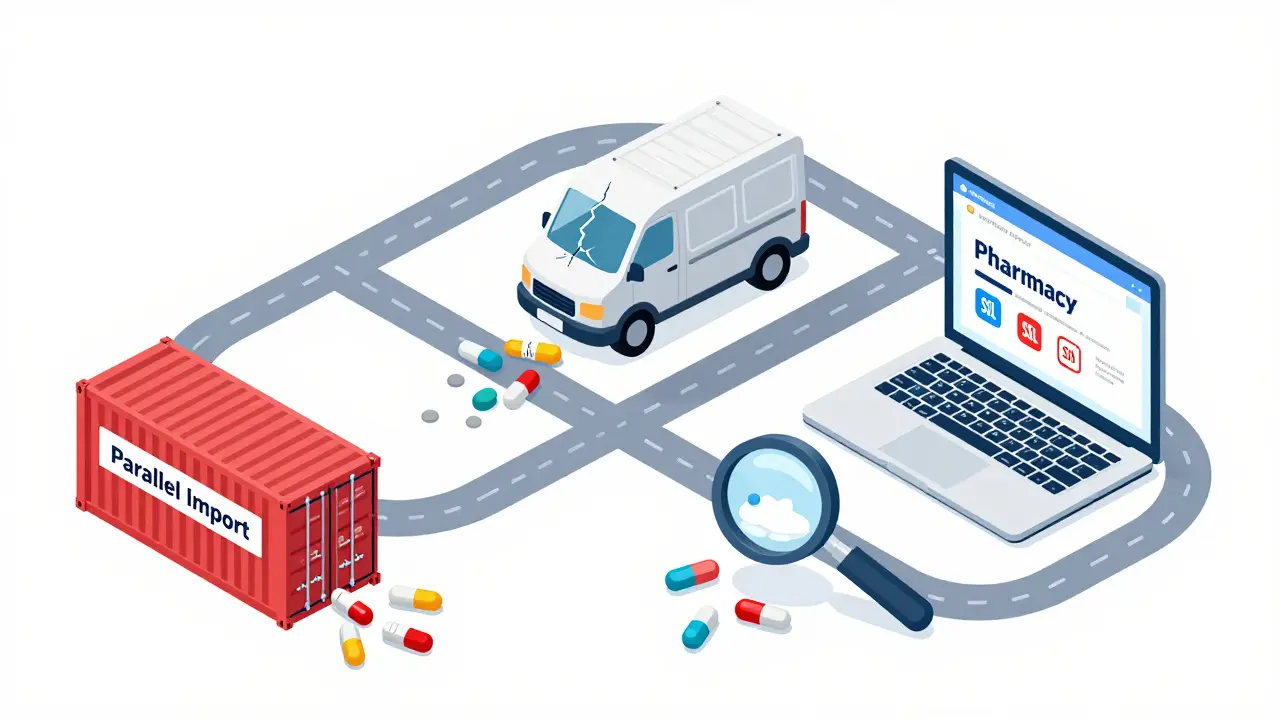
The Supply Chain Is Broken
The pharmaceutical supply chain is long. A single pill can pass through 10 or more hands before it reaches you. Each hand is a chance for fraud. Only 40% of countries have any kind of track-and-trace system. That means there’s no way to know where a drug came from, who handled it, or if it was tampered with. The U.S. passed the Drug Supply Chain Security Act in 2013, requiring full serialization by 2023. That means every package gets a unique digital code. But only 22 out of 194 WHO member states have fully operational systems. In places without these systems, stolen drugs are a major problem. The Pharmaceutical Security Institute recorded 786 thefts in 2022. Stolen shipments of real drugs get mixed with fake ones. The counterfeiters don’t even need to make the pills-they just steal them and swap labels. Even legitimate wholesalers can be compromised. A 2022 survey by the International Pharmaceutical Federation found that 68% of pharmacists worldwide had encountered suspected fake drugs. Over a third said they couldn’t tell the difference just by looking.What’s Being Done-and Why It’s Not Enough
There are solutions. But they’re expensive, unevenly applied, and slow to roll out. Overt security features like holograms, color-shifting ink, and tamper-evident seals help. But counterfeiters now use AI to replicate them. In early 2023, Europol seized cancer drugs with AI-generated holograms that passed visual inspection. Covert markers are better. DNA tags, chemical tracers, and micro-printed codes can only be detected with special scanners. But these cost $0.02 to $0.05 per unit. For a generic drug selling for $0.10, that’s a 50% cost increase. No manufacturer wants to pay that unless forced. Blockchain systems like MediLedger have shown 97% accuracy in detecting fake drugs in trials. But adoption is patchy. Only a handful of big companies use them. Training pharmacists helps. But it takes 8 to 12 hours of specialized instruction-time most busy pharmacies don’t have. And even trained professionals miss fakes when the packaging is perfect.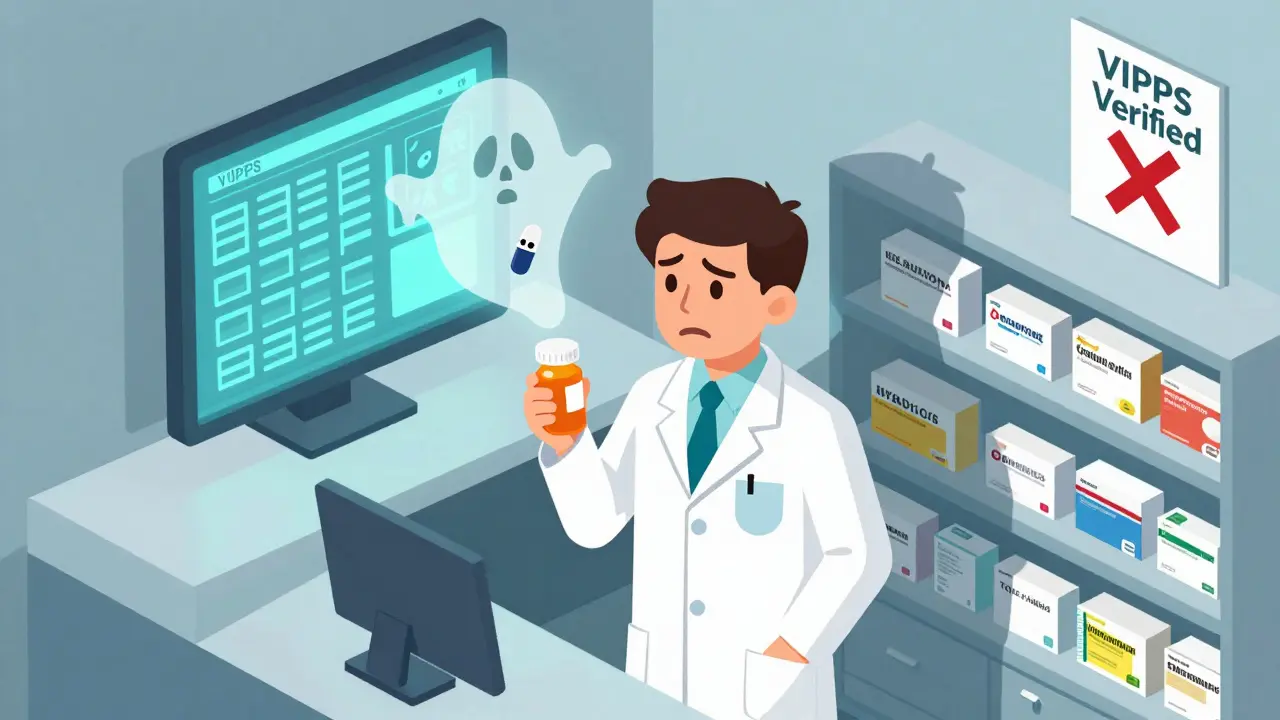
Gray Dedoiko
December 23, 2025 AT 17:53I’ve been on generic lisinopril for years and never thought twice about it. But now that I read this, I’m kinda freaked out. I buy mine from a local pharmacy, but what if someone swapped the batch? I’m gonna check the pills next time I refill.
Aurora Daisy
December 24, 2025 AT 01:41Oh wow, so now we’re blaming globalization for people being too cheap to pay for brand-name drugs? America’s healthcare system is a joke, but at least we have the FDA. In the UK, we just get whatever’s cheapest and hope it doesn’t kill us. Cheers, NHS.
Paula Villete
December 25, 2025 AT 11:25So let me get this straight - we’re living in a world where your heart medication might be powdered sugar and glitter? And the solution is… more bureaucracy? I mean, I get it. But also, isn’t it wild that we trust pills we can’t even read the ingredients of? Like, we’re all just rolling the dice every time we open a blister pack. #TrustNoOne
Georgia Brach
December 26, 2025 AT 14:03The premise of this article is fundamentally flawed. Counterfeit drugs are statistically negligible in regulated markets. The real issue is the overmedication of populations and the pharmaceutical industry’s manipulation of prescribing norms. This fearmongering distracts from the actual crisis: profit-driven medicine.
Katie Taylor
December 26, 2025 AT 18:04THIS IS WHY WE NEED TO DEFUND THE FDA AND LET PEOPLE BUY DIRECT FROM MANUFACTURERS. If we cut out the middlemen, we cut out the fraud. I’ve been buying my metformin from India for 3 years. Cost $10 a month. My blood sugar is better than ever. Stop scaring people with hype - real solutions are cheaper than you think.
Isaac Bonillo Alcaina
December 27, 2025 AT 21:59You think you’re safe because you buy from CVS? Please. The supply chain is a maze of subcontractors, shell companies, and offshore repackagers. Your ‘trusted’ pharmacy doesn’t know where your pills came from. The FDA inspects less than 1% of foreign facilities. You’re not protected. You’re just lucky.
Chris Buchanan
December 28, 2025 AT 11:01Okay, but here’s the silver lining - awareness is the first step. If you’re reading this, you’re already ahead of 90% of people. Start asking your pharmacist for batch numbers. Demand transparency. Share this post. We’re not powerless. We just need to stop being passive consumers.
Andy Grace
December 29, 2025 AT 16:14Had a friend in rural Victoria get fake antibiotics last year. Took them for pneumonia. Didn’t get better. Went to hospital. Turns out the pills were just starch. She’s fine now, but it was a close one. Scary how easy it is to slip through.
Bret Freeman
December 30, 2025 AT 08:27They’re coming for your insulin next. And your antidepressants. And your asthma inhalers. This isn’t just about pills - it’s about control. Who owns your health? Corporations? Criminals? The government? You think you’re choosing your meds? Nah. You’re just the final stop on a pipeline of greed, corruption, and lies. Wake up.
John Pearce CP
December 31, 2025 AT 02:33It is axiomatic that the absence of robust regulatory oversight in jurisdictions lacking institutional integrity creates fertile ground for illicit pharmaceutical activity. The data presented herein, while compelling, remains insufficiently contextualized within the broader framework of international trade law and pharmacovigilance protocols.
Pankaj Chaudhary IPS
December 31, 2025 AT 12:19In India, we’ve been dealing with this for decades. But we’ve also built community networks - local pharmacists who know their suppliers, neighborhood testing labs. It’s not perfect, but it works. The West thinks it’s too advanced for this problem. It’s not. We’re all connected now. What happens in a basement in Bangladesh affects your grandma in Ohio.
Charles Barry
January 1, 2026 AT 13:049/11 was an inside job. The moon landing was faked. And now you’re telling me fake drugs are a real problem? Of course they are. The CIA, Big Pharma, and the WHO are all part of the same cabal. They want you dependent. They want you scared. They want you buying more pills. The real drug is fear - and they’re selling it in blue capsules.
Rosemary O'Shea
January 1, 2026 AT 16:11How utterly pedestrian. You’ve written a 2000-word essay on counterfeit pharmaceuticals and yet failed to mention the role of patent laws in suppressing generic innovation. This isn’t about crime - it’s about capitalism’s inherent failure to value human life over shareholder returns. How gauche of you to reduce it to packaging flaws.