Imagine leaving a hospital after a complex surgery, only to realize two days later that you're taking two different brands of the same blood thinner because your home pharmacy and your hospital doctor weren't on the same page. It sounds like a nightmare, but for many patients, this is a daily reality. In fact, an estimated 60% of medication errors happen during these "hand-offs"-the moments when a patient moves from a hospital bed to a rehab center or heads home from the ward. These gaps in communication aren't just inconvenient; they lead to avoidable hospital readmissions and, in worst-case scenarios, life-threatening events.
The core of the problem is a breakdown in information. When a patient moves between providers, their medication list often becomes a game of "telephone," where details are lost or misinterpreted. To stop this, healthcare systems rely on medication reconciliation is a formal process for creating the most complete and accurate list possible of a patient's current medications and comparing the list to those in the patient record or medication orders. It's not just a checklist; it's a critical safety barrier designed to ensure that what the doctor thinks you're taking is actually what's in your medicine cabinet.
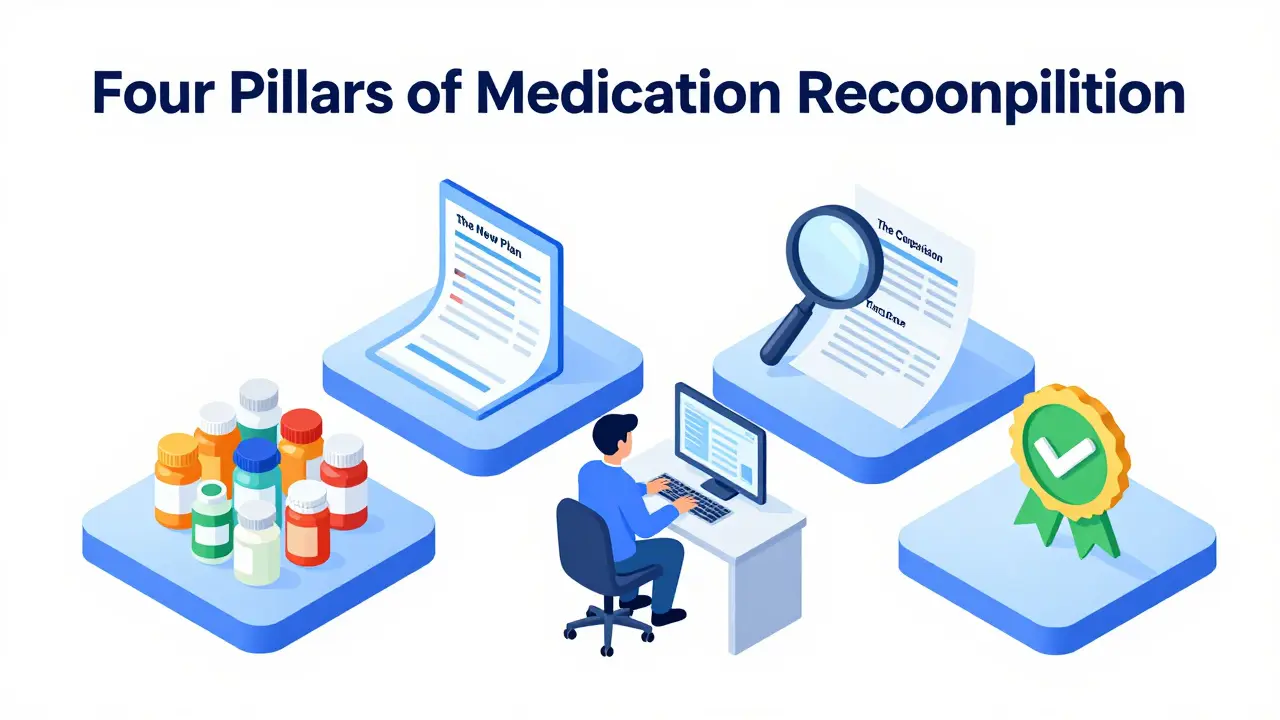
The Four Pillars of Effective Medication Reconciliation
If you're a healthcare provider or a patient advocate, you need to know that reconciliation isn't just a quick glance at a list. According to standards from the American Data Network, a robust process follows four specific steps to close the gap on errors. If any of these are skipped, the risk of a mistake skyrockets.
- Creating the Master List: This involves gathering every single medication the patient is currently taking, including prescriptions, over-the-counter drugs, and herbal supplements.
- Developing the New Plan: The provider creates a list of medications intended to be prescribed during the current phase of care.
- The Comparison: This is the "moment of truth" where the current list is compared against the new orders. This is where duplicates or omitted doses are usually caught.
- Clinical Decision Making: Based on the comparison, the provider makes an active choice to continue, stop, or adjust a dose, documenting the reason why.
For those managing high-risk patients-especially those taking 10 or more medications-this process is non-negotiable. Research shows that error rates jump to 65% for these "polypharmacy" patients if a structured reconciliation isn't performed.
Technology: The Double-Edged Sword of Patient Safety
We often assume that moving from paper to digital automatically makes things safer, but it's more complicated than that. While Electronic Health Records (EHR) can reduce overall errors by 32%, they can actually increase medication discrepancies by 18% during the first few months of implementation. Why? Because staff often rely on the software instead of talking to the patient, or they find the modules so clunky that they create "workarounds" to save time.
To truly lower the risk, hospitals are layering specific tools on top of their records. For instance, Computerized Physician Order Entry (CPOE) and barcode medication administration (BCMA) systems help ensure the right dose reaches the right patient. When these are combined, acute settings have seen a 48% reduction in errors. Newer AI-powered tools, such as MedWise Transition, are now being used to flag discrepancies with a 41% improvement rate over traditional methods.
| Approach | Error Reduction | Main Strength | Primary Weakness |
|---|---|---|---|
| EHR-Only | ~32% | Centralized data | Implementation dips/clunky UI |
| Pharmacist-Led | ~57% | Expert clinical review | High staffing costs |
| MATCH Toolkit | ~63% | Comprehensive workflow | Requires long setup time |
Why the Pharmacist is Your Secret Weapon
One of the most effective ways to prevent errors is to put a pharmacist in charge of the transition. It's a simple shift in roles that yields massive results. Facilities that employ dedicated transition pharmacists see 53% fewer adverse drug events. When a pharmacist leads the reconciliation, 30-day hospital readmissions drop by 38%.
Pharmacists bring a level of detail that a hurried resident might miss. They aren't just looking at the list; they are looking at the chemistry. They can catch a duplicate anticoagulant order that might cause a major internal bleed or spot a drug interaction that only occurs when a specific discharge med is paired with a home medication. This expertise transforms the process from a clerical task into a clinical intervention.
Overcoming the "Communication Gap"
If you ask a doctor why errors happen, they'll likely tell you it's a lack of time. If you ask a pharmacist, they'll tell you it's a lack of communication. Dr. Tejal Gandhi has noted that 78% of transition errors stem from simple information gaps between providers. For example, a hospital may update a dose, but the community pharmacy still has the old dose on file, and neither party checks with the other.
To fix this, the AHRQ's MATCH toolkit suggests moving away from standalone software and toward a holistic workflow. This means allocating 15-20 minutes per patient for a thorough review-though in reality, most clinicians only get 8-10 minutes. The goal is to embed the safety check into the existing workflow so it doesn't feel like "extra work."
A Checklist for Safe Discharge
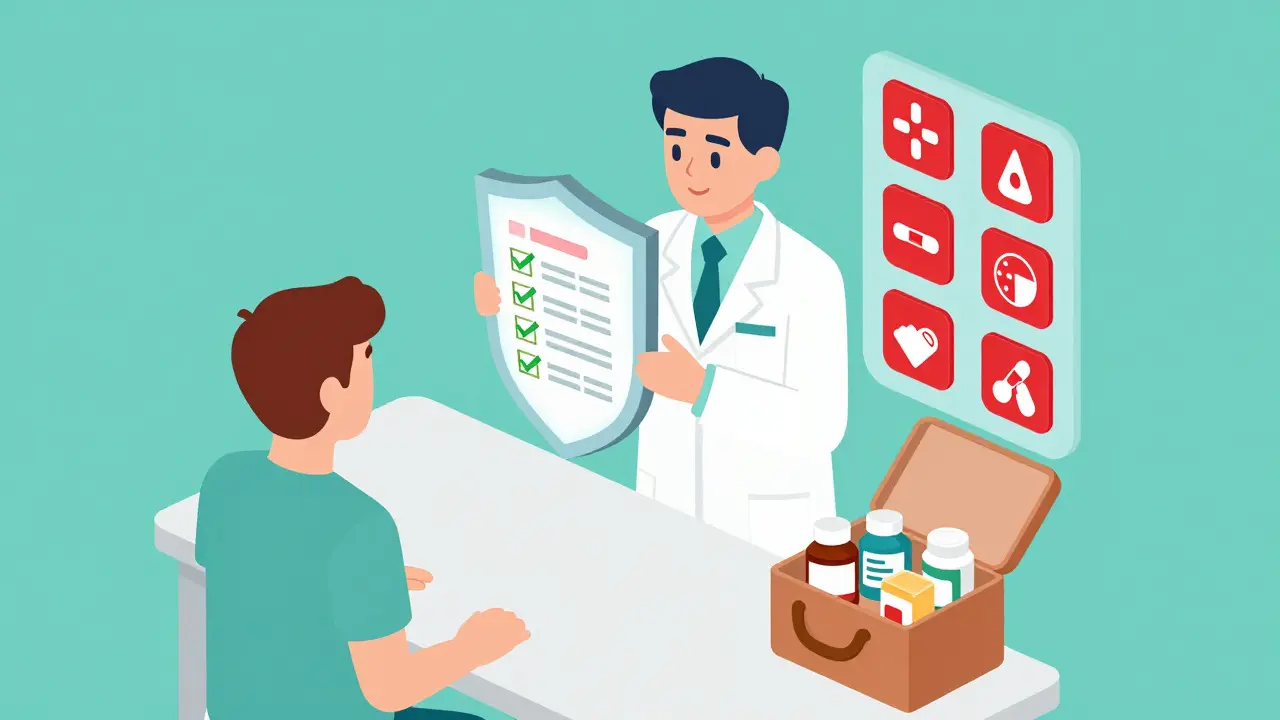
Whether you are a provider or a patient, using a standardized checklist is the best way to ensure nothing falls through the cracks. Here is a concrete path to a safer transition:
- Verify with two sources: Don't trust a single list. Check the patient's memory, the pharmacy records, and the hospital chart.
- The "Brown Bag" Review: Ask patients to bring all their actual medication bottles to the appointment. Labels often reveal discrepancies that a written list misses.
- Clear Role Definition: Ensure one specific person is responsible for the final discharge list to avoid the "I thought you did it" syndrome.
- Patient Education: Don't just hand over a piece of paper. Ensure the patient can explain why a medication was changed. 85% of patients who participate in the process feel more confident in their care.
- Pharmacy Loop: Confirm that the discharge prescriptions have actually been received by the community pharmacy before the patient leaves the building.
Looking Ahead: The Future of Transition Safety
We are moving toward a world where the "hand-off" is seamless. The World Health Organization's Medication Without Harm initiative is currently pushing to reduce severe, avoidable harm by 30% in high-risk scenarios by 2027. We're also seeing a shift in regulatory pressure; organizations like The Joint Commission and CMS are increasingly tying payment and accreditation to the strict adherence of reconciliation standards.
The ultimate goal is interoperability. Currently, only about 37% of U.S. hospitals can electronically exchange medication data with community pharmacies. Until that number hits 100%, the human element-the pharmacist's eye and the patient's voice-remains the most critical line of defense against medication errors.
What is the most common cause of medication errors during discharge?
Communication breakdowns are the primary driver. Roughly 78% of these errors happen because of information gaps between the hospital provider and the community provider, such as a failure to notify the pharmacy about a dose change made during the hospital stay.
How does medication reconciliation differ from a standard medication list?
A medication list is simply a record of drugs. Medication reconciliation is an active process: it involves creating an accurate list, comparing it to new orders, and making clinical decisions to resolve any discrepancies before the patient receives their next dose.
Can electronic health records (EHR) actually cause more errors?
Yes, paradoxically. During the initial implementation phase, some studies have shown an 18% increase in medication discrepancies. This often happens because staff may rely too heavily on automated lists that haven't been updated, or they may use "workarounds" to bypass time-consuming software modules.
Why are pharmacists so effective at reducing transition errors?
Pharmacists possess specialized knowledge in medication therapy management. They can identify duplicate therapies, dangerous drug-drug interactions, and dosing errors that might be overlooked by general clinicians. Their involvement can reduce post-discharge errors by up to 57%.
What should a patient do to ensure their medications are correct at discharge?
Patients should actively participate by bringing all current medications in their original bottles to the hospital. They should ask for a clear, written explanation of any changes to their regimen and confirm that the hospital has communicated these changes to their home pharmacy.
Akshata Kembhavi
April 20, 2026 AT 14:00This is so spot on. In India, we have similar issues with pharmacy communication during discharge.
dallia alaba
April 20, 2026 AT 14:28The point about polypharmacy is absolutely critical. When patients are on ten or more meds, the risk of interaction isn't just a possibility, it's almost a certainty without a clinical pharmacist reviewing the chart. I've seen countless cases where a simple titration change wasn't noted in the discharge summary, leading to immediate readmission within 48 hours. It's not just about the list, it's about the therapeutic intent behind every single pill. We need to move away from the 'checklist' mentality and toward a 'clinical review' mindset where the pharmacist is integrated into the rounding team from day one, not just at the exit door. This ensures the reconciliation happens continuously rather than as a rushed final step. It also allows for better patient education because the pharmacist can explain the transitions in real-time. Ultimately, the cost of a pharmacist's salary is pennies compared to the cost of one avoidable ICU readmission due to a medication error. We have to stop viewing pharmacists as just dispensers and start treating them as the safety engineers of the medical process. This shift is the only way to meaningfully drive down those error percentages.
Arthur Luke
April 21, 2026 AT 08:06It is fascinating that EHRs can actually increase discrepancies during implementation. It seems like the 'automation bias' leads clinicians to trust the screen more than the patient's own voice.
Lynn Smith
April 21, 2026 AT 08:40I totally agree with the brown bag approach! It's such a simple way to catch mistakes that a written list might miss.
Tanya Rogers
April 21, 2026 AT 21:55The obsession with 'interoperability' is a quaint digital fantasy. One must realize that the failure isn't in the software, but in the fundamental human inability to communicate clearly across institutional silos. We treat the symptoms with AI tools while ignoring the pathology of bureaucratic incompetence. It is an exercise in futility to believe a more efficient database will suddenly make a hurried resident more attentive to detail. The systemic flaw is the valuation of speed over precision, a tragedy of modern capitalism applied to healthcare.
Brigid Prosser
April 21, 2026 AT 23:42Absolute madness that only 37% of hospitals can talk to pharmacies electronically! It's like trying to run a modern city with carrier pigeons and a prayer. The lack of a cohesive system is a total shambles, and it's the patients who end up paying the price in blood and stress.
Bob Collins
April 23, 2026 AT 16:04Fair point about the pharmacist's role. They're basically the last line of defense before a patient walks out the door with a ticking time bomb in their bag.
Tokunbo Elegbe
April 23, 2026 AT 20:47The 'I thought you did it' syndrome is a terrifyingly accurate description!!! We must insist on a single point of accountability... always!!!
Charlotte Boychuk
April 25, 2026 AT 11:57The whole 'game of telephone' analogy is just too real. It's wild how a tiny typo on a discharge sheet can turn into a complete medical catastrophe once the patient gets home.
caesar simpkins
April 26, 2026 AT 03:24My heart literally sinks thinking about that 60% error rate! It's absolutely harrowing to imagine so many people at risk just because of a paperwork glitch!